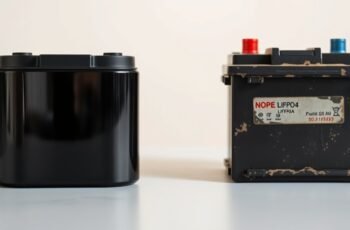
At the crossroads of energy storage, the choice between LiFePO4 and lithium-ion batteries symbolizes a balance between safety and performance. As we analyze their technical differences, we uncover how each chemistry aligns with specific needs—whether it’s high energy density or long-term stability. Understanding these nuances can considerably influence application outcomes, prompting us to examine what truly sets these technologies apart and why one might be favored over the other in critical scenarios.
Key Takeaways
- Lithium-ion batteries have higher energy density and power output, making them suitable for compact, high-performance applications.
- LiFePO4 offers superior thermal stability and longer cycle life, enhancing safety and long-term durability.
- Lithium-ion batteries typically degrade faster over cycles, resulting in shorter lifespan compared to LiFePO4.
- LiFePO4’s stable chemistry reduces risk of thermal runaway, simplifying safety measures and disposal.
- Despite higher initial costs, LiFePO4’s longevity and environmental benefits can reduce overall lifecycle expenses.
How Do LiFePO4 and Lithium-Ion Batteries Differ in Performance?
Although both LiFePO4 and traditional lithium-ion batteries are popular energy storage options, they exhibit distinct performance characteristics that influence their suitability for different applications. LiFePO4 batteries offer enhanced thermal stability and longer cycle life, which can simplify battery recycling processes and reduce manufacturing challenges associated with thermal management. Conversely, lithium-ion batteries typically deliver higher energy density and power output, but their more complex chemistry increases manufacturing complexity and concerns over safety. These differences impact their overall performance, with LiFePO4 favored for applications demanding durability and safety, while lithium-ion excels where high energy density is prioritized. Understanding these distinctions helps inform manufacturing processes and recycling strategies, ensuring ideal performance and environmental sustainability across diverse energy storage systems.
Comparing Energy Density and Power Output of LiFePO4 vs Lithium-Ion
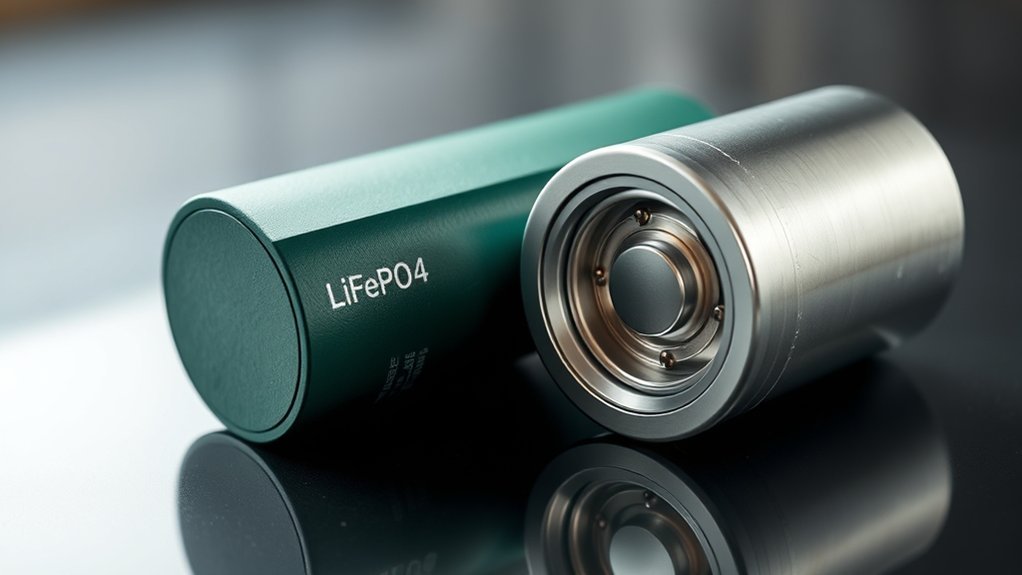
When comparing energy density and power output, we observe that LiFePO4 batteries typically have lower energy density but offer more consistent power delivery. Lithium-ion batteries generally provide higher energy density, but their performance can vary more under different conditions. Understanding these differences is vital for evaluating how each chemistry maintains stability and efficiency in specific applications.
Energy Density Differences
Energy density is a critical factor in evaluating battery performance, as it determines how much energy a cell can store relative to its weight and volume. Lithium-ion batteries typically exhibit higher energy densities than LiFePO₄, offering more power in a smaller package. This difference stems from manufacturing processes and material chemistry, influencing cell design and energy storage capabilities. Specifically:
- Lithium-ion chemistry allows for higher volumetric and gravimetric energy densities.
- LiFePO₄’s stable crystal structure limits its energy storage capacity.
- Manufacturing processes for lithium-ion cells optimize electrode materials for maximum density.
- Battery charging protocols can impact the effective energy storage over time, especially in high-density cells.
Power Output Variations
While energy density influences the overall capacity of a battery, power output determines how quickly that energy can be delivered during operation. LiFePO₄ batteries generally provide lower peak power compared to lithium-ion variants, which excel in high-current applications. This affects performance in demanding scenarios like rapid acceleration or heavy load cycles. Additionally, manufacturing processes influence the consistency of power delivery, with LiFePO₄’s more stable chemistry offering predictable performance. Battery recycling methods also impact power output, as efficient recycling preserves electrode integrity. The table below summarizes these differences:
| Feature | Lithium-Ion | LiFePO₄ |
|---|---|---|
| Peak Power Output | Higher | Moderate |
| Manufacturing Processes | Complex, precise | Simpler, cost-effective |
| Battery Recycling Impact | Potentially less stable | Enhances stability |
| Application Suitability | High-power needs | Stable, moderate power |
Performance Stability Factors
Performance stability in LiFePO₄ and lithium-ion batteries hinges on their distinct energy density and power output characteristics. These factors influence how well each battery type maintains performance over time. LiFePO₄ batteries offer consistent power delivery and enhanced thermal stability, partly due to manufacturing processes optimized for longevity. Conversely, lithium-ion batteries typically have higher energy density but can experience capacity fade with frequent cycling. Factors affecting stability include:
- Battery recycling practices, which impact long-term performance by reducing degradation.
- Manufacturing processes, influencing uniformity and defect rates.
- Thermal management, essential for preventing capacity loss.
- Operational voltage ranges, affecting cycle life and stability.
Understanding these elements helps predict performance sustainability, balancing energy density against power output for specific applications.
Which Battery Type Offers Better Longevity and Cycle Life?
When comparing longevity and cycle life, LiFePO4 batteries generally outperform lithium-ion counterparts due to their more stable chemical structure, which reduces capacity fade over repeated cycles. This stability translates into a higher cycle count and extended service life, often surpassing 2,000 cycles compared to lithium-ion’s 500-1,000. Manufacturing processes influence longevity by impacting electrode integrity and electrolyte stability, with LiFePO4 benefiting from more sustainable and consistent production methods. Additionally, battery recycling is more straightforward for LiFePO4, as its chemistry produces fewer hazardous byproducts, contributing to longer overall lifespan and environmental sustainability. Ultimately, these factors make LiFePO4 batteries a more durable choice for applications demanding long-term reliability.
Safety Features and Thermal Stability in Lithium-Ion and LiFePO4 Batteries
Safety features and thermal stability are critical factors when evaluating lithium-ion and LiFePO4 batteries, as they directly impact operational security and longevity. LiFePO4 batteries inherently offer superior thermal stability, reducing risks of thermal runaway and fires, unlike some lithium-ion variants. This enhances safety during operation and simplifies battery recycling processes, minimizing environmental hazards. Conversely, traditional lithium-ion batteries often require complex safety mechanisms, increasing manufacturing costs. Key safety considerations include:
- Robust internal safety mechanisms
- Resistance to overheating and thermal runaway
- Simpler manufacturing due to inherent stability
- Lower risk during battery recycling processes
These factors highlight how LiFePO4’s stability benefits safety and environmental impact, while lithium-ion batteries often demand additional safety features, raising costs but offering different performance trade-offs.
Cost, Maintenance, and Environmental Impact: Making the Right Choice
Evaluating the overall value of lithium-ion and LiFePO4 batteries requires examining their costs, maintenance needs, and environmental impacts. Manufacturing costs for LiFePO4 batteries are generally higher due to more complex material processing, but they benefit from longer lifespans, reducing replacement frequency. Lithium-ion batteries, meanwhile, often have lower initial costs but incur higher long-term expenses due to faster degradation. Maintenance for both types is minimal, but safe handling protocols differ. Environmental impact considerations include battery recycling; LiFePO4 batteries are often easier to recycle safely because they contain fewer toxic materials. Overall, although LiFePO4 batteries entail higher upfront costs, their durability and environmentally friendly recycling processes can offset initial expenses, making them a compelling sustainable choice.
Practical Applications: When to Use LiFePO4 Instead of Lithium-Ion
LiFePO4 batteries are particularly advantageous in applications that demand high safety standards, long cycle life, and environmental sustainability. They excel where thermal stability reduces risk, such as in renewable energy storage or electric buses. Their stable chemistry also simplifies manufacturing processes, leading to fewer safety concerns and easier battery recycling.
Consider using LiFePO4 in scenarios where longevity surpasses initial cost, including grid storage and off-grid systems. They are ideal when environmental impact matters, thanks to eco-friendly manufacturing and recyclability. Additionally, their stable chemistry minimizes degradation over time, reducing waste.
- Enhanced safety and thermal stability
- Longer cycle life in high-demand environments
- Simpler manufacturing processes
- Improved battery recycling potential
Frequently Asked Questions
How Do Charging Times Compare Between Lifepo4 and Lithium-Ion Batteries?
Charging times differ mainly due to charging speed and power output, with Lifepo4 batteries typically charging faster and handling higher current rates, reducing overall charging time, whereas lithium-ion batteries generally have slower charging speeds and lower power output efficiency.
Are Lifepo4 Batteries More Environmentally Friendly Than Lithium-Ion Options?
Imagine batteries as eco-friendly forests; Lifepo4 batteries tend to have longer lifespans and lower manufacturing impact, making them more environmentally friendly than lithium-ion options. Their durability reduces waste, supporting sustainability and minimizing harmful resource extraction.
Can Lifepo4 Batteries Handle Higher Discharge Rates Than Lithium-Ion?
We find Lifepo4 batteries handle higher discharge rates better than lithium-ion, offering enhanced battery longevity under heavy loads. While their initial cost is higher, their cost comparison over time favors Lifepo4 due to durability and performance stability.
What Are the Temperature Range Differences for Optimal Performance?
We find that Lifepo4 batteries offer superior thermal stability and broader temperature tolerance, typically performing well between -20°C to 60°C, whereas lithium-ion batteries excel in a narrower range, around 0°C to 45°C, impacting their ideal performance.
How Do Recycling Processes Differ for Lifepo4 and Lithium-Ion Batteries?
They say, “Every cloud has a silver lining,” but recycling Lifepo4 batteries offers advantages like easier separation and fewer toxic materials, reducing recycling challenges and extending battery lifespan, unlike lithium-ion batteries, which involve complex, hazardous processes.
Conclusion
In conclusion, choosing between LiFePO4 and lithium-ion batteries hinges on specific needs. While lithium-ion offers higher energy density and power, LiFePO4 excels in safety, longevity, and environmental stability—traits that echo the reliability of a well-forged suit of armor in battle. By analyzing performance parameters and application demands, we can determine the most suitable technology, ensuring our energy solutions are both efficient and sustainable, much like the enduring legacy of a master craftsman.