Moving from lead-acid to LiFePO4 batteries involves evaluating technical advantages against initial costs and system compatibility. We recognize that this decision impacts safety, performance, and long-term efficiency. As we analyze these factors, it’s clear that a thorough approach is necessary to guarantee a seamless upgrade. Exploring the core benefits and potential challenges can help us determine if this shift aligns with our operational goals and sustainability commitments.
Key Takeaways
- Verify system compatibility, including wiring, charge controllers, and inverters, before upgrading to LiFePO4 batteries.
- Ensure chargers are specifically designed or configured for LiFePO4 chemistry to prevent overcharging or damage.
- Consider higher initial costs balanced by longer lifespan, lower maintenance, and improved safety features of LiFePO4 batteries.
- Properly recycle old lead-acid batteries and follow safety protocols during the transition to minimize environmental impact.
- Regularly monitor voltage, temperature, and system performance to optimize lifespan and ensure safe operation of LiFePO4 batteries.
Why Switch From Lead-Acid to LiFePO4 Batteries?
While lead-acid batteries have long been the standard for many applications, advancements in battery technology have made LiFePO4 (lithium iron phosphate) a compelling alternative. Its superior voltage stability guarantees consistent power output, which is critical for sensitive electronics and high-demand systems. Additionally, LiFePO4 batteries offer enhanced safety profiles and longer cycle life, reducing the frequency of replacements and waste. This directly benefits battery recycling efforts by minimizing hazardous waste and easing disposal concerns. The stability in voltage also means fewer fluctuations that can damage connected devices. Overall, moving to LiFePO4 not only improves operational reliability but also supports sustainable practices through more efficient recycling processes, making it a prudent choice for modern energy storage needs.
Understanding the Key Benefits of LiFePO4 Batteries
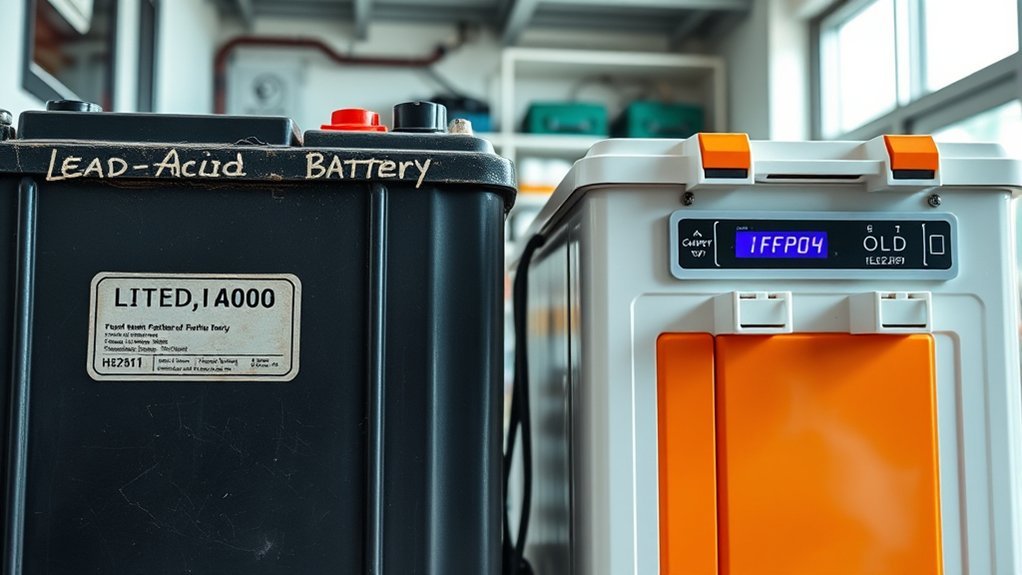
Understanding the key benefits of LiFePO4 batteries is essential for appreciating their growing popularity in energy storage applications. Their unique battery chemistry offers enhanced safety, with stable thermal properties that reduce risk of thermal runaway. Additionally, LiFePO4’s energy density, while slightly lower than some other lithium-ion chemistries, remains sufficient for most applications, providing a reliable balance between capacity and longevity. The chemistry’s stability translates into longer cycle life and lower maintenance needs, making these batteries more cost-effective over time. Their inherent safety, combined with consistent energy delivery, makes LiFePO4 batteries ideal for critical systems. Overall, the combination of advanced chemistry and respectable energy density underpins their advantages, positioning them as a superior alternative to traditional lead-acid batteries.
How to Assess If Your System Is Ready for an Upgrade
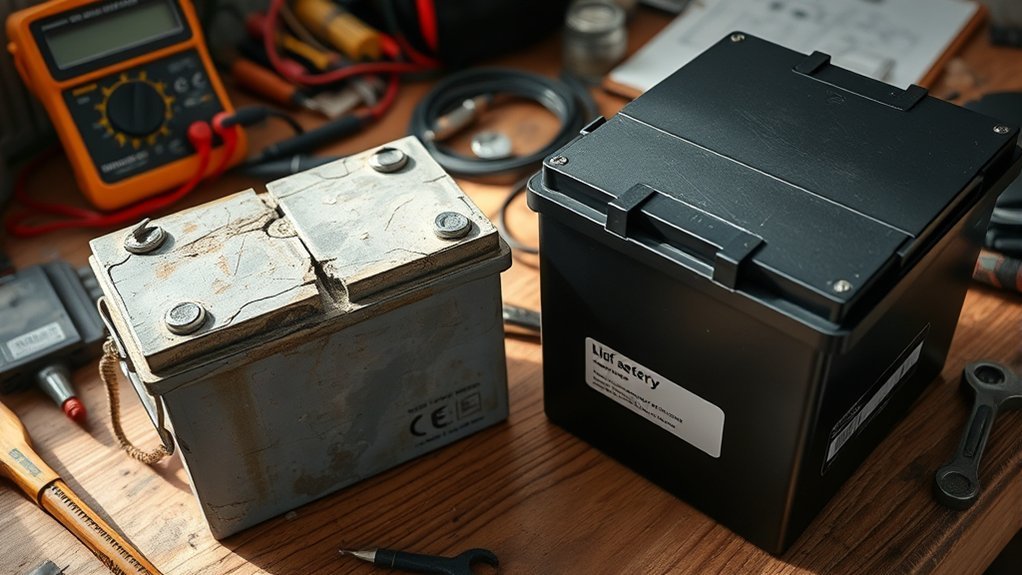
Before upgrading to LiFePO4 batteries, we need to critically evaluate whether your current system can support the shift. This involves analyzing system compatibility, including wiring, charge controllers, and inverter capabilities. Since battery chemistry varies markedly, ensuring that existing components can handle the new chemistry is essential. LiFePO4 batteries demand different voltage and current management compared to lead acid systems, so compatibility checks are vital to prevent damage or inefficiency. Evaluate whether your charge controllers are compatible with LiFePO4 charging profiles and whether your wiring can accommodate higher discharge rates if necessary. A thorough assessment helps identify potential upgrades needed, ensuring a seamless transition without risking system integrity or performance.
Choosing the Right LiFePO4 Battery for Your Needs
Selecting the appropriate LiFePO4 battery for your application requires a thorough analysis of your energy demands, operational conditions, and system compatibility. Critical factors include battery chemistry, which influences safety and lifespan, and power capacity, determining how much energy the battery can deliver continuously. To optimize performance, consider your system’s voltage requirements, discharge rates, and cycle life.
| Parameter | Consideration |
|---|---|
| Battery Chemistry | Guarantees safety, longevity, and thermal stability |
| Power Capacity | Matches your energy consumption and peak load demands |
| Voltage Compatibility | Ensures seamless integration with existing systems |
| Cycle Life | Determines overall longevity and replacement frequency |
| Operating Conditions | Accounts for temperature, vibration, and operational stress |
Balancing these parameters ensures a tailored, efficient LiFePO4 solution for your needs.
Installing and Connecting Your New Battery Safely
Proper wiring techniques are essential to guarantee safe and reliable operation when connecting your new LiFePO4 battery. We must follow manufacturer guidelines and use appropriate gauge wiring to prevent overheating or voltage issues. Safety precautions, such as disconnecting power sources and wearing protective gear, are critical during installation to avoid electrical hazards.
Proper Wiring Techniques
Ensuring correct wiring techniques is essential for safely installing and connecting your LiFePO4 battery. Proper wiring respects the battery chemistry, ensuring compatibility and preventing damage. Adhering to wiring standards minimizes resistance and voltage drops, optimizing performance. Use appropriately rated cables and connectors to handle current loads. Maintain polarity consistency to avoid reverse connections that could lead to shorts or damage. Secure connections tightly to prevent loosening over time.
| Step | Action | Purpose |
|---|---|---|
| 1 | Use correct gauge wire | Handle high current safely |
| 2 | Follow wiring standards | Ensure reliability and safety |
| 3 | Confirm polarity before connecting | Prevent reverse polarity damage |
Safety Precautions During Installation
Before beginning the installation process, we must prioritize safety to prevent accidents and equipment damage. Proper handling of Lifepo4 batteries involves wearing protective gear and guaranteeing correct polarity during connections to avoid short circuits. We should work in a well-ventilated area, as improper installation can lead to thermal issues. It’s essential to verify that all wiring is secure and insulated, following established wiring techniques. Additionally, implementing appropriate storage solutions minimizes risk during and after installation, especially if batteries need to be stored temporarily. Responsible battery recycling practices should be observed at the end of the battery’s lifecycle to prevent environmental harm. Prioritizing these safety precautions ensures a secure setup, reduces hazards, and promotes efficient, sustainable use of your new Lifepo4 batteries.
Comparing Costs: Upfront Investment Vs. Long-Term Savings
When evaluating costs, we compare the higher initial purchase price of Lifepo4 batteries against the potential savings from lower maintenance and longer lifespan. We analyze how these factors influence total lifecycle costs, including replacement frequency and operational expenses. This comparison helps determine whether the upfront investment justifies long-term financial benefits for users.
Initial Purchase Price
While LiFePO4 batteries typically have a higher initial purchase price compared to traditional lead-acid options, analyzing the total cost of ownership reveals significant long-term savings. Their advanced battery chemistry enhances energy storage efficiency and lifespan, offsetting upfront costs. Although the initial investment is steeper, LiFePO4 systems offer higher cycle counts and better performance, reducing replacement frequency.
| Aspect | Lead-Acid | LiFePO4 |
|---|---|---|
| Initial Purchase Price | Lower | Higher |
| Energy Storage Efficiency | Moderate | Superior |
| Expected Lifespan | Shorter | Longer |
| Total Cost Over Time | Potentially higher due to replacements | Cost-effective long-term |
This comparison underscores that initial costs are balanced by superior longevity and energy storage benefits of LiFePO4 technology.
Maintenance and Replacement Costs
Although LiFePO4 batteries often require a higher initial investment, their maintenance and replacement costs tend to be considerably lower over the long term. This is due to their extended cycle life, which reduces frequency of replacements and associated labor costs. Additionally, their stability minimizes maintenance requirements, lowering operational expenses.
- Longer lifespan reduces the need for frequent battery recycling, lowering environmental impact and disposal costs
- Superior chemical stability minimizes degradation, decreasing replacement frequency
- Reduced maintenance demands lead to lower labor and servicing expenses
These factors contribute to overall cost efficiency, offsetting the higher upfront price. The environmental impact of LiFePO4 batteries is also favorable, as their durability lessens waste and supports sustainable battery recycling practices, further reducing long-term costs.
Overall Lifecycle Savings
Investing in LiFePO4 batteries involves a higher initial capital outlay compared to lead-acid alternatives. However, the benefits of advanced battery chemistry and higher energy density markedly enhance overall lifecycle savings. LiFePO4’s superior energy density allows for more compact, efficient systems, reducing space and weight costs. Its longer cycle life—often exceeding 2,000 cycles—translates into fewer replacements over time. While upfront costs are greater, the reduced maintenance, lower replacement frequency, and improved efficiency contribute to substantial long-term savings. In contrast, lead-acid batteries require more frequent replacements and maintenance, diminishing their cost-effectiveness over the lifespan. When evaluating total cost of ownership, LiFePO4’s durability and performance advantages outweigh initial investment, making it the more economical choice over the long run.
Tips for Maintaining and Maximizing Your LiFePO4 Battery Life
Proper maintenance is essential to extending the lifespan and enhancing the performance of LiFePO4 batteries. Regular monitoring of voltage and temperature prevents overcharging or overheating, which can reduce capacity and safety risks. Consistent use of balanced charging systems ensures uniform cell health, prolonging battery efficiency. Additionally, implementing proper battery recycling practices minimizes environmental impact, reducing hazardous waste and supporting sustainability. To maximize longevity, avoid deep discharges and keep the battery within recommended state-of-charge ranges. These measures not only improve performance but also support responsible disposal, aligning with environmental concerns. Maintaining ideal conditions and adhering to best practices ensures your LiFePO4 batteries deliver reliable power over time while minimizing ecological footprint.
Common Challenges When Switching and How to Overcome Them
| Challenge | Solution | Consideration |
|---|---|---|
| Charging compatibility | Use chargers designed for LiFePO4 | Prevent overcharging or damage |
| Battery recycling | Follow proper recycling protocols | Minimize environmental impact |
| System integration | Confirm system components are compatible | Optimize performance |
Addressing these issues guarantees a safe, efficient shift and sustainable lifecycle management.
Frequently Asked Questions
Can I Mix Lifepo4 Batteries With Existing Lead-Acid Batteries?
We advise against mixing Lifepo4 with lead-acid batteries due to differences in charging compatibility and risk of damage. Proper battery recycling guarantees safety and efficiency, but combining these types can compromise system performance and longevity, so separate configurations are recommended.
What Is the Typical Lifespan of a Lifepo4 Battery?
Like a resilient marathon runner, Lifepo4 batteries typically last 8-10 years with proper charging protocols, and responsible battery recycling extends their lifespan, ensuring peak performance and sustainability over their extensive operational life.
Are There Any Safety Concerns With Lifepo4 Batteries?
We find Lifepo4 batteries generally safe if properly managed, but storage safety and responsible battery recycling are essential; avoiding overcharging, thermal management, and adhering to safety protocols minimizes risks associated with thermal runaway or chemical leaks.
How Do Temperature Variations Affect Lifepo4 Battery Performance?
Temperature variations impact LiFePO4 batteries’ thermal stability and temperature resilience, causing performance fluctuations. Extreme heat accelerates degradation, while cold reduces capacity, emphasizing the importance of maintaining ideal temperature conditions for reliable, long-term operation.
Is Professional Installation Necessary for Lifepo4 Batteries?
We believe professional installation is essential for Lifepo4 batteries, ensuring proper setup, adherence to charging protocols, and safe handling, which also facilitates effective battery recycling practices and optimizes performance and lifespan through expert calibration.
Conclusion
In summary, switching to LiFePO4 batteries isn’t just a smart upgrade; it’s a bold statement against outdated technology. While the initial cost might make your wallet shudder, the long-term savings and safety benefits are undeniable. So, let’s embrace the future, leave lead-acid in the dust, and prove that innovation isn’t just for techies—it’s for anyone serious about sustainable, reliable energy. After all, who wants to be stuck in the dark ages?