While the debate between Lifepo4 and lithium-ion batteries often centers on cost and performance, there are deeper considerations that influence their suitability for solar applications. Understanding their safety profiles, lifespan, and environmental impacts can profoundly affect long-term system reliability. As we analyze these factors, it becomes clear that choosing the right battery type requires careful evaluation of how each aligns with specific energy storage needs and safety standards. Exploring these nuances may reveal insights vital to making an informed decision.
Key Takeaways
- Lifepo4 offers higher thermal stability and safety, reducing fire risk compared to cobalt or nickel-based lithium-ion batteries.
- Lithium-ion batteries provide higher energy density, making them suitable for compact solar storage solutions.
- Lifepo4 has a longer cycle life (2000-3000 cycles) and lower degradation, ensuring better long-term performance.
- Lithium-ion batteries are initially cheaper but tend to have higher maintenance and replacement costs over time.
- Lifepo4’s environmentally friendly materials and simpler recycling processes offer a lower ecological impact.
What Are Lifepo4 and Lithium-Ion Batteries? An Overview
While both Lifepo4 and lithium-ion batteries are popular choices for energy storage, they differ markedly in chemistry and performance characteristics. Lifepo4 batteries utilize lithium iron phosphate chemistry, which influences their manufacturing process and overall stability. They typically have lower energy density compared to lithium-ion variants, meaning they store less energy per unit volume or weight. Lithium-ion batteries, on the other hand, often feature nickel, cobalt, or manganese cathodes, allowing for higher energy density but complicating manufacturing and safety considerations. These differences impact their suitability for solar applications, with Lifepo4 offering advantages in longevity and thermal stability, while lithium-ion batteries excel in energy capacity. Understanding these core distinctions helps inform ideal battery selection for specific energy storage needs.
Safety Differences Between Lifepo4 and Lithium-Ion Batteries
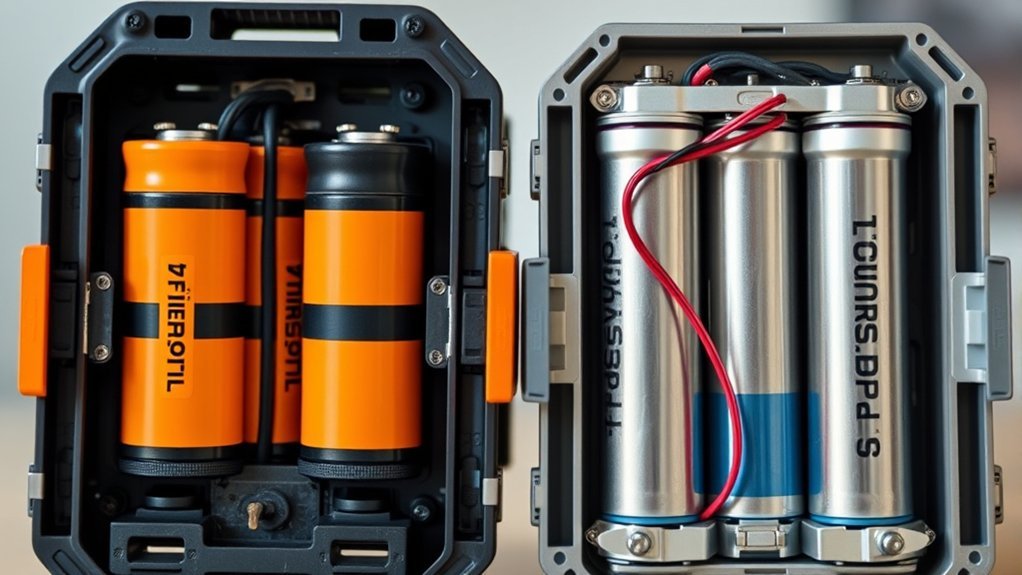
Lifepo4 and lithium-ion batteries differ considerably in thermal stability, affecting their fire risk and safety profiles. Lifepo4 cells exhibit higher temperature tolerance and are less prone to thermal runaway, enhancing damage tolerance. Understanding these safety distinctions is vital for evaluating their suitability in solar applications.
Thermal Stability Levels
Thermal stability is a critical safety factor when comparing Lifepo4 and lithium-ion batteries for solar applications. Lifepo4’s chemical structure inherently offers higher thermal stability due to its stable phosphate compound, which resists thermal runaway. In contrast, lithium-ion batteries, especially those with cobalt-based cathodes, are more sensitive to temperature fluctuations. Advances in battery manufacturing and technological advancements have improved both types, but Lifepo4 remains more resilient at elevated temperatures. Key points include:
- Lifepo4’s stable crystal lattice reduces heat generation during charging/discharging.
- Lithium-ion batteries are more prone to overheating from internal short circuits.
- Manufacturing processes influence thermal management, with Lifepo4 benefiting from more robust thermal characteristics.
- Technological improvements continue to enhance safety, but fundamental chemistry dictates thermal stability differences.
Risk of Fire
Despite technological advancements, the risk of fire remains a critical safety concern when choosing between Lifepo4 and lithium-ion batteries for solar systems. Lifepo4 batteries inherently have a lower thermal runaway potential due to their stable chemistry, reducing fire risk. In contrast, lithium-ion batteries with cobalt or nickel cathodes are more prone to thermal instability if damaged or improperly maintained. Proper battery maintenance and strict adherence to installation safety protocols are essential to mitigate fire hazards. Ensuring correct wiring, adequate cooling, and protective circuitry minimizes the chances of thermal events. While Lifepo4 batteries are generally safer, neglecting regular maintenance or unsafe installation practices can still lead to fire risks in either technology. Consequently, safety depends heavily on diligent maintenance and proper installation procedures.
Damage Tolerance
When considering damage tolerance, it’s essential to recognize that Lifepo4 batteries generally withstand physical impacts and internal faults better than lithium-ion batteries. This resilience primarily stems from their battery chemistry, which is inherently more stable and less prone to thermal runaway. Manufacturing processes also contribute, as Lifepo4 cells are manufactured with stricter controls, resulting in more robust internal structures. Specifically:
- Lifepo4’s chemical stability reduces the risk of catastrophic failure from impacts.
- Their lower internal voltage and heat generation lessen damage from internal faults.
- Manufacturing quality controls enhance structural integrity against physical damage.
- The inherent safety of the chemistry minimizes risks during mishandling or accidents.
Cost Comparison: Which Battery Offers Better Value?
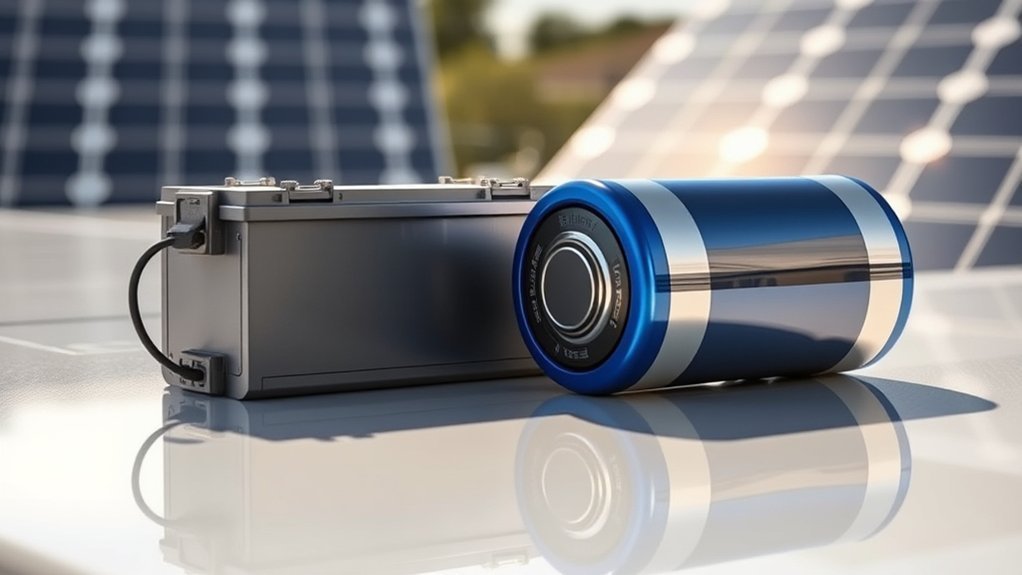
How do Lifepo4 and lithium-ion batteries compare in regard to overall value? From a cost perspective, Lifepo4 batteries often have a higher upfront price due to more complex battery manufacturing processes, but they compensate with lower maintenance costs over their lifespan. Lithium-ion batteries tend to be more affordable initially, benefiting from broader market availability and established supply chains. However, lithium-ion’s shorter lifespan and higher degradation rates can lead to increased replacement expenses over time. When evaluating value, it’s essential to contemplate not just initial costs but total ownership expenses, including replacement and maintenance. Overall, Lifepo4 batteries may offer better long-term value, especially in applications demanding durability, while lithium-ion batteries present a more accessible entry point due to current market availability.
Lifespan and Durability: How Long Do These Batteries Last?
We compare the cycle life and degradation factors of Lifepo4 and lithium-ion batteries to assess their longevity. Understanding how each chemistry responds to repeated charge cycles and environmental stressors reveals their true durability. This analysis helps determine which technology provides a more reliable long-term energy solution for solar applications.
Cycle Life Comparison
Although both Lifepo4 and lithium-ion batteries are popular choices for solar energy storage, their cycle life—the number of charge-discharge cycles before capacity drops—differs markedly. Lifepo4 batteries typically offer 2,000 to 3,000 cycles, while lithium-ion variants average around 500 to 1,000 cycles. This longevity stems from their manufacturing processes, where Lifepo4’s stable chemistry reduces electrode degradation. Additionally, Lifepo4’s resistance to thermal stress enhances durability, extending cycle life. Recycling practices also impact lifespan, as Lifepo4 batteries are generally easier to recycle, encouraging sustainable disposal and reuse. Conversely, lithium-ion batteries are more sensitive to cycling conditions, which accelerates capacity decline over time. Ultimately, Lifepo4’s superior cycle life makes it more suitable for long-term solar applications.
Degradation Factors
Degradation factors profoundly influence the lifespan and durability of Lifepo4 and lithium-ion batteries, impacting their long-term performance in solar applications. Variations in battery manufacturing processes, such as electrode composition and electrolyte quality, directly affect degradation rates. Lifepo4 batteries typically exhibit slower capacity fade due to stable chemistry and reduced thermal stress, while lithium-ion batteries may degrade faster under high temperature and charge cycles. Market trends indicate increased emphasis on improving cycle stability and thermal management to extend battery life. Both chemistries are susceptible to degradation from deep discharges, overcharging, and environmental conditions, but Lifepo4’s robust chemistry offers superior resistance. Understanding these degradation factors helps optimize battery selection for durability and longevity in solar energy systems.
Efficiency and Performance in Solar Energy Storage
When evaluating lithium iron phosphate (LiFePO4) and traditional lithium-ion batteries for solar energy storage, their efficiency and overall performance emerge as critical factors. The battery chemistry profoundly influences charge retention and cycle life, with LiFePO4 offering enhanced stability. Regarding charging methods, LiFePO4 batteries tolerate faster charging without compromising longevity, unlike some lithium-ion variants. Consider these points:
- Energy Density: Lithium-ion batteries generally provide higher energy density, impacting storage capacity.
- Charge Efficiency: LiFePO4 exhibits superior charge acceptance and minimal energy loss during cycling.
- Thermal Performance: LiFePO4 maintains stable operation across temperature ranges, improving reliability.
- Cycle Life: Longer cycle life in LiFePO4 enhances overall efficiency, reducing replacement frequency.
These factors underscore the importance of battery chemistry and charging protocols in optimizing solar energy storage performance.
Environmental Impact and Recycling of Lifepo4 vs Lithium-Ion
The environmental footprint and recyclability of battery chemistries play a crucial role in sustainable energy solutions. Lifepo4 batteries generally have a lower environmental impact due to their non-toxic materials and more straightforward recycling processes. They contain fewer hazardous substances, simplifying adherence to environmental regulations and reducing disposal concerns. Conversely, lithium-ion batteries often involve complex recycling processes because of their diverse chemistries and the presence of toxic components like cobalt and nickel. These processes require advanced technology and can generate hazardous waste, raising environmental and regulatory challenges. Both battery types’ recyclability depends heavily on current environmental regulations, which influence collection, processing, and reuse practices. Ultimately, Lifepo4’s more environmentally benign composition positions it as a more sustainable choice, particularly considering future regulatory landscapes.
Which Battery Is Better Suited for Your Solar Power System?
Selecting the most suitable battery for a solar power system requires careful consideration of performance, safety, and long-term costs. When evaluating options, consider these factors:
- Battery manufacturing quality: Lifepo4 batteries generally have stricter manufacturing standards, resulting in enhanced safety and durability.
- Market availability: Lithium-ion batteries dominate the market, offering abundant options, whereas Lifepo4 systems are increasingly accessible but still less widespread.
- Performance consistency: Lithium-ion batteries often provide higher energy density, but Lifepo4 batteries excel in cycle life and thermal stability.
- Cost and supply chain: Lifepo4 batteries tend to be more cost-effective long-term due to fewer safety-related expenses, while lithium-ion batteries benefit from mature supply chains.
Ultimately, market availability and manufacturing quality heavily influence which battery best suits your system’s needs.
Key Factors to Consider When Choosing Between Lifepo4 and Lithium-Ion
Choosing between Lifepo4 and lithium-ion batteries requires a careful analysis of several critical factors that directly impact system performance, safety, and long-term costs. Battery management systems (BMS) are essential for monitoring cell health, balancing, and preventing overcharging or deep discharges. Lifepo4 batteries typically feature more robust BMS compatibility, enhancing safety and longevity. Charging protocols also vary; Lifepo4 batteries often demand specific voltage and current profiles to maximize lifespan, while lithium-ion batteries may be more tolerant but require strict adherence to manufacturer guidelines to prevent thermal runaway. Evaluating these factors helps guarantee reliable operation, safety, and cost-effectiveness over the system’s lifespan. Ultimately, understanding the nuances of battery management and charging protocols guides the best choice for your solar installation.
Frequently Asked Questions
How Do Temperature Ranges Affect Lifepo4 and Lithium-Ion Batteries?
Temperature ranges critically impact battery longevity and thermal stability. Lifepo4 batteries handle wider temperatures better, maintaining stability and extending lifespan, whereas lithium-ion batteries degrade faster outside ideal thermal conditions, reducing efficiency and overall durability.
Can Lifepo4 Batteries Be Used for Off-Grid Solar Systems?
Yes, Lifepo4 batteries are suitable for off-grid solar systems due to their battery safety and environmental impact advantages. They offer stable performance, longer lifespan, and a safer, eco-friendlier option compared to other lithium-ion types, ensuring reliable energy storage.
What Are the Warranty Differences Between These Battery Types?
Battery warranties differ: Lifepo4 offers longer coverage, reflecting its extended lifespan, while lithium-ion warranties tend to be shorter but often cover higher initial costs. We analyze cost comparison and durability for informed solar energy investments.
How Do Charging Times Compare for Lifepo4 and Lithium-Ion Batteries?
We find Lifepo4 batteries charge faster, reducing downtime and improving efficiency, while lithium-ion batteries take longer. Considering battery lifespan and cost comparison, Lifepo4 offers a more durable, cost-effective solution for solar energy storage.
Are There Any Compatibility Issues With Existing Solar Setups?
Surprisingly, our existing solar setups face no compatibility issues with Lifepo4 or Lithium-Ion batteries, but differing battery lifespan and cost comparisons demand careful analysis to optimize system performance and longevity without unforeseen technical surprises.
Conclusion
In summary, choosing between Lifepo4 and lithium-ion batteries hinges on our specific needs and priorities. While lithium-ion offers superior energy density and initial affordability, Lifepo4’s safety, longevity, and environmental benefits often make it the smarter long-term investment. Ultimately, understanding these nuances helps us make an informed decision—it’s clear that selecting the right battery isn’t just about price but about playing our cards right for sustainable, reliable solar energy storage.