Imagine two batteries, one glowing with stability and long-term reliability, the other lightweight and power-dense, each with distinct strengths and vulnerabilities. As we compare Lifepo4 and Li-ion technologies, it becomes clear that their differences in chemistry, safety, and application suitability are profound. Understanding these nuances is essential for making informed choices that align with specific energy needs—especially when the right decision impacts performance, safety, and environmental impact over time.
Key Takeaways
- Lifepo4 batteries offer greater thermal stability and safety due to their robust chemical structure, reducing risk of thermal runaway compared to Li-ion.
- Li-ion batteries have higher energy density and lighter weight, making them ideal for portable electronics and compact devices.
- Lifepo4 cells typically last longer with 2,000–5,000 charge cycles, whereas Li-ion cells last around 500–1,500 cycles.
- Manufacturing and raw materials for Lifepo4 are more environmentally friendly and easier to recycle than those for Li-ion.
- Li-ion batteries are generally cheaper upfront due to mature production processes, but Lifepo4 may provide better long-term value through durability.
How Do LiFePO4 and Li-Ion Batteries Differ in Composition and Chemistry?
While both LiFePO4 and Li-ion batteries are lithium-based chemistries, they differ markedly in their chemical composition and structure, which directly impacts their performance and safety. Regarding battery manufacturing, LiFePO4 uses lithium iron phosphate as its cathode, offering enhanced chemical stability due to its stable crystal structure. This stability reduces the risk of thermal runaway and prolongs cycle life. Conversely, Li-ion batteries typically employ layered transition metal oxides, such as cobalt or nickel manganese cobalt oxides, which are less chemically stable but enable higher energy density. These compositional differences influence their electrochemical behaviors, with LiFePO4 providing a more robust chemical stability profile. Ultimately, the distinct chemistries shape each battery’s characteristics, affecting safety, longevity, and overall performance.
Which Battery Offers Better Safety and Thermal Stability?
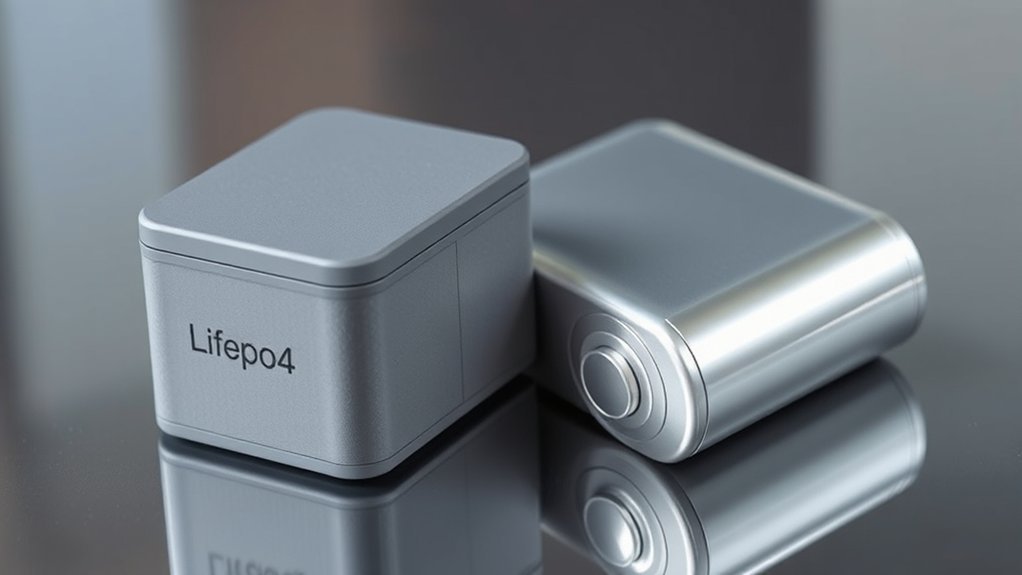
When comparing safety and thermal stability, we observe significant differences rooted in their chemical structures; LiFePO4 cells generally maintain more stable temperatures under stress. The safety mechanisms also vary, with LiFePO4 batteries inherently less prone to thermal runaway due to their robust chemistry. Analyzing these factors helps determine which battery type offers superior safety and stability in demanding applications.
Thermal Stability Differences
Thermal stability is a critical factor in evaluating the safety of battery chemistries, as it directly impacts their ability to resist overheating and thermal runaway. Lifepo4 batteries exhibit superior heat resistance, making them less prone to thermal runaway under high temperatures. In contrast, Li-ion batteries are more susceptible to thermal instability if damaged or improperly managed. To illustrate, consider these key differences:
- Lifepo4’s stable crystal structure reduces heat generation during operation.
- Li-ion batteries have a higher risk of overheating under stress.
- Lifepo4’s thermal runaway threshold is markedly higher, enhancing safety.
- Heat dissipation in Lifepo4 is more efficient, reducing failure risks.
This analysis underscores Lifepo4’s better thermal stability, translating into safer operation under extreme conditions.
Safety Mechanism Variations
Safety mechanisms in battery chemistries play an essential role in preventing failures and ensuring secure operation, especially under adverse conditions. Lifepo4 batteries inherently feature a more stable chemical structure, reducing risks of thermal runaway, which enhances safety and thermal stability. In contrast, Li-ion batteries rely heavily on sophisticated safety features like venting systems, thermal fuses, and shutdown separators, often incorporated during battery manufacturing. These safety mechanisms are vital for managing internal faults and preventing catastrophic failures. Additionally, safety certification standards vary between the two chemistries, with Lifepo4 generally meeting stricter standards due to its chemical stability. Overall, Lifepo4’s design offers a more intrinsic safety advantage, while Li-ion batteries depend on advanced safety mechanisms to mitigate risks associated with their higher energy density.
Comparing Lifespan and Durability: How Long Do Each Battery Type Last?
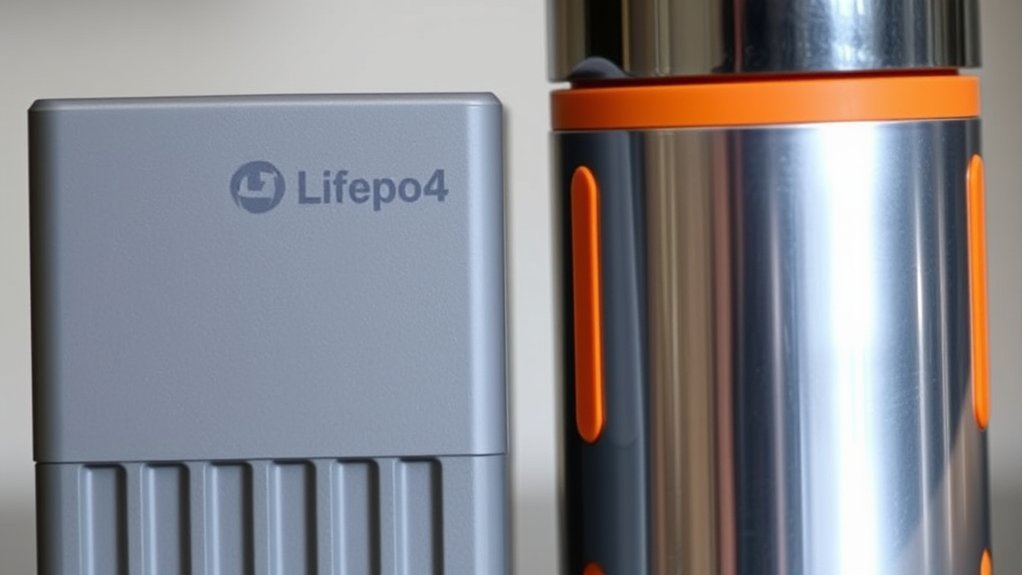
Lifepo4 and Li-ion batteries differ markedly in their lifespan and durability, primarily due to their chemical compositions and internal structures. Lifepo4 batteries typically endure more charge cycles, making them more suited for long-term use. Their robust chemical stability results from battery manufacturing processes that prioritize thermal stability and cycle life. In contrast, Li-ion batteries often have a shorter cycle life but are more widely available in various market segments. To visualize their durability:
- Lifepo4 batteries can sustain 2,000–5,000 charge cycles before significant capacity loss.
- Li-ion batteries generally last between 500–1,500 cycles.
- Market availability favors Li-ion due to extensive manufacturing infrastructure.
- Lifespan differences influence their suitability for stationary storage versus portable devices.
Cost Analysis: Which Battery Is More Affordable Initially and Over Time?
While Lifepo4 and Li-ion batteries differ considerably in their cycle life and durability, their initial costs and long-term affordability also vary markedly. Lifepo4 batteries generally have higher upfront costs due to more complex battery manufacturing processes and the use of specialized materials. However, their market availability is expanding, which can help reduce costs over time. Conversely, Li-ion batteries are more widely produced and often cheaper initially, benefiting from mature manufacturing techniques and established supply chains. Over time, Lifepo4’s longer lifespan and lower maintenance requirements can offset its higher initial investment, making it more economical in the long run. Ultimately, the total cost of ownership depends on application-specific factors, but Lifepo4’s durability may offer better value despite higher initial expenses.
Environmental Impact: Which Battery Is More Eco-Friendly?
We assess the environmental impact by examining raw material sustainability, recycling efforts, and the carbon footprint during production. Lifepo4 batteries generally use more abundant, less toxic materials, reducing ecological strain, while Li-ion batteries rely on scarce, conflict-prone resources. Understanding these factors helps determine which battery type offers a more sustainable and eco-friendly solution over its lifecycle.
Raw Material Sustainability
Which battery type presents a more sustainable choice when it comes to raw material extraction and environmental impact? Lifepo4 batteries generally benefit from more sustainable sourcing practices, utilizing abundant and less environmentally damaging raw materials. In contrast, Li-ion batteries often depend on ethically sourced cobalt and nickel, which can involve problematic mining practices. To visualize, consider:
- Renewable sourcing of lithium for Lifepo4, reducing reliance on finite resources.
- Ethical mining of cobalt and nickel in Li-ion production, addressing social and environmental concerns.
- The lower ecological footprint of Lifepo4’s raw materials, thanks to less intensive mining processes.
- The potential for more transparent supply chains in Lifepo4 manufacturing, supporting sustainable development.
Recycling and Disposal Efforts
Recycling and disposal efforts play a key role in determining the overall environmental impact of battery technologies. Lifepo4 batteries are generally easier to recycle due to their stable chemistry and less hazardous materials, reducing recycling challenges associated with battery manufacturing. In contrast, Li-ion batteries contain complex, often toxic, materials such as cobalt and nickel, which complicate recycling processes and pose environmental risks if improperly disposed of. Effective recycling methods are essential for minimizing waste and recovering valuable materials, but current infrastructure and technology gaps hinder widespread adoption. These challenges impact the eco-friendliness of each battery type, with Lifepo4’s simpler chemistry offering a more sustainable disposal profile. Ultimately, improved recycling efforts are necessary to mitigate environmental impacts and promote responsible battery lifecycle management.
Carbon Footprint During Production
The carbon footprint generated during the production of batteries considerably influences their overall environmental impact, with Lifepo4 and Li-ion batteries exhibiting distinct differences. During battery manufacturing, Lifepo4 cells typically require less energy input due to simpler chemical processes, resulting in a lower initial carbon footprint. In contrast, Li-ion batteries, with higher energy density, demand more intensive manufacturing, increasing emissions. Visualize these stages:
- Raw material extraction, involving mining and processing.
- Active material synthesis, where energy-intensive chemical reactions occur.
- Cell assembly, requiring significant energy for precision manufacturing.
- Final testing and packaging, contributing additional emissions.
These factors highlight how energy density and manufacturing complexity directly affect the environmental impact, making Lifepo4 batteries generally more eco-friendly during production.
Performance in Different Applications: Electric Vehicles vs. Portable Devices
Lifepo4 and Li-ion batteries exhibit distinct performance characteristics that influence their suitability for different applications, particularly in electric vehicles (EVs) versus portable devices. Lifepo4 batteries tend to be heavier, which impacts battery weight considerations in EV design, but they offer greater thermal stability and longer cycle life. In contrast, Li-ion batteries are lighter and provide higher energy density, making them ideal for portable devices where weight and size are critical. Additionally, Li-ion batteries offer more design flexibility due to their compact form factors, enabling integration into slim, lightweight devices. While Lifepo4’s weight can be a drawback for portable applications, its safety and longevity make it more suitable for EVs. Each chemistry’s performance profile directly influences application-specific performance and design choices.
How Do Charging and Maintenance Requirements Vary?
Charging and maintenance requirements differ considerably between Lifepo4 and Li-ion batteries, impacting their operational efficiency and lifespan. Lifepo4 batteries demand strict adherence to specific charging protocols, such as avoiding overcharge and maintaining voltage limits to prevent capacity fade. In contrast, Li-ion batteries are more sensitive to charging conditions, requiring precise voltage and current regulation to optimize longevity. Regarding maintenance routines, Lifepo4 batteries generally need minimal upkeep, mainly periodic balancing to ensure uniform cell voltage. Conversely, Li-ion batteries benefit from regular calibration and monitoring to prevent capacity loss due to aging. To visualize, consider:
- Lifepo4’s forgiving charge limits versus Li-ion’s delicate voltage thresholds
- The need for routine balancing in Lifepo4 batteries
- Li-ion’s susceptibility to capacity fade without careful monitoring
- Lifepo4’s reduced maintenance overhead for extended lifespan
Which Battery Is the Better Choice for Your Needs?
Choosing the right battery depends on your specific application, usage patterns, and operational priorities. Lifepo4 batteries excel in safety, longevity, and thermal stability, making them ideal for stationary storage and electric vehicles, especially as market adoption increases due to advancements in battery manufacturing. Conversely, lithium-ion batteries offer higher energy density and lighter weight, which benefit portable electronics and certain transportation needs, though they face challenges in longevity and thermal management. Market adoption trends influence availability and cost, shaping overall suitability. If your priority is safety, durability, and sustainability, Lifepo4 is often the better choice. For applications requiring maximum energy density and compactness, Li-ion batteries may be preferable. Ultimately, evaluating manufacturing quality, lifecycle costs, and operational demands guides the most suitable selection.
Frequently Asked Questions
Can Lifepo4 Batteries Handle High Discharge Rates Better Than Li-Ion Batteries?
We find that LiFePO4 batteries handle high discharge rates with better efficiency, reducing stress on the battery and extending lifespan, whereas Li-ion batteries often experience decreased discharge efficiency and accelerated wear under high load conditions, impacting longevity.
Are There Geographic Regions Where One Battery Type Is More Popular?
We see regional adoption shaping market trends like a river carving valleys; in Asia, Li-ion dominates due to consumer electronics, while Lifepo4 gains traction in Europe for industrial applications, reflecting regional preferences and technological priorities.
How Do Warranty Periods Compare Between Lifepo4 and Li-Ion Batteries?
We find that warranty longevity for Lifepo4 batteries often exceeds that of Li-ion ones, with regional preferences affecting warranty terms due to manufacturer policies, climate, and usage patterns, influencing consumers’ confidence and maintenance expectations across different areas.
What Are the Weight Differences for Similar Capacity Batteries?
We find Lifepo4 batteries are generally heavier for similar capacity, impacting portability. Their longer battery longevity and lower environmental impact make them more sustainable, though Li-ion batteries offer lighter weight advantages, influencing application-specific design choices.
Do Different Brands Affect the Performance Comparison Between the Two Batteries?
Think of batteries as athletes; brand reputation and manufacturing standards shape their performance. Different brands influence efficiency and longevity, making it essential to scrutinize quality factors when comparing Lifepo4 and Li-ion batteries for reliable, consistent results.
Conclusion
In conclusion, choosing between Lifepo4 and Li-ion batteries depends on your specific needs. For example, an electric vehicle fleet opting for Lifepo4 benefits from longer lifespan and enhanced safety, reducing long-term costs and environmental impact. Conversely, portable electronics favor Li-ion for its high energy density and lightweight design. Carefully evaluating application requirements, safety considerations, and lifecycle costs will guide you to the most suitable battery technology for your project.