When selecting batteries for marine applications, we recognize the critical importance of balancing performance, safety, and cost. LiFePO4 and lead-acid batteries each offer distinct advantages and drawbacks that can markedly impact your vessel’s reliability and efficiency. As technology advances, making an informed choice becomes increasingly complex. To navigate these options effectively, it’s essential to evaluate their long-term value and suitability for your specific marine needs.
Key Takeaways
- LiFePO4 batteries have higher energy density, longer lifespan, and faster charging compared to lead acid batteries.
- They are safer with lower risks of thermal runaway and require minimal maintenance.
- Although more expensive initially, LiFePO4 offers better long-term cost savings and environmental benefits.
- Compatibility with marine systems requires specific charging protocols and Battery Management Systems (BMS).
- Lead acid batteries are more affordable upfront but have shorter lifespan, higher environmental impact, and greater maintenance needs.
Understanding Marine Battery Basics: LiFePO4 vs Lead Acid
While both LiFePO4 and lead acid batteries serve as essential power sources for marine applications, understanding their fundamental differences is crucial for making an informed choice. Battery chemistry markedly influences performance, lifespan, and safety. LiFePO4 batteries utilize lithium iron phosphate chemistry, offering higher energy density, faster charging, and greater cycle life compared to traditional lead acid models. Lead acid batteries rely on lead plates and sulfuric acid, which are more prone to degradation over time and require regular maintenance. Market trends indicate a shift toward lithium-based solutions due to advancements in battery technology, improved safety standards, and decreasing costs. Recognizing these core distinctions helps marine operators evaluate durability, efficiency, and long-term cost-effectiveness, ensuring ideal power management tailored to specific vessel needs.
Key Factors to Consider When Choosing a Marine Battery
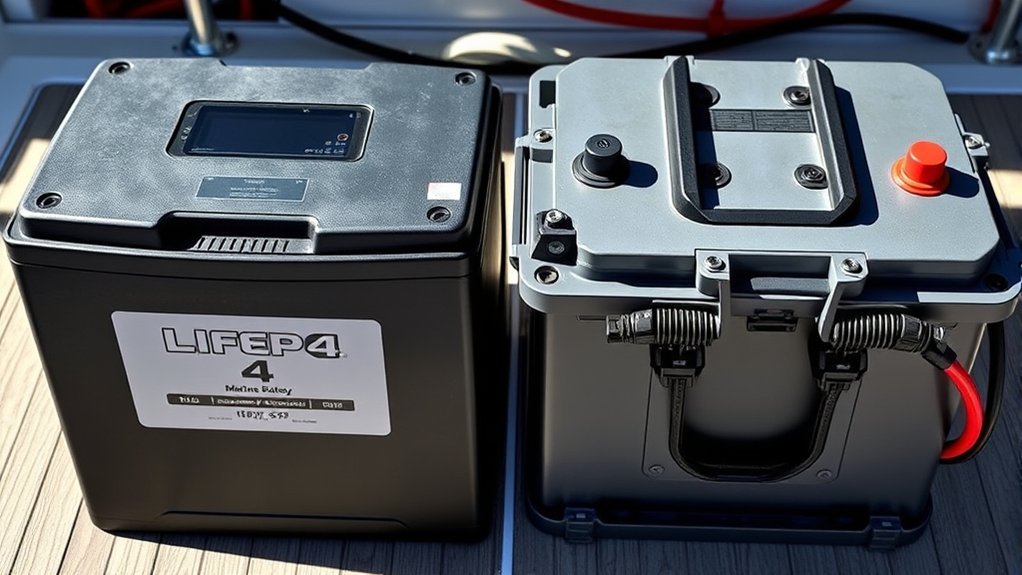
Selecting the appropriate marine battery requires a thorough evaluation of several critical factors that directly impact performance and reliability. Key considerations include safety, environmental impact, and maintenance requirements. Battery recycling is essential to guarantee environmentally responsible disposal, especially for lead-acid batteries. Corrosion prevention measures are crucial, as marine environments accelerate degradation, impacting longevity. Additionally, consider the following:
- Compatibility with existing electrical systems and charging infrastructure
- Resistance to vibration and temperature fluctuations
- Ease of maintenance, including cleaning and leak prevention
These factors influence overall durability and operational efficiency. Prioritizing batteries with effective corrosion prevention and clear recycling protocols helps guarantee long-term performance while minimizing environmental impact. Careful assessment of these elements guides a sound investment in marine power solutions.
Performance Differences: Power, Charging, and Longevity
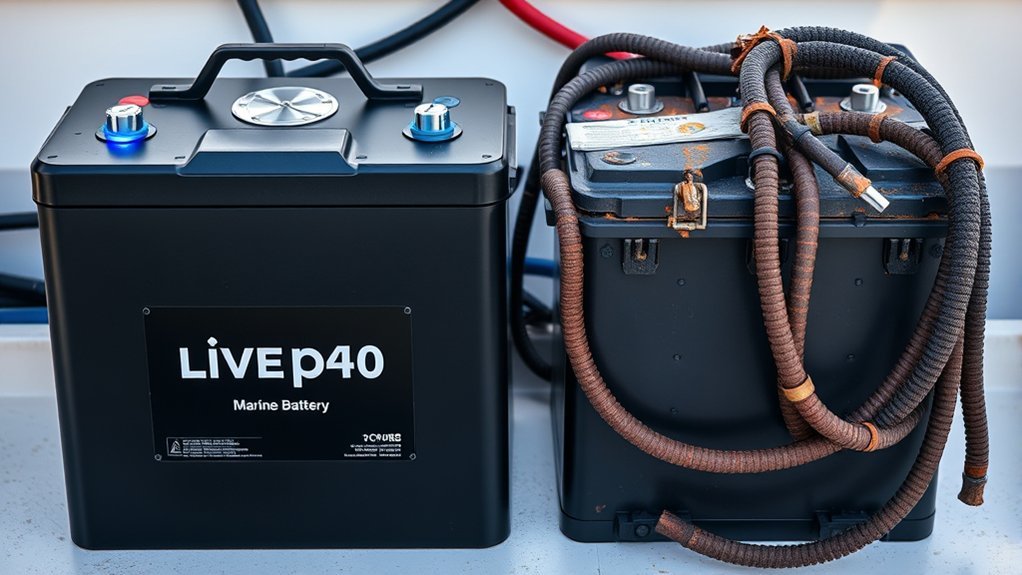
When comparing the performance of Lifepo4 and lead-acid batteries for marine applications, differences in power output, charging efficiency, and longevity become apparent. Lifepo4 batteries deliver higher, more consistent power due to superior chemical stability, supporting demanding marine systems. Their charging efficiency surpasses lead-acid, with faster, more complete charges that reduce downtime. Additionally, Lifepo4 batteries tend to have a longer cycle life, often exceeding 2000 cycles, which enhances overall longevity. Manufacturing processes for Lifepo4 involve more environmentally conscious materials and facilitate easier battery recycling, reducing ecological impact. Lead-acid batteries, by contrast, require more maintenance and exhibit faster capacity degradation. These performance distinctions highlight Lifepo4’s advantages in power reliability, charging speed, and lifespan, making them a more sustainable choice for marine use.
Safety and Maintenance: Which Battery Is Safer for Marine Use?
When evaluating safety for marine batteries, fire risk is a primary concern, with Lifepo4 batteries offering a lower propensity for thermal runaway compared to lead-acid cells. Maintenance requirements differ markedly; Lifepo4 batteries demand minimal upkeep, while lead-acid systems require regular checks and equalization. Handling safety concerns also vary, as lead-acid batteries contain corrosive acids and pose spill risks, whereas Lifepo4 batteries are more stable and less hazardous during operation and disposal.
Fire Risk Differences
LiFePO4 batteries generally present a lower fire risk compared to traditional lead-acid batteries, owing to their inherent chemical stability and robust safety features. Their stable chemistry reduces the likelihood of thermal runaway, a primary cause of battery fires. Additionally, LiFePO4 cells are less prone to overcharging and short circuits, enhancing safety protocols aboard vessels.
Key safety advantages include:
- Reduced risk of fire during mishandling or fault conditions
- Safer disposal and recycling processes aligned with environmental regulations
- Minimized hazards related to electrolyte leakage or explosion
These safety benefits contribute to overall marine safety. Moreover, the long-term environmental regulations surrounding battery recycling favor LiFePO4, which is less toxic and easier to manage sustainably.
Maintenance Requirements
Maintaining marine batteries safely requires understanding their specific upkeep needs, as improper maintenance can compromise safety and performance. Lithium iron phosphate (LiFePO₄) batteries generally demand less frequent maintenance, thanks to their stable chemistry and superior Voltage stability. Regular inspection ensures terminals are clean and secure, reducing the risk of corrosion. Lead acid batteries require more diligent attention, including checking electrolyte levels and equalizing charges to prevent sulfation. Both types should be properly recycled at the end of their lifecycle—battery recycling is essential for environmental safety and regulatory compliance. Proper maintenance minimizes hazards, ensures reliable power, and prolongs lifespan. While LiFePO₄ batteries are inherently safer due to their chemistry, consistent upkeep remains critical to maximizing safety and efficiency in marine applications.
Handling Safety Concerns
Is safety the primary concern when choosing a marine battery? Both Lifepo4 and lead acid batteries pose distinct safety considerations. Lifepo4 batteries are inherently safer due to their stable chemistry, reducing risks of thermal runaway. Lead acid batteries, however, contain sulfuric acid, requiring careful handling to prevent leaks and corrosive damage. Proper maintenance, including corrosion prevention, is essential for both types. Additionally, safe disposal and battery recycling are critical to minimize environmental hazards.
- Preventing acid leaks and corrosion in lead acid batteries
- Handling and storage protocols for safe operation
- Ensuring proper battery recycling to reduce environmental impact
Cost Analysis: Initial Investment and Long-Term Expenses
Although the initial purchase price of lithium iron phosphate (LiFePO4) batteries is considerably higher than that of traditional lead-acid batteries, their long-term financial benefits often offset this upfront cost. LiFePO4’s superior charging efficiency reduces energy waste, lowering operational expenses. Additionally, their extended cycle life minimizes replacement frequency, decreasing long-term expenses. When considering battery recycling, LiFePO4 batteries are more environmentally sustainable, potentially reducing disposal costs and supporting compliance with evolving regulations. While lead-acid batteries may seem more economical initially, their shorter lifespan and lower efficiency can lead to higher cumulative costs over time. Overall, the initial investment in LiFePO4 offers substantial savings through improved performance, decreased maintenance, and more responsible end-of-life management.
Environmental Impact and Sustainability of LiFePO4 and Lead Acid
While both LiFePO4 and lead-acid batteries have environmental footprints, LiFePO4 batteries generally present a more sustainable option due to their longer lifespan and lower toxicity. Their reduced environmental impact stems from fewer hazardous materials and improved energy efficiency. LiFePO4 batteries also align better with stringent environmental regulations, promoting safer disposal and recycling practices.
LiFePO4 batteries are more sustainable, with longer lifespans and lower toxicity than lead-acid options.
Key considerations include:
- *Battery recycling:* LiFePO4’s chemical stability simplifies recycling processes, minimizing toxic waste.
- *Toxicity levels:* Lead-acid batteries contain lead and sulfuric acid, posing significant health and environmental risks if improperly disposed of.
- *Lifecycle impact:* The extended lifespan of LiFePO4 reduces the frequency of replacements, decreasing waste and resource consumption over time.
Installation and Compatibility: Making the Switch or Choosing for Your Boat
Switching to LiFePO4 batteries or selecting them for a new marine setup requires careful consideration of installation requirements and compatibility with existing systems. These batteries often demand different charging protocols and BMS (Battery Management System) integration compared to lead-acid options, which can impact wiring and space constraints. Compatibility with marine battery regulations is essential to guarantee compliance and safety. Proper installation facilitates efficient performance and simplifies future battery recycling, supporting sustainable disposal practices. Additionally, verifying that the vessel’s electrical system can handle the higher voltage and current characteristics of LiFePO4 is vital. Addressing these factors facilitates a seamless shift, minimizes retrofit costs, and aligns with environmental standards, making the switch both technically sound and environmentally responsible.
Making the Right Choice: Which Marine Battery Suits Your Needs?
Choosing the right marine battery depends on evaluating your vessel’s power demands, operational conditions, and long-term maintenance considerations. Battery chemistry influences performance, lifespan, and safety, while adherence to marine regulations ensures compliance and safety standards. To determine the best fit, consider:
- Compatibility with existing electrical systems and charging infrastructure
- Compliance with marine regulations regarding battery safety and disposal
- Expected operational lifespan and maintenance requirements
Lifepo4 batteries offer superior durability and safety due to their stable chemistry, making them suitable for demanding environments. Conversely, lead-acid batteries are more traditional, cost-effective, and easier to service but require regular maintenance. Your decision should align with your vessel’s power needs, operational environment, and regulatory obligations, ensuring optimal performance and safety for your marine operations.
Frequently Asked Questions
How Do Lifepo4 and Lead Acid Batteries Perform in Cold Marine Environments?
In cold marine environments, Lifepo4 batteries maintain better charging efficiency and longer lifespan than lead-acid ones, which struggle with reduced performance and faster degradation. We recommend Lifepo4 for reliable, efficient power in cold conditions.
What Are the Warranty Differences Between Lifepo4 and Lead Acid Marine Batteries?
Think of warranties as a shield for your investment—Lifepo4 batteries often offer longer coverage, reflecting their superior battery lifespan and charging efficiency, whereas lead acid warranties tend to be shorter, emphasizing reliability but less longevity.
Can Lifepo4 Batteries Be Used With Existing Marine Electrical Systems?
Yes, Lifepo4 batteries integrate seamlessly with existing marine electrical systems, provided you consider proper battery maintenance and guarantee charging compatibility. We recommend verifying voltage and charging profiles to optimize performance and longevity, ensuring safe, efficient operation on your vessel.
How Do Recycling Processes Differ for Lifepo4 and Lead Acid Batteries?
We find that battery recycling for Lifepo4 involves extracting valuable metals like lithium and phosphorus with less environmental impact, whereas lead acid recycling primarily focuses on lead recovery, often resulting in higher environmental risks due to toxic components.
Are There Specific Regulations or Certifications for Marine Batteries?
We guarantee marine batteries meet strict certification standards like UL 1340 and IEC 62619, emphasizing battery safety and reliability. These regulations guarantee marine batteries adhere to rigorous safety protocols essential for safe, certified marine applications.
Conclusion
In conclusion, LiFePO4 batteries offer a compelling upgrade for marine applications, with over 2,000 charge cycles and a considerably lower fire risk compared to lead-acid options. Their superior lifespan and safety features make them a cost-effective, sustainable choice despite higher initial costs. As marine systems demand more reliable power, switching to LiFePO4 can enhance performance and safety, ensuring your vessel remains efficient and environmentally responsible for years to come.