Imagine a power backup system failing unexpectedly due to thermal runaway; this highlights the critical safety distinctions between LiFePO4 and traditional lithium-ion batteries. Both types pose risks, but understanding their underlying chemistry reveals why LiFePO4 batteries are inherently more stable. Examining these differences can help us determine which option better suits safety-critical applications, yet many overlook the nuances that make one safer than the other. The details behind their chemical structures and safety features are essential to making informed choices.
Key Takeaways
- Lifepo4 batteries have a more stable crystal lattice, reducing the risk of thermal runaway and fire compared to traditional lithium-ion batteries.
- Lithium-ion batteries are more prone to internal short circuits and electrolyte flammability, increasing fire and explosion hazards.
- Lifepo4’s robust chemical structure and high thermal stability enhance safety during overcharge, mechanical damage, or high temperatures.
- Proper handling, certification, and maintenance are critical for both types, but Lifepo4 generally requires fewer safety devices.
- Lifepo4 batteries offer easier recyclability and lower environmental hazards, contributing to safer disposal practices.
How Do Lifepo4 and Lithium-Ion Batteries Differ in Safety Features?
Although both Lifepo4 and lithium-ion batteries utilize lithium-based chemistries, their safety features differ markedly due to their distinct chemical compositions and structural properties. Lifepo4’s stable crystal lattice prevents thermal runaway, reducing risks associated with overheating and fires, which enhances battery longevity and minimizes environmental impact. In contrast, traditional lithium-ion batteries, with their more reactive cathodes, are more prone to thermal instability under stress. This structural stability in Lifepo4 also means fewer safety devices are necessary, decreasing complexity and potential failure points. Additionally, Lifepo4’s inherent stability contributes to a more environmentally friendly profile, as it produces fewer hazardous byproducts during disposal. Overall, these differences profoundly influence safety protocols, environmental considerations, and the longevity of each battery type.
What Are the Common Safety Risks Associated With Lithium-Ion Batteries?
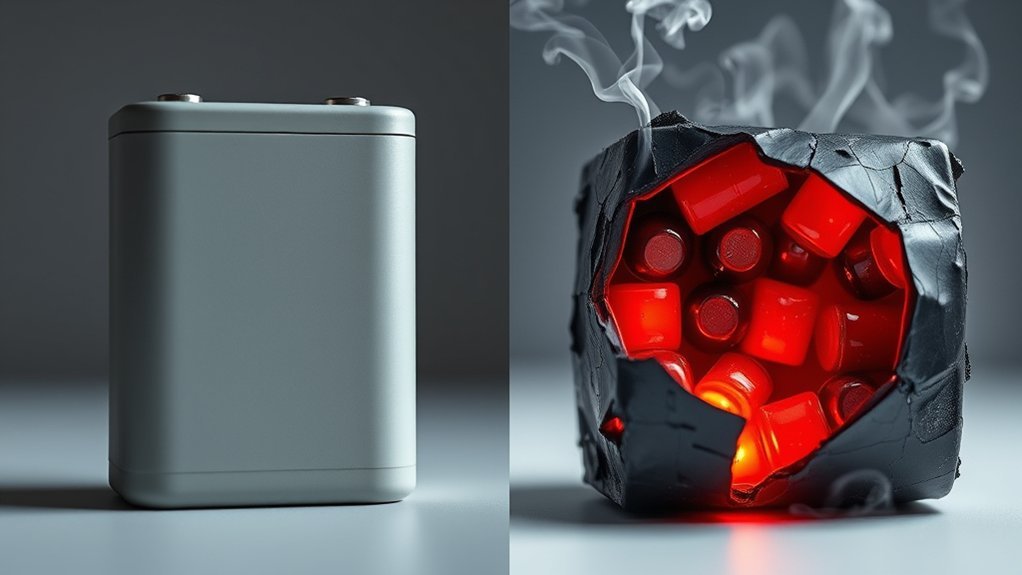
Lithium-ion batteries pose several safety risks primarily due to their highly reactive cathode materials and the potential for internal short circuits. These issues can lead to thermal runaway, fires, and explosions under stress or damage. The risk heightens during improper handling, manufacturing defects, or exposure to high temperatures. Additionally, unsafe battery recycling practices can release hazardous materials, impacting the environment.
| Risk Factor | Explanation |
|---|---|
| Internal Short Circuits | Cause localized heating, potential fire hazards |
| Thermal Runaway | Rapid temperature increase, possible explosion |
| Mechanical Damage | Compromises internal structures, risking failure |
| Overcharging | Excess heat, capacity degradation |
| Environmental Impact | Toxic materials from improper disposal |
How Does Lifepo4 Battery Chemistry Contribute to Its Safety?
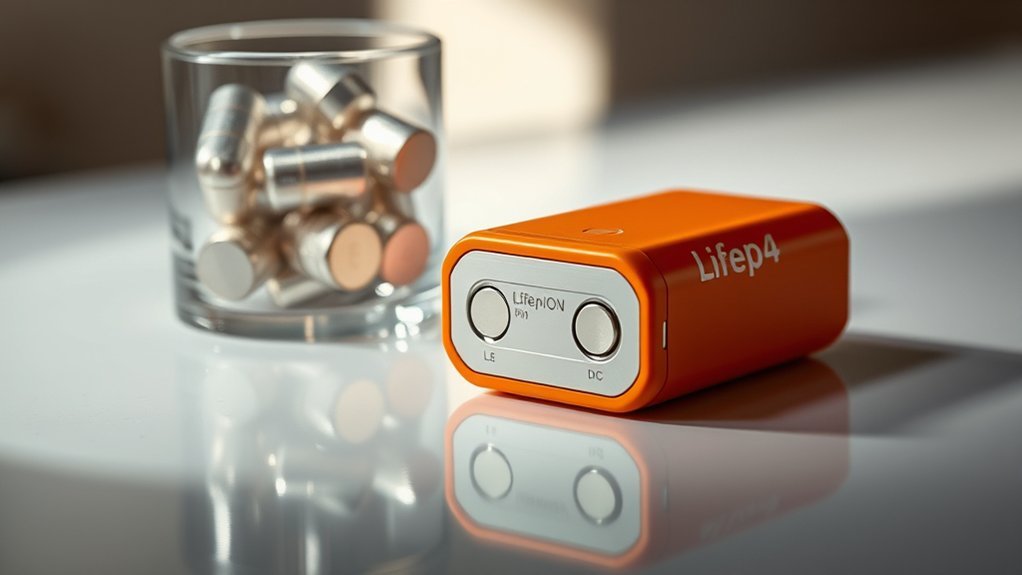
Lifepo4 batteries benefit from a chemically stable composition that minimizes the risk of unintended reactions under normal operating conditions. This stability considerably reduces the likelihood of thermal runaway, a primary safety concern in lithium-ion chemistries. Consequently, Lifepo4’s inherent chemical properties enhance its safety profile in demanding applications.
Stable Chemical Composition
The stable chemical composition of Lifepo4 batteries notably enhances their safety profile by minimizing the risk of thermal runaway and internal short circuits. This stability stems from the inherent chemical properties of the cathode material, which exhibits high chemical stability under various operating conditions. Lifepo4’s robust molecular structure ensures consistent material durability, reducing the likelihood of decomposition or degradation that could lead to safety hazards. Unlike other lithium-ion chemistries, Lifepo4 resists phase changes and maintains structural integrity even during overcharge or mechanical stress, thanks to its resilient crystal lattice. Consequently, the chemical stability and material durability of Lifepo4 batteries contribute considerably to their safer operation, providing a reliable, long-lasting energy source less prone to dangerous failures.
Reduced Thermal Runaway
Because of its unique chemical composition, Lifepo4 batteries inherently resist thermal runaway—a dangerous chain reaction that leads to rapid temperature escalation and potential fires. This stability stems from the strong covalent bonds in the phosphate group, which provide a higher thermal stability compared to other lithium chemistries.
- The solid electrolyte interface (SEI) layer remains stable, preventing internal short circuits
- Lower operating temperatures reduce the risk of overheating
- Enhanced manufacturing safety minimizes defect-induced failures
- Lifepo4’s stable chemistry simplifies battery recycling, reducing hazardous waste
- Reduced risk of thermal runaway diminishes fire hazards and safety concerns
These factors make Lifepo4 batteries safer, especially in high-demand applications, while also promoting safer manufacturing practices and responsible battery recycling.
What Are the Fire and Explosion Risks for Both Battery Types?
While lithium-ion batteries are generally safe when used properly, they pose notable fire and explosion risks due to their chemistry and thermal stability. The risk primarily arises from thermal runaway, which can ignite electrolyte flammable gases. Manufacturing safety protocols mitigate some hazards, but incidents can occur from manufacturing defects or physical damage. In contrast, LiFePO₄ (lifepo4) batteries exhibit enhanced thermal stability, reducing the likelihood of catastrophic failure. Fire risks increase when batteries undergo improper Battery recycling or are exposed to high temperatures. Both types require careful handling during recycling to prevent short circuits or mechanical damage that could trigger fires. Overall, understanding the specific chemical properties and strict manufacturing standards is essential to minimizing fire and explosion dangers for both battery types.
Which Battery Type Is Safer for Portable and Mobile Applications?
When evaluating safety for portable and mobile applications, the choice between lithium-ion and LiFePO₄ batteries hinges on their inherent thermal and chemical stability. LiFePO₄’s robust chemical structure offers superior thermal stability, reducing risk during accidental damage or overcharging. In contrast, traditional lithium-ion batteries pose higher risks of thermal runaway. Additionally, LiFePO₄ batteries are safer in terms of manufacturing safety, with less hazardous materials involved. Their recyclability is also more straightforward, reducing environmental hazards. Conversely, lithium-ion batteries require complex recycling processes to manage toxic electrolytes, increasing safety concerns. For portable and mobile use, the inherent stability, safer manufacturing practices, and environmentally friendly battery recycling of LiFePO₄ make it the safer choice overall.
How Do Temperature Tolerances Affect Battery Safety?
Temperature tolerances directly impact the safety and reliability of lithium-based batteries by influencing their chemical stability and thermal behavior. Proper temperature regulation is essential to prevent thermal runaway, which can lead to fires or explosions. Batteries operate best within specific temperature ranges; deviations can accelerate degradation or cause internal damage. Effective thermal management systems mitigate risks by dissipating excess heat during charging and discharging cycles. Lithium iron phosphate (Lifepo4) batteries generally tolerate higher temperatures better than traditional lithium-ion variants, reducing safety concerns in high-temperature environments. Conversely, inadequate thermal management or exposure to extreme cold can impair performance and increase failure risks. Maintaining strict temperature tolerances through advanced temperature regulation mechanisms is vital for ensuring safe operation and prolonging battery lifespan.
What Safety Certifications and Standards Should You Look For?
Ensuring a battery’s safety requires verifying that it meets recognized safety certifications and standards, which serve as benchmarks for quality, reliability, and risk mitigation. These certifications ensure the battery adheres to strict safety protocols, including manufacturing quality, thermal stability, and environmental impact. Look for certifications such as UL 2580, IEC 62133, and UN 38.3, which validate safety testing and hazard mitigation. Manufacturer certifications also indicate compliance with industry standards and reliable quality control. Additionally, standards promoting battery recycling practices ensure environmentally responsible disposal. Proper certification reduces risks like thermal runaway and fire hazards, providing peace of mind in critical applications. Ultimately, verifying these standards helps ensure both safety and sustainable lifecycle management of Lithium-ion and LiFePO4 batteries.
How Can Proper Usage and Maintenance Enhance Battery Safety?
Regular inspection practices enable early detection of potential issues such as swelling, corrosion, or electrolyte leakage that could compromise safety. Adhering to correct charging procedures guarantees batteries operate within safe voltage and current limits, minimizing thermal runaway risks. Proper storage techniques, including temperature control and avoiding physical damage, maintain battery integrity and prevent hazardous failures.
Regular Inspection Practices
To maximize battery safety, we must implement consistent inspection routines that identify early signs of deterioration or damage. Regular checks help maintain peak battery lifespan and ensure manufacturing quality standards are upheld. Early detection of issues such as swelling, corrosion, or discoloration prevents catastrophic failures. Additionally, inspecting terminal connections for tightness and corrosion ensures reliable performance. Monitoring for abnormal temperature rise during operation can reveal internal faults. Consistent visual assessments of casing integrity, electrolyte leaks, and venting systems are essential. These practices reduce the risk of thermal runaway and prolong battery life, ultimately safeguarding users and assets. Incorporating detailed inspections into maintenance schedules enhances our ability to detect potential safety hazards before they escalate.
Correct Charging Procedures
Proper charging procedures are critical for maintaining battery safety because they directly influence the overall health and stability of the cells. Overcharging or undercharging can lead to thermal runaway, capacity loss, and potential safety hazards. Using chargers designed specifically for Lifepo4 or lithium-ion chemistries, with appropriate voltage and current limits, guarantees safe, efficient charging cycles. Regularly monitoring voltage levels prevents overvoltage conditions, which can compromise cell integrity. Proper maintenance extends battery lifespan, reducing the frequency of replacements and supporting environmentally responsible practices like battery recycling. Minimizing premature disposal lessens environmental impact. Adhering to strict charging protocols not only enhances safety but also promotes sustainable usage, ensuring that batteries are safely managed throughout their lifecycle and reducing adverse effects on the environment.
Proper Storage Techniques
Implementing correct storage techniques is crucial for maintaining battery safety and longevity. Proper storage minimizes risks like thermal runaway and degradation, while also supporting sustainable practices such as battery recycling. To optimize safety, store batteries in a cool, dry environment, ideally between 0°C and 25°C, avoiding extreme temperatures that accelerate capacity loss. Maintain a partial charge—around 50-70%—to reduce stress and preserve cell integrity. Use fire-resistant containers for storage, especially if batteries are not in use for extended periods. Regularly inspect batteries for physical damage or corrosion, ensuring minimal environmental impact and facilitating safe battery recycling. Proper storage practices are essential for environmental safety, reducing the risk of hazardous leaks and supporting responsible disposal.
Frequently Asked Questions
Are Lifepo4 Batteries More Environmentally Friendly Than Lithium-Ion Batteries?
We find LiFePO4 batteries more environmentally friendly due to their longer lifespan and greater cost efficiency, reducing waste and resource consumption over time. Their stable chemistry also minimizes hazardous risks during manufacturing and disposal.
How Do Manufacturing Defects Impact the Safety of Each Battery Type?
Manufacturing defects can compromise safety by causing thermal runaway or leaks; both Lifepo4 and lithium-ion batteries benefit from rigorous defect prevention and high manufacturing quality, though Lifepo4’s stable chemistry inherently reduces risks associated with defects.
Can Lifepo4 Batteries Be Safely Used in High-Temperature Environments?
We can confidently say Lifepo4 batteries are thermally stable, even in high-temperature environments, considerably reducing fire risk. Their robust chemistry prevents thermal runaway, making them safer than other lithium-ion types under extreme heat conditions.
What Are the Long-Term Safety Considerations for Each Battery Type?
Like a fortress guarding its treasure, we see Lifepo4 batteries offering superior thermal stability and fewer chemical hazards long-term, unlike lithium-ion batteries, which face risks from thermal runaway and chemical degradation, demanding vigilant monitoring and proper maintenance.
How Do Recycling Processes Differ Between Lifepo4 and Lithium-Ion Batteries?
We find that battery recycling for LiFePO4 is more straightforward, with less hazardous materials, reducing environmental impact, while lithium-ion recycling involves complex processes to safely handle toxic electrolytes, making LiFePO4 more environmentally friendly overall.
Conclusion
In summary, LiFePO4 batteries provide a considerably safer alternative to traditional lithium-ion cells, with studies showing they’re up to 70% less prone to thermal runaway. Their stable chemistry and robust molecular bonds reduce risks of fires and explosions, especially in portable applications. By understanding these safety features and adhering to proper handling standards, we can maximize their benefits and guarantee safer energy storage solutions for critical and mobile uses.