When comparing battery technologies, the question isn’t just about initial cost but about the long-term efficiency and reliability. We often find that LiFePO4 batteries outperform lead acid counterparts in key performance metrics, yet their higher upfront price can obscure the true value they provide over time. Understanding these differences requires a detailed look at energy density, lifespan, and operational costs—factors that can profoundly influence your choice and project success.
Key Takeaways
- LiFePO4 batteries have higher energy density, enabling more efficient power storage in smaller, lighter forms compared to lead acid.
- They offer a longer cycle life, reducing replacement frequency and improving overall efficiency over time.
- LiFePO4 supports deeper discharges with less capacity fade, enhancing energy utilization efficiency.
- They require less maintenance and have better temperature stability, maintaining efficiency across various conditions.
- Although initially more expensive, LiFePO4’s lower long-term costs and environmental benefits make it a more efficient choice overall.
How Do LiFePO4 and Lead Acid Batteries Differ in Energy Density?
While both LiFePO4 and lead acid batteries serve as common energy storage solutions, they differ markedly in their energy density, which directly impacts their performance and application. LiFePO4 batteries offer substantially higher energy density, enabling more power storage in a smaller, lighter form factor. This efficiency translates into better performance for applications requiring compact, high-capacity systems. Conversely, lead acid batteries contain less active material per unit volume, resulting in lower energy density and bulkier designs. From an environmental perspective, higher energy density in LiFePO4 batteries reduces the number of units needed, decreasing the environmental impact associated with battery recycling. Additionally, LiFePO4’s chemistry promotes safer disposal and recycling processes, further mitigating environmental concerns linked to battery lifecycle management.
Comparing Lifespan and Durability of Lithium Iron Phosphate and Lead-Acid Batteries

The lifespan and durability of batteries considerably influence their overall value and suitability for various applications. Lithium Iron Phosphate (LiFePO4) batteries typically last over 2,000 charge cycles, offering superior longevity compared to lead-acid batteries, which average around 500-1,000 cycles. This extended lifespan reduces the frequency of replacements, impacting battery recycling efforts and lowering environmental impact. LiFePO4’s stable chemistry enhances durability, resisting thermal runaway and degradation over time. In contrast, lead-acid batteries are more prone to capacity loss and electrolyte degradation, diminishing their lifespan. The longer cycle life of LiFePO4 batteries results in fewer disposal concerns and more sustainable use, emphasizing their environmental benefits. Overall, durability and lifespan are key factors in evaluating long-term cost-effectiveness and environmental considerations.
How Do Charging and Discharging Rates Impact Battery Efficiency?
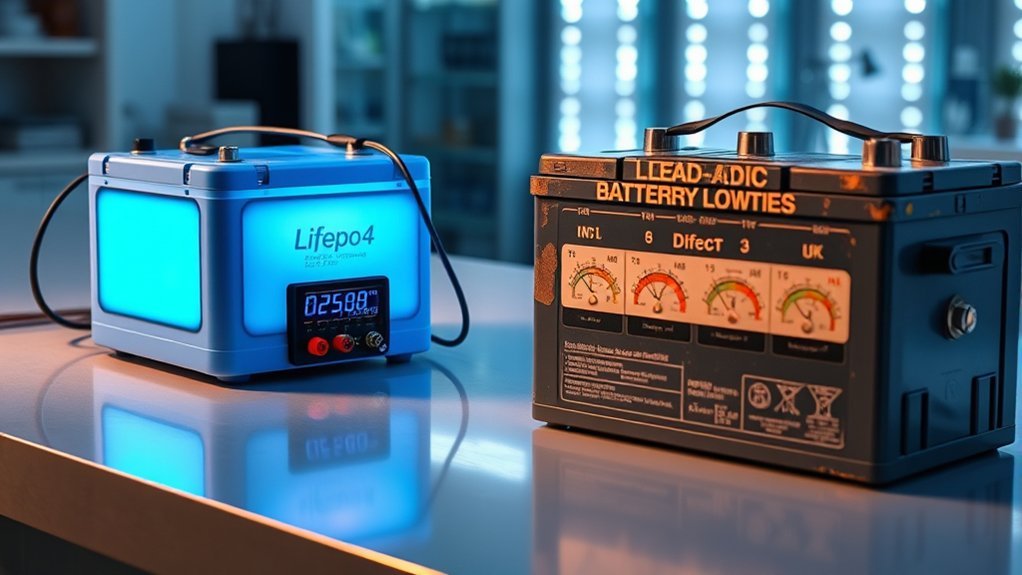
Charging and discharging rates directly influence the efficiency and longevity of batteries by affecting internal resistance, heat generation, and overall system stability. Proper charging protocols are essential; exceeding recommended rates can lead to increased internal resistance, degraded cycle life, and reduced capacity. Fast discharge cycles generate excessive heat, accelerating electrode wear and diminishing efficiency. Lithium Iron Phosphate (LiFePO4) batteries tolerate higher charge and discharge rates better than lead-acid batteries, but both are impacted by these rates. Key considerations include:
- Faster charging can shorten cycle life if protocols aren’t ideal
- High discharge rates increase heat, reducing overall efficiency
- Best rates balance performance with longevity by minimizing stress on the system
Understanding these factors helps maximize battery performance and lifespan across different chemistries.
Which Battery Type Offers Better Cost-Effectiveness Over Time?
When evaluating cost-effectiveness, we consider both initial purchase prices and ongoing maintenance expenses. Lifepo4 batteries typically have higher upfront costs but lower long-term maintenance, whereas lead acid batteries are cheaper initially but incur higher replacement and upkeep costs over time. Analyzing these factors helps determine which option delivers better value throughout its lifespan.
Initial Purchase Costs
Is the initial investment in Lifepo4 batteries justified when compared to lead acid options? While Lifepo4 batteries typically have higher upfront costs, their durability reduces the frequency of replacements, translating to lower lifecycle expenses. This cost advantage is compounded by their superior efficiency and longer lifespan, which mitigate the initial expense over time. Additionally, Lifepo4 batteries offer environmental benefits through easier battery recycling and reduced environmental impact during disposal, unlike lead acid batteries that involve hazardous materials.
- Higher initial costs offset by fewer replacements
- Longer lifespan enhances overall cost-effectiveness
- Better environmental impact due to eco-friendly recycling processes
Long-Term Maintenance Expenses
While the initial purchase cost is a significant factor, evaluating long-term maintenance expenses offers a clearer view of overall cost-effectiveness. Lifepo4 batteries generally incur lower upkeep costs due to their longer cycle life and reduced need for replacement. This translates to fewer battery recycling events over time, minimizing environmental impact and disposal costs. In contrast, lead-acid batteries require regular maintenance, such as water refilling and equalization charges, increasing operational expenses and environmental footprint. Additionally, the shorter lifespan of lead-acid batteries leads to more frequent replacements, escalating costs and waste. Consequently, Lifepo4 batteries tend to be more economical over the long term, as their durability reduces both maintenance and environmental concerns, making them a smarter choice for sustainable, cost-effective energy storage.
How Do Temperature Tolerances Affect LiFePO4 and Lead Acid Performance?
Temperature tolerances profoundly influence the performance and longevity of both LiFePO₄ and lead-acid batteries, as each chemistry responds differently to thermal variations. LiFePO₄ batteries exhibit higher temperature stability, enabling more consistent operation across varied environments. Thermal management is critical for lead-acid batteries, which are more susceptible to temperature extremes, risking capacity loss or damage. Proper thermal regulation guarantees peak efficiency and prolongs lifespan. Key considerations include:
- Maintaining peak operating temperatures to prevent capacity degradation.
- Recognizing that LiFePO₄ handles temperature fluctuations better than lead-acid.
- Implementing effective thermal management systems to ensure consistent temperature stability.
Understanding these differences helps optimize battery performance and lifespan under diverse environmental conditions.
What Factors Should You Consider When Choosing Between LiFePO4 and Lead Acid Batteries?
When choosing between LiFePO4 and lead acid batteries, cost and budget constraints are primary considerations, as initial prices and long-term expenses vary markedly. We also assess lifespan and durability, since these factors influence total cost of ownership and maintenance requirements. Understanding how these elements align with our application needs ensures an informed and effective choice.
Cost and Budget
Choosing between LiFePO4 and lead-acid batteries requires careful consideration of several cost-related factors. Initial purchase price is significant, but long-term expenses often outweigh upfront costs. LiFePO4 batteries, despite higher initial costs, typically offer lower maintenance and replacement expenses, reducing overall lifecycle costs. When evaluating budget, consider:
- Total Cost of Ownership: including installation, maintenance, and replacement, influenced by efficiency and lifespan.
- Battery recycling and environmental impact: LiFePO4 batteries are more environmentally friendly and easier to recycle, potentially lowering disposal costs.
- Efficiency and performance: higher efficiency reduces energy loss, translating into operational savings over time.
Analyzing these factors helps determine the most cost-effective solution aligned with environmental and financial priorities.
Lifespan and Durability
Evaluating lifespan and durability requires examining the intrinsic characteristics and operational resilience of LiFePO4 and lead-acid batteries. LiFePO4 batteries typically offer longer cycle life, often exceeding 2,000 cycles, compared to lead-acid’s 500-1,000 cycles. This extended durability reduces frequency of replacement and minimizes environmental impact, especially considering battery recycling challenges. Lead-acid batteries are more prone to capacity fade and require regular maintenance, affecting overall lifespan. The table below summarizes key durability factors:
| Factor | LiFePO4 | Lead Acid |
|---|---|---|
| Cycle life | >2000 cycles | 500-1000 cycles |
| Maintenance | Minimal | Regular watering/venting |
| Environmental impact | Lower (recyclable) | Higher (hazardous waste) |
| Resilience | Better at deep discharges | Less resilient |
Frequently Asked Questions
How Do Recycling and Environmental Impacts Differ Between Lifepo4 and Lead Acid Batteries?
We find Lifepo4 batteries have longer lifespans, simplifying recycling processes and reducing environmental impact. Lead acid batteries, however, require more resource-intensive recycling, producing hazardous waste, which increases their overall ecological footprint over their shorter lifespan.
What Safety Considerations Are Unique to Each Battery Type?
We consider safety by examining battery lifespan and cost efficiency, recognizing that LiFePO4’s thermal stability reduces fire risk, while lead acid’s gas emission hazards demand careful venting, ensuring safe operation through proper handling and maintenance.
How Do Maintenance Requirements Compare for Lifepo4 and Lead Acid Batteries?
We find Lifepo4 batteries require minimal maintenance, extending battery lifespan and reducing costs over time, unlike lead acid batteries which need regular watering, equalization, and cleaning, making Lifepo4 more cost-effective in an all-encompassing cost analysis.
Can Lifepo4 Batteries Be Used Interchangeably With Lead Acid Systems?
Think of Lifepo4 batteries as a new chapter—they can’t seamlessly replace lead acid systems due to differing voltage, charging, and safety protocols. While they offer longer lifespan and better cost comparison, system modifications are essential for interchangeability.
What Is the Impact of Battery Size and Weight on Installation Options?
Battery size and weight markedly impact installation options, as larger capacities require more space and heavier batteries demand robust support structures. Weight considerations influence placement flexibility, while compact, lightweight Lifepo4 batteries optimize capacity-to-weight ratios for efficient system integration.
Conclusion
In conclusion, LiFePO4 batteries outperform lead acid counterparts in efficiency, longevity, and temperature resilience, making them a smart choice for long-term applications. Despite initial costs being higher, their superior cycle life—often exceeding 2,000 cycles—reduces replacement frequency and operational expenses. This statistic highlights how investing in LiFePO4 batteries can lead to substantial savings over time, especially in demanding environments where performance consistency and durability are critical.