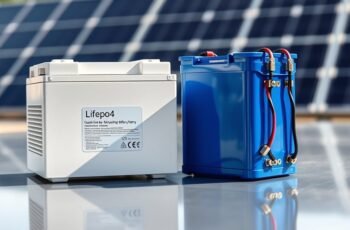
When comparing LiFePO4 and lead-acid batteries, understanding their maintenance requirements is vital for informed decision-making. While lead-acid batteries demand regular checks, electrolyte management, and careful charging protocols, LiFePO4 units are designed for minimal upkeep due to their stable chemistry. The differences in maintenance complexity not only influence long-term operational costs but also impact overall reliability. To fully grasp these implications, it’s essential to analyze each system’s specific procedures and long-term performance factors.
Key Takeaways
- LiFePO4 batteries require minimal maintenance, avoiding water refilling and regular equalization, unlike lead-acid batteries.
- Lead-acid batteries need regular inspections, terminal cleaning, water top-ups, and scheduled equalization charges.
- LiFePO4 batteries tolerate broader temperature ranges and have longer lifespans with fewer interventions.
- Lead-acid batteries demand precise charging protocols and regular monitoring to prevent damage and capacity loss.
- Overall, LiFePO4 offers lower ongoing maintenance costs and environmental impact compared to lead-acid options.
How Do LiFePO4 and Lead-Acid Batteries Differ in Maintenance Needs?
While both LiFePO4 and lead-acid batteries serve similar functions, their maintenance requirements differ markedly due to their distinct chemical and structural characteristics. LiFePO4 batteries exhibit minimal maintenance, thanks to their stable chemistry, which reduces risks associated with electrolyte degradation. Unlike lead-acid types, they do not require regular water refilling, and their lifespan isn’t heavily impacted by shallow discharges. Proper storage temperature is critical for both types; LiFePO4 batteries perform most effectively within a broader temperature range, whereas lead-acid batteries are highly sensitive, risking capacity loss if stored improperly. Additionally, battery recycling protocols differ substantially: LiFePO4 batteries contain less hazardous materials, simplifying recycling processes, while lead-acid batteries involve more complex procedures due to toxic lead and acid components.
What Are the Regular Maintenance Tasks for Lead-Acid Batteries?
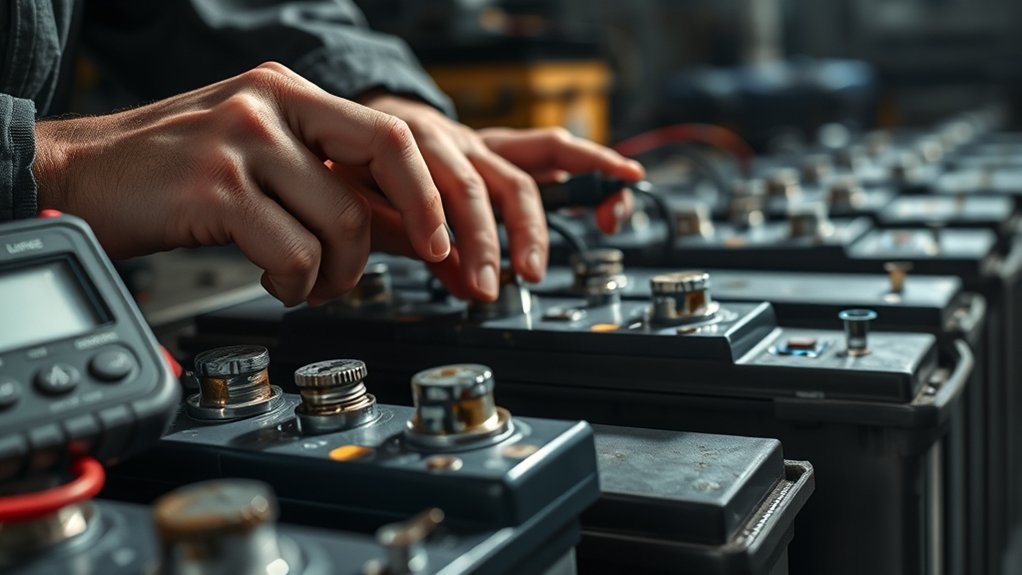
Regular maintenance of lead-acid batteries involves a series of specific tasks aimed at prolonging lifespan and guaranteeing peak performance. We focus on regular inspection, fluid level checks, and cleaning terminals to prevent corrosion. Maintaining proper electrolyte levels minimizes sulfation, maximizing battery lifespan and reducing environmental impact. It’s essential to top up with distilled water only when necessary, avoiding overfilling. Additionally, equalization charges help balance cells, preventing capacity loss. Monitoring voltage and specific gravity provides insights into battery health. Neglecting these tasks accelerates degradation and increases environmental impact due to early disposal.
| Maintenance Task | Purpose |
|---|---|
| Inspect terminals and cables | Prevent corrosion, guarantee good conductivity |
| Check electrolyte levels | Maintain maximized chemical balance |
| Clean terminals | Reduce resistance and corrosion |
| Perform equalization charge | Balance cells, extend lifespan |
Why Do LiFePO4 Batteries Require Less Upkeep?
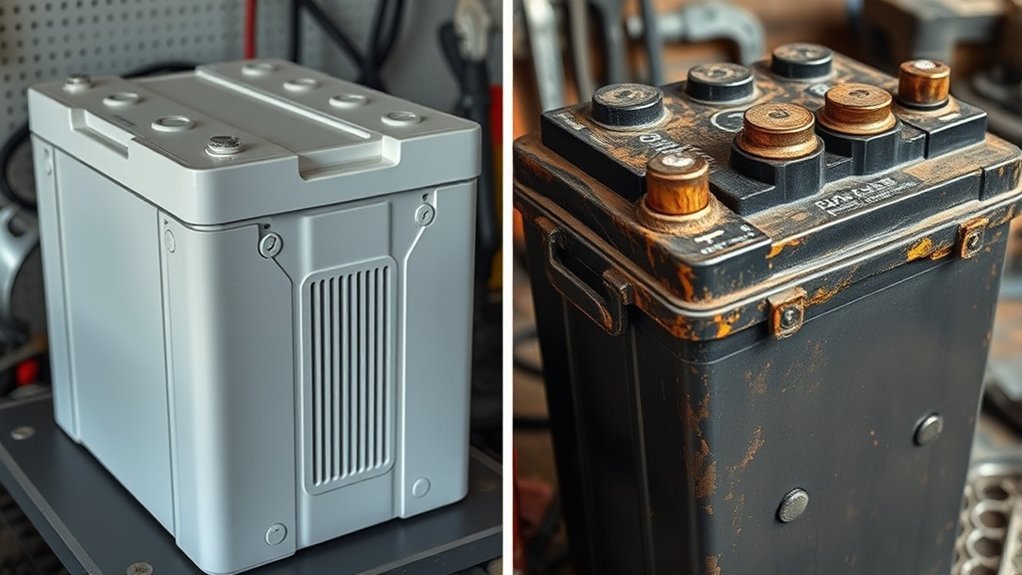
LiFePO4 (lithium iron phosphate) batteries require considerably less upkeep than lead-acid counterparts primarily because of their chemical stability and structural design. Their robust chemistry minimizes degradation over time, leading to an extended battery lifespan with fewer maintenance interventions. The stable cathode chemistry reduces the risk of thermal runaway and sulfation, common issues in lead-acid batteries that necessitate regular equalization and watering. Additionally, LiFePO4 batteries do not require water top-ups, simplifying maintenance routines. From an environmental impact perspective, their longer lifespan reduces waste and resource consumption. This durability results in fewer replacements, lowering environmental burden. Overall, the inherent stability and design efficiencies of LiFePO4 batteries translate into a maintenance profile that’s more sustainable and less labor-intensive.
How Do Charging and Equalization Processes Vary Between the Two?
Charging and equalization processes differ markedly between LiFePO4 and lead-acid batteries due to their distinct electrochemical properties. For LiFePO4, charging protocols emphasize constant current/constant voltage (CC/CV) methods, with minimal need for equalization, as these batteries are less prone to sulfation and stratification. In contrast, lead-acid batteries require specific charging protocols to prevent sulfation buildup, involving regular equalization techniques—controlled overcharging sessions that balance cell voltages and remove sulfate crystals. Lead-acid batteries demand careful monitoring during equalization to avoid overcharging damage. Conversely, LiFePO4 batteries typically do not necessitate frequent equalization, simplifying maintenance. These fundamental differences in charging and equalization highlight the significance of tailored protocols to extend battery life and guarantee excellent performance for each type.
Which Battery Type Is Easier to Maintain for Long-Term Use?
When evaluating long-term maintenance, LiFePO4 batteries generally require less ongoing attention compared to lead-acid counterparts. Their superior chemical stability results in minimal maintenance, reducing the need for regular watering or equalization. LiFePO4’s battery lifespan is especially longer, often exceeding 2,000 cycles, which diminishes replacement frequency and associated upkeep. Conversely, lead-acid batteries demand routine checks, fluid top-offs, and careful equalization, increasing maintenance complexity. Regarding cost comparison, while LiFePO4 batteries have a higher upfront cost, their durability and reduced maintenance needs lower total ownership expenses over time. This makes LiFePO4 more suitable for long-term use, where minimal intervention and longevity are priorities. Overall, LiFePO4’s ease of maintenance offers significant advantages for sustained, reliable operation.
What Should You Consider When Choosing Between LiFePO4 and Lead-Acid for Your Maintenance Preferences?
Choosing between LiFePO4 and lead-acid batteries hinges on evaluating your specific maintenance preferences and operational priorities. Key factors include battery lifespan, which profoundly influences maintenance frequency and replacement costs; LiFePO4 batteries generally offer a longer lifespan—often over 2000 cycles—reducing long-term maintenance efforts. Additionally, environmental impact plays a vital role; LiFePO4 batteries produce fewer hazardous emissions and are more environmentally friendly during disposal, whereas lead-acid batteries require careful handling due to toxic materials. Consider how each type aligns with your maintenance capabilities, including charging, watering, and recycling procedures. Ultimately, assessing these factors helps determine which battery type minimizes ongoing maintenance burdens while supporting sustainability goals.
Frequently Asked Questions
How Does Temperature Affect the Maintenance of Each Battery Type?
Temperature impacts both batteries’ maintenance through thermal management and charging protocols; high temps accelerate degradation, while cold temps reduce capacity. Proper thermal regulation guarantees longevity, with Lifepo4 requiring less stringent control than lead acid, simplifying maintenance protocols.
Are There Specific Storage Conditions That Benefit Lifepo4 Batteries?
We find that storing Lifepo4 batteries in cool, dry environments with stable temperatures optimizes lifespan, emphasizing proper charging protocols and battery recycling practices. This prevents capacity loss and enhances overall safety during storage and long-term use.
What Safety Precautions Are Necessary During Maintenance?
During maintenance, we follow strict safety protocols, including proper battery disposal and adherence to charging protocols, to prevent hazards like thermal runaway. We wear protective gear and guarantee proper ventilation to mitigate risks from chemical exposure.
How Often Should Battery Terminals Be Inspected and Cleaned?
We inspect and clean battery terminals regularly, typically every 3 to 6 months, to prevent terminal corrosion. Consistent cleaning frequency guarantees ideal conductivity and prevents issues, acting like a guardrail maintaining smooth electrical flow and extending battery life.
Can Maintenance Routines Impact Battery Lifespan Significantly?
Yes, maintenance routines considerably impact battery lifespan; proper charging protocols prevent overcharging, while regular battery recycling guarantees environmental safety and ideal performance, reducing degradation. Consistent maintenance minimizes capacity loss and extends operational life for both Lifepo4 and lead-acid batteries.
Conclusion
In conclusion, LiFePO4 batteries offer a compelling advantage with their minimal maintenance requirements, reducing both labor and long-term costs. While some may argue that initial investment is higher, the extended lifespan and lower upkeep complexity justify the expense—particularly for those prioritizing reliability and operational efficiency. Ultimately, choosing LiFePO4 aligns with a strategic focus on durability and reduced maintenance, making it the more sophisticated, future-proof option for both technical and practical considerations.