Did you know that despite their higher upfront costs, LiFePO4 batteries can deliver a more consistent power output and longer cycle life than traditional lead-acid options? This difference in technology markedly impacts overall performance, maintenance, and safety. As we compare these two types for RV applications, understanding their core distinctions can influence your long-term investment. Let’s explore which battery type truly aligns with your needs and why.
Key Takeaways
- LiFePO4 offers higher cycle life, faster charging, and greater efficiency compared to lead-acid batteries for RV applications.
- Lead-acid batteries are more affordable initially but require more maintenance and replacements over time.
- LiFePO4 is safer, with lower risk of thermal runaway and electrolyte leaks, making it more suitable for RV use.
- Lead-acid batteries emit hydrogen gas and need venting, while LiFePO4 batteries are maintenance-free and environmentally friendlier.
- Although costlier upfront, LiFePO4 provides better long-term value due to durability and lower operational costs.
How Do Lifepo4 and Lead Acid Batteries Differ in Technology and Performance?
While both LiFePO4 (lithium iron phosphate) and lead-acid batteries serve as energy storage solutions for RVs, their underlying technologies differ markedly, impacting performance and longevity. LiFePO4 batteries utilize lithium-based cells with a stable chemistry, enabling higher cycle life and faster charging rates. Lead-acid batteries rely on lead plates submerged in sulfuric acid, which limits their lifespan and efficiency. From an environmental impact perspective, lithium batteries are more sustainable due to advancements in battery recycling, reducing toxic waste. Conversely, lead-acid batteries pose greater environmental concerns due to the hazardous nature of lead and acid disposal. These technological differences influence not only performance metrics but also the sustainability considerations vital for environmentally-conscious RV owners.
Which Battery Type Offers Better Cost-Effectiveness for RV Use?
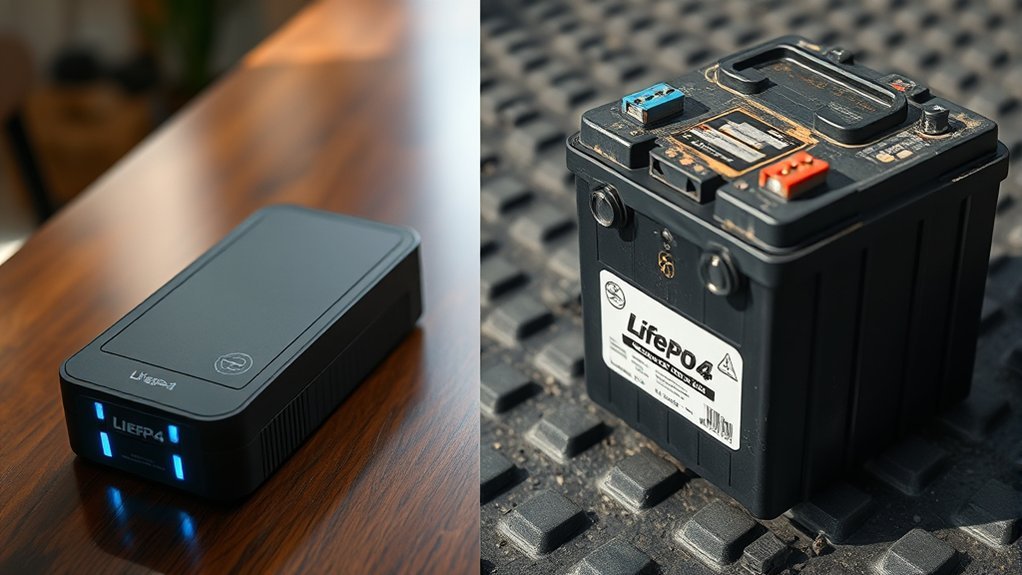
Evaluating the cost-effectiveness of LiFePO4 versus lead-acid batteries for RV use requires examining both upfront expenses and long-term operational costs. LiFePO4 batteries typically have a higher initial purchase price but offer greater efficiency, longer lifespan, and lower maintenance costs. Their lighter battery weight reduces strain on the RV’s structure and simplifies installation. From an environmental perspective, LiFePO4 batteries have a lower environmental impact due to fewer hazardous materials and longer service life, reducing waste and replacement frequency. Conversely, lead-acid batteries are cheaper initially but require more frequent replacements and maintenance, increasing total ownership costs over time. Overall, despite a higher upfront investment, LiFePO4 batteries often prove more cost-effective in the long run because of their durability, reduced environmental footprint, and operational efficiency.
How Do Lifepo4 and Lead Acid Batteries Compare in Longevity and Maintenance?
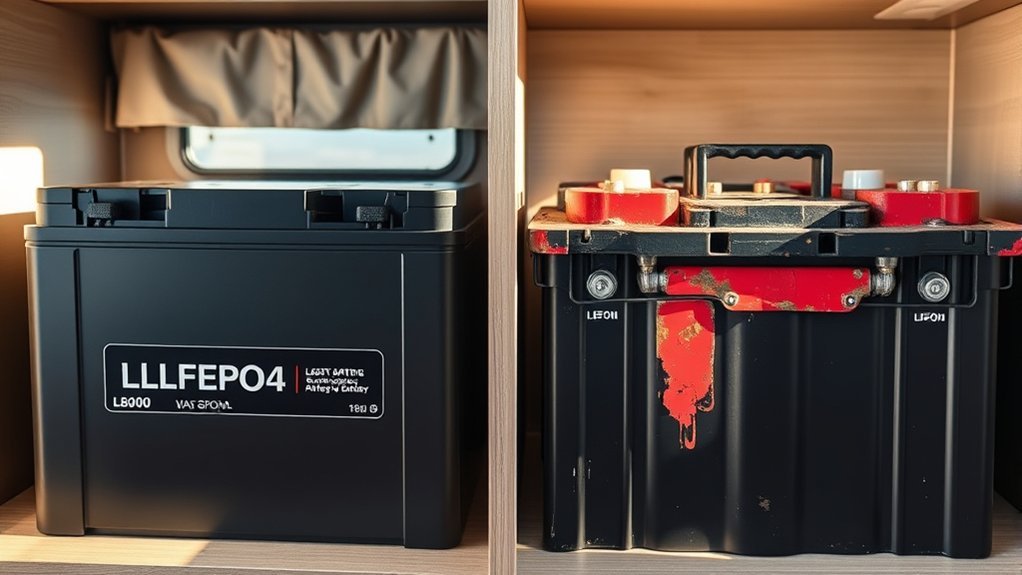
Lifepo4 and lead acid batteries differ considerably in lifespan and maintenance demands, impacting long-term reliability for RV use. Lifepo4 cells generally offer a longer cycle life with less frequent capacity degradation, whereas lead acid batteries require more regular maintenance to sustain performance. Analyzing these factors helps determine the most cost-effective and durable choice for RV owners.
Battery Lifespan Differences
Lifepo4 batteries generally outperform lead-acid batteries regarding longevity and maintenance requirements, making them a more durable choice for RV applications. They typically last 2-3 times longer, often exceeding 2000 charge cycles, compared to 500-1000 cycles for lead-acid. This extended lifespan reduces replacement frequency, positively impacting battery recycling efforts and lowering overall environmental impact. Notable differences include:
- Higher cycle life translates to fewer replacements and less waste
- Reduced capacity degradation over time ensures consistent performance
- Longer lifespan decreases the environmental footprint associated with manufacturing and disposal
- Better resistance to deep discharges minimizes battery damage
Maintenance Requirements Comparison
While both battery types require some level of maintenance, their approaches and ongoing needs differ considerably. Lead acid batteries demand regular checks of water levels, terminal cleaning, and equalization charges to prevent sulfation and capacity loss. Conversely, Lifepo4 batteries are virtually maintenance-free, with no water additions or equalization needed, thanks to their stable chemistry. From an environmental perspective, Lifepo4’s longer lifespan reduces the frequency of battery recycling, minimizing waste and environmental impact. Lead acid batteries, however, typically require more frequent recycling due to shorter service lives and the presence of toxic lead and acid components. Overall, Lifepo4 batteries offer a lower-maintenance profile and a more sustainable lifecycle, making them an increasingly attractive option for RV owners prioritizing longevity and environmental responsibility.
Which Battery Provides Greater Efficiency and Fast Charging?
When comparing efficiency and fast charging, Lifepo4 batteries typically outperform lead acid counterparts due to their lower internal resistance and optimized chemical composition. This results in quicker recharge times and more consistent power delivery under load. Analyzing these factors helps determine which battery type better suits the demanding needs of RV applications.
Charging Speed Differences
Although both Lifepo4 and lead acid batteries can be charged efficiently, their charging speed characteristics differ markedly. Lifepo4 batteries typically support higher charge rates, enabling faster replenishment of capacity without risking damage. In contrast, lead acid batteries often require slower charging to prevent overheating and prolong lifespan. Key differences include:
- Lifepo4 batteries accept rapid charging without significant degradation
- Lead acid batteries necessitate controlled, slower charging cycles
- Faster charging with Lifepo4 reduces downtime and increases operational efficiency
- Both battery types impact environmental footprint and battery recycling processes, influencing overall environmental impact
Understanding these differences is essential for optimizing charging protocols, reducing environmental impact, and ensuring sustainability in RV applications. The faster charging ability of Lifepo4 also promotes eco-friendly practices through improved battery recycling potential.
Efficiency in Power Delivery
Evaluating the efficiency in power delivery reveals significant distinctions between Lifepo4 and lead acid batteries. Lifepo4 batteries excel in charging speed and energy transfer efficiency, delivering more consistent power output with minimal voltage sag under load. Their fast-charging capabilities reduce downtime, which is essential for RV use. Conversely, lead acid batteries exhibit slower charge acceptance, leading to energy losses during charging cycles. When considering battery recycling and environmental impact, Lifepo4 batteries generate less hazardous waste and have a longer lifespan, reducing environmental footprint. Their higher efficiency in power delivery minimizes energy loss, promoting sustainability. Overall, Lifepo4 batteries provide greater efficiency in power transfer and faster charging, making them a more environmentally conscious choice for RV applications.
What Are the Safety Considerations of Using Lifepo4 Versus Lead Acid Batteries?
LiFePO4 batteries generally pose fewer safety risks compared to traditional lead-acid batteries due to their stable chemical composition and lower propensity for thermal runaway. Their safer chemistry reduces the likelihood of fires and explosions during mishandling or failure. Additionally, LiFePO4 batteries are less prone to electrolyte leaks, which can cause corrosion or damage.
Key safety considerations include:
- Lower risk of thermal runaway
- Reduced electrolyte leakage hazards
- Safer handling and installation
- Enhanced battery recycling options, minimizing environmental impact
While lead-acid batteries require careful venting and maintenance due to hydrogen gas emissions, LiFePO4’s stable chemistry simplifies safety protocols. Both types impact environmental safety, but LiFePO4’s recyclability offers a more sustainable solution, reducing long-term ecological concerns.
Which Battery Is Right for Your RV: Making the Final Decision?
Choosing the right battery for your RV depends on a careful assessment of your power needs, budget, and long-term maintenance considerations. Lifepo4 batteries offer superior cycle life, faster charging, and safer operation, making them ideal for extensive use. Lead acid batteries, while more affordable initially, require regular maintenance and have shorter lifespans. When determining the best fit, consider battery installation requirements: Lifepo4 systems often need specific wiring and BMS integration, while lead acid batteries are more straightforward. Storage precautions are equally vital; Lifepo4 batteries should be stored in a fully charged state in a cool, dry environment, whereas lead acid batteries need regular top-ups to prevent sulfation. Ultimately, the choice hinges on balancing upfront costs with long-term performance and safety.
Frequently Asked Questions
Can Lifepo4 Batteries Operate in Extreme Temperatures?
Lifepo4 batteries can operate in extreme temperatures with proper thermal management and battery insulation, preventing damage. We recommend integrating these strategies to guarantee safety, longevity, and peak performance during temperature fluctuations, especially in challenging environments.
Are Lifepo4 Batteries Environmentally Friendly Compared to Lead Acid?
We find Lifepo4 batteries more environmentally friendly than lead acid, with a 2000+ cycle lifespan reducing waste. Although they cost more upfront, their longevity and recyclability make them a smarter, eco-conscious choice over traditional lead acid options.
How Do Battery Weight and Size Influence RV Space Planning?
Battery weight and size markedly impact RV space planning; smaller, lightweight batteries optimize capacity and weight distribution, allowing efficient use of space while maintaining essential battery capacity and enhancing overall vehicle stability and performance.
What Is the Impact of Battery Choice on RV Resale Value?
Choosing Lifepo4 batteries, with their longer lifespan, enhances RV resale value by appealing to tech-savvy buyers. Like upgrading to a high-performance engine boosts a car’s resale, this investment signals durability, strengthening appeal in the competitive resale market.
Do Lifepo4 Batteries Require Special Charging Equipment?
We find that LiFePO4 batteries do require specialized charging equipment to optimize battery longevity and guarantee safety, which generally increases upfront costs compared to lead acid. However, their superior lifespan often offsets initial expenses.
Conclusion
Considering all factors, LiFePO4 batteries stand out as the smarter choice for RVs, especially given their lifespan—often exceeding 2,000 cycles—compared to lead-acid’s 500. While the upfront cost is higher, their superior efficiency, rapid charging, and safety features deliver better long-term value. For those seeking durability and reliable power, investing in LiFePO4 batteries aligns with a modern, technically sound approach, ensuring your RV’s energy needs are met efficiently and safely over many years.