When comparing LiFePO4 and lithium-ion batteries, understanding their distinct charging requirements is essential for ensuring safety and maximizing lifespan. While both types involve specific voltage and current limits, their operational differences influence how we manage their charging protocols. Recognizing these nuances can substantially impact performance and longevity, prompting us to examine their technical distinctions more closely, especially as advances in battery technology continue to evolve and challenge conventional practices.
Key Takeaways
- LiFePO4 batteries operate at around 3.65V per cell, while lithium-ion cells reach up to 4.2V during charging.
- LiFePO4 requires specialized chargers with lower voltage and current limits compared to standard lithium-ion chargers.
- Charging LiFePO4 at 0.5C to 1C optimizes lifespan; lithium-ion can handle higher charge rates for faster cycles.
- Proper temperature management is crucial for both chemistries; LiFePO4 is more tolerant of higher temperatures.
- Both batteries benefit from controlled charging cycles and depth of discharge to maximize longevity and safety.
How Do LiFePO4 and Lithium-Ion Batteries Differ in Charging Requirements?
Although LiFePO4 and lithium-ion batteries are both popular energy storage options, their charging requirements differ considerably due to variations in chemistry and voltage characteristics. LiFePO4 batteries operate at a lower voltage and exhibit more stable electrochemical properties, requiring specific charging protocols to optimize lifespan and safety. Conversely, lithium-ion batteries demand precise voltage and current limits to prevent degradation. These differences impact manufacturing processes, influencing quality control and safety standards. Additionally, the distinct chemistry affects battery recycling strategies, as LiFePO4’s phosphate chemistry simplifies material recovery and reduces environmental impact. Understanding these fundamental differences is vital for developing tailored charging systems and sustainable manufacturing practices, ensuring both battery longevity and effective recycling.
Understanding Charging Voltage and Current Limits for Both Battery Types
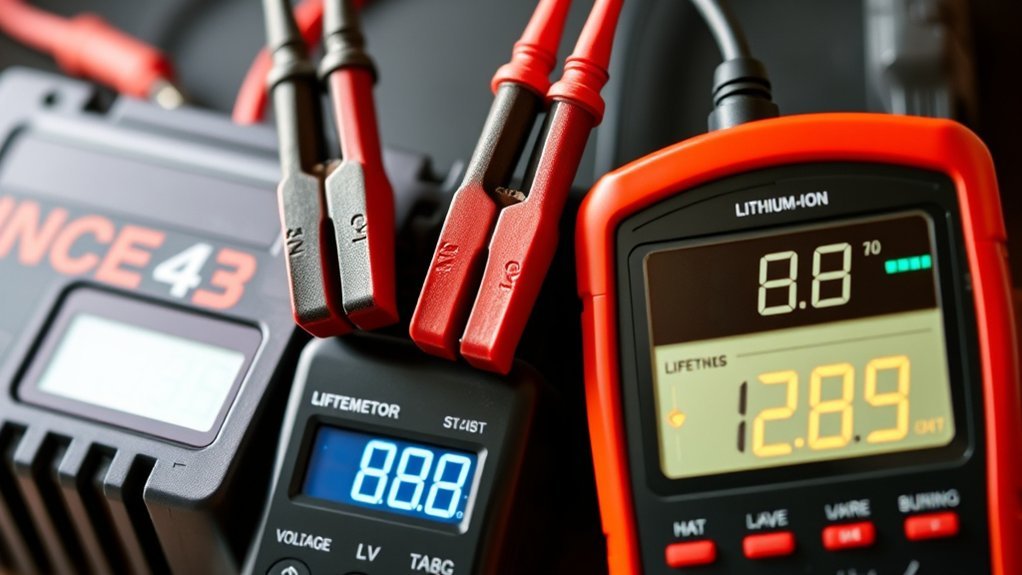
Understanding the specific voltage and current limits for charging LiFePO4 and lithium-ion batteries is fundamental to maximizing their performance and safety. LiFePO4 cells typically require a charging voltage around 3.65V per cell, with current limits set to prevent thermal runaway, while lithium-ion batteries often accept voltages up to 4.2V per cell. Proper current regulation is essential to avoid overcurrent damage, especially during fast charging. Advances in manufacturing have led to improved battery designs, enabling more precise voltage and current controls, which in turn support sustainable practices like battery recycling. These advancements enhance safety, extend lifespan, and facilitate more efficient recycling processes, highlighting the importance of adhering to manufacturer-specified limits for peak performance and environmental responsibility.
How Do Charging Cycles and Depths Affect Battery Lifespan?
We understand that each charging cycle gradually degrades battery capacity, but the extent varies with the depth of discharge. Shallow discharges tend to preserve lifespan more effectively than full cycles, emphasizing the importance of ideal charging practices. Analyzing these factors helps us extend battery longevity while maintaining performance.
Impact of Charging Cycles
How do charging cycles and depths influence the lifespan of lithium-based batteries? Repeated cycles cause capacity fade, with more cycles accelerating degradation. The cycle count directly impacts longevity, especially in high-depth discharges. Manufacturing advancements have optimized electrode materials, reducing stress per cycle. Proper management of charging practices can extend cycle life, enhancing sustainability through improved battery recycling potential. Key factors include:
- Cycle count: Fewer cycles mean less wear and longer battery life.
- Charge rate: Slower charging minimizes stress, prolonging lifespan.
- Depth of discharge: Limiting discharge depth preserves capacity over cycles.
Understanding these dynamics helps developers improve battery design, maximizing longevity and environmental benefits. As manufacturing techniques evolve, batteries become more resilient to cycle-induced degradation, supporting sustainable energy solutions.
Depth of Discharge Effects
The depth of discharge (DoD) considerably influences the overall lifespan of lithium-based batteries by dictating the extent of energy extracted during each cycle. Higher DoD levels accelerate capacity fade, reducing cycle life and increasing the frequency of battery replacements. This has direct implications for battery recycling efforts, as more frequent replacements generate greater environmental impact. Conversely, shallower discharge cycles extend battery longevity, decreasing waste and the associated environmental footprint. Understanding DoD effects helps optimize lifespan and sustainability, especially given the resource-intensive nature of battery production and recycling. Managing DoD effectively not only preserves individual battery health but also mitigates environmental consequences, emphasizing the importance of balancing usage patterns with recycling initiatives to reduce ecological harm.
Optimal Charging Practices
Optimizing charging practices is fundamental to extending battery lifespan, as the way we charge directly influences cycle health and capacity retention. Proper management of charging cycles and depths minimizes stress on the battery, preserving its integrity. For lithium-ion batteries, including Lifepo4, avoiding full discharges and high voltage charges reduces degradation. This approach also impacts manufacturing processes and battery recycling, as longer-lasting batteries lessen environmental impact. Key practices include:
- Limiting charge depths to prevent accelerated capacity loss
- Using appropriate charging rates to reduce thermal stress
- Maintaining ideal voltage levels to preserve cycle life
Adhering to these practices ensures batteries perform efficiently over time, aligns with sustainable manufacturing, and supports effective battery recycling, ultimately extending overall lifespan and reducing environmental footprint.
What Safety Considerations Are Important During Charging?
Ensuring safety during charging is vital to prevent hazards such as thermal runaway, fires, or explosions. Proper charging protocols must consider the thermal management of batteries, especially since improper handling can compromise manufacturing safety standards. Overcharging or using incompatible chargers increases risks, emphasizing the importance of built-in safety mechanisms like voltage regulation and current limiting. Additionally, safe handling during battery recycling processes minimizes exposure to hazardous materials. Manufacturers must implement rigorous safety protocols for production, including quality control to prevent cell defects that could lead to safety incidents. Regular monitoring and maintenance of charging systems are essential, as they help detect anomalies early, reducing risk. Overall, prioritizing safety during charging aligns with best practices in battery recycling and manufacturing safety to guarantee reliable, hazard-free operation.
How Do Charging Times Compare Between LiFePO4 and Lithium-Ion Batteries?
Charging times for LiFePO4 batteries generally outperform those of traditional lithium-ion counterparts, primarily due to differences in chemistry and internal resistance. LiFePO4’s lower internal resistance allows for faster charge acceptance without compromising safety or longevity. This efficiency impacts critical aspects like charging station design, enabling quicker turnaround times and higher throughput. Additionally, the ease of battery recycling with LiFePO4 supports sustainable practices, aligning with faster charging cycles that reduce overall battery degradation. Compared to lithium-ion, LiFePO4 batteries typically charge in shorter periods, especially at higher current rates, making them ideal for applications requiring rapid turnaround. The combination of these factors underscores the importance of understanding these differences for optimizing operational efficiency and sustainable energy management.
What Are the Best Practices for Charging Lithium Iron Phosphate Batteries?
To enhance the lifespan and performance of Lithium Iron Phosphate batteries, we need to adhere to specific charging protocols. This involves maintaining ideal charging voltages, regulating proper charging currents, and implementing effective temperature management strategies. Understanding these technical parameters is essential for ensuring safe and efficient operation.
Optimal Charging Voltages
Optimizing the charging process for Lithium Iron Phosphate (LiFePO4) batteries involves adhering to specific voltage parameters that maximize lifespan and safety. Maintaining voltage within the recommended range prevents overcharging, which can accelerate battery degradation and hinder recycling processes. Typically, the maximum voltage for LiFePO4 cells is around 3.65V to 3.70V per cell, ensuring efficient energy storage without compromising longevity. Proper charging infrastructure should incorporate precise voltage regulation for consistent performance. Key practices include:
- Limiting charging voltage to prevent overvoltage stress
- Ensuring balanced cell charging through specialized BMS
- Considering voltage stability for broader battery recycling initiatives
These measures enhance overall safety, extend battery cycle life, and support sustainable recycling efforts.
Proper Charging Currents
Establishing appropriate charging currents is critical for maintaining the health and performance of Lithium Iron Phosphate (LiFePO4) batteries. Proper currents optimize battery longevity and efficiency within battery storage systems and charging infrastructure. Typically, a safe charging rate is around 0.5C to 1C, with higher rates risking capacity loss. Exceeding recommended currents accelerates degradation, while lower currents prolong lifespan but extend charging time. Consider this table for guidance:
| Charging Current (C-rate) | Effect on Battery Life |
|---|---|
| 0.2C – 0.5C | Optimal balance, longevity |
| 1C or higher | Faster charging, risk of degradation |
| Below 0.2C | Longer charge cycles, minimal stress |
| Above 1C | Potential damage, reduced life |
Adhering to these practices ensures reliable performance across various charging infrastructure setups.
Temperature Management Tips
Maintaining proper temperature conditions during charging is essential to preserving the performance and lifespan of Lithium Iron Phosphate (LiFePO4) batteries. Elevated or low temperatures accelerate degradation, reducing overall efficiency. To optimize battery health, adhere to these best practices:
- Charge within the manufacturer’s recommended temperature range, typically 0°C to 45°C.
- Use temperature sensors and active cooling or heating systems to sustain stable conditions during operation.
- Implement proper storage techniques, avoiding extreme temperatures, and prioritize battery recycling when batteries reach end-of-life to prevent environmental harm.
Monitoring temperature ensures safe charging and prolongs cycle life. Consistent temperature management supports better performance, reduces thermal stress, and enhances safety during charging.
When Should You Use Specific Chargers for Each Battery Type?
Choosing the correct charger for each battery type is vital to guarantee safety, longevity, and maximum performance. Lithium iron phosphate (LiFePO4) batteries require chargers tailored to their specific voltage and current profiles, which prevent overcharging and thermal stress. Lithium-ion batteries, on the other hand, benefit from chargers that adapt to their rapid charge cycles and high energy density characteristics. Using the appropriate charger aligns with ongoing manufacturing advancements, ensuring efficient energy transfer and reducing degradation. Additionally, proper charging practices support sustainable battery recycling efforts by extending lifespan and minimizing waste. Mismatched chargers can lead to safety hazards and premature failure, which hampers the development of recycling infrastructure. Thus, selecting specialized chargers based on each battery’s chemistry is essential for maximizing safety, durability, and environmental responsibility.
How Do Temperature and Environmental Factors Influence Charging Performance?
Temperature and environmental conditions profoundly impact the efficiency and safety of battery charging processes. Elevated or low temperatures can accelerate degradation or cause thermal runaway, especially in lithium-ion chemistries. Cold environments hinder ion mobility, reducing charging efficiency, while excessive heat accelerates aging and may compromise safety. Proper storage techniques mitigate these risks, preserving battery lifespan. Additionally, ideal environmental control supports effective battery recycling by maintaining chemical stability during disassembly. Factors like humidity and dust can also influence performance, increasing the risk of short circuits or corrosion. Understanding these influences helps us select suitable chargers and environments, ultimately enhancing charge consistency and safety. Managing temperature and environmental variables is essential for maximizing lifespan and ensuring safe operation of both Lifepo4 and lithium-ion batteries.
Frequently Asked Questions
Can Lifepo4 Batteries Be Overcharged Safely?
We understand Lifepo4 batteries can’t be overcharged safely because proper charging safeguards battery lifespan and guarantees charging safety, preventing damage or safety hazards. Using suitable chargers and following manufacturer guidelines is essential for maintaining ideal performance and longevity.
Do Charging Methods Differ for Portable Versus Stationary Applications?
We find charging methods differ surprisingly little between portable and stationary uses, thanks to standardized charging protocols and robust battery management systems that guarantee safety, efficiency, and longevity regardless of application size or power demands.
How Does Aging Impact Charging Efficiency?
Aging reduces charging efficiency by decreasing battery lifespan and the number of charging cycles it can endure. As batteries age, capacity diminishes, resulting in longer charging times and less effective energy storage, impacting overall performance and longevity.
Are There Specific Indicators for Proper Charging Completion?
Proper charging completion is indicated by advanced charging technology, which employs precise voltage and current thresholds. We rely on indicator accuracy in battery management systems to guarantee complete, safe charging while preventing overcharge or undercharge conditions.
What Are the Environmental Impacts of Charging These Batteries?
Charging these batteries impacts the environment, with lithium extraction contributing to over 70% of global supply chain concerns. Recycling challenges hinder sustainable disposal, emphasizing the need for improved methods to reduce mineral extraction and mitigate ecological footprints.
Conclusion
Just as a skilled captain knows when to adjust the sails for calm or storm, understanding each battery’s unique charging needs helps us navigate safe, efficient power management. Recognizing the differences between LiFePO4 and lithium-ion batteries allows us to optimize performance and extend lifespan. By applying precise charging protocols and considering environmental factors, we steer clear of risks and guarantee our energy vessels remain resilient on their journey.