We recognize the importance of choosing the right battery technology for specific needs—whether it’s safety, lifespan, or cost-effectiveness. We compare LiFePO4 and lithium-ion batteries not only on performance metrics but also on their suitability for demanding applications. Understanding the trade-offs involved can influence long-term outcomes, but the decision isn’t straightforward. To make an informed choice, it’s essential to analyze the key differences and applications that define each option.
Key Takeaways
- LiFePO4 offers superior safety and thermal stability, reducing risk of overheating and fires compared to lithium-ion batteries.
- Lithium-ion batteries generally have higher energy density, making them better for portable electronics needing compact size.
- LiFePO4 has a longer lifespan of 2,000-3,000 cycles, providing better durability for long-term applications.
- Initial costs for LiFePO4 are higher, but its longer lifespan makes it more cost-effective over time.
- LiFePO4 is environmentally safer due to less toxic materials and easier recycling processes.
What Are the Main Differences Between LiFePO4 and Lithium-Ion Batteries?
While both LiFePO4 and lithium-ion batteries are popular energy storage options, they differ considerably in chemistry and performance characteristics. The primary distinction lies in their battery chemistry: LiFePO4 uses lithium iron phosphate, offering a stable, non-toxic, and thermally safer composition, whereas lithium-ion batteries typically employ cobalt or nickel-based cathodes. This chemistry impacts charging efficiency; LiFePO4 batteries tend to have slightly lower charging efficiency due to their higher internal resistance, requiring longer charge times. Conversely, lithium-ion batteries often feature higher charging efficiency and faster charge acceptance. These differences influence performance, lifespan, and safety considerations, making each battery type suitable for specific applications. Understanding these core distinctions helps in selecting the right energy storage solution for your needs.
Which Battery Type Offers Better Safety for Your Devices?
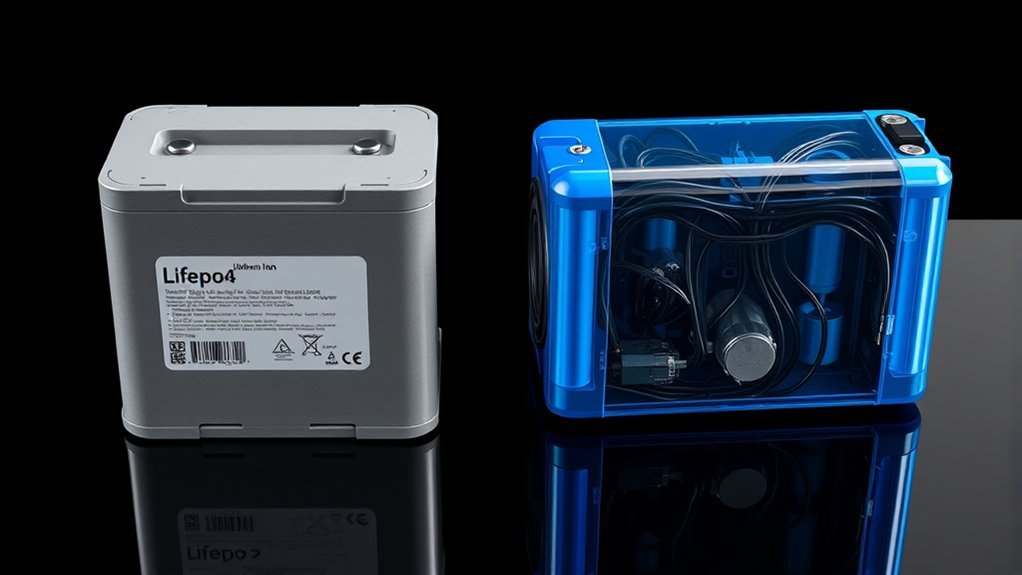
When evaluating battery safety, the chemical composition and thermal stability of the cells play a pivotal role. Lithium iron phosphate (LiFePO4) batteries generally exhibit superior safety due to their stable battery chemistry, which reduces the risk of thermal runaway. In contrast, traditional lithium-ion batteries with cobalt-based chemistries are more prone to overheating and potential fires. Additionally, LiFePO4 batteries generate less heat during operation, enhancing thermal stability. From an environmental impact perspective, LiFePO4 batteries utilize less toxic materials, making them safer for disposal and recycling. Overall, the more stable chemistry and lower environmental footprint of LiFePO4 batteries make them a safer choice for protecting your devices and minimizing risks associated with battery failures.
How Do LiFePO4 and Lithium-Ion Batteries Compare in Terms of Lifespan and Durability?
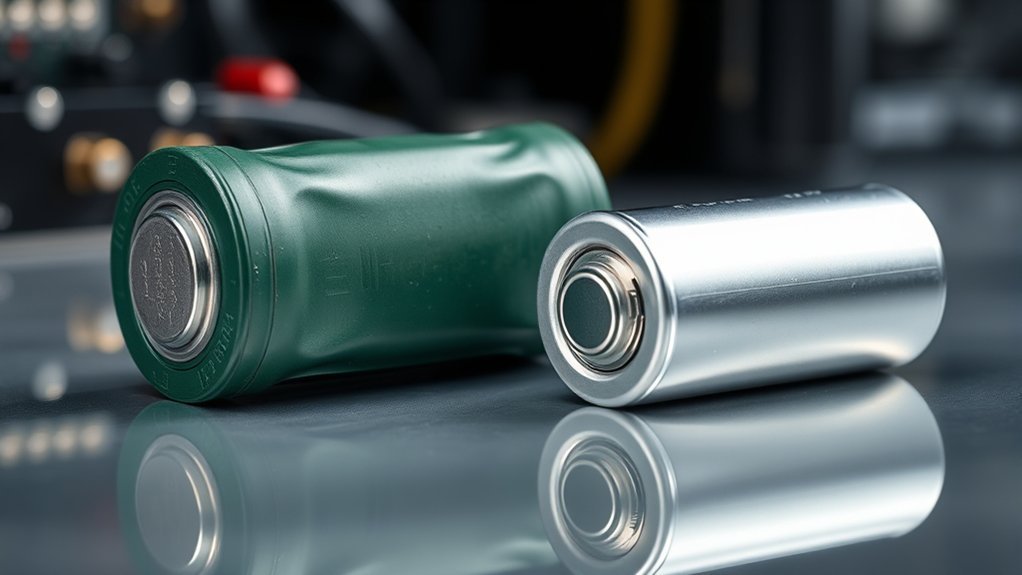
LiFePO4 batteries generally outperform lithium-ion batteries in regards to lifespan and durability due to their stable chemistry and structural robustness. They typically offer 2,000 to 3,000 charge cycles, considerably exceeding lithium-ion’s 500 to 1,000 cycles, which translates into a longer operational life. Their lower battery weight, owing to the stable phosphate structure, enhances portability without sacrificing durability. Additionally, LiFePO4’s chemical stability reduces degradation over time, making them more resistant to thermal stress and environmental impact. This stability not only extends lifespan but also minimizes environmental hazards associated with battery disposal. In contrast, lithium-ion batteries are more susceptible to capacity fade and structural deterioration, limiting their durability under demanding conditions. Overall, LiFePO4 batteries provide superior longevity and resilience, essential for long-term applications.
Which Battery Is More Cost-Effective Over Time?
Evaluating long-term cost-effectiveness requires examining both initial investment and ongoing expenses associated with each battery type. A detailed cost comparison reveals that LiFePO4 batteries typically have higher upfront costs but offer greater longevity, reducing replacement frequency and maintenance expenses over time. Lithium-ion batteries generally have a lower initial price but tend to wear out faster, increasing total lifecycle costs. Additionally, environmental impact influences overall cost-effectiveness; LiFePO4 batteries are more environmentally friendly due to their safer chemistry and longer lifespan, which diminishes disposal costs and ecological concerns. When considering total ownership costs, LiFePO4 batteries often prove more economical in the long run, especially in applications demanding durability and sustainability. This makes them a more cost-effective choice for many long-term energy storage needs.
Which Battery Type Is Better Suited for Specific Uses and Applications?
Choosing the appropriate battery type depends heavily on the specific requirements of the application, as each chemistry offers distinct advantages tailored to different use cases. For instance,
Selecting the right battery chemistry depends on application needs, balancing performance, safety, and environmental impact.
- Lifepo4 batteries excel in electric vehicles and stationary storage due to their high thermal stability, long cycle life, and safety profile, making them ideal for demanding environments.
- Lithium-ion batteries are preferred for portable electronics and consumer gadgets, benefiting from higher energy density and compact form factors.
- Both types impact battery recycling and environmental impact differently; Lifepo4’s lower toxicity simplifies recycling processes, while lithium-ion’s widespread use raises concerns about resource extraction and disposal. Ultimately, selecting the right chemistry involves balancing performance needs with sustainability considerations.
Frequently Asked Questions
How Do Charging Times Compare Between Lifepo4 and Lithium-Ion Batteries?
Charging times differ: Lifepo4 batteries generally have faster charging speeds due to lower internal resistance, enabling quicker power output, whereas lithium-ion batteries may take longer to reach full charge, affecting overall power delivery and efficiency.
Are Lifepo4 Batteries Environmentally Friendly and Recyclable?
We find LiFePO4 batteries environmentally friendly and recyclable, thanks to their longer battery lifespan and stable chemistry. While the initial cost comparison is higher, their durability reduces waste, making them a more sustainable choice overall.
Can Lifepo4 Batteries Handle Extreme Temperatures Better?
We find that LiFePO4 batteries demonstrate superior thermal resilience and temperature tolerance, maintaining performance in extreme conditions better than lithium-ion counterparts. Their stable chemistry guarantees safety and reliability under high or low-temperature environments, making them ideal for harsh climates.
What Are the Size and Weight Differences for Similar Capacities?
While similar in capacity, Lifepo4 batteries tend to be slightly larger and heavier, influencing overall system design. Their longer battery lifespan often justifies the cost comparison, making them a refined choice for durability and efficiency in demanding applications.
How Does Maintenance Differ Between the Two Battery Types?
We find Lifepo4 batteries require less maintenance due to their stable chemistry, extending battery lifespan and enhancing cost efficiency, while Lithium-ion batteries demand more frequent checks and cooling, impacting long-term operational costs and reliability.
Conclusion
In weighing LiFePO4 against lithium-ion batteries, we see a race where safety and longevity lead the pack, much like a steady, reliable vessel steering through stormy seas. While lithium-ion batteries offer speed and higher energy density, LiFePO4’s resilience and thermal stability make it the smarter choice for demanding, long-term applications. Ultimately, understanding these nuances helps us select the right energy source, guiding us toward safer, cost-effective, and sustainable solutions.