When comparing Lifepo4 and lead-acid batteries, understanding their unique lifespan characteristics is vital for making informed energy storage choices. Both types serve essential roles, but their longevity, influenced by design and usage, varies considerably. Recognizing these differences can impact long-term costs and sustainability goals. As we explore the factors affecting their durability, you’ll see why selecting the right battery requires more than just initial price—it’s about understanding how each performs over time.
Key Takeaways
- LiFePO4 batteries typically last 2,000 to 5,000 cycles, whereas lead-acid batteries last 500 to 1,000 cycles.
- Longer cycle life of LiFePO4 results in a significantly longer overall lifespan compared to lead-acid.
- LiFePO4 batteries have higher durability, reducing the need for frequent replacements and waste generation.
- Proper maintenance and optimal usage extend the lifespan of both battery types, with LiFePO4 generally maintaining capacity longer.
- Environmental impact is lower for LiFePO4 due to fewer replacements and easier recycling processes.
How Do Lifepo4 and Lead Acid Batteries Differ in Core Longevity?
Although both LiFePO4 (lithium iron phosphate) and lead-acid batteries serve as reliable energy storage solutions, their core longevity differs markedly due to fundamental chemical and structural characteristics. LiFePO4 batteries typically last 2,000 to 5,000 cycles, thanks to their stable chemistry, whereas lead-acid batteries endure around 500 to 1,000 cycles. This difference impacts not only operational lifespan but also environmental factors. Longer-lasting LiFePO4 batteries reduce the frequency of replacement, thereby decreasing the environmental impact associated with battery recycling. Lead-acid batteries generate more waste over time, increasing the burden on recycling facilities. Consequently, LiFePO4’s durability enhances sustainability by lowering waste volume, while its stable chemistry minimizes environmental hazards during battery recycling processes.
What Factors Affect the Lifespan of Lifepo4 Batteries?
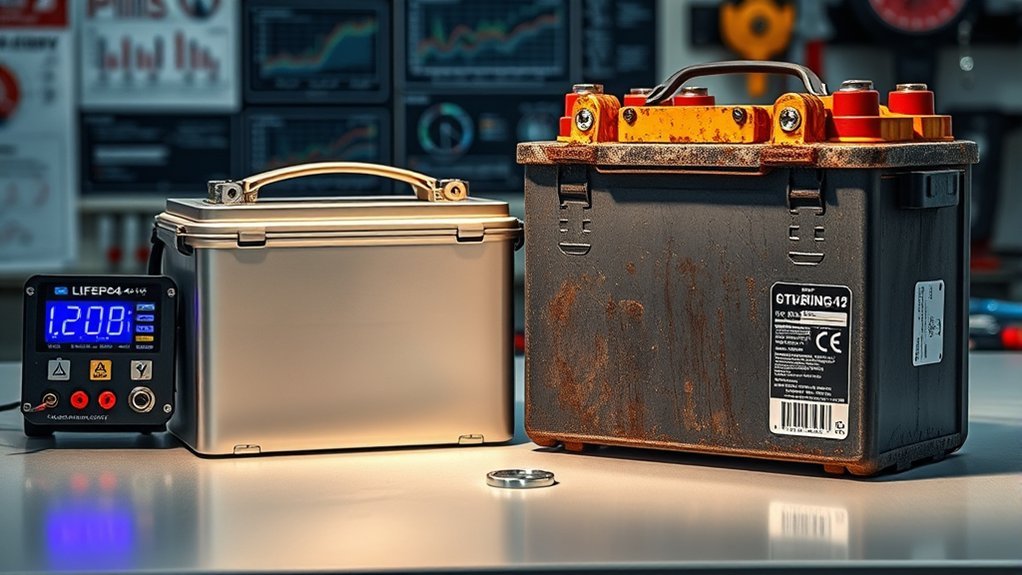
Charging practices considerably influence Lifepo4 battery lifespan, as improper charging can accelerate degradation. Operating temperature also plays a critical role; high temperatures increase chemical wear, while cold conditions reduce performance. Additionally, adhering to recommended depth of discharge limits helps prevent capacity loss and extends overall cycle life.
Charging Practices Impact Longevity
Proper charging practices are essential in determining the lifespan of LiFePO4 batteries, as they directly influence the battery’s chemical stability and cycle durability. Overcharging or deep discharging accelerates capacity fade and reduces overall longevity, emphasizing the importance of precise charge control. Maintaining ideal voltage levels (around 3.65V per cell) minimizes degradation and extends cycle life. Consistent, balanced charging also reduces risks associated with battery recycling, as improper use can generate waste and environmental impact. Additionally, proper charging protocols support sustainable practices by maximizing battery lifespan, therefore decreasing the frequency of replacements and environmental burden. Ultimately, disciplined charging practices safeguard both the battery’s performance and ecological footprint, underscoring their critical role in the overall sustainability and longevity of LiFePO4 systems.
Operating Temperature Effects
Operating temperature profoundly influences the lifespan of LiFePO4 batteries by impacting their chemical stability and internal processes. Excessive heat accelerates degradation of electrolyte and electrode materials, reducing thermal stability and overall durability. Conversely, low temperatures hinder ionic movement, impairing performance and efficiency. Ideal temperature ranges enhance temperature resilience, maintaining consistent capacity and cycle life. Extreme temperatures can cause irreversible damage, decreasing lifespan considerably. Proper thermal management is essential to prevent overheating or chilling, ensuring stable operation. Factors affecting lifespan include:
- Elevated temperatures causing thermal runaway and material breakdown
- Cold environments increasing internal resistance and reducing capacity
- Fluctuations in temperature leading to mechanical stress and degradation of internal components
Depth of Discharge Limits
The depth of discharge (DoD) markedly impacts the lifespan of LiFePO4 batteries because it determines how much energy is used relative to their total capacity before recharging. Lower DoD levels extend cycle life, as frequent deep discharges accelerate electrode degradation. Conversely, shallower discharges preserve battery health, reducing capacity fade over time. This balance influences not only longevity but also environmental impact, since longer-lasting batteries require less frequent replacement and support sustainable battery recycling practices. Reduced cycle stress minimizes the need for disposal and raw material extraction, lessening ecological footprints. Understanding ideal DoD limits is essential for maximizing lifespan, ensuring efficient performance, and promoting eco-friendly lifecycle management, especially in comparison to lead-acid batteries, which typically tolerate deeper discharges but with shorter overall durability.
How Does Usage Pattern Impact Battery Lifespan?
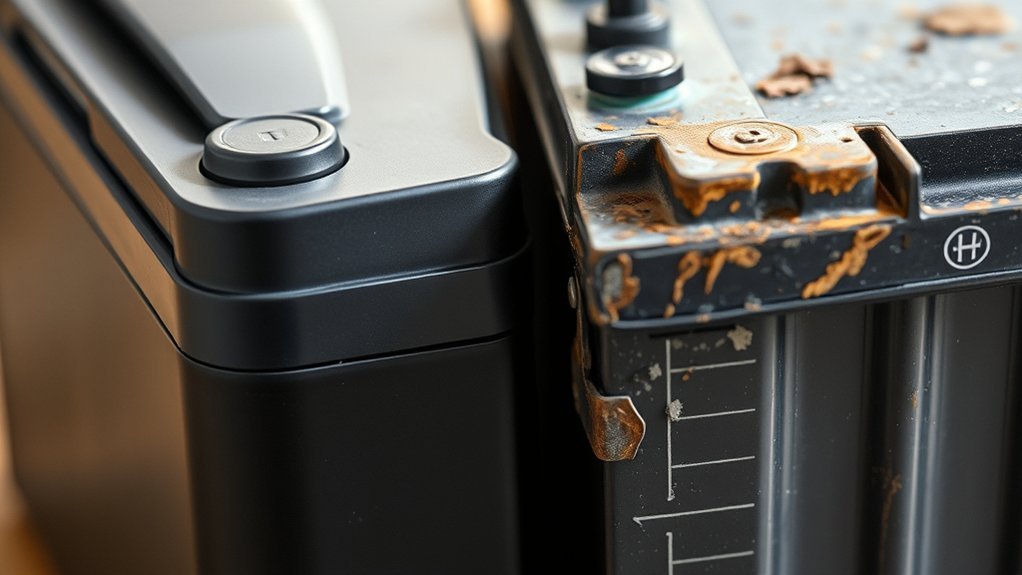
Usage patterns profoundly influence the lifespan of both LiFePO4 and lead-acid batteries, as each type responds differently to charge and discharge cycles. Frequent deep discharges accelerate capacity loss, especially in lead-acid batteries, reducing overall longevity. Conversely, shallow cycling extends lifespan but may impact energy availability. Proper usage also affects environmental impact, since efficient cycling minimizes waste and promotes battery recycling efforts.
Proper cycling preserves battery lifespan and supports sustainable recycling efforts.
- Regular moderate discharges preserve capacity and delay degradation
- Overcharging or deep discharging hastens capacity fade and shortens lifespan
- Consistent, optimal charging practices reduce waste and facilitate sustainable battery recycling
Understanding these patterns helps optimize performance and longevity, ultimately reducing environmental impact by minimizing premature disposal and supporting sustainable lifecycle management.
Comparing Lifepo4 and Lead Acid: Maintenance and Care Tips
Effective maintenance of Lifepo4 and lead acid batteries hinges on proper charging routines, storage conditions, and ongoing health monitoring. We need to understand how each type responds to regular use and environmental factors to optimize lifespan. Implementing targeted care strategies allows us to maximize performance and longevity for both battery chemistries.
Regular Charging Practices
While both LiFePO4 and lead-acid batteries require regular charging to maintain peak performance, their maintenance routines differ markedly due to their chemical and design distinctions. LiFePO4 batteries benefit from a controlled charging process that minimizes overcharging, which extends lifespan and supports sustainable practices like battery recycling. In contrast, lead-acid batteries tolerate more frequent deep discharges but demand careful attention to prevent sulfation and capacity loss. Proper charging practices directly influence environmental impact; LiFePO4’s longer cycle life reduces waste, whereas lead-acid batteries require more frequent replacements. To guarantee longevity and ecological benefits, practitioners should:
- Use dedicated chargers tailored to each battery type
- Avoid deep discharges in lead-acid batteries
- Monitor and adhere to manufacturer-recommended charging voltages
Proper Storage Techniques
Proper storage practices markedly influence the longevity and performance of both LiFePO4 and lead-acid batteries, especially when they are not in active use for extended periods. For LiFePO4 batteries, storing at a partial state of charge (around 50-70%) in a cool, dry environment minimizes capacity loss and prevents degradation. Lead-acid batteries should be stored fully charged and periodically topped up to avoid sulfation and capacity reduction. Both types benefit from regular inspection for corrosion or leakage and should be stored away from direct sunlight and extreme temperatures. Proper storage also impacts environmental impact, as improper disposal or recycling of batteries can have detrimental effects. Implementing correct storage protocols aids in extending lifespan, reducing waste, and supporting sustainable battery recycling efforts.
Monitoring Battery Health
Monitoring the health of batteries is essential for maintaining ideal performance and extending their lifespan, especially when comparing LiFePO4 and lead-acid types. Regularly evaluating voltage, capacity, and internal resistance helps identify early signs of degradation, enabling timely maintenance. Proper monitoring also reduces environmental impact by optimizing battery recycling efforts, preventing premature disposal.
- Use specialized tools to track capacity loss and internal resistance changes.
- Perform periodic equalization and balancing to prevent uneven aging.
- Keep detailed records to analyze performance trends and inform recycling decisions.
What Are the Signs of Battery Degradation and When to Replace?
Battery degradation manifests through measurable declines in capacity, voltage stability, and overall performance, signaling the need for replacement. As batteries age, their ability to hold charge diminishes, leading to shorter run times and increased voltage fluctuations under load. Signs such as frequent recharging, reduced efficiency, and thermal anomalies indicate advanced degradation. When degradation becomes significant, it’s essential to contemplate proper battery recycling to mitigate environmental impact, as discarded batteries pose ecological hazards if not disposed of correctly. Timely replacement prevents system failures and supports sustainable practices by reducing waste. Monitoring these signs enables informed decisions, ensuring peak performance while minimizing environmental footprint. Recognizing degradation early helps extend battery life through proper recycling, ultimately reducing the adverse effects associated with battery disposal.
Cost-Effectiveness Over Time: Which Battery Lasts Longer?
When evaluating long-term value, Lifepo4 batteries generally outperform lead-acid counterparts regarding lifespan and overall cost-efficiency. They offer more charge cycles, reducing replacement frequency and lowering lifecycle costs. Additionally, Lifepo4 batteries support more sustainable practices through easier battery recycling, minimizing environmental impact.
- Longer cycle life reduces replacement costs over time
- Lower maintenance needs contribute to operational savings
- Improved environmental impact due to cleaner recycling processes
Although initial investments are higher for Lifepo4, their extended lifespan and recyclability translate into better cost-effectiveness over time. This durability not only saves money but also aligns with environmentally responsible energy storage practices, making Lifepo4 batteries a superior long-term investment when considering total cost and ecological footprint.
Which Battery Is Better Suited for Your Energy Needs?
Choosing the appropriate energy storage solution depends heavily on your specific power requirements and usage patterns. Lifepo4 batteries generally excel in high-cycle applications and rapid charging scenarios, making them suitable for renewable energy systems and electric vehicles. Lead acid batteries, however, often serve well in backup power and stationary setups due to their proven reliability and lower upfront costs. When evaluating which battery is better suited, consider environmental impact: Lifepo4 batteries have a longer lifespan, reducing the frequency of battery recycling and waste. Their eco-friendly design minimizes environmental harm during disposal. Lead acid batteries, while recyclable, pose greater challenges due to hazardous materials. Ultimately, selecting the right battery hinges on balancing energy needs, lifecycle considerations, and environmental responsibility.
Frequently Asked Questions
How Do Temperature Variations Affect Lifepo4 and Lead Acid Battery Lifespan?
Temperature variations considerably impact battery efficiency and temperature stability; Lifepo4 batteries perform better in extreme conditions, maintaining lifespan, while lead acid batteries degrade faster with temperature fluctuations, reducing overall lifespan and operational reliability.
Can Rapid Charging Shorten the Lifespan of Either Battery Type?
Fast charging can accelerate battery degradation, risking shortened lifespans for both Lifepo4 and lead acid batteries. We’ve observed that rapid charging introduces stress, potentially damaging internal structures, and ultimately diminishing overall performance and longevity.
What Recycling Processes Are Available for Lifepo4 and Lead Acid Batteries?
We analyze battery recycling processes, emphasizing environmental impact reduction. Lead acid batteries undergo well-established recycling methods, including lead recovery, while LiFePO4 batteries require advanced techniques to extract valuable materials, minimizing ecological harm and promoting sustainable use.
How Does Depth of Discharge Influence Overall Battery Longevity?
We understand deeper discharge reduces battery capacity and shortens life, decreasing charge cycles. Maintaining shallow discharges preserves battery health, extending overall longevity, especially for Lifepo4 and lead acid batteries, which are sensitive to depth of discharge variations.
Are There Specific Industries Where One Battery Type Outperforms the Other?
We find lithium iron phosphate batteries excel in industries prioritizing lightweight, high-performance solutions, like aerospace, due to their lower battery weight and manufacturing costs. Lead-acid remains favored where cost-effectiveness outweighs weight and performance demands.
Conclusion
In evaluating lifespan, durability, and cost-effectiveness, we see that LiFePO4 batteries clearly outperform lead-acid in longevity, handling deeper discharges, and reducing replacement frequency. They offer extended service life, lower environmental impact, and better value over time. While initial costs are higher, their resilience and lower maintenance needs make them the superior choice for sustainable energy storage. Ultimately, selecting the right battery depends on your specific energy demands, but LiFePO4’s long-term benefits are compelling.