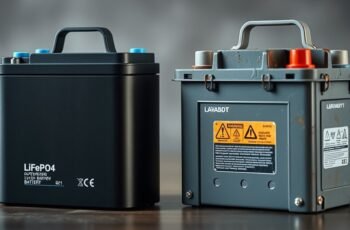
When weighing the future of solar energy storage, the question isn’t just about cost but about long-term reliability and safety. As we analyze Lifepo4 and lead-acid batteries, it becomes clear that each has distinct strengths and weaknesses that could influence system performance over time. Understanding these differences is essential, especially as the decision impacts sustainability, maintenance, and overall investment. So, what truly makes one option more suited to your needs than the other?
Key Takeaways
- Lifepo4 batteries offer longer lifespan (over 10 years) and more cycles than lead-acid, reducing replacement costs for solar storage.
- Lifepo4 provides higher safety and environmental benefits due to better chemical stability and fewer hazardous materials.
- Although initial costs are higher, Lifepo4’s lower maintenance and longer durability make it more cost-effective long-term.
- Lead-acid batteries are cheaper upfront but require frequent replacements, increasing overall lifecycle expenses.
- Lifepo4 is preferable for sustainable, eco-friendly solar energy storage with better performance and safety features.
What Are the Key Differences Between Lifepo4 and Lead-Acid Batteries?
While both Lifepo4 and lead-acid batteries serve as common energy storage solutions for solar systems, they differ markedly in design, performance, and longevity. Lifepo4 batteries typically offer a longer battery lifespan due to their superior chemical stability and higher cycle life, often exceeding 2,000 cycles. Lead-acid batteries, by comparison, usually provide around 500-1,000 cycles, resulting in more frequent replacements. Recycling considerations also vary; Lifepo4 batteries contain fewer hazardous materials, making them easier and safer to recycle, whereas lead-acid batteries require careful handling due to toxic lead content. These differences influence not only operational efficiency but also environmental impact and long-term cost-effectiveness, making Lifepo4 batteries increasingly attractive for sustainable solar energy storage solutions.
Pros and Cons of Lifepo4 Batteries for Solar Systems
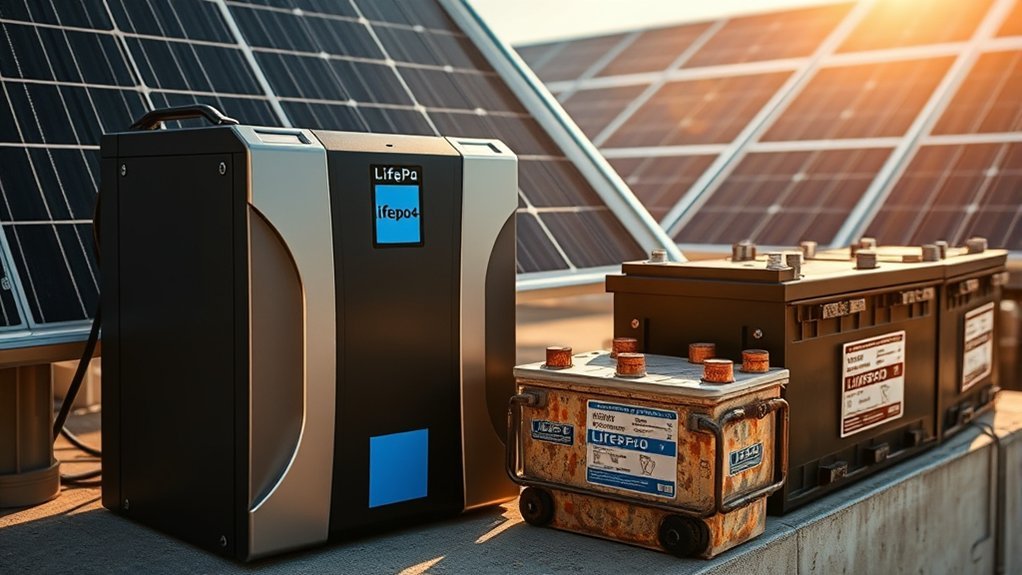
What makes Lifepo4 batteries a compelling choice for solar energy storage is their combination of high performance and safety features. They offer a particularly longer battery lifespan, often exceeding 10 years with proper management, reducing replacement frequency and overall costs. Additionally, Lifepo4 batteries feature stable chemistry that enhances safety by minimizing thermal runaway risks. However, their recycling processes are more established compared to other lithium-ion chemistries, supporting environmentally responsible disposal. The table below compares key attributes:
| Attribute | Lifepo4 | Lead Acid |
|---|---|---|
| Battery lifespan | Up to 10,000 cycles | 500-1,000 cycles |
| Safety | High, thermal stability | Lower, risk of acid leaks |
| Recycling | Well-developed processes | Mature, established methods |
| Cost | Higher upfront, lower long-term | Lower upfront, higher maintenance |
| Performance | Consistent, deep cycle ability | Limited depth of discharge |
Advantages and Drawbacks of Lead-Acid Batteries for Solar Power
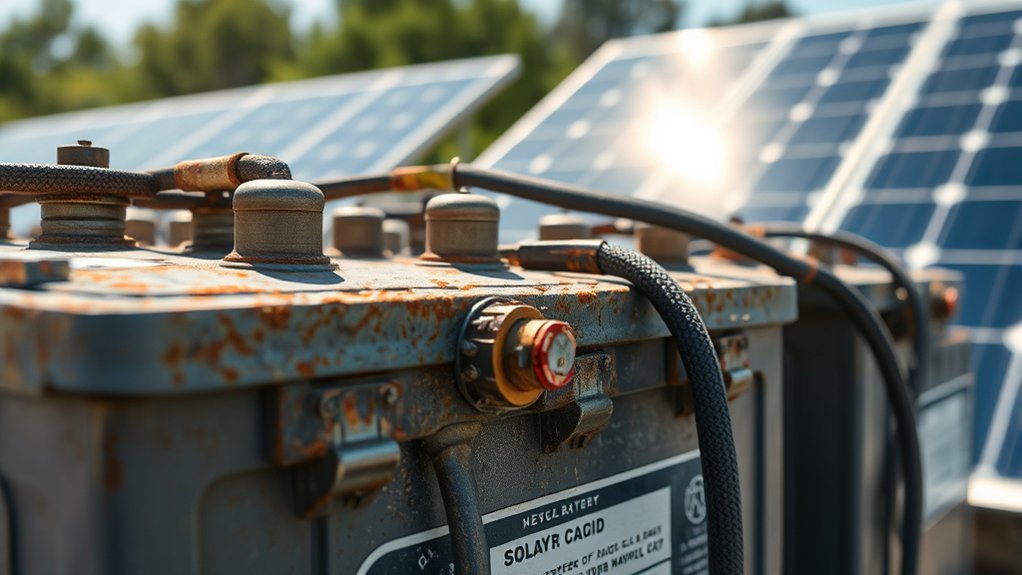
Lead-acid batteries remain a popular choice for solar energy storage due to their established technology and affordability. However, their environmental impact and recycling challenges are significant drawbacks. Lead-acid batteries have a relatively low cycle life, requiring more frequent replacements, which increases waste and resource consumption. Proper battery recycling is essential to prevent lead contamination, as improper disposal poses health risks and environmental hazards. Additionally, their lower energy density limits portability and space efficiency compared to newer chemistries. Despite being cost-effective initially, maintenance requirements like regular water addition can add to operational costs. Overall, while lead-acid batteries are accessible and proven, their environmental footprint and recycling concerns highlight the necessity for considering alternative options in sustainable solar systems.
- Battery recycling reduces lead contamination and environmental hazards
- Lower energy density limits space-efficient applications
- Frequent maintenance increases operational costs
Which Battery Type Is More Cost-Effective in the Long Run?
Determining which battery type offers greater cost-effectiveness over time requires analyzing initial investment, lifespan, maintenance, and replacement costs. Lifepo4 batteries typically have a higher upfront price but longer lifespans and fewer maintenance needs, reducing long-term costs. Lead-acid batteries are cheaper initially but require more frequent replacements, increasing lifecycle expenses. Environmental impact considerations include battery recycling challenges and disposal issues; Lifepo4 batteries are more eco-friendly due to easier recycling processes. The table below summarizes key factors:
| Feature | Lifepo4 | Lead Acid |
|---|---|---|
| Initial Cost | Higher | Lower |
| Lifespan | 8-10 years | 3-5 years |
| Maintenance | Low | High |
| Replacement Frequency | Less frequent | More frequent |
| Environmental Impact | Lower, easier recycling | Higher, complex recycling |
How to Choose the Right Battery Based on Your Solar Energy Needs
Selecting the appropriate battery for your solar energy system hinges on analyzing your specific energy consumption patterns, system size, and long-term goals. To determine the best fit, consider factors like cycle life, efficiency, and maintenance needs. Lifepo4 batteries generally offer superior longevity and stability, reducing environmental impact through better Battery recycling processes, while lead acid batteries tend to have higher initial costs and shorter lifespans.
- Assess your daily energy demands and storage requirements
- Evaluate the environmental impact of battery disposal and recycling options
- Consider long-term operational costs versus upfront investment
Frequently Asked Questions
How Do Lifepo4 and Lead-Acid Batteries Compare in Cold Weather Performance?
In cold weather, LiFePO4 batteries maintain better performance and longer lifespan compared to lead-acid, which suffer from reduced capacity and faster degradation. Although LiFePO4 has a higher initial cost, its superior longevity offers better cost efficiency over time.
What Are the Environmental Impacts of Each Battery Type?
We find that lead-acid batteries pose recycling challenges due to toxic lead, while Lifepo4 batteries have lower manufacturing emissions and easier recycling, making them more environmentally sustainable despite initial resource extraction impacts.
How Do Maintenance Requirements Differ Between Lifepo4 and Lead-Acid Batteries?
We find Lifepo4 batteries require minimal maintenance, with longer battery lifespan and lower overall costs, whereas lead-acid batteries need regular watering and equalization, increasing maintenance efforts and affecting long-term cost comparison.
Can Lifepo4 Batteries Be Integrated With Existing Lead-Acid Systems?
Yes, we can integrate Lifepo4 batteries with existing lead-acid systems, but due to differing voltage and charging profiles, it impacts battery lifespan and overall cost comparison, requiring careful system compatibility assessment for peak performance.
What Are the Safety Considerations for Each Battery Type?
We prioritize safety by considering battery lifespan and charging safety; Lifepo4 batteries typically offer longer lifespan and stable charging, reducing risk, while lead-acid batteries require vigilant venting and maintenance to prevent hazards and guarantee safe operation.
Conclusion
Ultimately, choosing between Lifepo4 and lead-acid batteries is like selecting the right tool for a precise job—each has its role. While lead-acid might seem cheaper initially, Lifepo4’s durability and longer lifespan make it a smarter investment over time. For those aiming for a resilient, eco-friendly solar system, Lifepo4 batteries act as the sturdy backbone supporting sustainable energy storage, ensuring your system’s performance remains steady as the sun’s journey across the sky.