We must consider safety, lifespan, and cost, and weigh these factors carefully when choosing between LiFePO4 and lithium-ion batteries for home backup systems. Both options have distinct advantages and limitations that directly impact long-term reliability and environmental sustainability. Understanding how each technology performs under real-world conditions can influence your decision profoundly. As we explore these details, you’ll see why this choice is more complex than it first appears—and why it matters.
Key Takeaways
- LiFePO4 batteries offer superior thermal stability and safety for home backup systems.
- They have a longer lifespan, typically exceeding 3,000 cycles, reducing replacement costs.
- LiFePO4 is more environmentally friendly due to easier, safer recycling processes.
- Lithium-ion batteries provide higher energy density, allowing for more compact home storage solutions.
- Consider long-term costs, safety, and sustainability when choosing between LiFePO4 and lithium-ion for home backup.
What Are LiFePO4 and Lithium-Ion Batteries? An Overview
LiFePO4 (Lithium Iron Phosphate) and lithium-ion batteries are two prevalent types of rechargeable energy storage systems used in various applications, including home backup solutions. LiFePO4 batteries are known for their thermal stability, long cycle life, and safer chemistry, making them a popular choice for sustainable energy systems. Lithium-ion batteries, while offering higher energy density, pose different environmental challenges, especially concerning battery recycling and disposal. The environmental impact of these batteries depends heavily on proper recycling methods; LiFePO4’s less toxic composition simplifies this process. Understanding these distinctions is essential for evaluating their sustainability and ecological footprint. Ultimately, choosing between the two involves analyzing not only technical performance but also the broader implications for environmental impact and responsible battery recycling practices.
How Safety Differs Between LiFePO4 and Lithium-Ion Options
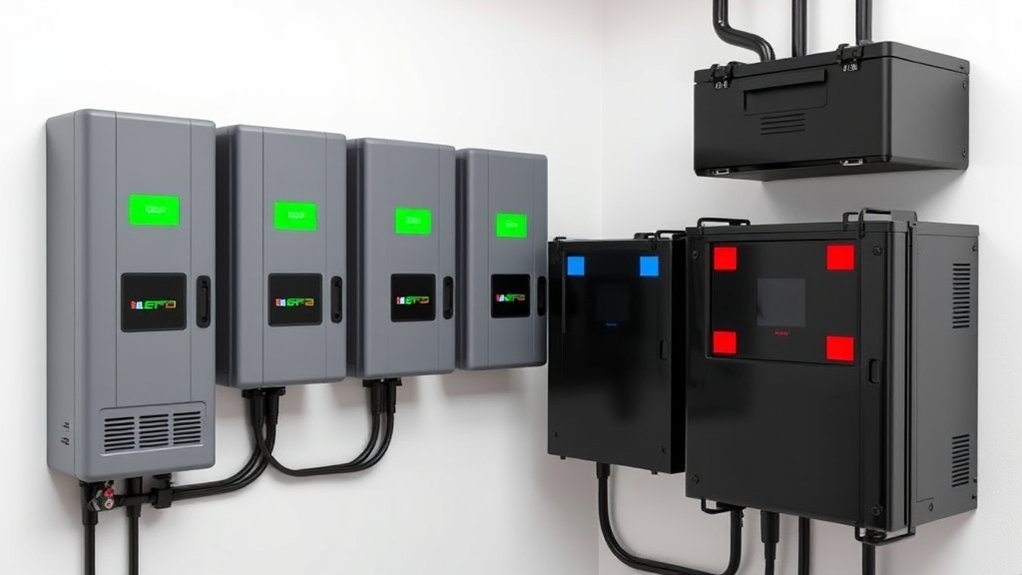
LiFePO4 batteries generally exhibit superior thermal stability compared to traditional lithium-ion chemistries, reducing the risk of thermal runaway. This enhanced stability translates to a lower likelihood of fire or explosion under fault conditions. Understanding these safety differences is essential when evaluating home backup energy storage options.
Thermal Stability Differences
While both lithium iron phosphate (LiFePO4) and traditional lithium-ion batteries are popular choices for home backup systems, their thermal stability profiles differ considerably, impacting overall safety. LiFePO4 batteries exhibit superior thermal stability due to their chemical structure, which resists thermal runaway and reduces the risk of overheating. This stability translates to safer operation and minimizes safety concerns like fire hazards. Conversely, lithium-ion batteries with cobalt-based cathodes are more prone to temperature fluctuations, increasing safety risks. From an environmental perspective, LiFePO4 batteries are easier to recycle safely, reducing environmental impact. Their chemical stability lessens the risk of toxic leaks during battery recycling processes, making them more sustainable long-term options for home backup solutions.
Risk of Fire
How does the risk of fire differ between lithium iron phosphate (LiFePO4) and traditional lithium-ion batteries? LiFePO4 batteries exhibit markedly lower thermal runaway potential, reducing fire hazards during battery installation and operation. Their stable chemical structure means they’re less prone to overheating or combustion under fault conditions. In contrast, conventional lithium-ion batteries, with cobalt or nickel cathodes, are more susceptible to thermal instability, increasing fire risk during failure or damage. For emergency preparedness, this safety margin makes LiFePO4 a preferable choice. Proper battery installation—ensuring correct wiring, cooling, and protection—is essential for both types, but LiFePO4’s inherent stability offers an added safety buffer. Overall, LiFePO4 batteries provide a safer profile, especially important in home backup systems where safety is paramount.
Comparing LiFePO4 and Lithium-Ion Battery Lifespans and Durability
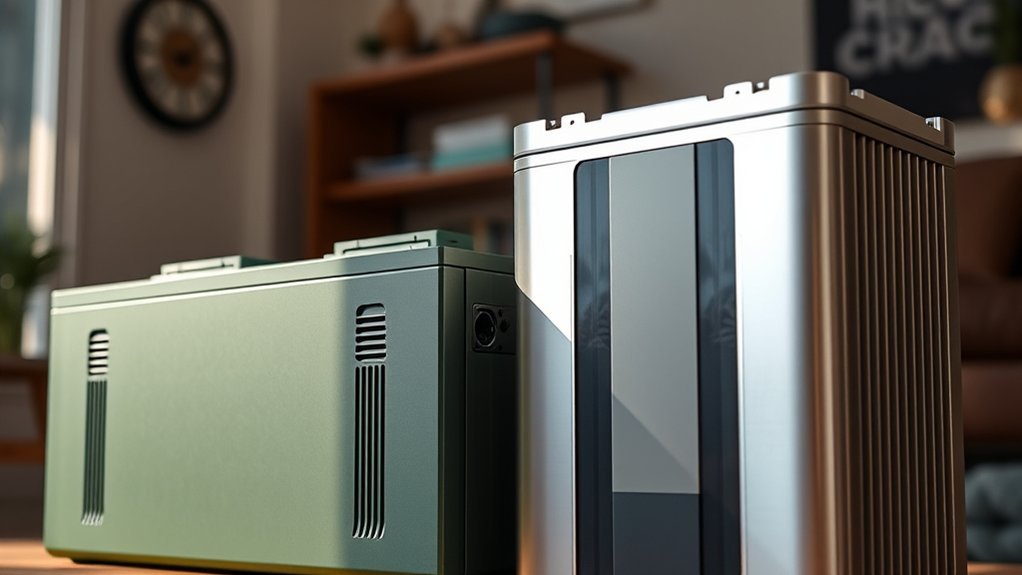
When comparing LiFePO4 and lithium-ion batteries, cycle life and temperature tolerance are critical factors influencing durability. LiFePO4 batteries typically offer higher cycle counts and better performance across a wider temperature range, enhancing longevity in varied environments. Analyzing these parameters helps determine which chemistry provides more reliable, long-term home backup solutions.
Battery Cycle Life
Battery cycle life is a critical factor in evaluating the long-term durability of energy storage options for home backup systems. Lithium Iron Phosphate (LiFePO4) batteries generally offer a higher cycle count—often exceeding 3,000—compared to traditional lithium-ion batteries, which typically range around 1,000 to 2,000 cycles. This durability stems from their stable chemistry and manufacturing processes that minimize electrode degradation over time. Additionally, LiFePO4’s design supports more sustainable practices like battery recycling, reducing environmental impact. In contrast, lithium-ion batteries may require more frequent replacements, influenced by their more complex manufacturing processes and less robust chemistry. Ultimately, cycle life impacts the total cost of ownership and environmental footprint, making LiFePO4 a compelling choice for long-term home backup resilience.
Temperature Tolerance
Temperature tolerance markedly influences the lifespan and durability of both LiFePO4 and traditional lithium-ion batteries in home backup systems. LiFePO4 batteries exhibit superior thermal stability, maintaining performance across broader temperature ranges, which enhances their suitability for solar integration in diverse climates. This resilience reduces degradation rates caused by temperature fluctuations, thus extending cycle life and minimizing environmental impact through reduced replacement frequency. Conversely, lithium-ion batteries are more sensitive to high temperatures, which accelerate capacity fade and safety risks, especially in unregulated environments. Proper thermal management is essential for optimizing longevity and performance for both chemistries. Hence, understanding their temperature tolerance is critical for ensuring reliable backup power, especially in regions with extreme weather conditions, ultimately influencing environmental sustainability and system reliability.
Cost Considerations: Which Battery Type Is More Budget-Friendly?
Although initial purchase price is a significant factor, evaluating the long-term costs of LiFePO4 and lithium-ion batteries reveals notable differences. LiFePO4 batteries often have higher manufacturing costs due to complex chemistry but benefit from longer cycle life, reducing replacement frequency. Conversely, lithium-ion batteries typically feature lower upfront costs but incur higher expenses over time due to more frequent replacements and concerns about battery recycling impacts. The table below summarizes these factors:
| Aspect | LiFePO4 | Lithium-Ion |
|---|---|---|
| Manufacturing Costs | Higher | Lower |
| Cycle Life | Longer | Shorter |
| Recycling Impact | Less environmentally taxing | More challenging |
| Replacement Cost | Lower over lifespan | Higher over lifespan |
| Upfront Cost | Higher | Lower |
This analysis emphasizes that initial costs are only part of the total expense, with long-term considerations playing a vital role.
Performance Factors: Which Battery Powers Your Home Better?
When evaluating how well LiFePO4 and lithium-ion batteries power a home, performance factors such as energy density, charge/discharge rates, and stability become essential. LiFePO4 batteries generally offer lower energy density but excel in thermal stability and longevity, leading to consistent performance over time. Lithium-ion batteries often provide higher energy density and faster charge/discharge capabilities, which can be advantageous during peak demand. Manufacturing processes influence these performance traits; advanced manufacturing techniques can improve battery stability and lifespan. Additionally, battery recycling practices impact long-term sustainability, with LiFePO4 batteries being more environmentally friendly due to easier recycling. Ultimately, performance depends on balancing energy needs, stability, and eco-conscious manufacturing, making both options viable but suited to different home backup priorities.
Understanding Charging and Maintenance Needs for Both Batteries
Understanding the charging and maintenance requirements for LiFePO4 and lithium-ion batteries is essential for ensuring their best performance and longevity. Both types demand specific charge protocols to prevent capacity fade; LiFePO4 cells tolerate deeper discharges and benefit from balanced charging, reducing cycle stress. Lithium-ion batteries require careful voltage regulation to avoid overcharging, which can accelerate degradation. Proper maintenance includes monitoring for capacity loss and adhering to recommended charge cycles. Additionally, responsible battery recycling is vital for minimizing environmental impact, especially given their manufacturing processes, which involve critical materials. Regular checks help identify early signs of deterioration, extending lifespan and safety. By understanding these factors, users can optimize battery health and contribute to sustainable practices.
Which Battery Is Better for Renewable Energy Integration?
Selecting the most suitable battery for renewable energy integration requires a careful assessment of performance characteristics, safety, and longevity. Lifepo4 batteries generally offer higher thermal stability and safer operation, making them better suited for continuous, large-scale applications. Lithium-ion batteries often feature higher energy density, but their environmental impact and complexity in recycling processes can pose sustainability concerns. When evaluating options, consider:
- Battery recycling processes and their efficiency
- Environmental impact of raw material extraction and disposal
- Cycle life and degradation rates over time
- Safety risks associated with thermal runaway
Ultimately, Lifepo4 batteries tend to be more environmentally friendly and easier to recycle, reducing long-term waste concerns, while lithium-ion batteries may provide higher immediate energy density but at a greater environmental cost.
Making the Choice: Factors to Consider for Your Home Backup System
Choosing the right battery for your home backup system requires a thorough analysis of several critical factors. Key considerations include capacity, longevity, safety, and cost-effectiveness. Lithium Iron Phosphate (Lifepo4) batteries typically offer longer cycle life and enhanced thermal stability, reducing safety concerns. Lithium-ion batteries may provide higher energy density but often have a shorter lifespan. Environmental impact is also essential; Lifepo4 batteries generally have a lower ecological footprint due to safer materials and easier battery recycling processes. Recycling options influence long-term sustainability, making Lifepo4 more environmentally favorable. Ultimately, evaluating these factors helps optimize reliability, safety, and environmental responsibility in your backup system, ensuring that your choice aligns with both your power needs and ecological values.
Future Trends in Home Battery Technology: LiFePO4 vs. Lithium-Ion
As advancements in battery technology accelerate, the future of home energy storage hinges on the evolving capabilities of LiFePO4 and lithium-ion systems. We anticipate significant improvements driven by innovations in manufacturing processes and sustainable battery recycling methods. LiFePO4’s inherent thermal stability and longer cycle life position it favorably for eco-friendly recycling, reducing environmental impact. Meanwhile, lithium-ion technology continues to advance with higher energy densities and cost reductions, though challenges in recycling infrastructure persist. Future trends include integrating smarter battery management systems, enhancing safety standards, and adopting scalable manufacturing techniques. These developments aim to optimize performance, sustainability, and affordability, shaping a more resilient and environmentally conscious home energy storage landscape.
- Sustainable battery recycling practices
- Manufacturing process innovations
- Safety and performance enhancements
- Cost reduction and scalability
Frequently Asked Questions
How Do Lifepo4 and Lithium-Ion Batteries Impact Overall Home Energy Efficiency?
We find that Lifepo4 and lithium-ion batteries enhance home energy efficiency by offering longer battery lifespan and reliable performance. Although Lifepo4 tends to have a higher initial cost, it provides better long-term value compared to lithium-ion, balancing out overall efficiency.
What Are the Environmental Impacts of Manufacturing Lifepo4 Versus Lithium-Ion Batteries?
We find that Lifepo4 batteries generally have lower environmental impacts due to reduced manufacturing emissions and safer, more recyclable materials, facilitating better battery recycling practices. Lithium-ion production often results in higher emissions and more complex recycling challenges.
Can Lifepo4 Batteries Be Safely Used in Extreme Climate Conditions?
Like a sturdy fortress, Lifepo4 batteries withstand extreme climates, ensuring longer battery lifespan and safer charging, even in harsh conditions. We trust their resilience, providing reliable energy storage while maintaining safety and performance under challenging environmental stresses.
How Do Warranty Periods Differ Between Lifepo4 and Lithium-Ion Home Batteries?
We find Lifepo4 batteries typically offer longer warranty periods, reflecting their greater battery lifespan and stability. When comparing costs, Lifepo4’s extended warranties may offset higher initial expenses, making them a more cost-effective choice over time.
Are There Any Government Incentives for Installing Lifepo4 or Lithium-Ion Battery Systems?
We find that government subsidies and tax credits are available for installing Lifepo4 or Lithium-ion battery systems, often incentivizing renewable energy investments. These incentives vary by region, making detailed local analysis essential for maximizing financial benefits.
Conclusion
Choosing between LiFePO4 and lithium-ion batteries depends on your priorities—safety, longevity, or initial cost. Importantly, LiFePO4 batteries typically last over 3,000 cycles, nearly double the lifespan of many lithium-ion options, translating to significant long-term savings. As technology advances, LiFePO4’s superior thermal stability and eco-friendliness make it a compelling choice for sustainable, reliable home backup solutions. Making an informed decision now guarantees resilience and efficiency for years to come.