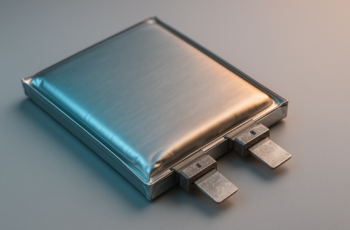
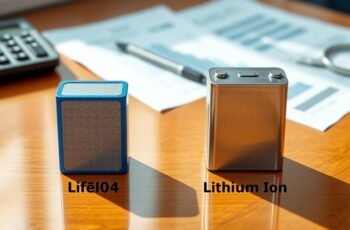
Did you know that LiFePO4 batteries can endure up to 5,000 charge cycles, five times more than traditional lead-acid options? This significant difference impacts long-term performance and cost-effectiveness in energy storage systems. Understanding how these batteries compare regarding longevity, maintenance, and overall value is vital for making informed decisions. As we analyze these technologies, you’ll find that choosing the right type depends on specific application needs and long-term goals.
Key Takeaways
- LiFePO4 batteries have higher energy density and faster charge-discharge cycles than lead-acid batteries.
- They offer longer cycle life (2000-5000 cycles) versus 500-1000 for lead-acid.
- LiFePO4 requires less maintenance and has better thermal stability.
- Despite higher initial costs, LiFePO4’s durability reduces long-term ownership expenses.
- LiFePO4 is safer, more environmentally friendly, and better suited for demanding energy storage applications.
How Do LiFePO4 and Lead-Acid Batteries Differ in Performance?
While both LiFePO4 and lead-acid batteries serve as reliable energy storage solutions, their performance characteristics differ considerably. The key lies in their battery chemistry: LiFePO4 uses lithium iron phosphate, offering higher energy density and faster charge-discharge cycles, whereas lead-acid relies on lead plates immersed in sulfuric acid, resulting in lower efficiency. These differences impact overall performance, with LiFePO4 delivering more consistent power output and longer cycle life. Additionally, their environmental impact varies notably. LiFePO4 batteries are more environmentally friendly due to their non-toxic chemistry and recyclability, while lead-acid batteries pose greater environmental risks because of toxic lead and acid. Consequently, understanding these performance distinctions helps inform better choices aligned with operational and ecological priorities.
Which Battery Type Offers Better Longevity and Durability?
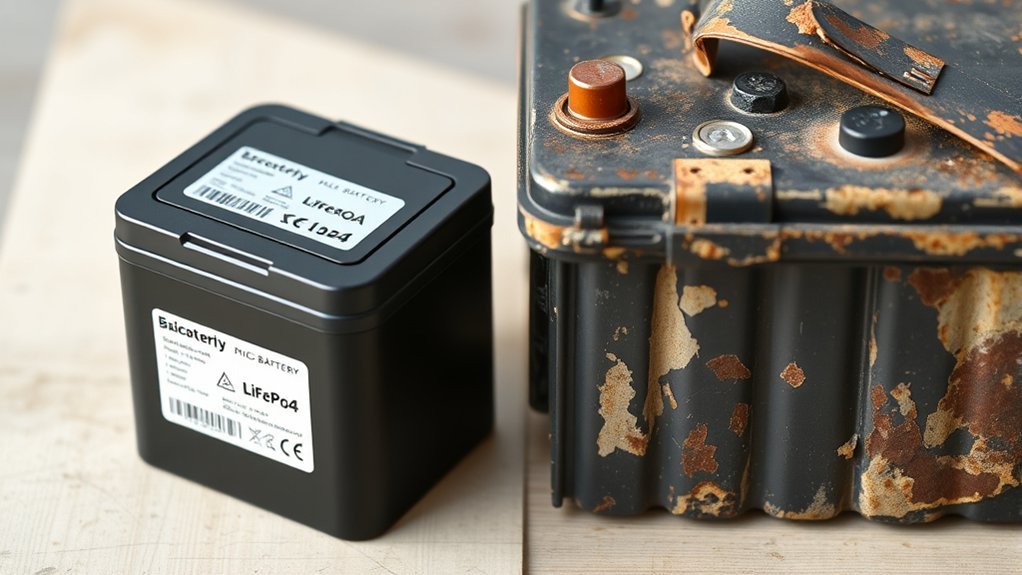
When comparing longevity and durability, LiFePO4 batteries generally outperform lead-acid systems due to their advanced chemistry and construction. They typically offer 2000-5000 charge cycles, far exceeding the 500-1000 cycles of lead-acid batteries, which results in a longer operational lifespan. Additionally, LiFePO4 cells exhibit better thermal stability and resist capacity fade over time, enhancing durability under demanding conditions. From an environmental impact perspective, LiFePO4 batteries produce fewer harmful emissions during manufacturing and discharge. Recycling considerations also favor LiFePO4, as they contain fewer toxic materials and are easier to process safely. Overall, the superior cycle life, stability, and eco-friendliness make LiFePO4 batteries a more durable and sustainable choice for long-term applications.
What Are the Maintenance Requirements for Each Battery?
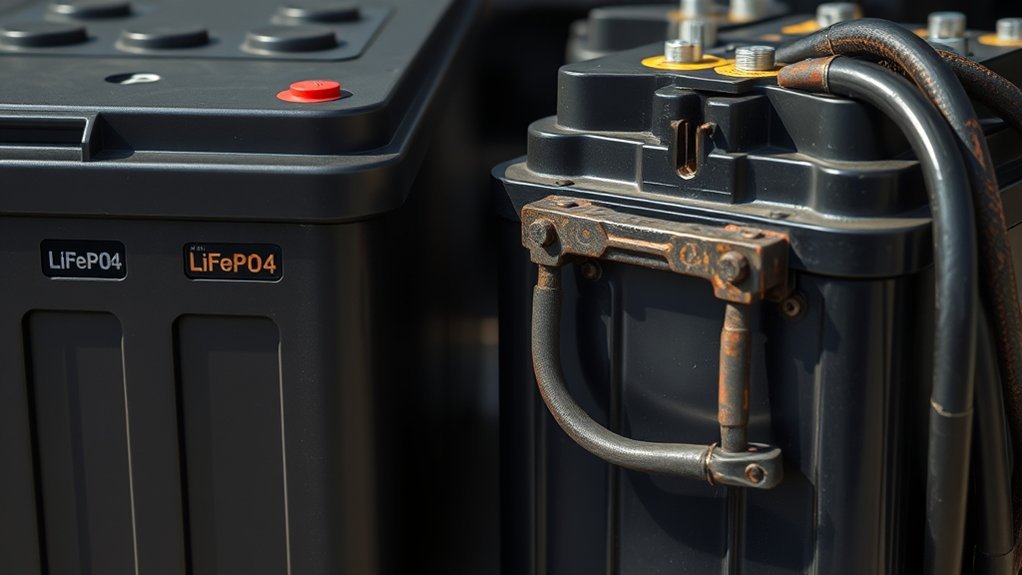
LiFePO4 batteries generally require less maintenance compared to lead-acid systems due to their stable chemistry and robust design. They do not need regular water additions, unlike lead-acid batteries, which require electrolyte top-ups and periodic equalization charges. Monitoring voltage and temperature during charging cycles is essential to prevent overcharging or thermal stress, ensuring peak performance and longevity. Regarding battery recycling, LiFePO4 batteries pose fewer environmental concerns and are easier to repurpose at the end of their lifespan, whereas lead-acid batteries contain hazardous materials requiring specialized disposal. Overall, LiFePO4’s minimal maintenance needs simplify operational protocols, while lead-acid batteries demand routine checks and careful handling to sustain performance and facilitate responsible recycling.
How Do Costs Compare Between Lithium Iron Phosphate and Lead-Acid Batteries?
Although lithium iron phosphate (LiFePO4) batteries typically have a higher upfront cost than lead-acid batteries, their longer lifespan and superior performance tend to offset initial expenses, making them more cost-effective over time. Market trends indicate increasing adoption of LiFePO4 due to declining manufacturing costs and improved efficiency. While lead-acid batteries remain cheaper initially, their shorter cycle life and higher maintenance costs diminish long-term value. Environmental impact considerations also favor LiFePO4, as they produce fewer hazardous materials and have a smaller ecological footprint across their lifecycle. Overall, despite higher initial investment, the total cost of ownership for LiFePO4 batteries decreases over time, driven by lower replacement needs and enhanced sustainability, aligning with evolving market demands for environmentally responsible energy storage solutions.
Which Battery Is Better Suited for Your Specific Energy Storage Needs?
Choosing the right energy storage solution depends on understanding the specific demands of your application. For high safety standards and longevity, LiFePO4 batteries often outperform lead-acid options due to their inherent thermal stability and lower risk of thermal runaway. They also facilitate safer operation, which is vital in residential or commercial settings. Recycling considerations are essential; LiFePO4 batteries are easier to recycle and contain fewer hazardous materials compared to lead-acid batteries, reducing environmental impact. Conversely, lead-acid batteries may be more suitable for applications with short-term, low-cost needs but pose greater safety risks and more complex recycling processes. Ultimately, evaluating factors like safety, lifespan, environmental impact, and your energy demands will help identify the most appropriate choice for your specific storage needs.
Frequently Asked Questions
Are Lifepo4 and Lead-Acid Batteries Environmentally Friendly?
We believe LiFePO4 batteries are more environmentally friendly due to their longer lifespan and lower manufacturing impact, which reduce waste and resource use. Lead-acid batteries pose higher environmental risks because of toxic materials and shorter cycle life.
How Do Temperature Extremes Affect Each Battery Type’s Performance?
Imagine a solar-powered system in winter; LiFePO4 batteries maintain performance stability due to superior temperature resilience, unlike lead-acid batteries which suffer reduced capacity and efficiency. Temperature extremes considerably impact each battery type’s performance stability.
Can Lifepo4 Batteries Be Recycled Easily?
Yes, LiFePO4 batteries are recyclable, reducing their environmental impact through specialized battery recycling processes. This makes them a more sustainable choice, as they enable efficient recovery of valuable materials and minimize waste compared to traditional batteries.
What Safety Concerns Are Associated With Each Battery?
We recognize that LiFePO4 batteries pose lower battery fire risks and are less prone to chemical leakage concerns, whereas lead-acid batteries carry higher fire risks and potential acid leaks. Both require careful handling to guarantee safety and prevent hazards.
How Do Charging Times Compare Between the Two Battery Types?
Charging speed for LiFePO4 batteries generally exceeds that of lead-acid, thanks to superior power efficiency and faster acceptance rates. This results in reduced downtime, making LiFePO4 more suitable for applications demanding rapid recharge cycles.
Conclusion
In the landscape of energy storage, LiFePO4 batteries stand as the resilient guardians, outlasting and outperforming lead-acid counterparts with their superior cycle life and safety features. While the initial investment may seem steep, their long-term endurance and lower maintenance costs make them a strategic choice—like planting a robust tree in a storm. Ultimately, selecting the right battery depends on your specific needs, balancing upfront costs with future reliability and sustainability.