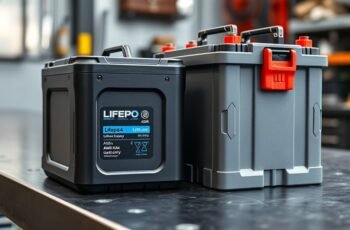
Some might assume all lithium batteries pose similar safety risks, but the chemistry behind LiFePO4 batteries actually offers notable advantages. Their superior chemical stability reduces the likelihood of thermal runaway and fire hazards, especially under demanding conditions. Understanding these differences is essential when evaluating safety for various applications, yet many overlook the specific properties that make LiFePO4 a potentially safer choice. Exploring these distinctions could impact how we select energy storage solutions, so let’s examine the key safety considerations more closely.
Key Takeaways
- LiFePO4 batteries have higher thermal stability, reducing the risk of thermal runaway and fires compared to traditional lithium-ion batteries.
- Their stable chemical composition makes LiFePO4 less prone to decomposition under stress, enhancing safety.
- LiFePO4 cells are less flammable and more resistant to high temperatures, lowering explosion risks.
- Both types require proper BMS and safety features, but LiFePO4’s inherent stability provides an extra safety margin.
- Overall, LiFePO4 batteries are considered safer for high-demand and large-scale applications due to their robust chemistry.
How Do LiFePO4 and Lithium-Ion Batteries Differ Chemically?
While both LiFePO4 and traditional lithium-ion batteries rely on lithium-based chemistry, their core differences lie in their cathode materials, which markedly influence their chemical stability. In battery manufacturing, LiFePO4 employs lithium iron phosphate, offering a more stable crystal structure that resists decomposition under stress. This stability impacts charging protocols, as LiFePO4 cells tolerate higher charge currents without degrading, contrasting with lithium-ion variants that require carefully managed charging to prevent thermal runaway. The chemical composition directly affects electrolyte interactions and the formation of solid-electrolyte interphase (SEI) layers, influencing overall longevity and safety. Consequently, understanding these chemical distinctions is crucial for optimizing battery performance, especially in applications demanding robust charging protocols and enhanced safety profiles.
Which Battery Is Safer in Terms of Thermal Stability?
LiFePO4 batteries demonstrate superior thermal stability compared to traditional lithium-ion batteries, primarily due to their robust chemical structure. This stability enhances safety by reducing risks of thermal runaway, which can cause fires or explosions. Their stable chemistry contributes to a longer battery lifespan, maintaining performance over many charge cycles without degradation. Manufacturing standards further influence thermal safety; high-quality production minimizes defects that could lead to thermal issues. Lithium-ion batteries with weaker chemistries are more susceptible to overheating under stress, while LiFePO4’s stable composition inherently resists temperature fluctuations. Consequently, LiFePO4 batteries offer a safer profile for thermal stability, making them preferable where safety and longevity are critical considerations.
How Do Each Battery Type Handle Overcharging and Short Circuits?
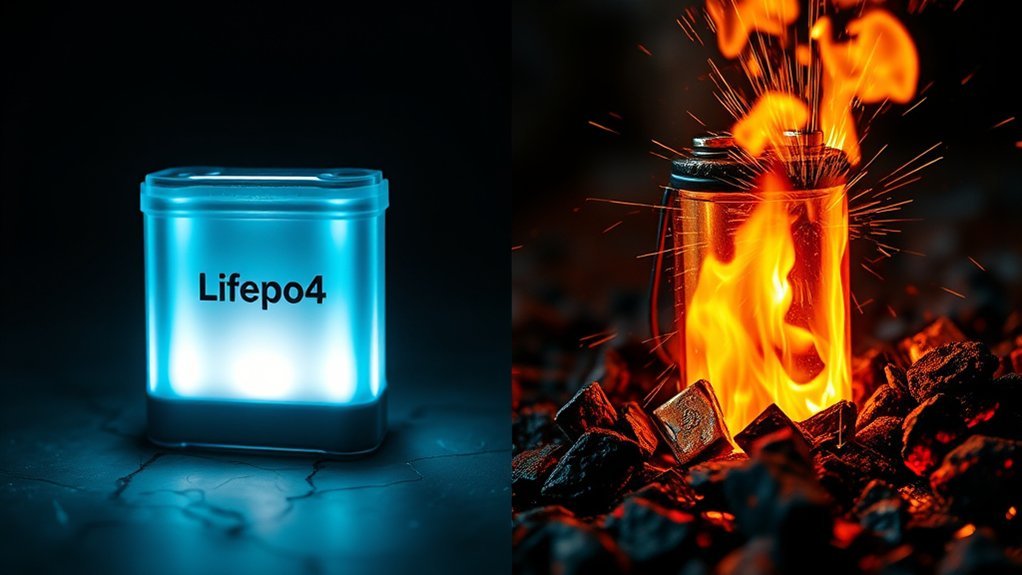
Both battery types employ specific design features to mitigate risks associated with overcharging and short circuits, but their effectiveness varies considerably. Lithium-Ion batteries often rely on electronic Battery Management Systems (BMS) to control charging speed and prevent overvoltage, protecting battery capacity and longevity. Conversely, LiFePO₄ batteries inherently resist overcharging due to their stable chemistry, reducing the need for complex BMS.
- Lithium-Ion batteries utilize BMS to cut off charging once capacity thresholds are met, ensuring safety.
- LiFePO₄ batteries’ chemical stability minimizes risks even if overcharged, but a BMS still enhances safety.
- Short circuit protection is integrated into both types, with LiFePO₄’s thermal stability providing an added safety margin.
What Are the Fire and Explosion Risks of Lithium-Ion vs. LiFePO4?
Lithium-ion batteries generally exhibit lower thermal stability and a higher propensity for thermal runaway, increasing fire and explosion risks under fault conditions. In contrast, LiFePO4’s more stable chemistry reduces the likelihood of catastrophic failure, though the flammability of its components still warrants attention. Understanding these differences is vital for evaluating safety profiles in various applications.
Thermal Stability Differences
While lithium-ion batteries are widely used for their high energy density, their thermal stability poses significant safety concerns, particularly regarding fire and explosion risks. Lithium-ion cells are prone to thermal runaway due to their chemical composition and battery manufacturing processes, which can escalate rapidly under abuse conditions. In contrast, LiFePO4 batteries exhibit superior thermal stability because of their stable cathode chemistry. Specifically:
- They resist decomposition at elevated temperatures, reducing fire risk.
- Their lower energy density limits the heat released during failure.
- Their inherent chemical stability makes them less susceptible to thermal runaway initiation.
This fundamental difference in thermal stability underscores why LiFePO4 batteries are considered safer, especially in applications demanding rigorous safety standards.
Risk of Thermal Runaway
How significant is the risk of thermal runaway in different lithium-based batteries? Lithium-ion batteries pose a higher risk due to their higher energy density and battery capacity, which can accelerate thermal runaway if internal failures occur. Their faster charging speeds can increase stress on the cell, elevating the chance of overheating. Conversely, LiFePO4 batteries have a more stable chemistry, with lower energy density reducing the likelihood of catastrophic failures. The inherent thermal stability of LiFePO4 minimizes the potential for thermal runaway, even under fast charging conditions. While both types can experience thermal runaway, lithium-ion batteries are more susceptible due to their design and chemical characteristics, making their fire and explosion risks more significant compared to the safer profile of LiFePO4 batteries.
Flammability of Components
The composition of battery components directly influences their flammability and the potential severity of fire or explosion incidents. Regarding safety, LiFePO4 batteries tend to be less flammable than traditional lithium-ion chemistries. This difference stems from their chemical makeup and manufacturing processes.
- Electrolyte Stability: LiFePO4’s electrolyte is more thermally stable, reducing ignition risk during failure.
- Cathode Material: Its phosphate-based cathode minimizes release of oxygen, limiting fire escalation.
- Manufacturing Standards: Improved battery manufacturing ensures consistent quality, directly impacting consumer safety.
Are LiFePO4 Batteries Less Likely to Degrade or Fail Over Time?
LiFePO4 batteries generally demonstrate greater stability over time compared to traditional lithium-ion variants, primarily due to their robust chemical structure. This stability translates into a longer battery lifespan, with fewer capacity losses as cycles progress. Their inherent chemical stability reduces the likelihood of degradation-related failures, especially when manufacturing standards are strictly adhered to. High-quality manufacturing ensures consistent cell quality, minimizing defects that could accelerate failure modes. Consequently, LiFePO4 batteries tend to maintain their performance characteristics longer, with less capacity fade over extended use. This resilience makes them suitable for applications demanding durability and longevity. Overall, their chemically stable design and rigorous manufacturing standards contribute notably to their lower degradation rate and enhanced reliability over time.
How Do Safety Features in Each Battery Type Prevent Accidents?
While both LiFePO4 and traditional lithium-ion batteries incorporate safety features designed to mitigate risks, their mechanisms and effectiveness differ considerably. The battery chemistry fundamentally influences these safety measures. For LiFePO4, the stable cathode chemistry reduces thermal runaway risk, adhering to strict safety regulations. Conversely, lithium-ion batteries often include:
- Built-in BMS (Battery Management System): Monitors voltage, temperature, and current to prevent overcharging or overheating.
- Separator Design: Enhanced separators prevent internal short circuits.
- Pressure Relief Valves: Allow controlled venting in case of internal pressure buildup.
These features demonstrate how each battery type’s safety design aligns with safety regulations, but LiFePO4’s chemistry inherently provides a higher resistance to accidents, making it safer overall.
What Are the Environmental Impacts of Recycling Lithium-Ion and LiFePO4 Batteries?
Recycling lithium-ion and LiFePO4 batteries presents distinct environmental challenges due to their chemical compositions and material contents. As batteries reach the end of their lifespan, effective recycling procedures become vital to minimize environmental impact. Lithium-ion batteries contain hazardous materials like cobalt and nickel, which pose risks of soil and water contamination if improperly processed. Conversely, LiFePO4 batteries have a more stable chemical makeup, reducing some environmental hazards. However, both battery types require specialized recycling techniques to recover valuable metals and prevent toxic waste. The efficiency of these procedures directly impacts resource conservation and pollution control. Ultimately, understanding and improving recycling processes for each battery type helps mitigate their environmental footprint and promotes sustainable battery lifecycle management.
Which Battery Type Is Better for High-Temperature Environments?
When evaluating battery performance in high-temperature environments, it becomes clear that chemical stability and thermal resilience are critical factors. LiFePO4 batteries generally outperform lithium-ion variants due to their robust thermal stability, which reduces risks of thermal runaway. In contrast, lithium-ion batteries tend to degrade faster under elevated temperatures, influenced by battery manufacturing processes that often introduce less stable cathode materials.
Key considerations include:
- Battery manufacturing: LiFePO4’s stable crystal structure offers enhanced thermal resilience, making it suitable for high-temperature conditions.
- Charging protocols: Proper protocols prevent overheating, but LiFePO4’s inherent stability reduces the need for complex thermal management.
- Thermal management: LiFePO4 batteries require less intensive cooling systems, increasing safety and longevity in hot environments.
Can LiFePO4 Batteries Be Safely Used in Large-Scale Energy Storage?
LiFePO4 batteries are increasingly being considered for large-scale energy storage due to their inherent safety and stability characteristics. Their thermal stability diminishes risks of thermal runaway, making them suitable for grid applications. Although their energy density is lower than lithium-ion chemistries, advances in battery manufacturing have improved performance. Proper design and management systems are essential to guarantee safety at scale. The table below highlights key factors influencing their large-scale deployment:
| Feature | Advantage | Limitation |
|---|---|---|
| Battery manufacturing | Consistent quality control | Higher initial costs |
| Safety | Reduced thermal runaway risk | Lower energy density |
| Scalability | Modular design for large grids | Complex management systems |
| Longevity | Long cycle life | Potential capacity fade |
These factors affirm LiFePO4’s viability for large-scale energy storage projects.
What Should Consumers Consider When Choosing a Safer Battery Option?
When selecting a safer battery, we must evaluate the specific safety features and associated risks of each type, considering factors like thermal stability and failure modes. Compatibility with intended applications and operational requirements also play a critical role in ensuring safe and effective use. By analyzing these technical aspects, consumers can make informed decisions aligned with their safety and performance priorities.
Safety Features and Risks
Choosing a safer battery involves carefully evaluating specific safety features and understanding potential risks. Key considerations include:
- Thermal stability: LiFePO4 batteries exhibit higher thermal stability, reducing risks of thermal runaway, whereas lithium-ion batteries with higher energy density may pose increased fire hazards.
- Battery capacity and charging cycles: LiFePO4 cells typically offer a lower battery capacity but withstand more charging cycles, enhancing longevity and safety. Lithium-ion batteries with higher capacity can be more sensitive to overcharging, increasing risks.
- Built-in safety mechanisms: Modern lithium-ion batteries often incorporate safety features like pressure relief valves and protective circuitry, but their effectiveness varies. Evaluating these features helps determine overall safety during operation and potential failure modes.
Compatibility and Usage Needs
Selecting the appropriate battery requires a clear understanding of specific compatibility and usage requirements, as these factors directly influence safety and performance. Consumers should evaluate the manufacturing standards that guarantee consistent quality and safety features, reducing risks associated with poorly manufactured cells. Compatibility involves examining voltage, capacity, and form factor to prevent damage or inefficiencies. Additionally, considering the battery’s lifecycle and its impact on battery recycling is vital for sustainable disposal. Lifepo4 batteries often adhere to stringent manufacturing standards, facilitating safer handling and longer lifespan, whereas some lithium-ion variants may not meet these benchmarks. Ultimately, matching the battery’s technical specifications with the device’s demands, alongside sustainable practices like battery recycling, guarantees both safety and peak performance.
Frequently Asked Questions
How Do Lifepo4 Batteries Perform in Extreme Weather Conditions?
Lifepo4 batteries excel in extreme weather due to their thermal stability, maintaining safety and performance; however, their cold performance can decline, requiring insulation or heating solutions to guarantee reliable operation in low temperatures.
Are There Differences in Charging Times Between Lifepo4 and Lithium-Ion Batteries?
Surprisingly, charging times differ minimally between Lifepo4 and lithium-ion batteries, but Lifepo4’s superior charging efficiency enhances battery longevity, making it a smarter choice for long-term performance despite similar initial charge durations.
What Are the Cost Differences Between Lifepo4 and Lithium-Ion Batteries?
We find that LiFePO4 batteries generally cost more upfront due to advanced chemistry and safety features, but their longer lifespan enhances cost-effectiveness. Market availability influences pricing, with LiFePO4 becoming more accessible as demand grows.
How Do Recycling Processes Differ for These Two Battery Types?
Like unraveling a complex puzzle, we see that Lifepo4 batteries, with their stable cathode chemistry, allow for higher recycling efficiency due to less hazardous materials, whereas lithium-ion batteries pose challenges with cobalt and electrolyte recovery, affecting overall recyclability.
Are There Specific Safety Regulations for Each Battery Type?
We find that safety regulations for Lifepo4 and lithium-ion batteries differ, considering their battery lifespan and energy density. Lifepo4’s lower energy density reduces thermal risks, leading to stricter standards, whereas lithium-ion batteries face varied regulations due to higher energy densities.
Conclusion
Based on our analysis, LiFePO4 batteries demonstrate superior safety due to their stable chemical composition and thermal resilience, considerably reducing risks of fire, explosion, and degradation. While both battery types have their applications, LiFePO4’s inherent stability makes them a more reliable choice for high-temperature and large-scale energy storage scenarios. Ultimately, understanding these differences helps us select safer, more durable energy solutions tailored to demanding environments and long-term use.