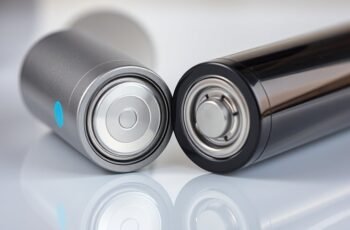
While Lifepo4 and lithium-ion batteries both power our devices and vehicles, their fundamental differences in chemistry and design lead to distinct advantages and limitations. Understanding these nuances is essential for making informed decisions about which battery type best suits specific applications. As we examine safety, longevity, performance, and cost, you’ll see that choosing the right option involves more than just capacity. The key factors may surprise you, and the implications are significant.
Key Takeaways
- Lifepo4 uses a lithium iron phosphate cathode, offering enhanced safety and thermal stability over lithium-ion’s cobalt or manganese cathodes.
- Lifepo4 batteries have longer cycle life (over 2000 cycles) and are more environmentally friendly and easier to recycle.
- Lithium-ion batteries provide higher energy density and power output, making them ideal for portable electronics.
- Lifepo4 is safer with lower risk of thermal runaway, suited for grid storage and electric vehicles.
- Lithium-ion batteries typically degrade faster, have higher initial costs, and pose greater recycling challenges.
How Do Lifepo4 and Lithium-Ion Batteries Differ in Chemistry and Design?
Although both Lifepo4 and lithium-ion batteries rely on lithium chemistry, their fundamental differences in chemistry and design considerably impact their performance and safety. Lifepo4 batteries utilize a lithium iron phosphate cathode, leading to a stable electrolyte composition that withstands high thermal and chemical stress. In contrast, lithium-ion batteries often employ cobalt or manganese-based cathodes, which require different electrolyte formulations for peak performance. Cell architecture also diverges: Lifepo4 cells feature a more robust, layered design that enhances thermal stability and reduces dendrite formation. Lithium-ion cells typically have a cylindrical or prismatic architecture tailored for energy density. These structural distinctions influence not only safety margins but also the overall durability and operational characteristics of each battery type.
Which Battery Type Offers Better Safety and Longevity?

When evaluating safety and longevity, Lifepo4 batteries generally outperform lithium-ion batteries due to their inherently stable chemistry and robust cell design. This stability reduces risks of thermal runaway and fires, making Lifepo4 safer in high-stress environments. Additionally, Lifepo4 cells tend to have longer cycle lives, often exceeding 2000 cycles, which enhances longevity. From an environmental perspective, Lifepo4 batteries also offer advantages, as their chemistry facilitates easier Battery Recycling and results in a lower Environmental Impact. To summarize:
- Improved thermal stability minimizes safety hazards.
- Longer cycle life increases overall durability.
- Stable chemistry reduces degradation over time.
- Easier Battery Recycling lessens environmental footprint.
These factors collectively favor Lifepo4 in both safety and longevity contexts.
How Do Performance and Cost Compare Between Lifepo4 and Lithium-Ion Batteries?
Performance and cost are critical factors when comparing Lifepo4 and lithium-ion batteries, as they directly influence their suitability for various applications. Lifepo4 batteries typically offer lower initial costs and longer cycle life, which can reduce long-term expenses. Their stable chemistry also enhances safety, decreasing risks associated with battery recycling and environmental impact. Conversely, lithium-ion batteries generally provide higher energy density and power output, making them preferable for compact, high-performance needs, but at a higher upfront cost. Although lithium-ion batteries tend to degrade faster, they are more widely recycled due to established infrastructure, impacting environmental considerations. Overall, Lifepo4 batteries present a cost-effective, safer option with a favorable environmental footprint, while lithium-ion batteries excel in performance but pose greater challenges related to battery recycling and environmental impact.
What Are the Best Use Cases for Lifepo4 and Lithium-Ion Batteries?
Lifepo4 and lithium-ion batteries each excel in specific applications due to their distinct performance characteristics. Lifepo4 batteries are ideal for applications requiring high safety, long cycle life, and stable discharge, such as grid storage and electric vehicles. Lithium-ion batteries, with higher energy density, are better suited for portable electronics and consumer devices. When considering use cases, we also evaluate factors like battery recycling and environmental impact. Lifepo4 batteries are easier to recycle and have a lower environmental footprint, making them preferable for large-scale energy storage. Lithium-ion batteries, while more energy-dense, pose greater challenges in battery recycling and disposal. The choice depends on balancing performance needs with environmental considerations, ensuring sustainable and efficient energy solutions for diverse applications.
Which Battery Is Right for Your Needs: Making the Informed Choice?
Choosing the right battery depends on analyzing your specific energy requirements, safety considerations, and environmental priorities. Lifepo4 offers advantages in safety and longevity, making it suitable for high-cycle applications, while lithium-ion provides higher energy density for compact needs. When considering environmental impact, Lifepo4 batteries are more sustainable due to easier battery recycling and lower toxicity. Conversely, lithium-ion batteries pose challenges in recycling processes and generate more hazardous waste. Your decision should also factor in safety protocols, lifecycle costs, and disposal practices, as these influence overall sustainability. Ultimately, understanding these technical differences helps you select a battery that aligns with your operational needs and environmental commitments, ensuring you make an informed, responsible choice for your energy storage solutions.
Frequently Asked Questions
How Do Lifepo4 and Lithium-Ion Batteries Perform in Extreme Temperatures?
We find Lifepo4 batteries offer superior thermal stability and temperature resilience in extreme conditions, maintaining performance without overheating or capacity loss, unlike lithium-ion batteries, which are more susceptible to thermal runaway and degradation under high or low temperatures.
Are Lifepo4 Batteries More Environmentally Friendly Than Lithium-Ion Batteries?
We find LiFePO4 batteries more environmentally friendly due to longer battery lifespan, reducing waste, and safer chemistry. Although higher initial costs may be a concern, their lower environmental impact offers a compelling cost comparison advantage over traditional lithium-ion batteries.
What Are the Recycling Options for Each Battery Type?
We find that recycling processes for lithium-ion batteries are well-established, focusing on recovering valuable materials, whereas LiFePO4 batteries offer longer battery longevity, reducing waste, though recycling methods are still evolving for ideal material recovery.
How Do Charging Times Compare Between Lifepo4 and Lithium-Ion Batteries?
Charging speed for Lifepo4 batteries is generally faster due to their lower internal resistance, providing more consistent power delivery. Lithium-ion batteries may take longer to reach full charge, but both maintain stable power output during use.
Can Lifepo4 Batteries Be Used in High-Drain Applications?
Think of Lifepo4 batteries as sturdy bridges—excellent at handling high-drain demands with reliable capacity, unlike some lithium-ion types. Their balanced battery capacity and cost comparison make them a strong choice for demanding applications.
Conclusion
Ultimately, choosing between Lifepo4 and lithium-ion batteries hinges on aligning their unique strengths with your specific needs. While Lifepo4’s safety and longevity may seem ideal for sustainable energy solutions, lithium-ion’s high energy density suits portable tech. It’s no coincidence that many industries now integrate both types, optimizing performance and safety. By understanding these nuances, you’re better equipped to make an informed decision—one that aligns with your application’s technical and operational priorities.