We compare LiFePO4 against lead acid with a focus on real-world performance and safety implications. We’ll examine how a stable lattice reduces gas evolution and thermal risk, how longevity lowers replacement and maintenance costs, and how optimized charging and temperature management preserve capacity. Our goal is to assess total cost of ownership and system design impacts. But before we settle on numbers, we must consider how each factor translates to your specific use case and constraints.
Key Takeaways
- LiFePO4 has a safer, stable chemistry with lower risk of gas evolution and thermal runaway compared to lead-acid.
- Longer lifespan and lower total cost of ownership reduce replacement, maintenance, and downtime.
- Better charging, discharging, and thermal management preserve capacity and enable safer, optimized performance.
- Smaller environmental footprint with lower production emissions and higher recyclability than lead-acid.
- Scalable, modular system design with improved safety in enclosures and straightforward BMS integration.
What Makes LiFePO4 Safer Than Lead Acid
What makes LiFePO4 safer than lead acid? We evaluate chemistry, failure modes, and thermal behavior with a disciplined, data-driven lens. LiFePO4 exhibits safer chemistry due to a stable lattice structure, lower tendency for gas evolution, and reduced risk of thermal runaway. In contrast, lead acid cells release flammable hydrogen under abuse and pressure buildup can prompt venting events. Our analysis shows LiFePO4 cells maintain structural integrity under overcharge and short-circuit conditions, limiting rapid energy release. The safer chemistry translates to lower risk of catastrophic failure, allowing more forgiving operating margins. Practically, this means fewer safety-alarmed scenarios and more predictable performance. For users, the implication is clear: lower risk, more reliable safety outcomes for routine operation and installation.
How LiFePO4 Longevity Cuts Your Total Cost
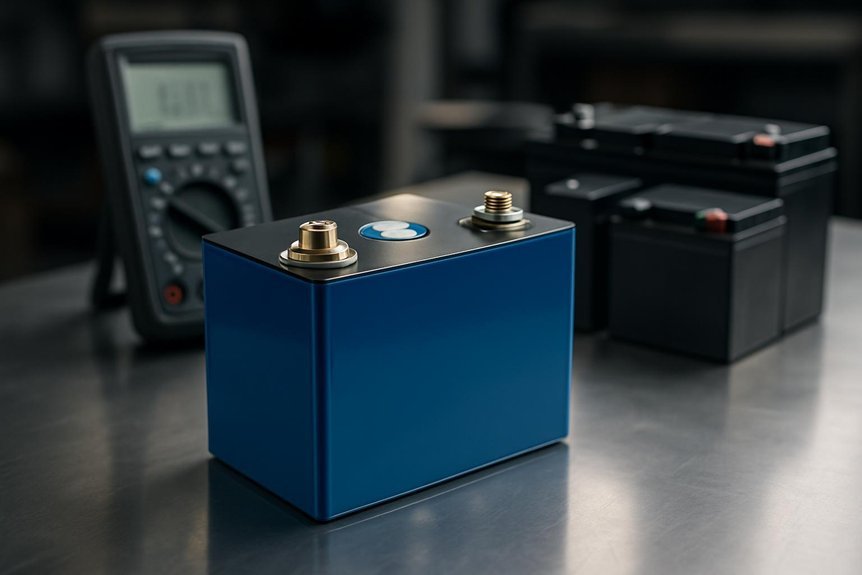
How does LiFePO4 longevity translate into lower total cost over the system’s life? We quantify benefits by comparing replacement cycles, maintenance events, and depreciation of energy storage. Our approach treats longevity cost as a function of cycle life, depth of discharge, and failure rates, yielding a clear lifespan value that informs budgeting and risk. We focus on hardware, installation, and lifecycle costs, not transient gains.
1) Reduced replacement frequency lowers capex and labor costs, improving total cost of ownership.
2) Fewer maintenance events save service downtime, extending system reliability and uptime value.
3) Stable performance over time preserves energy yield, improving payback period and long-term affordability.
LiFePO4 in Action: Charging, Discharging, and Heat
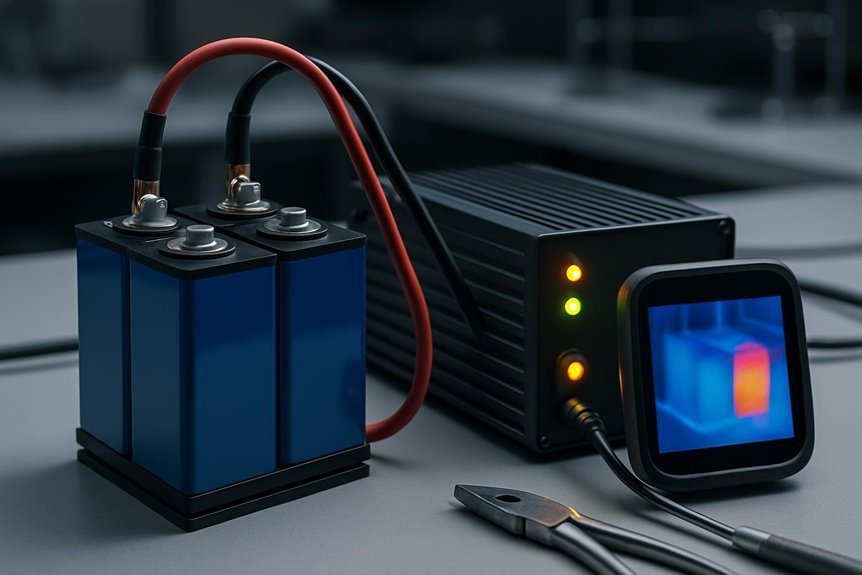
LiFePO4 batteries operate within well-defined charging and discharging windows that directly influence performance and longevity. We operate within these boundaries to optimize cycle life and reliability, detailing practical implications for users. Charging profiles shape charging efficiency, balancing rate, voltage limits, and temperature to minimize degradation. We emphasize controlled dQ/dt, proper state-of-charge targets, and temperature-aware charging to sustain capacity. During discharge, we monitor available depth of discharge and internal resistance shifts that affect usable energy and efficiency. Thermal management is essential: effective cooling or heating keeps cells within optimal temperature ranges, reducing impedance rise and self-discharge. We recommend site-specific strategies—load profiling, ambient considerations, and battery management system tuning—to maintain stable performance and predictable energy delivery over time.
LiFePO4’s Environmental Footprint and Safety
Environmental footprint and safety are central to evaluating LiFePO4 batteries: they offer lower emissions during production and operation, safer chemistry, and fewer hazard risks compared to many alternatives.
We, as researchers and practitioners, weigh environmental tradeoffs with practical safety considerations, balancing lifecycle impacts against performance gains. Overall, LiFePO4 exhibits reduced toxic emissions, lower thermal runaway potential, and longer mean times between failures, contributing to safer, more reliable deployments.
1) Lifecycle emissions and resource use compare favorably to lead-acid, with lower energy intensity during manufacture and recycling considerations.
2) Thermal safety profile reduces ignition risk under fault conditions, improving on-site risk management.
3) End-of-life handling remains essential, but material recyclability supports lower long-term environmental burden.
How to Choose the Right LiFePO4 System for Your Use Case
Selecting the right LiFePO4 system hinges on clearly defined use cases, operating profiles, and lifecycle expectations. We address system sizing by aligning selecting capacity with demand and reserve margins, then validate with real load patterns. Battery chemistry safety informs enclosure, venting, and thermal design, while charging strategies optimize efficiency and cycle life. Installation guidelines ensure compliant wiring, grounding, and space planning, complemented by monitoring solutions that track SOC, health, and temperature management. Warranty considerations and warranty terms define risk exposure, while lifecycle cost analysis accounts for upfront, replacement, and maintenance. Modular design enables scalable capacity, improving off grid viability and solar integration. BMS features determine fault protection and data visibility; weight and space influence mounting. Environmental impact and recycling options complete the assessment, reinforcing responsible decisions.
Frequently Asked Questions
How Do Lifepo4 Batteries Perform in Extreme Temperatures?
Extreme temperatures degrade LiFePO4 performance: high heat accelerates capacity fade and cycle life declines, while cold reduces usable power. We, however, design for thermal management to maintain stable cycle life and consistent output.
What Is the Real-World Cycle Life Under Heavy Loads?
We observe real world cycles under heavy load durability between 1000 and 4000 cycles, depending on temperature and depth of discharge, with endurance dropping at higher currents but remaining practical for many high-drain systems.
Can Lifepo4 Be Recycled Cost-Effectively?
Like a tightly wound clock, we can recycle LiFePO4 cost-effectively, we say. We analyze recycling economics and end of life logistics, arguing that scale, processing efficiency, and policy incentives drive viable, ongoing LiFePO4 recycling.
How Do Charging Myths Affect Lifepo4 Performance?
We debunk charging myths and performance myths by showing how proper LiFePO4 charging algorithms maintain voltage, current, and temperature limits, preserving capacity and cycle life, while incorrect practices cause heat, degradation, and misread state-of-charge показатели.
Do Lifepo4 Outperform in High-Drain Solar Setups?
Yes, we outperform in high-drain solar setups, delivering superior high drain performance and maintaining solar efficiency under load shocks; our cells sustain higher discharge rates with steadier voltage, improving system reliability and overall energy harvest.
Conclusion
We’ve shown how LiFePO4 batteries combine safer chemistry, longer life, and robust thermal management to outpace lead-acid on reliability and total cost. Their modular design and temperature-aware charging reduce maintenance and risk, while environmental impact remains favorable. Considering your application, the math stacks up: higher upfront cost, but lower lifecycle expenses and safer on-site use. Are you ready to upgrade to a system that protects people, assets, and budgets over time?