We’ll start with a clear view of Lifepo4 batteries: they’re safer and stable, yet real-world performance often derates due to high discharge, temperature swings, and aging. Internal resistance climbs and peak power fades as cycles accumulate. High temps accelerate wear; cold starts hamper charging efficiency. System integration brings BMS wiring and balancing challenges, safety margins that prune usable energy, and recycling ethics that complicate true sustainability. There’s more to unpack, and the next questions matter for meaningful improvements.
Key Takeaways
- Thermal sensitivity can still cause performance drops and degradation, especially at extreme temperatures, impacting capacity and efficiency.
- Real-world usable energy is lower than nominal capacity due to derating, pack design, and parasitic losses.
- Cycle life fades with high-temperature cycling and deep discharges, increasing internal resistance and reducing peak power.
- BMS and system integration risk: poor diagnostics or improper isolation can lead to safety or reliability issues.
- Life-cycle costs include maintenance, cooling, and potential replacement, not just upfront battery price.
What Lifepo4 Batteries Are and Why They Matter
Lifepo4 batteries are a rechargeable chemistry that trades heavier metals for lithium iron phosphate, delivering a safer, more stable energy source than many lithium-ion options. We frame them as a distinct energy storage technology with predictable voltage, high thermal stability, and long cycle life, enabling safer pack design and management. Their chemistry yields lower risk of thermal runaway, which informs system-level safety margins and cooling requirements. We examine emissions comparison to contextualize life-cycle impacts, noting manufacturing, operation, and end-of-life pathways. We also consider mining ethics, recognizing supply chain responsibilities and material sourcing practices that influence overall sustainability. In application, Lifepo4 cells support reliable retimed energy services, particularly where safety, longevity, and predictable performance matter for grid, transport, and off-grid deployments.
Cost and Value Analysis: Upfront Price and Lifetime Value
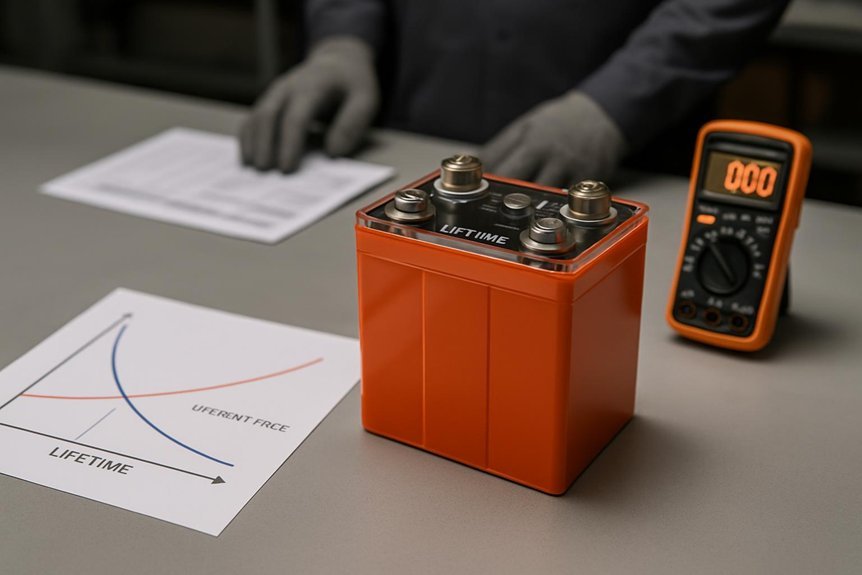
We compare upfront costs and ongoing value to reveal the true lifetime economics of LiFePO4 options. Our analysis weighs initial purchase, installation, and degradation risks against long-term performance, maintenance, and replacement costs. By framing the tradeoffs between upfront price and lifetime value, we set the stage for a data-driven assessment of cost-effectiveness.
Upfront Cost Comparison
A clear upfront cost comparison weighs the purchase price, installation expenses, and the battery’s expected lifetime, translating to apples-to-apples value rather than mere sticker price. We quantify component costs, labor rates, and required infrastructure, then normalize by cycle life and warranty terms to reveal true payback periods. We account for ancillary costs, such as BMS integration, mounting hardware, and safety devices, avoiding optimistic marketing hype that inflates perceived value. Our analysis isolates upfront expenditures from downstream maintenance and replacement, enabling direct assessment across Lifepo4 options. We also consider performance guarantees under typical duty cycles, recognizing that higher upfront price may be offset by longer service intervals. When adverse events occur, cost implications through downtime and remediation are reflected in total ownership, guiding informed procurement decisions.
Lifetime Value Assessment
To assess lifetime value, we balance upfront price against long-run performance and reliability, translating initial expenditures into expected cost per cycle and total ownership over the battery’s life. We perform a rigorous cost analysis that includes capital, maintenance, degradation, and replacement costs, weighted by usage patterns and warranty terms. Our assessment accounts for cycle life, calendar aging, charge/discharge efficiencies, and failure probabilities, translating these factors into a single metric to compare technologies. We recognize supplier bias when gathering data, cross-checking manufacturer claims with independent test results and field performance. By modeling scenarios across duty cycles, temperatures, and safety constraints, we reveal how upfront discounts may be offset by higher long-term costs. The goal is transparent, evidence-based value, not promotional pricing.
Real-World Energy Density: What Capacity Means in Practice
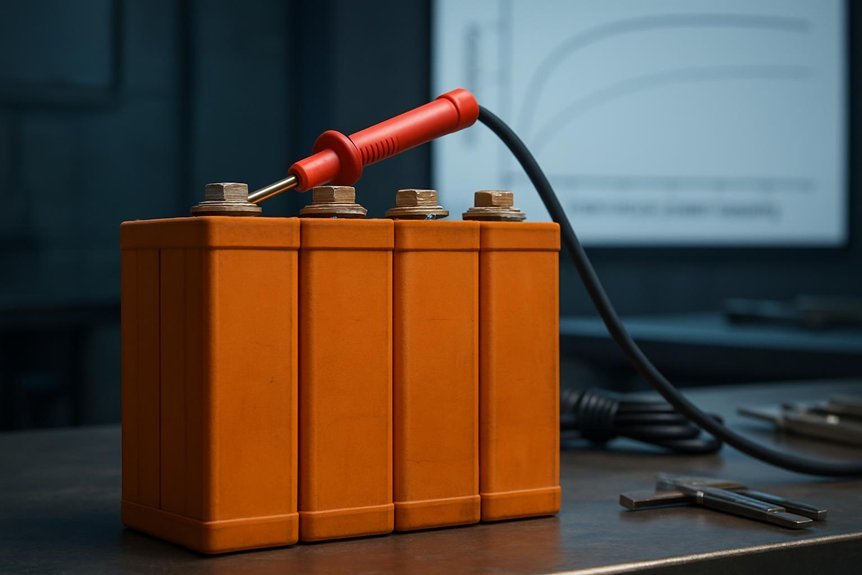
Real-world energy density for LiFePO4 packs reflects not just the nominal capacity on a label but how much usable energy the system delivers under typical operating conditions. We quantify this by factoring derating, pack geometry, and parasitic losses, which shift label values downward in practice. To illustrate, consider these points:
1) Nominal capacity vs. usable energy under load
2) Effects of high discharge rates on effective density
3) Impact of pack design, wiring, and cooling on deliverable energy
4) Influence of battery branding and cell sourcing on quality consistency
We, as practitioners, emphasize consistent specs and traceable sourcing to avoid misleading claims. Accurate energy density metrics enable better system sizing, cost forecasting, and reliability assessments, ensuring performance expectations align with real-world use and lifecycle realities.
Temperature Sensitivity and Performance: How Temps Affect Output
Temperature swings don’t just feel uncomfortable—they directly steer LiFePO4 performance. We examine how ambient and operating temperatures alter internal resistance, charge acceptance, and voltage response. Temperature sensitivity influences kinetic processes: ion diffusion slows at low temps, reducing available capacity and raising impedance; at high temps, accelerated side reactions can raise self-discharge and shorten effective output window. We quantify performance impact by noting voltage sag under load, reflected as lower peak power and steeper, less predictable discharge curves. Charging behavior also shifts; overly cold cells resist acceptance, while heat-laden packs risk overstress unless managed. Our assessment isolates controllable variables—thermal management, state of charge, and load profiles—to minimize adverse effects. The takeaway: temperature-aware design yields consistent, predictable performance impact mitigation without sacrificing safety or efficiency.
Cycle Life Realities: Durability, Degradation, and Maintenance
We examine how durability declines over cycle life and what patterns signal early degradation. We then consider maintenance and longevity factors that influence how long LiFePO4 packs stay reliable. By linking these elements, we establish a framework for predicting wear and scheduling interventions.
Durability Decline Patterns
Durability decline in LiFePO4 batteries follows identifiable cycle-life patterns, driven by cumulative capacity fade, increased internal resistance, and gradual loss of usable capacity under varied operating conditions. We examine these patterns to inform decisions, not to alarm. Here are the core observations:
- Capacity fade accelerates with high-temperature cycling and deep discharges.
- Internal resistance rises as electrode surfaces age, reducing peak power.
- SoC swing and state-of-health metrics diverge under uneven load profiles.
- Recovery effects from rest periods are limited, constraining real-world lifespan forecasting.
These durability patterns enable more accurate lifespan forecasting and maintenance planning. By tracking capacity retention and impedance trends, we quantify degradation trajectories, align expectations with actual performance, and adjust usage strategies accordingly.
Maintenance and Longevity Factors
Maintenance and longevity in LiFePO4 systems hinges on how we manage usage, charging, and operating conditions over the cycle life. We address cycle-life realities by quantifying degradation mechanisms, such as SEI growth, cathode aging, and impedance rise, then linking them to practical operating envelopes. Our focus is on predictable schedules for state of charge, temperature control, and load profiles to minimize stress and uneven aging. We evaluate diagnostic indicators—voltage rebound, capacity fade rate, and internal resistance trends—to inform maintenance intervals and replacement planning. Battery chemistry dictates limits; material choices shape resilience, while environmental impact guides end-of-life decisions and recycling strategies. Clear metrics, disciplined procedures, and continuous monitoring reduce variability, extend usable life, and support accurate lifecycle cost assessments.
BMS Complexity and System Integration: Keeping It Simple and Safe
How can we keep BMS complexity from spiraling while still ensuring safe, reliable operation in a LiFePO4 system? We focus on clear boundaries between functions, modular hardware, and disciplined software interfaces to reduce risk and maximize reliability. Our aim is robust system integration with minimal entanglement.
- Define essential BMS roles (cell monitoring, balance control, fault signaling) and retire nonessential features.
- Choose closed, well-documented communication protocols to prevent integration drift.
- Favor modular, plug-and-play components with consistent electrical and logical interfaces.
- Standardize diagnostics and alarms for rapid troubleshooting and maintenance.
This approach emphasizes bms simplification and disciplined system integration, delivering safety without unnecessary complexity.
Safety and Thermal Management: Preventing Fires and Keeping Cool
What practical measures prevent LiFePO4 battery fires and manage heat effectively, and how do we validate their effectiveness? We, as engineers, implement layered safety: robust enclosure, thermal insulation, and active cooling plus precise venting for pressure events. We use temperature monitoring, fault flags, and rapid isolation via a reliable BMS to curtail overtemperature and short circuits. Material selection emphasizes chemical stability, low reactivity, and controlled aging to reduce runaway risk. Validation proceeds through controlled thermal abuse tests, calorimetry, and safety-margin stress analyses, complemented by continuous field data. We address two word discussion ideas: safety myths, thermal limits, to frame risk assessment and communicate limits clearly. In practice, we quantify heat generation, diffusion, and dissipation, maintaining safe operating envelopes and preventing ignition pathways.
Charging, Discharging, and Storage Pitfalls: Do’s and Don’ts
Are there common charging, discharging, and storage pitfalls we can reliably avoid with clear guidance and disciplined practices? We, as a team, aim for disciplined operation that respects lithium chemistry constraints and market realities. Poor cycles or improper storage elevate degradation and cost risk, independent of capacity. We must track voltage windows, temperature limits, and state of charge to minimize calendar aging and unnecessary heating. Pricing dynamics influence maintenance decisions and replacement timing.
- Adhere to recommended charge voltages and end-of-discharge thresholds to prevent over-stress.
- Avoid high-temperature exposure during charging and during storage.
- Limit deep discharges; use gentle, partial-state-of-charge cycles when feasible.
- Store at moderate temperatures and monitor for extended idle periods to reduce aging.
Practical Workarounds to Maximize Lifepo4 Performance
Practical workarounds to maximize Lifepo4 performance demand disciplined, data-driven actions that directly influence longevity and efficiency. We approach optimal by targeted parameter tuning, measuring impact, and documenting results. Concept pairing guides our decisions: we link charging profiles, temperature ranges, and aging indicators to concrete performance gains, avoiding interpretive drift. We implement flat-top charging within recommended voltage bounds and monitor cell balance in real time, flagging deviations before degradation accelerates. Acknowledging unrelated focus, we isolate parasitic loads and calendar effects from primary cycle stress, ensuring test integrity. We prioritize thermal management, using deterministic cooling strategies and verified insulation to sustain optimal 25–35°C operation. Data logs drive maintenance windows, electrolyte conditioning, and firmware updates, enabling reproducible improvements and predictable cycle life.
Frequently Asked Questions
Are Lifepo4 Cells Environmentally Friendly at End of Life?
Yes, LiFePO4 cells are relatively environmentally friendly at end of life, though their impact depends on recycling practices. We assess environmental impact and prioritize end of life recycling to recover materials and minimize hazardous waste for responsible disposal.
How Does Aging Affect Lifepo4 Voltage Under Load?
Aging effects reduce LiFePO4 voltage under load as capacity fades; we see higher internal resistance and sag. We’ll quantify aging, monitor voltage under load, beware counterfeit pitfalls, and note end of life environmental impact considerations.
Do Lifepo4 Batteries Recover After Deep Discharge?
Yes, lifepo4 batteries can recover after deep discharge, but recovery is limited and performance may be compromised; we discuss deep discharge recovery strategies, high rate charging safety, cell balancing, and controlled recharging to minimize long-term damage.
Can Lifepo4 Handle High-Rate Charging Safely?
We can’t recommend high-rate charging for LiFePO4; it poses high rate safety concerns. We’re confident rapid charge risks include thermal runaway and cell imbalance, so we proceed cautiously, monitor temperatures, current limits, and use proper BMS-controlled protocols.
What Are Common Counterfeit Lifepo4 Pitfalls?
Counterfeit dangers lurk in fake LiFePO4 cells; we’ve seen misrepresented specs and unsafe chemistries. We profile risks, then guide sourcing verification steps, stay precise, and insist on traceable lot numbers and independent testing to protect you.
Conclusion
We’ve examined Lifepo4 batteries with a critical eye, not to sow doubt, but to test a theory: that apparent limits reveal system design, not cell weakness alone. True performance hinges on management—temperature control, proper charging, and thoughtful BMS wiring. When we align usage with chemistry—avoid high temps, respect DoDs, and ensure real balancing—we unlock durable energy. So, the truth isn’t mystical resilience; it’s disciplined integration, precise controls, and honest expectations about lifecycle costs.