A case study shows a mobile grid project switching to LiFePO4 reduced thermal risk while extending cycle life by 2–3x. We’ll discuss how its safety, durability, and lower total cost of ownership compare with other chemistries, and why these factors matter for real-world use. Our goal is to present precise, actionable points that help you assess suitability as conditions and loads vary, and to flag key tradeoffs you’ll want to consider before deciding.
Key Takeaways
- LiFePO4 batteries offer improved safety and thermal stability, reducing thermal runaway risk compared to other lithium chemistries.
- They provide strong longevity with high cycle life and durable performance across varied temperatures and operating conditions.
- Lower maintenance and simpler charging requirements contribute to lower total ownership costs and reliable operation.
- Predictable, gentle heat generation and robust lattice structure enhance safety margins under stress and fast charging.
- They maintain performance in real-world use with stable energy delivery, effective thermal management, and clear diagnostics for fault detection.
What Makes LiFePO4 Safer Than Other Batteries
LiFePO4 batteries are safer primarily due to their thermal and chemical stability, which reduces the risk of thermal runaway compared with other lithium chemistries. We outperform with predictable behavior under stress, gentler heat generation, and robust lattice structure. Safe charging protocols further minimize overcharge and dendrite formation, preserving cell integrity during routine use. Thermal stability means composition resists rapid temperature spikes, allowing safer operation in variable environments. We emphasize controlled current, appropriate voltage limits, and proper cooling to maintain performance margins. Our chemistry supports wider safety margins without sacrificing reliability, enabling safer integration into portable devices, stationary packs, and automotive applications. By prioritizing safe charging and leveraging intrinsic thermal stability, we deliver safer, dependable energy storage for diverse real‑world needs.
LiFePO4 Cycle Life: How Long It Lasts and Why It Matters
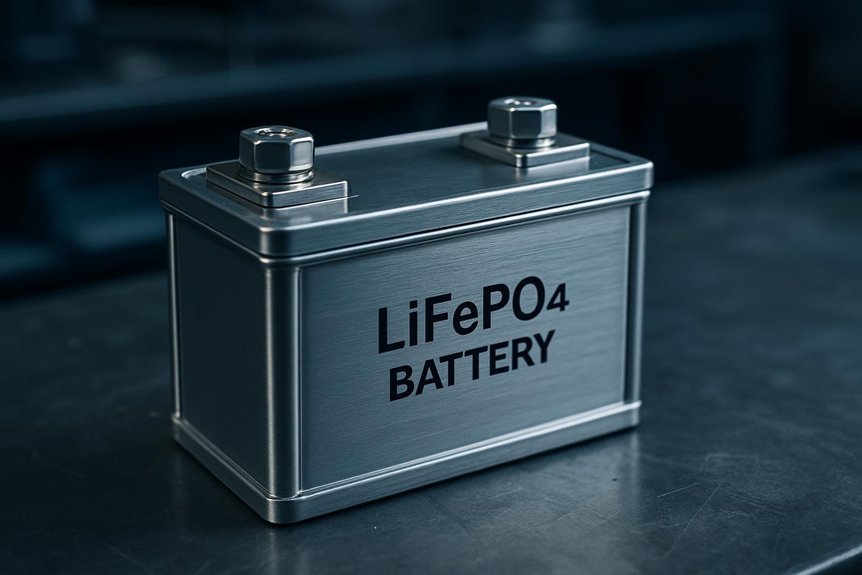
We’ll outline how cycle life defines LiFePO4 longevity and why it matters for total cost of ownership. We’ll summarize the main drivers of durability, including how many charge-discharge cycles the chemistry can sustain and how that translates to real-world performance. We’ll also highlight the key factors that influence lifespan, so you can anticipate maintenance and replacement needs.
Cycle Life Longevity Explained
Cycle life longevity is a key metric for LiFePO4 batteries, reflecting how many full charge–discharge cycles the cell can sustain before its capacity drops to a defined threshold. We explain this by focusing on intrinsic chemistry and standardized testing, not speculative hype, to provide clear expectations for users. In practice, cycle life depends on how we manage depth of discharge, charging rates, and operating temperature, which we track as longevity factors.
1) Cycle life targets: defined capacity retention after a set number of cycles
2) Depth of discharge: shallower cycles extend usable life
3) Charge/discharge rates: higher C-rates can reduce longevity
4) Temperature: extremes accelerate degradation and reduce cycle counts
Factors Affecting Lifepo4 Durability
Durability in LiFePO4 cells hinges on how chemistry, design, and usage interact to limit capacity fade over time. We, as researchers and users, examine factors that influence cycle life and long-term performance. Key determinants include electrode materials stability, electrolyte compatibility, and operating temperatures that affect reaction kinetics and SEI formation. We also consider charge-discharge protocols, depth of discharge, and aging mechanisms like microcracking and particle isolation. Mitigation strategies center on optimized cell design, stringent quality control, and proper thermal management. We perform Durability testing to quantify fade rates under representative load profiles, while Safety metrics track thermal events and electrolyte safety boundaries. Together, these evaluations guide best practices and design refinements to maximize durability and reliability in real-world use.
LiFePO4: Long-Term Cost Savings You Can Expect
LiFePO4 batteries deliver meaningful long‑term cost savings through lower total ownership costs, higher cycle life, and reduced maintenance. We outline how these factors translate into practical financial planning and lower long term costs for users. By reducing replacements and service needs, we lock in predictable expenses and minimize seasonal spikes. Our approach emphasizes data-driven budgeting, lifecycle analysis, and total cost of ownership comparisons to conventional chemistries.
1) Lower upfront and ongoing costs over implied system lifetime
2) Extended cycle life reducing replacement frequency and waste
3) Fewer maintenance events and simpler charging requirements
4) Improved asset recovery and resale value due to longevity
LiFePO4 Performance Across Temperatures and Real-World Use
We observe how temperature shapes LiFePO4 performance, from high-rate capabilities to capacity retention, and we’ll explain the practical implications for real-world use. We’ll summarize temperature-dependent trends, representative operating ranges, and how these factors influence longevity and charging safety in typical environments. By framing real-world usage insights alongside condition-tested longevity, we’ll set clear expectations for performance across seasons and applications.
Temperature-Dependent Performance
How does temperature shape LiFePO4 performance in real-world use? We examine how ambient and operating temperatures influence capacity, internal resistance, and safe operation, emphasizing practical implications for design and use. We focus on consistent, repeatable behavior across typical ranges, avoiding exaggerated claims. Our goal is precise guidance on predicting performance under field conditions, reflecting temperature sensitivity ideas and thermal cycling effects without delving into unrelated usage cases.
- Temperature sensitivity ideas affect charge/discharge efficiency and aging rates, guiding system sizing.
- Higher temperatures raise resistance briefly but can accelerate degradation with thermal cycling.
- Low temperatures reduce available capacity and responsiveness, demanding warm-up or staged charging.
- Thermal management strategies stabilize performance, extending cycle life and reliability.
Real-World Usage Insights
Across temperatures, LiFePO4 batteries show consistent, measurable shifts in capacity, resistance, and charge acceptance that matter for field use. In real-world scenarios, we see performance deviations tied to ambient conditions, state of charge, and pack design. We operate with a focus on reliability, documenting how capacity loss at extreme lows affects run-time and how resistance increases impact charging profiles. Our testing emphasizes practical thresholds rather than theoretical limits, enabling informed decisions for system protection and load planning. We address battery safety as a core concern, outlining safe charging, thermal management, and fault response. When anomalies arise, we implement quick fixes that restore operation without compromising safety or data integrity. This approach delivers actionable, repeatable insights for diverse applications.
Longevity Across Conditions
LiFePO4 performance remains robust across a broad temperature range, though longevity trends shift with ambient conditions and charge state. We assess how temperature and usage affect cycle life, capacity fade, and overall durability, framing longevity considerations for real-world deployments. Our focus is on predictable behavior, reproducible results, and clear benchmarks that inform design choices and maintenance schedules.
- Temperature-dependent degradation impacts cycle life, stressing the importance of thermal management and monitoring.
- Charge state during operation influences wear rates, guiding state-of-charge strategies.
- Real-world duty cycles determine durability benchmarks, aiding field predictions and replacements.
- Environmental factors, including vibration and humidity, modulate aging paths and system resilience.
Together, these factors define robust longevity strategies, ensuring durable, reliable energy storage across conditions.
LiFePO4 Maintenance and Reliability You Can Trust
Maintaining LiFePO4 batteries is straightforward and reliable when we follow proven practices. We approach maintenance with a disciplined routine, tracking state-of-charge, temperature, and voltage to prevent degradation. Our emphasis is on consistent charging within recommended ranges, periodic capacity checks, and clean, secure connections to minimize resistance. We debunk maintenance myths by separating user error from material limits, ensuring expectations match chemistry realities. Reliability metrics we monitor include cycle life under rated conditions, depth-of-discharge impact, and calendar aging, allowing us to quantify performance over time. We simplify diagnostics with clear voltage and temperature thresholds, enabling early fault detection. By documenting cycles and environmental conditions, we validate longevity claims and sustain performance, avoiding overkill while preserving safety, efficiency, and dependable operation in real-world use.
Choosing LiFePO4: Key Buying Considerations for Savvy Buyers
Are you getting the best value when selecting LiFePO4 batteries? We outline key buying considerations to help you decide with confidence. Our aim is precise guidance that balances performance, safety, and cost.
Discover balanced guidance on performance, safety, and cost for LiFePO4 battery value.
1) Battery chemistry and compatibility: confirm voltage, capacity, and cycle life align with your system requirements.
2) Safety tradeoffs: evaluate thermal management needs, venting, and fault tolerance as they relate to your application.
3) Quality and certifications: seek UL, CE, or UN/DOT marks and reputable warranty terms for reliability.
4) Total cost of ownership: include upfront price, replacement intervals, charging efficiency, and ancillary hardware needs.
Frequently Asked Questions
How Lightweight Is Lifepo4 Compared to Other Chemistries?
We’re lighter than many chemistries, but the exact delta depends on energy density and form factor; lightweight comparison shows LiFePO4 typically trails li-ion chemistries in gravimetric energy, yet excels in safety and cycle life.
Are Lifepo4 Batteries Recyclable and Eco-Friendly?
Yes, LiFePO4 batteries are recyclable and eco-friendly overall, but we face recycling challenges and eco friendly tradeoffs. We’ll optimize processes, minimize hazardous waste, and recover materials while balancing cost, energy use, and supply chain efficiency for you.
Do Lifepo4 Cells Suffer From Memory Effect?
We don’t see a memory effect in LiFePO4 cells; capacity fade, due to aging and cycles, is the main concern. We monitor electrodes and depth of discharge to mitigate capacity fade and sustain performance over time.
What Charging Profiles Optimize Lifepo4 Performance?
We answer: proper charging profiles optimize LiFePO4 performance, reducing degradation. We investigate theory and confirm: we recommend CC-CV with current taper, balanced top-offs, and non-equalization. These optimization strategies extend lifecycle impact and preserve capacity.
How Fast Can Lifepo4 Recharge in Practical Use?
We can recharge LiFePO4 fairly quickly in practice, but it’s limited by fast charging limitations and thermal management challenges; we optimize with controlled profiles, monitoring temperature, and staying within safe current to protect cells and longevity.
Conclusion
We’ve shown that LiFePO4 batteries deliver superior safety, predictable aging, long cycle life, and compelling total-cost advantages, with robust performance across temperatures and real-world use. This combination supports confident, low-maintenance operation and clearer diagnostics, even under demanding duty cycles. In short, they’re a solid, reliable choice for durable energy storage. If you’re weighing options, LiFePO4 is the smart bet—it’s a dependable workhorse you can bet your bottom dollar on.