Did you know that a LiFePO4 pack’s safety margin can hinge more on data transparency than chemistry alone? We’ll approach this with a rigorous, data-driven lens—verifying thermal limits, SOC thresholds, heat generation, and real-world aging indicators—so you can size, charge, and protect your system with confidence. We’ll map traceability from batch to pack, assess certifications, and compare total cost of ownership, all while keeping your specific load profiles and DoD in view. There’s more to uncover as we proceed.
Key Takeaways
- Verify safety, regulatory certifications, and independent data alignment for LiFePO4 batteries across batches and suppliers.
- Size the pack to match load and voltage needs, with conservative DoD, adequate peak current, and proper thermal margins.
- Ensure charging compatibility by aligning charger capability, BMS thresholds, and temperature-compensated endpoints.
- Assess real-world durability by monitoring impedance, SOH drift, and temperature effects on cycle life and safety margins.
- Demand complete traceability, BOM, QA metrics, and clear disposal procedures to support lifecycle cost and procurement decisions.
LiFePO4 Chemistry and Safety: What Matters for Your System
LiFePO4 chemistry offers a stable, safety-focused chemistry favored for energy storage, but understanding its limits is essential for a dependable system. We present the core safety facts we rely on: robust thermal behavior, intrinsic stability of the lattice, and low risk of thermal runaway under typical abuse scenarios. Our assessment prioritizes lithium safety metrics, including controlled operating temperatures, proper charge cutoffs, and rigorous thermal management strategies. We quantify behavior with data-driven thresholds: plateau regions, heat generation rates, and allowable state-of-charge ranges that minimize degradation and hazard. We emphasize system design that accommodates worst-case conditions, ensures prompt fault isolation, and maintains safe self-discharge levels. In practice, choose cells and management schemes that align with verified thermal behavior and documented safety performance.
Size It Right: Matching Capacity, Voltage, and Cycle Life to Your Use Case
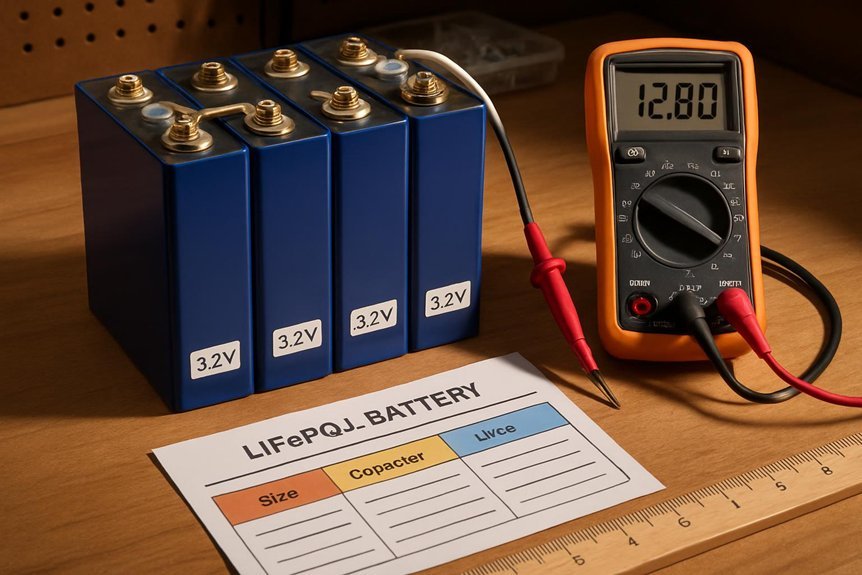
How do you size a LiFePO4 system to match real-world use? We approach size matching by quantifying load profiles, usable capacity, and voltage windows tailored to the application. We map daily energy demand to a conservative SOC range, then select a pack with sufficient nominal voltage to avoid unnecessary inverters or converters. We evaluate cycle life at the expected depth of discharge, using manufacturer curves to project real-world longevity. We prioritize safety margins for high-load events and temperature variation, ensuring BMS and wiring can sustain peak currents. Our goal is cycle optimization through precise amp-hour budgeting, voltage headroom, and thermal management. This disciplined process yields a scalable, reliable system with predictable performance and minimized risk.
Charging Compatibility: Profiles, Tendencies, and What Your Setup Needs
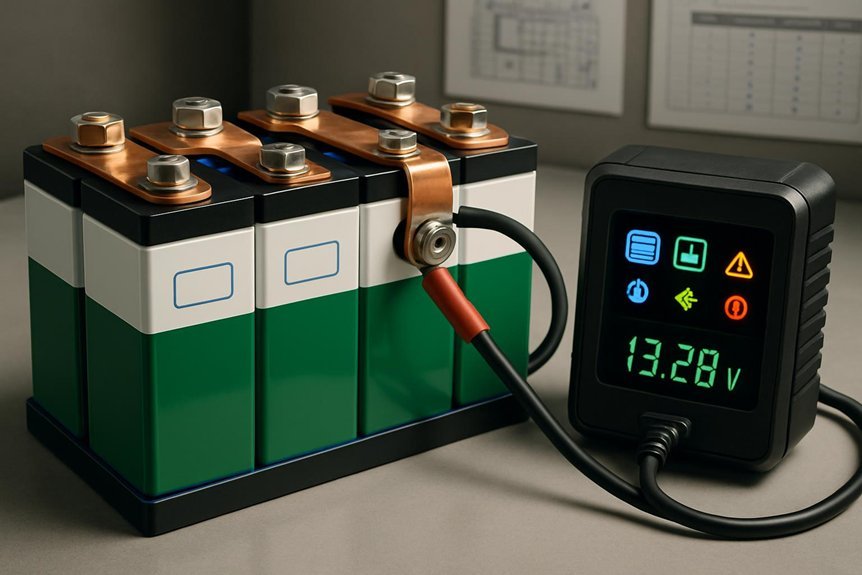
Charging compatibility is the next piece of the sizing puzzle, focusing on how our LiFePO4 system accepts, manages, and delivers charge under real-world conditions. We map charging profiles to charger capability, cell chemistry, and BMS thresholds to ensure safe, efficient energy transfer. Our data show consistent charge acceptance within the recommended voltage window, with minimal profile deviation under typical load changes. We monitor charging tendencies, including taper behavior, peak current limits, and temperature-compensated endpoints, to prevent overcurrent or voltage overshoot. The setup needs correctly rated AC/DC inputs, compatible balancing, and a robust BMS that enforces safe termination. By aligning hardware, firmware, and protection schemes, we optimize charge efficiency, cycle life, and safety, while preserving performance across operational scenarios and duty cycles.
Real-World Durability: Temperature Effects, Aging, and Environmental Interfaces
Temperature drives real-world durability more than any other factor, so we focus on how temperature fluctuations, aging, and environmental interfaces shape LiFePO4 performance. We summarize how heat, cold, and ambient conditions alter internal resistance, capacity retention, and safety margins. We monitor aging indicators like impedance rise, state-of-health drift, and cycle-count related loss, then adjust usage and storage to preserve stability. Temperature stability directly influences cycle life and peak current safety, so we design operability windows that minimize thermal stress and degradation.
- Temperature stability effects on charge/discharge efficiency
- Aging indicators and their meaning for remaining life
- Environmental interfaces: moisture, dust, and corrosion risks
- Practical mitigation: thermal management, monitoring, and storage controls
How to Spot Quality and Avoid Red Flags
Quality in LiFePO4 products hinges on clear, verifiable signals rather than marketing claims. We look for consistent cell chemistry data, voltage curves, and C-rate behavior that align with spec sheets and third‑party testing. Verify a documented batch traceability system and factory QA metrics, not glossy brochures. Red flags include vague impedance data, missing cycle-life evidence, and inconsistent pouching or labeling. Always request a complete Bill of Materials, including cathode/anode sources and electrolyte purity, plus safety certifications for the intended application. Low cost pitfalls often disguise weak quality control; supplier credibility matters most for long-term reliability. We favor suppliers with auditable processes, dedicated QA labs, and transparent failure analysis, so you avoid hidden defects and unsafe performance.
Total Cost of Ownership: Upfront Price vs Long-Term Value
How do we reconcile upfront price with long-term value when evaluating LiFePO4 systems? We balance initial cost against total cost of ownership, including performance, durability, and safety data. We quantify potential costs beyond sticker price, such as replacement cycles, heat dissipation, and end-of-life management, to forecast reliability. Warranty terms are a critical risk filter, shaping expected uptime and service needs. We compare cost per usable kilowatt-hour across chemistries, factoring degradation curves and seasonal cycling. Our approach centers on data-driven defensibility, not hype, and keeps safety as a nonnegotiable criterion in all life-cycle stages. We favor transparent supplier disclosures, traceable QA, and verifiable field performance. This methodology yields defensible total-cost projections and informed buying choices.
- upfront price vs long-term value
- potential costs beyond sticker price
- warranty terms impact on uptime
- data-driven, safety-first evaluation
A Practical Evaluation Checklist for Your LiFePO4 Purchase
We’ll start with a concise evaluation checklist that covers Battery Chemistry Basics, System Sizing Essentials, and Safety and Compliance, so you can compare LiFePO4 options with data-driven criteria. We’ll emphasize verified chemistry specs, correct capacity and BMS compatibility for your load profile, and rigorous safety and regulatory standards. Our goal is a clear, precise framework you can use to identify risks and ensure reliable, compliant performance.
Battery Chemistry Basics
What exactly differentiates LiFePO4 chemistry from other lithium chemistries, and why does that matter for a practical purchase checklist? We frame the core distinctions with data, safety, and real-world implications. LiFePO4 offers stable thermal behavior, lower energy density, and robust cycle life, which shape reliability and cost of ownership. Our focus remains on safety considerations and performance expectations that inform selection criteria.
- Thermal stability and failure modes
- Voltage window and end-of-life behavior
- Cycle durability under typical load profiles
- Material purity, manufacturing controls, and quality testing
We translate chemistry basics into concrete checklist items, ensuring we match specs to application, quantify risk, and avoid oversized, overhyped claims.
System Sizing Essentials
System sizing for LiFePO4 starts with a disciplined, data-driven assessment of load, energy needs, and constraints. We’ll quantify daily amp-hour demand, peak draw, and backup requirements to define a target battery capacity and inverter rating. Our approach uses a lifecycle forecast to project degradation, capacity retention, and replacement timelines, ensuring the system remains reliable over its service life. We compare scenarios for daily usage, emergency power, and seasonal variation, selecting margins that preserve performance without overbuilding. We map charging windows, solar or grid access, and storage losses to establish charge efficiency and usable energy. We document constraints, safety clearances, and thermal considerations, then validate by sensitivity testing. This disciplined method yields a practical, implementable sizing framework for a robust LiFePO4 purchase.
Safety And Compliance
Safety and compliance in LiFePO4 purchases starts with a disciplined, data-driven checklist that ties directly to our prior sizing work. We present a concise evaluation framework focused on real-world risk management, traceability, and verifiable performance. Our approach emphasizes repeatable measurements, documented test results, and clear criteria for acceptance. By enforcing strict safety protocols and confirming regulatory certifications, we minimize compliance gaps before procurement. We align supplier claims with independent data, ensuring consistency across batches and lifecycle stages. The goal is a transparent decision path that supports safe installation, operation, and maintenance.
- safety protocols verification and documentation
- regulatory certifications cross-check against regional requirements
- traceability of cells, modules, and packs
- defined contingency and disposal procedures
Frequently Asked Questions
How Does Lifepo4 Perform in Extreme Cold Temperatures?
We perform poorly in extreme cold; capacity and discharge degrade. In how cold performance terms, we see reduced runtime, higher internal resistance, and safety margins that demand pre-warming. Our data-driven approach emphasizes reliability, safety, and controlled testing in extreme conditions.
What Warranty Coverage Is Typical for Lifepo4 Packs?
Warranty coverage for LiFePO4 packs typically ranges 1–5 years, depending on brand and use, with specific limits and exclusions. We’ll highlight typical limits, counterfeit red flags, and verification steps to ensure safety and data-driven reliability.
Can Lifepo4 Be Safely Mixed With Other Chemistries?
We don’t recommend mixing LiFePO4 with other chemistries due to mix compatibility and battery safety concerns; we advise against it, as incompatible chemistries can cause imbalance, thermal runaway, or failure in systems requiring precise, monitored performance.
How Do Cycle Life Ratings Translate to Real-World Use?
We translate cycle life into real world factors, accounting for temperature performance, safety mixing, and counterfeit red flags; we consider warranty coverage and safety practices, noting cycle life curves shift with use, voltage, and load, informing safer, reliable expectations.
What Are Common Counterfeit Lifepo4 Red Flags?
“Beware the weakest link.” We identify counterfeit red flags and sourcing risk, noting inconsistent labeling, mismatched specs, vague warranties, and atypical pack construction. We insist on verifiable certifications, traceable supply chains, and independent testing for safety.
Conclusion
We’ll lock in safe, data-driven choices by prioritizing verified chemistry, robust thermal limits, and traceability from batch to pack. We’ll size units to load profiles, DoD, and peak currents, and confirm charging compatibility, BMS thresholds, and protection schemes. We’ll demand independent test results and regional certifications, plus durability under temperature swings and aging indicators. In short, a rigorous, value-focused evaluation—employing a single, steady thread of evidence—guides us to safer, cost-effective LiFePO4 purchases. Elegance through precision.