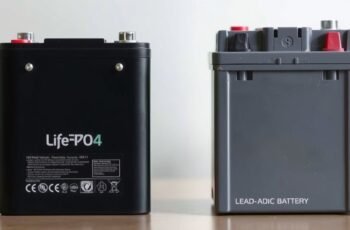
When evaluating energy storage options, understanding the differences between LiFePO4 and NMC batteries is essential for making informed decisions. Both chemistries offer unique advantages and trade-offs in safety, performance, and sustainability. As we analyze their characteristics, it becomes clear that selecting the right type depends on specific application requirements and long-term considerations. Exploring these distinctions can markedly impact the efficiency, safety, and environmental footprint of your energy systems.
Key Takeaways
- LiFePO4 offers superior thermal stability and longer cycle life, while NMC provides higher energy density and performance.
- NMC batteries have greater environmental concerns due to resource extraction and disposal challenges.
- LiFePO4 is safer, less prone to thermal runaway, and suitable for stationary and renewable energy storage.
- NMC is preferred for high-performance applications like electric vehicles requiring compact, high-capacity batteries.
- Cost and availability favor NMC due to established manufacturing, but LiFePO4 is more environmentally friendly and durable.
What Are LiFePO4 and NMC Batteries and How Do They Work?
LiFePO4 and NMC batteries are two prominent lithium-ion chemistries, each with distinct chemical compositions that influence their performance and applications. LiFePO4 batteries use lithium iron phosphate cathodes, offering excellent thermal stability and a longer lifespan, which benefits sustainable practices like battery recycling. NMC batteries combine nickel, manganese, and cobalt, providing higher energy density but posing greater challenges for environmental impact due to resource extraction and disposal. Understanding their chemistry helps us evaluate environmental considerations, including the recyclability of materials and potential ecological effects. While both chemistries support clean energy, LiFePO4’s stability offers advantages in reducing environmental risks associated with battery degradation. Consequently, the chemical makeup directly impacts not only performance but also the broader environmental footprint of each battery type.
Comparing Safety, Lifespan, and Reliability of LiFePO4 and NMC Batteries
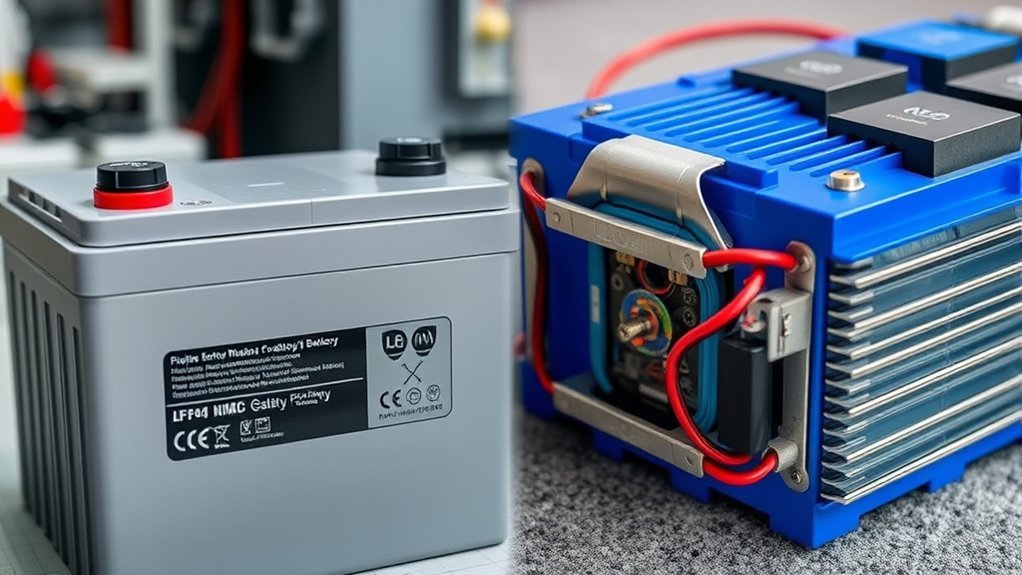
Although both LiFePO4 and NMC batteries are widely used in energy storage applications, their safety profiles, lifespan, and reliability differ markedly due to their chemical characteristics. LiFePO4 batteries are inherently safer, exhibiting greater thermal stability and reduced risk of thermal runaway, which enhances safety. They tend to have a longer cycle life, often exceeding 2,000 cycles, and demonstrate consistent reliability over time. In contrast, NMC batteries offer higher energy density but are more susceptible to thermal instability, impacting safety. Additionally, environmental impact considerations reveal LiFePO4’s advantages, as they pose fewer recycling challenges and contain fewer toxic materials. Conversely, NMC batteries require complex recycling processes, raising concerns about environmental sustainability. These factors are vital when evaluating long-term performance and ecological implications.
Which Battery Offers Higher Energy Density and Performance?
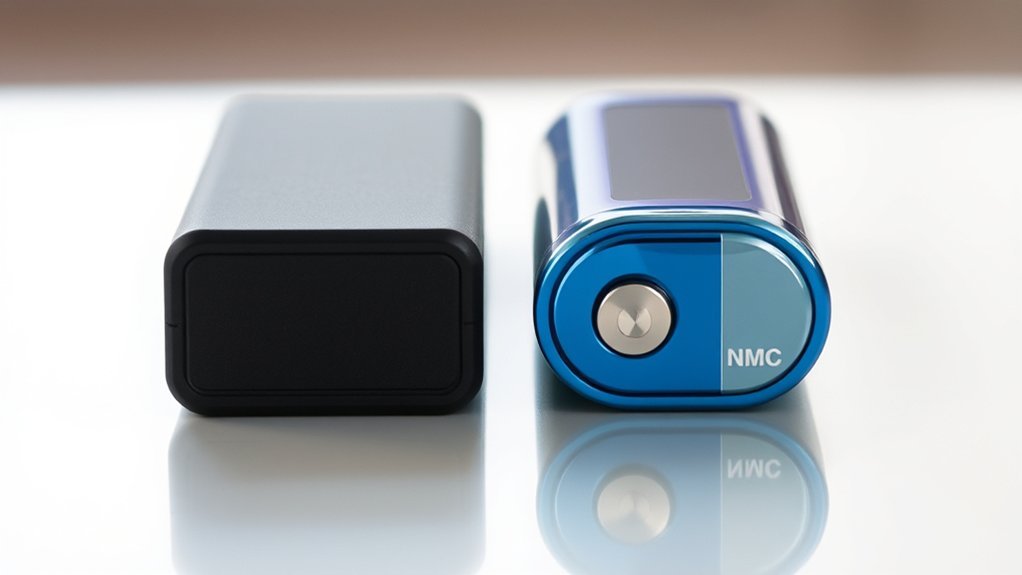
When comparing energy density and performance, NMC batteries consistently outperform LiFePO4 regarding voltage and capacity, making them more suitable for compact, high-performance applications. NMC’s higher energy density translates into longer runtime and better power delivery, essential for electric vehicles and portable devices. However, this increased performance comes with environmental considerations, particularly in battery recycling, where NMC’s complex chemistry poses challenges for sustainable disposal. In contrast, LiFePO4 offers a lower energy density but benefits from a more environmentally friendly profile due to its stable, less toxic materials. While NMC batteries deliver superior performance, their environmental impact during manufacturing, use, and recycling warrants careful evaluation, especially as sustainability becomes a critical factor in battery technology decisions.
Cost, Availability, and Maintenance: Choosing the Right Battery for Your Budget
Cost, availability, and maintenance considerations often influence the choice between LiFePO4 and NMC batteries as much as their performance characteristics. Our cost analysis shows that LiFePO4 batteries typically have a higher upfront cost but lower long-term maintenance expenses due to their longer lifespan and stability. Market trends indicate growing availability of LiFePO4, driven by supply chain expansions, while NMC batteries remain more prevalent due to established manufacturing infrastructure.
Key factors include:
- Initial investment: LiFePO4 often requires a higher initial outlay, but offers lower replacement costs.
- Supply chain stability: NMC benefits from mature global markets, ensuring easier access.
- Maintenance needs: LiFePO4’s stability reduces the frequency and cost of maintenance over time.
Best Use Cases: When to Choose LiFePO4 vs NMC Batteries
Choosing between LiFePO4 and NMC batteries ultimately depends on the specific application and operational priorities. For prolonged cycle life and enhanced safety, LiFePO4 excels in stationary storage and renewable energy systems, with a lower environmental impact due to easier battery recycling. Conversely, NMC batteries are preferred in electric vehicles where high energy density and power output are critical, despite a higher environmental footprint and more complex recycling processes. Here’s a comparison:
| Use Case | Recommended Battery Type |
|---|---|
| Renewable energy storage | LiFePO4 |
| Electric vehicles | NMC |
| Off-grid applications | LiFePO4 |
| High-performance demand | NMC |
Understanding these nuances helps optimize performance while considering environmental sustainability.
Frequently Asked Questions
How Do Environmental Factors Affect Lifepo4 and NMC Battery Performance?
Environmental factors like temperature and humidity impact both batteries’ performance, with Lifepo4 offering better thermal stability and corrosion resistance, ensuring safer operation. NMC batteries are more sensitive, degrading faster under extreme conditions, affecting longevity and efficiency.
Can Lifepo4 and NMC Batteries Be Recycled Easily?
We find that both Lifepo4 and NMC batteries are designed for recyclability, with efficient processes respecting battery safety standards; their manufacturing processes facilitate easier, environmentally-conscious recycling, though ongoing innovations aim to improve these methods further.
What Are the Charging Time Differences Between the Two Battery Types?
We find that Lifepo4 batteries typically charge faster due to superior charging efficiency in their chemistry, often completing in around 2-4 hours, while NMC batteries may take slightly longer, usually 3-5 hours, reflecting their different chemical characteristics.
Are There Any Specific Industries Favoring One Battery Type Over the Other?
Studies show industries prioritize safety and cost efficiency, favoring Lifepo4 batteries, which have a 70% lower risk of thermal runaway. We see sectors like renewable energy and electric vehicles prefer these, balancing safety with cost comparison advantages.
How Do Temperature Ranges Impact Battery Efficiency and Lifespan?
Temperature ranges profoundly influence battery chemistry and thermal stability, impacting efficiency and lifespan. We observe Lifepo4’s broader thermal stability, maintaining performance in extreme temperatures, whereas NMC’s efficiency declines sharply outside ideal operating conditions.
Conclusion
As we navigate the landscape of energy storage, choosing between LiFePO4 and NMC batteries is akin to selecting a vessel for different journeys—stability and longevity for calm waters, or speed and capacity for open seas. Both technologies have their merits, but understanding their distinct characteristics guarantees we make informed decisions. Like a skilled captain, aligning the right battery with our specific needs leads to safer, more efficient, and sustainable energy solutions.