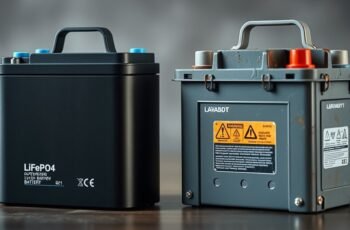
When evaluating battery chemistries like LiFePO4 and lithium-ion, we must consider factors such as safety, lifespan, and application-specific performance. Each chemistry offers distinct advantages and limitations that influence their suitability for different uses. Understanding these nuances is essential for making an informed choice. As we compare these technologies, it’s clear that the most suitable selection depends on your priorities—yet the decision isn’t straightforward and warrants closer examination.
Key Takeaways
- LiFePO4 offers superior safety, thermal stability, and longer cycle life compared to lithium-ion batteries.
- Lithium-ion batteries provide higher energy density and are more suitable for compact, high-capacity applications.
- LiFePO4 is more environmentally friendly, easier to recycle, and has a lower risk of thermal runaway.
- Lithium-ion batteries are generally cheaper upfront and better for space-constrained devices.
- The best choice depends on balancing safety, lifespan, cost, and specific application needs.
What Are the Key Differences Between LiFePO4 and Lithium-Ion Batteries?
Although both LiFePO4 and lithium-ion batteries are popular choices for energy storage, they differ markedly in their chemistry, performance, and application suitability. LiFePO4 batteries utilize lithium iron phosphate as the cathode, offering enhanced thermal stability and longer cycle life. Lithium-ion batteries, with their diverse cathode chemistries, typically provide higher energy density but are more sensitive to thermal runaway. From an environmental impact perspective, LiFePO4 batteries are advantageous due to their non-toxic materials and easier battery recycling processes. In contrast, lithium-ion batteries pose greater challenges for recycling and may release harmful substances if improperly disposed of. These differences influence not only performance but also sustainability considerations, making LiFePO4 a more environmentally friendly option for long-term energy storage solutions.
Which Battery Chemistry Offers Greater Safety and Stability?
When comparing the safety and stability of LiFePO4 and lithium-ion batteries, LiFePO4 consistently demonstrates superior performance due to its inherent chemical properties. Its stable crystal structure reduces thermal runaway risk, making it less prone to fires or explosions. During battery manufacturing, LiFePO4’s chemistry allows for safer production processes with lower environmental impact, as it doesn’t require toxic or rare materials. Lithium-ion batteries, while energy-dense, pose higher safety risks due to volatile electrolytes.
- Enhanced thermal stability reduces fire hazard
- Less prone to thermal runaway during use
- Safer manufacturing with lower environmental impact
- More predictable chemical behavior under stress
How Do LiFePO4 and Lithium-Ion Batteries Compare in Lifespan and Durability?
LiFePO4 batteries generally outperform lithium-ion batteries in lifespan and durability due to their inherently stable chemistry and robust crystal structure. This stability reduces capacity fade over time, allowing LiFePO4 cells to typically withstand 2,000 to 3,000 charge cycles, compared to 500-1,000 for lithium-ion variants. Their durable construction minimizes degradation from thermal stress, enhancing long-term reliability. Additionally, LiFePO4 batteries are more receptive to battery recycling, which mitigates environmental impact by enabling safer, more efficient material recovery. This extended lifespan and recyclability make them a sustainable choice, reducing waste and resource consumption over time. Consequently, LiFePO4 batteries offer superior durability, contributing positively to environmental sustainability and long-term operational stability.
What Are the Cost Implications of Choosing LiFePO4 Versus Lithium-Ion?
Choosing between LiFePO4 and lithium-ion batteries involves evaluating not only their performance characteristics but also their cost implications over the long term. LiFePO4 batteries generally have higher initial costs but offer longer cycle life, reducing replacement expenses. Lithium-ion batteries are more widely available in the market, often resulting in lower upfront prices, but they may require more frequent replacements, impacting total lifecycle costs. When considering environmental impact, LiFePO4 batteries tend to have less toxic materials and a more sustainable supply chain, potentially lowering disposal costs. These factors influence overall affordability and long-term savings.
- Market availability affects initial purchase cost and ease of supply.
- Longer lifespan of LiFePO4 can offset higher upfront expenses.
- Environmental impact influences disposal and regulatory costs.
- Total cost depends on usage, replacement frequency, and market trends.
Which Battery Chemistry Is Better Suited for Different Applications?
Different applications demand specific battery chemistries optimized for performance, safety, and longevity. Lithium-ion batteries excel in consumer electronics and electric vehicles due to high energy density and fast charging capabilities. However, their environmental impact, including challenges in battery recycling, raises sustainability concerns. Conversely, LiFePO4 batteries are favored for stationary storage and renewable energy systems because of their thermal stability, longer cycle life, and safer chemistry. Their lower environmental impact during disposal and recycling makes them suitable for applications prioritizing sustainability. Ultimately, selecting the right chemistry depends on balancing performance needs with environmental considerations. While lithium-ion offers compactness and high energy, LiFePO4 provides durability and safety, aligning better with applications emphasizing recyclability and reduced ecological footprint.
How to Decide Between LiFePO4 and Lithium-Ion for Your Energy Needs?
When choosing between LiFePO4 and lithium-ion batteries, understanding their energy density differences is essential for optimizing space and weight constraints. Safety and longevity also play important roles, as LiFePO4 offers enhanced stability and longer cycle life, while lithium-ion typically provides higher energy capacity. Evaluating these factors against your specific energy requirements helps determine the most suitable chemistry for your application.
Energy Density Differences
Since energy density directly impacts how much power a battery can store relative to its size and weight, understanding the differences between LiFePO4 and lithium-ion chemistries is essential for selecting the right cell for specific applications. Lithium-ion batteries generally offer higher energy densities, making them suitable for compact, high-capacity needs, whereas LiFePO4 batteries are more conservative but excel in stability and lifespan. When evaluating energy density, consider not only the raw capacity but also how charging protocols influence performance and how recycling methods impact long-term sustainability.
- Lithium-ion’s higher energy density supports compact, lightweight designs.
- LiFePO4’s lower energy density offers better thermal stability.
- Charging protocols vary markedly between chemistries, affecting efficiency.
- Recycling methods differ, influencing environmental impact and lifecycle management.
Safety and Longevity
Choosing between LiFePO4 and lithium-ion batteries hinges not only on energy density but also on their safety profiles and lifespan. LiFePO4 batteries offer superior thermal stability, reducing the risk of thermal runaway and fires, making them safer for long-term use. They typically have a longer cycle life, often exceeding 2,000 cycles, which enhances longevity and reduces the frequency of replacement. Lithium-ion batteries, while offering higher energy density, are more susceptible to capacity fade over time and pose greater safety concerns if damaged or improperly managed. From an environmental perspective, LiFePO4 batteries are more eco-friendly due to their more straightforward battery recycling process and lower toxic material content. This balance of safety and durability makes LiFePO4 a compelling choice for sustainable energy applications.
Frequently Asked Questions
Are Lifepo4 Batteries More Environmentally Friendly Than Lithium-Ion Batteries?
We believe LiFePO4 batteries are more environmentally friendly, thanks to their longer battery longevity and safer material composition. Although they cost more initially, their durability reduces waste, making them a better sustainable choice compared to lithium-ion batteries.
How Do Charging Times Compare Between Lifepo4 and Lithium-Ion Batteries?
Charging times between Lifepo4 and lithium-ion batteries are astonishingly similar, with Lifepo4 often charging slightly faster, boosting battery longevity and reducing costs. We analyze these factors technically, showing minimal differences impacting overall performance and economic considerations.
Can Lifepo4 Batteries Operate Effectively in Extreme Temperatures?
We find Lifepo4 batteries generally exhibit superior thermal stability and temperature resilience, enabling more effective operation in extreme conditions. Their stable chemical composition prevents thermal runaway, making them a reliable choice for high-temperature or low-temperature environments.
What Are the Recycling Options for Lifepo4 Versus Lithium-Ion Batteries?
We find that Lifepo4 batteries benefit from a more straightforward recycling process due to less toxic materials, unlike lithium-ion batteries, which require complex battery manufacturing and recycling procedures to safely recover valuable materials and minimize environmental impact.
How Does the Energy Density of Each Chemistry Affect Portable Device Use?
We find lithium-ion batteries offer higher energy density, enhancing portable device performance, but Lifepo4’s superior battery longevity and cost efficiency make it a practical choice for longer-term use, balancing power needs and economic considerations effectively.
Conclusion
In summary, choosing between LiFePO4 and lithium-ion batteries hinges on your specific application needs. With LiFePO4 offering up to 3,000 cycles and superior safety, it’s ideal for stationary and renewable energy storage. Remarkably, lithium-ion batteries dominate portable electronics due to their higher energy density, despite a shorter lifespan. By analyzing safety, longevity, and cost factors, you can make an informed decision that optimizes performance and sustainability for your energy solutions.