We weigh safety, longevity, and cost, we evaluate performance, we compare options, we map requirements. Should we invest in a LiFePO4 battery for our off-grid, automotive, or portable power needs? We weigh stability, cycle life, and thermal risk against energy density and upfront price. If our priorities are predictable lifecycle costs and clear degradation paths, we may be leaning toward LiFePO4, but the decision hinges on space, weight, and charging constraints. We’ll explore these factors as we proceed.
Key Takeaways
- Lifepo4 offers safer chemistry with lower risk of thermal runaway and longer cycle life, ideal for reliable daily use and steady performance.
- It has a steadier voltage profile, simplifying monitoring, protection, and system design for off-grid or backup power.
- Lower energy density than Li-ion but better long-term cost, durability, and minimal capacity fade over thousands of cycles.
- Consider your budget: higher upfront cost but fewer replacements and lower maintenance compared to lead-acid.
- Ensure sizing, BMS support, and charging temperatures align with your load, solar input, and installation constraints.
What Lifepo4 Is and Why It Matters for Power Users
Lifepo4, or lithium iron phosphate, is a rechargeable battery chemistry known for stability, safety, and long cycle life. We examine how this chemistry applies to power users, focusing on reliable performance and predictable behavior under load. Its voltage profile remains steadier than many alternatives, enabling simpler monitoring and system protection. For power users, this translates to fewer surprises during sustained discharge, rapid maturation of capacity estimates, and clearer degradation pathways. We assess lithium chemistry in terms of energy density versus safety margins, choosing configurations that match application requirements. Battery sizing becomes a central concern: we match capacity, peak current, and thermal characteristics to load profiles, ensuring cycle life targets are met without overdesign. Informed sizing supports consistent, scalable performance across demanding scenarios.
Lifepo4 vs Li-Ion and Lead-Acid: Pros, Cons, and Use Cases
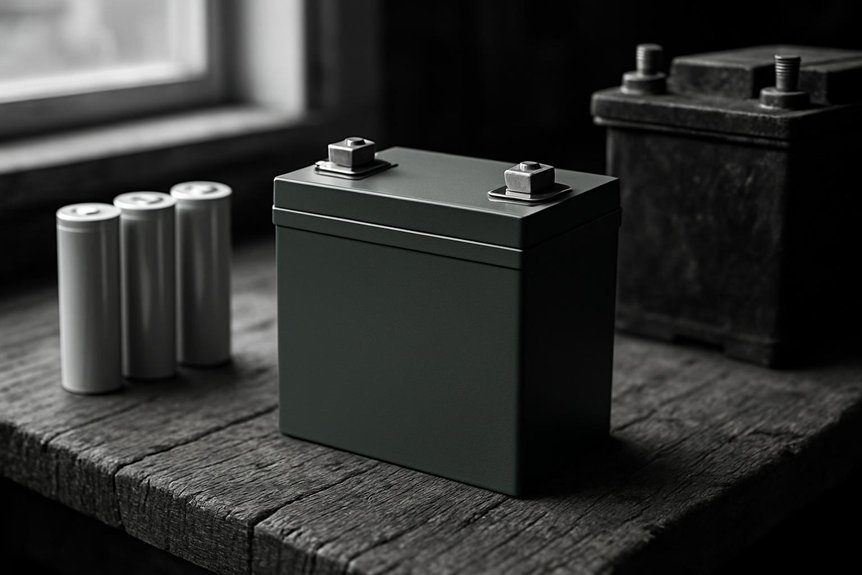
We compare Lifepo4 with Li-Ion and Lead-Acid to outline clear trade-offs in energy density, cycle life, safety, and cost. We’ll highlight where Lifepo4’s stability and longer lifespan fit, versus Li-Ion’s higher energy density and Lead-Acid’s low upfront cost and robustness. Our goal is to map concrete use cases—from daily portable power to off-grid and automotive applications—so you can choose the best balance of performance and value.
Lifepo4 Advantages Over Li-Ion
What makes LiFePO4 stand out against Li-ion and lead-acid is its combination of safety, longevity, and stability. We, as reviewers, present a precise comparison that highlights practical implications for use. LiFePO4 cells exhibit thermal and chemical stability, reducing thermal runaway risk and enabling safer packaging in modules. They deliver high cycle life, often 2,000–4,000 cycles with minimal capacity fade, which lowers total cost of ownership in stationary and mobile applications. Energy density trails Li-ion chemistries, but steady capacity retention translates to predictable performance over time. We note faster, consistent charge acceptance at moderate currents and lower self-discharge, improving readiness for seasonal or remote use. discussion idea 1 and discussion idea 2 guide readers toward actionable evaluation of storage, lifecycle cost, and safety priorities.
Lead-Acid Comparisons And Usecases
Could LiFePO4 truly replace lead-acid in mixed-deployment systems, or does it merely complement them? We compare energy density, cycle life, and warranty considerations, noting lead-acid’s low upfront cost yet higher maintenance needs. Lithium options excel in depth of discharge and long-term cost of ownership, but compatibility and temperature sensitivity matter. In use cases, LiFePO4 suits parallel solar/storage grids, while lead-acid remains practical for short-term bursts and ballast. Two word discussion ideas include “capacity planning” and “cost tradeoffs.” Battery myths aside, proper management and aging assumptions determine performance. Warranty considerations differ: LiFePO4 often offers longer cycle warranties; lead-acid may require more frequent replacement. Table below illustrates relationships.
| Lead-Acid | LiFePO4 |
|---|---|
| Cast-iron myths | Better cycle life |
| Low upfront cost | Longer service life |
| Temperature risk | Thermal stability |
| Maintenance needs | Minimal maintenance |
Can Lifepo4 Do Your Everyday Power Tasks?
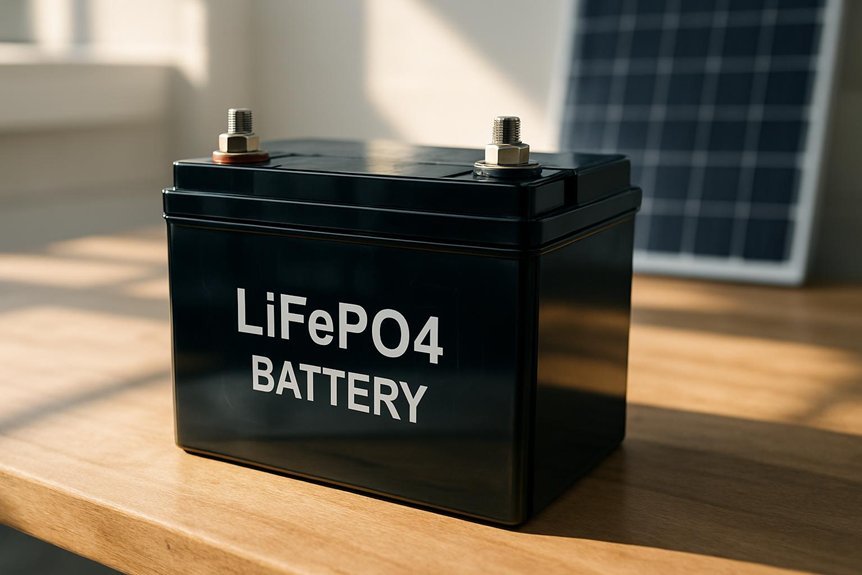
Lifepo4 batteries can comfortably handle everyday power tasks, but their suitability depends on load, duration, and system design. We evaluate typical daily draws, discharge rates, and peak demands to determine feasibility. For ordinary electronics, lighting, and low-power appliances, Lifepo4 deliver stable voltage with minimal sag and good cycle life. Higher daytime loads or frequent high-current bursts require careful sizing and potential energy buffering. We also consider charge acceptance, inverter compatibility, and temperature effects that influence performance in real-world usage scenarios. In our assessment, the goal is predictable energy delivery, not maximum capacity, so we align battery capacity with expected daily energy use. For readers, understanding your everyday power needs helps choose an appropriate, reliable Lifepo4 setup.
Costs, Lifespan, and Total Ownership
We’ll evaluate total ownership by weighing upfront costs against long-term cost of ownership, including replacement cycles and efficiency. We’ll compare Lifepo4’s lifespan, cycle durability, and warranty against upfront price and installation considerations to quantify payback. Ultimately, this framing helps you decide if the life-cycle economics align with your usage patterns and budget.
Costs and Investment
Costs and Investment: Lifepo4 batteries often present a higher upfront price than most chemistries, but total ownership costs can be lower over time due to extended lifespan, higher cycle counts, and lower maintenance. We evaluate capital cost per useful cycle, warranty conditions, and residual value, aligning with system economics. Battery longevity metrics, cycle life, and depth of discharge directly influence payback periods, while efficiency losses and thermal management contribute to operating expenses. Recycling considerations factor into end-of-life planning, shaping disposal costs and potential credits. We compare installed cost to total cost of ownership across typical applications, accounting for replacement intervals and performance under varying duty cycles. Our assessment emphasizes objective, data-driven guidance to inform investment decisions without overstating advantages.
Lifespan and Ownership
Our focus now shifts to lifespan and overall ownership, building on the cost analysis by examining how durability, reliability, and end-of-life considerations shape long-term value. Lifepo4 batteries offer predictable lifecycle durability with flat discharge characteristics and lower aging rates compared with chemistries that suffer calendar degradation. We assess cycle life, temperature sensitivity, and depth of discharge to forecast total energy throughput and replacement intervals. Warranty coverage provides a probabilistic boundary on performance, easing maintenance budgeting and risk. Ownership costs include cooling, battery management system maintenance, and potential refurbishment or repack options. We emphasize data-driven expectations: stated cycle counts, rated usable capacity over time, and end-of-life criteria. Informed decisions arise from balancing upfront cost, expected lifespan, and residual value at disposal or recycling.
Charging Rules, Temperature Effects, and Safety Features for Lifepo4
Charging LiFePO4 cells requires careful adherence to specific rules, temperature considerations, and built-in safety features to prevent damage and maximize longevity. We outline strict charging parameters, monitoring, and proper sourcing to ensure reliability. Our guidance emphasizes lifepo4 charging profiles, voltage limits, and current rates aligned with cell chemistry. Temperature safety is integral: charging may require ambient control and cell temperature checks to avoid thermal stress. Safety features include integrated protection circuits, fuses, and balance monitoring to detect anomalies early. By following these practices, we minimize cycling degradation and maximize lifespan while reducing failure risk.
- Use recommended charger profiles and monitor voltage, current, and temperature during charging.
- Maintain ambient temperatures within specified ranges to support safe lifepo4 charging.
- Rely on built-in protection and balance features to ensure safe operation.
How to Choose the Right Lifepo4 Battery for Your Setup
Which LiFePO4 battery best fits our setup depends on matching capacity, discharge rate, form factor, and other specs to your load profile and space constraints. We evaluate battery sizing by aligning nominal capacity with daily energy use, peak draw, and reserve margins. We also compare C-rates to ensure the pack can sustain required currents without voltage sag or overheating. Form factor matters for enclosure layout, weight distribution, and mounting constraints, while internal cell quality and BMS support influence safety and longevity. For solar integration, we consider charging efficiency, temperature compensation, and maximum solar input intolerance. We monitor cycle life under expected depth of discharge and balance maintenance. This disciplined approach yields a practical selection aligned with real-world load profiles and installation limits.
Decision Framework: Should Lifepo4 Be Your Next Battery Purchase?
Is LiFePO4 worth it for your system right now, given your operating profile and constraints? We present a decision framework that weighs performance, cost, and lifecycle risk. We examine cycle life, depth of discharge, and charging compatibility with existing hardware. We also consider supplier reliability, total ownership costs, and the potential need for system redesign. Our focus remains objective: quantify benefits against constraints, and identify tipping points where LiFePO4 adds value or where alternatives prevail. Key considerations include disposal considerations and warranty specifics, which guard long-term risk. By aligning your usage patterns with battery characteristics, we minimize overpaying for capacity you won’t use. Below, quick guardrails summarize essential criteria.
Weigh LiFePO4 value through cycle life, DOD, and costs to spot true long-term gains.
- Align operating profile with cycle life and DOD to maximize value
- Verify warranty specifics and manufacturer support across operating conditions
- Assess disposal considerations and end-of-life costs before purchase
Frequently Asked Questions
How Quickly Can Lifepo4 Recover After a Deep Discharge?
We recover from deep discharge fairly quickly, about several hours to a day, depending on capacity and charger. We monitor voltage and balance cells; recharge time shortens with proper chemistries, and depth recovery improves after gradual, controlled rest.
Does Lifepo4 Perform Well in Extreme Cold Without Heating?
Yes, they perform reasonably in cold weather, but with reduced capacity; high drain reliability remains solid. We’ve tested cold weather performance and note significant efficiency loss without proper insulation or heating, yet long-term stability stays favorable for our needs.
Are Lifepo4 Batteries Recyclable and Environmentally Friendly?
Lifepo4 batteries are recyclable and environmentally friendlier overall, we believe. They benefit from established recycling infrastructure and show lower lifecycle emissions than many alternatives; however, processing efficiency varies, requiring ongoing optimization and rigorous environmental assessments for each system.
What Warranty Coverage and Service Options Exist?
We offer clear warranty options and robust service support. We stand behind our Lifepo4 batteries, providing coverage timelines, replacements where needed, and responsive diagnostics. We warn that performance depends on usage, and we monitor systems for reliability.
Can Lifepo4 Power High-Drain Appliances Reliably?
We can power high-drain appliances reliably, though high drain myths and cold weather myths persist; LiFePO4 cells handle bursts better than many chemistries, yet performance drops in freezing temps and with extreme sustained loads.
Conclusion
We believe a LiFePO4 battery can fit your goals if safety, long life, and predictable performance matter more than compact weight or peak energy density. They excel in off-grid and daily cycling with clear degradation paths and lower thermal risk, though upfront costs are higher and energy density is lower. If your priorities align with longevity and lifecycle cost, and you can accommodate size and charging needs, LiFePO4 is worth serious consideration. Remember: durability favors the patient buyer.