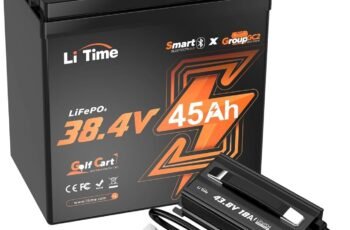
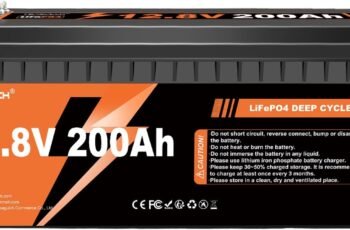
We can compare the LiTime 24V 100Ah LiFePO₄ battery by capacity, protection, and system fit. Its 2,560Wh storage, 100A BMS, and low-temperature cutoff suit many RV, marine, and off-grid solar setups, while its 45.6-pound weight and lack of Bluetooth monitoring may affect installation and oversight. We’ll weigh its cycle rating and practical trade-offs against common requirements, but one compatibility detail deserves attention before you choose it.
Key Takeaways
- The LiTime battery stores 2,560Wh (2.56kWh) at 25.6V and 100Ah, making it suitable for many 24V systems.
- EV-grade LiFePO₄ cells are rated for 4,000+ cycles at 100% depth of discharge, with a stated service life exceeding 10 years.
- Its 100A BMS includes overcharge, over-discharge, overheating, short-circuit, and low-temperature protection; the case is IP65-rated.
- It supports up to four batteries in parallel or two in series, but confirm system voltage and wiring before expanding.
- Weighing about 45.6 pounds, it lacks Bluetooth and isn’t designed for engine starting; check fit, compatibility, and the five-year warranty.
100Ah Capacity and Expandability
At 25.6V and 100Ah, this LiTime battery stores 2,560Wh (2.56kWh) of energy. For Capacity basics, we can compare its 2.56kWh rating with smaller 24V batteries: it provides more stored energy at the same nominal voltage, though actual runtime depends on the load and usable capacity.
This suits systems that need sustained power without immediately adding another battery. Expansion options include connecting up to four batteries in parallel and two in series, for a maximum configuration of 48V, 400Ah, and 20.48kWh.
We should confirm system voltage and wiring requirements before expanding, since series and parallel arrangements change voltage and capacity differently.
Detailed features
Beyond its 2.56kWh capacity, the LiTime battery uses EV-grade LiFePO₄ cells rated for 4,000+ cycles at 100% depth of discharge, with a stated service life of over 10 years. This cycle lifespan exceeds typical lead-acid performance, while monthly self-discharge is about 3%, versus roughly 15% for lead-acid.
A built-in 100A BMS provides safety protections against overcharging, over-discharging, overheating, and short circuits; low-temperature cutoff adds another safeguard. IP65-rated construction helps resist water and dust, but this model lacks Bluetooth monitoring.
At approximately 45.6 pounds, it uses M8 terminals and suits marine, RV, and off-grid solar systems—not engine starting.
Pros and Cons
We’ll compare the battery’s 2.56kWh capacity, long cycle life, and built-in protections with its size, lack of Bluetooth monitoring, and limits on engine starting.
This balance helps us assess whether it suits your 24V system better than lead-acid alternatives. We’ll also consider its expandability and five-year warranty.
Pros
The LiTime 24V 100Ah battery’s strongest advantages are its 2.56kWh capacity, long-life LiFePO₄ cells, and built-in protections. We get 25.6V nominal output, with support for configurations up to 48V, 400Ah, and 20.48kWh.
Its Long cycle life—4,000-plus cycles at 100% depth of discharge—compares favorably with typical lead-acid batteries. Stable chemistry offers thermal stability and a stated service life exceeding 10 years.
The 100A management system guards against overcharging, over-discharging, overheating, and short circuits, while low-temperature cutoff and IP65 protection add practical safeguards. At about 45.6 pounds, it suits many 24V marine, RV, and off-grid solar setups.
Cons
Despite its strong capacity and protection features, the LiTime 24V 100Ah battery has practical limitations: it lacks Bluetooth monitoring, weighs about 46 pounds, and measures roughly 21 × 8.2 × 8.5 inches, which may not fit smaller boat compartments.
| Limitation | Practical impact |
|---|---|
| No Bluetooth | We can’t check status remotely. |
| Large footprint | We should measure compartments first. |
| 46-pound weight | Installation and repositioning take effort. |
Compared with lighter, app-connected alternatives, this model offers less monitoring convenience and portability. Its dimensions may also restrict placement in compact RVs or boats. We should confirm clearance and lifting access before buying. The battery isn’t designed for engine starting or high-surge devices, so we’ll need a separate solution for those loads. These trade-offs matter most where space, remote visibility, or frequent handling are priorities.
Concluding thoughts
For 24V marine, RV, or off-grid use, the LiTime combines 2.56kWh of capacity, a 100A BMS, and a long-cycle LiFePO₄ design in a 45.6-pound package. Its 4,000-plus-cycle rating, low-temperature cutoff, and IP65 protection compare favorably with lead-acid options, while the five-year warranty adds reassurance.
We’d consider it for trolling motors, 24V RVs, and solar storage, but not engine starting or high-surge loads. Check the roughly 21-inch length against your battery compartment, and note that Bluetooth monitoring isn’t included.
For ideal buyers prioritizing cycle life and expansion, its long term value depends on fit, system compatibility, and price.
Frequently Asked Questions
Does This Battery Support Bluetooth Monitoring?
No, we won’t get Bluetooth monitoring with this battery, so Bluetooth App Access and Wireless Battery Tracking aren’t available. Unlike models with wireless connectivity, we’ll need external equipment to monitor its status remotely or view battery data.
Can It Be Used to Start an Engine?
No, we don’t recommend it for engine starting. Its Engine Cranking Capability isn’t specified, and Starter Compatibility isn’t supported; unlike a dedicated starting battery, this model targets trolling motors, marine systems, RVs, and off-grid storage.
Is a Charger Included With the Battery?
No charger inclusion is specified; we can’t confirm one comes in the box. Charger Package Contents should be verified with the seller. For Charging Equipment Requirements, use a compatible 24V LiFePO₄ charger; the battery stores 2,560Wh.
How Can I Check Whether It Fits My Boat’s Battery Compartment?
Measure the compartment clearance against the battery’s 20.95 × 8.15 × 8.5-inch dimensions, allowing room for terminals and cables. Verify mounting orientation and securement; we should also confirm access and ventilation before installation.
What Terminals Does the Battery Use?
The battery uses M8 × 16mm terminals—solid anchors for your wiring. We can confirm the Terminal type is threaded M8; choose compatible Connection hardware, such as correctly sized ring terminals, and tighten connections securely.
Conclusion
We see the LiTime 24V 100Ah LiFePO₄ battery as a strong fit for compatible RV, marine, and off-grid systems that need 2,560Wh of storage. Its 100A BMS, low-temperature cutoff, IP65 protection, and long cycle rating provide practical advantages, while its 45.6-pound weight and lack of Bluetooth may not suit every setup. Before buying, we recommend checking dimensions, terminals, wiring, and load demands. Think of it as a dependable power reservoir—not an engine-starting battery.