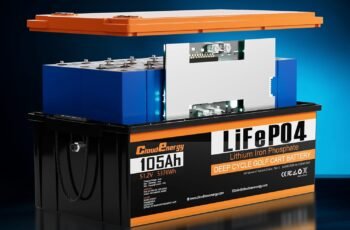
Litime 12V 230Ah battery overview
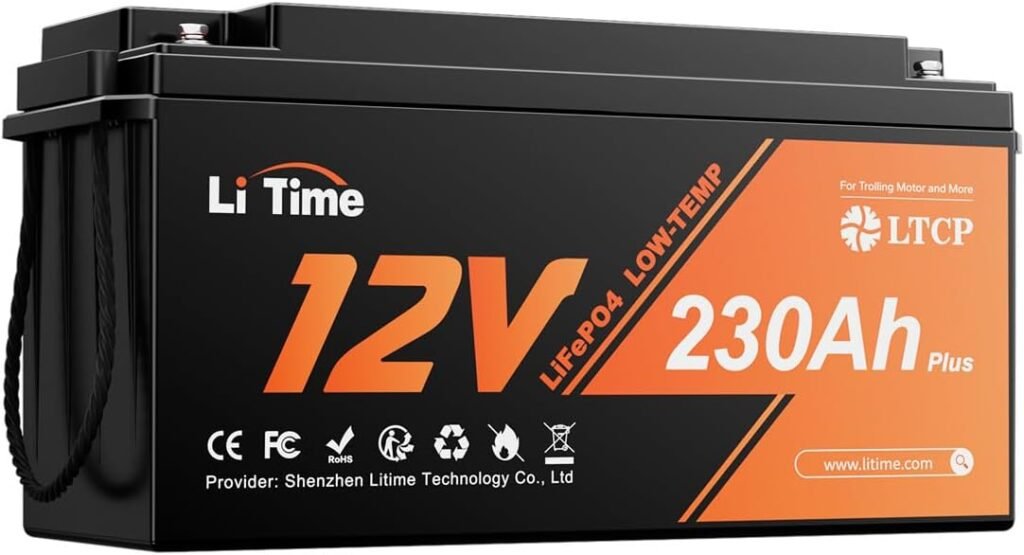
Can a 12V 230Ah LiFePO4 battery provide dependable RV energy without the weight and replacement burden of lead acid? The Litime 12V 230Ah battery looks designed to answer that question with a large reserve, a relatively manageable carrying weight, and an expansion path for more demanding systems. It is intended for mobile power applications in RVs, campers, and travel trailers, rather than being a small auxiliary battery for occasional electronics. The main specifications are a 12V nominal system, 230Ah capacity, 45.98 lb weight, Group 4D compatibility, a built-in 200A BMS, more than 4,000 cycles at 100% depth of discharge, and five-year service support.
Our early view is favourable for RV owners who need high usable capacity, easier handling than lead acid, and the option to expand later. Compatibility still matters more than headline capacity: the compartment, charger, solar controller, wiring, and protection equipment all need checking.

Capacity, weight, and RV installation details
At 12V and 230Ah, this battery represents approximately 2,760Wh of nominal energy before inverter losses, wiring losses, temperature effects, and the limits imposed by the charging system. That is a substantial reserve for lights, a refrigerator, water pump, electronics, and occasional inverter use, although actual runtime depends on the combined wattage and duty cycle of those loads.
The Group 4D designation helps identify the intended battery-box format, but it isn’t a substitute for checking the compartment. Before ordering, we should measure the available space, confirm terminal orientation and cable reach, inspect the hold-down arrangement, and make sure the battery can be accessed safely. LiFePO4 batteries generally provide more usable capacity than lead-acid units because they can normally be discharged more deeply, but the supplied information does not establish a precise usable-energy figure.
At 45.98 lb, the battery should be easier to carry, position, and replace than a comparable lead-acid bank. The listing describes that weight as about one-third of lead acid, which could matter in a travel trailer where handling and payload both matter. One larger battery can also simplify a cramped installation compared with several smaller units, provided the single case fits and its weight doesn’t create a distribution problem.
- Measure the compartment and confirm clearance around terminals.
- Check polarity, cable reach, cable gauge, and the required hold-down method.
- Verify that the RV converter and solar controller support lithium charging.
- Secure the battery, then test charging and discharging separately under load.
Key features of the Litime 12V 230Ah battery
The central protection feature is a built-in 200A battery management system, with the description claiming more than safeguards. Those protections are presented as covering situations such as overcurrent, overcharge, over-discharge, short circuits, and cell balancing. A BMS can disconnect or regulate the battery when unsafe conditions are detected, but the advertised protection list should not be treated as independent performance testing or permission to draw 200A continuously.
Low-temperature charging protection is another useful feature for seasonal RV use. The description says charging pauses below 0°C (32°F) to protect the cells. That protects against charging lithium cells in unsuitable conditions, but it doesn’t mean the battery will deliver identical charging performance in every winter environment. We should keep the battery in a suitable compartment where possible, prevent charging below the stated threshold, and check whether the converter, solar controller, or alternator charger has its own temperature controls.
The claimed cycle life is more than 4,000 cycles at 100% depth of discharge. Compared with the listed AGM reference of 200–500 cycles and approximately three years, that could reduce replacement frequency for owners who repeatedly use a large share of their battery. Cycle ratings remain estimates affected by temperature, charging quality, storage, and load conditions.
Five-year professional service support and/7 online assistance are reassuring ownership claims. Before purchase, we should confirm the exact warranty duration, exclusions, response process, and regional availability rather than assuming every support promise applies identically in every location.

Expansion potential for solar, backup, and larger systems
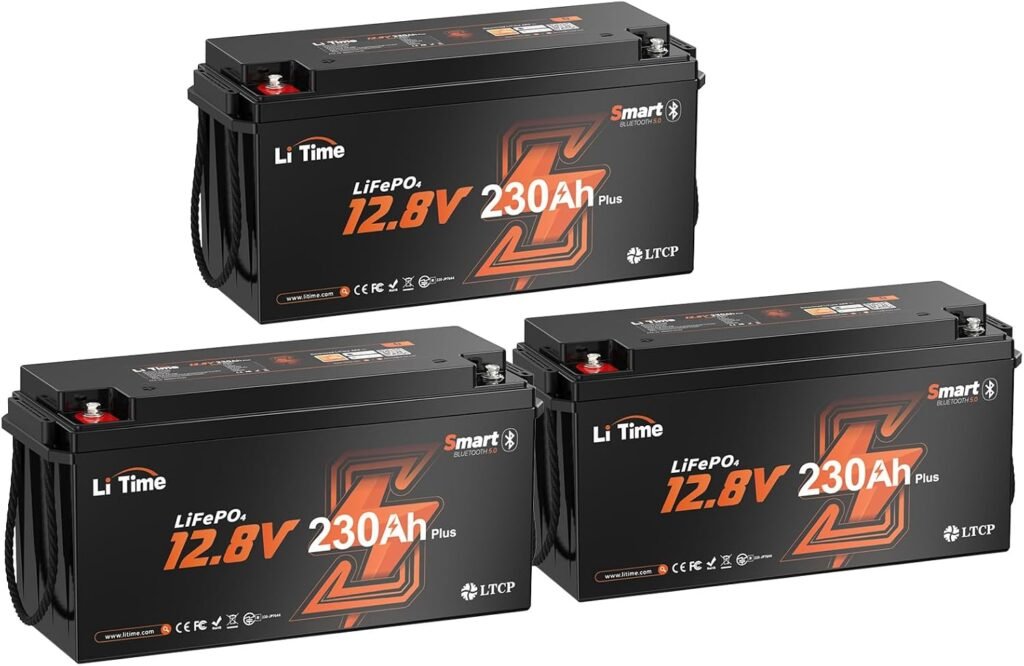
The stated expansion ceiling is ambitious: up to 16 batteries in a 4P4S arrangement, producing a 48V 920Ah system with a claimed maximum output of 47.1kWh. For an RV owner, the practical attraction is starting with one 12V unit and adding storage later as solar capacity, inverter demand, or backup requirements grow.
Parallel and series connections do different jobs. Parallel wiring keeps the voltage the same while increasing amp-hour capacity; series wiring increases voltage while the amp-hour rating remains based on the individual series string. Both arrangements need matched batteries, suitable protection, correctly rated cabling, compatible inverters, and manufacturer-approved configuration limits.
A 48V 920Ah bank is not a casual plug-in upgrade. Before expanding, we should use batteries of the same model and preferably the same age, confirm the approved arrangement, equalise cable lengths where appropriate, and install properly rated fuses and disconnects. A qualified installer should review any substantial series-parallel bank, particularly where it will supply a large inverter or stationary backup system.
The 47.1kWh figure should be read as a stated maximum system energy or output claim, not guaranteed daily usable energy. Inverter efficiency, charging input, chosen depth of discharge, temperature, and the connected loads will all change real-world results. One battery is likely the sensible scale for a camper or travel trailer; two or more may suit high-demand off-grid use, while the largest configurations fit stationary solar or backup projects better than ordinary weekend camping.
What Customers Are Saying about the Litime 12V 230Ah battery
The supplied product data does not include a live star rating or total review count, so we won’t invent either figure or claim that a particular customer pattern is established. A reliable review assessment should record the current rating and review total at publication, then separate repeated experiences from isolated comments. Without those numbers, the safest conclusion is that customer sentiment remains unverified for this review.
When examining the listing, we would look for specific reports of customers running refrigerators, lights, inverters, pumps, or other RV loads for defined periods. Comments that mention a shunt or battery monitor are more useful than vague statements that the battery feels powerful. We would also check for recurring reports about capacity, charge retention, installation, BMS behaviour, and the time taken to obtain technical support.
Critical reviews deserve the same care. Pay attention to inaccurate state-of-charge readings, compatibility problems with factory RV chargers, terminal hardware, low-temperature charging interruptions, packaging damage, and unresolved support cases. A charger setting or an undersized cable can create an installation problem that looks like a battery fault, so the reviewer’s system details matter.
- Read the newest critical reviews first, not only the highest-rated comments.
- Prioritise verified-purchase reviews with wiring, charger, and load details.
- Compare experiences from RVs with similar solar controllers and converters.
- Check the return process and warranty procedure before placing an order.

How the Litime 12V 230Ah battery compares with alternatives
We would compare the Litime 12V 230Ah battery with the ECO-WORTHY 12V 280Ah LiFePO4 Battery and the Renogy 12V 200Ah LiFePO4 Battery using the same questions: how much energy is available, how much space and weight are required, what continuous current is supported, how charging-temperature protection works, what cycle rating is claimed, and what service support is included.
The ECO-WORTHY model may appeal to shoppers who prioritise a higher amp-hour number, while the Litime’s stated Group 4D compatibility may be more useful to someone replacing a battery in a known 4D space. The Renogy alternative may attract buyers who value a different support arrangement, monitoring approach, or physical format. We cannot make a fair numerical price comparison here because the supplied data provides no live competitor prices and no currency symbol for the Litime listing.
Before deciding, record each listing’s current price with its displayed currency, dimensions, weight, maximum continuous current, charging-temperature limits, cycle claim, and warranty terms. Then compare those details with the RV’s existing charger, solar controller, inverter, alternator charging setup, and battery compartment. A slightly smaller battery with a better fit or clearer support can be the safer choice than a larger one that requires extensive modification.
Neither alternative is a universal winner. The right choice depends on whether we need maximum capacity, a particular physical fit, easier monitoring, stronger service coverage, or the least disruptive replacement.
Who should consider this RV battery?
This battery is most appealing to RV, camper, and travel-trailer owners who want a large 12V reserve, less carrying weight than lead acid, deep-cycle capability, and a route toward solar or backup expansion. Frequent off-grid campers could benefit most from the stated cycle rating because regular deep use makes replacement frequency more significant than it is for a vehicle used twice a year.
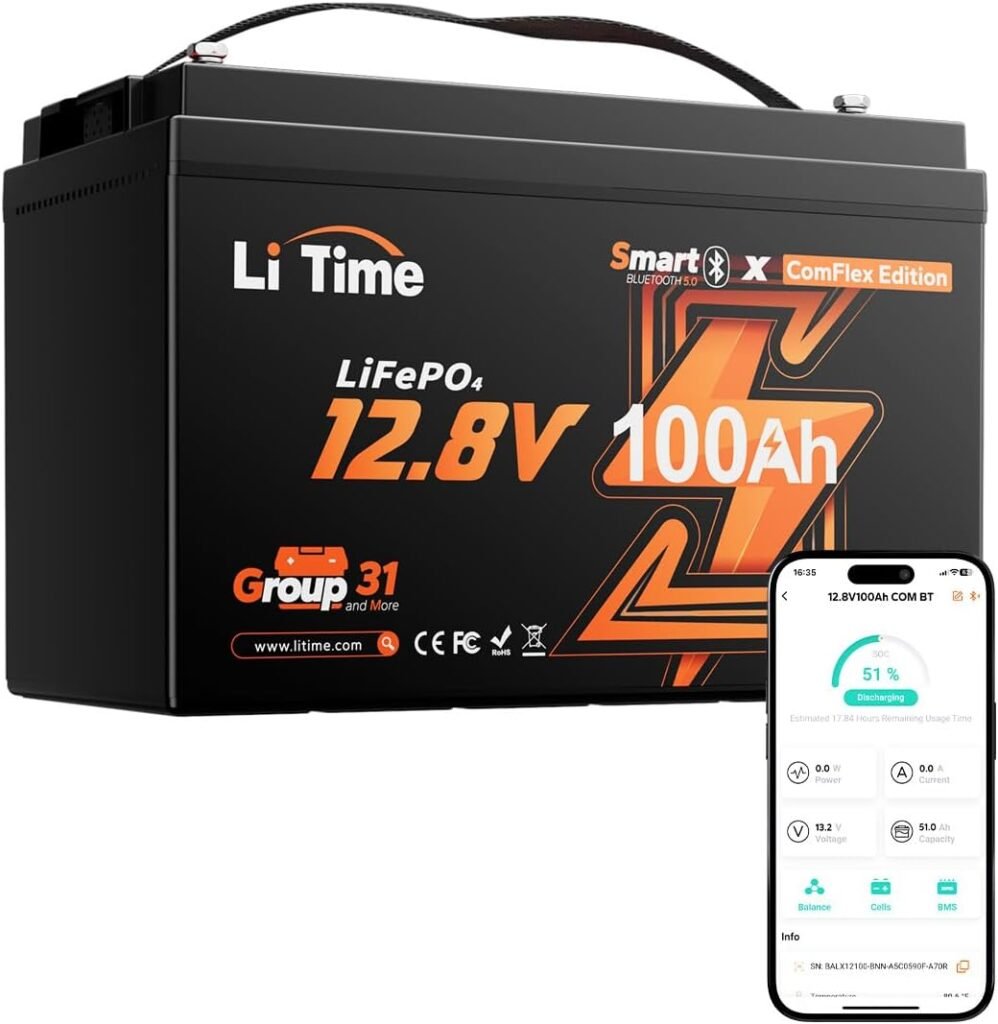
We would pause before recommending it to anyone with a very tight compartment, non-lithium-compatible charging equipment, extremely cold storage conditions, or limited ability to install suitable fuses and disconnects. The supplied specifications also don’t list a built-in display or smartphone app, so buyers who require those features should verify them rather than assume they are included.
A 200A BMS doesn’t automatically mean every RV load can draw 200A continuously. Inverter surge, cable ratings, fuse selection, connectors, and the manufacturer’s operating limits all need to match the intended load. For a sensible sizing decision, we should first calculate daily watt-hours, convert that requirement to 12V amp-hours, add a reserve, verify physical and electrical compatibility, and then decide whether one battery is enough or an expandable bank is justified.
People seeking a simple replacement should prioritise drop-in compatibility. Those planning solar-home backup should evaluate the entire inverter, charging, protection, and monitoring system rather than choosing on amp-hours alone.
Value assessment and ownership costs
Value here depends on more than the purchase price. The relevant factors are the capacity, stated cycle life, lighter handling, service support, installation work, and any charging equipment needed to replace an existing lead-acid system. The supplied listing shows 0.00 with no currency symbol, so we cannot produce a trustworthy cost-per-amp-hour or cost-per-cycle calculation.
To compare the live offer, divide the displayed price by 230Ah and record the result separately from the price divided by the claimed 4,000-plus cycles. Repeat the calculation for each candidate. Those figures are comparison tools, not guarantees: manufacturer cycle claims can vary with temperature, discharge depth, charge rate, and maintenance.
The long-term argument against AGM is clear in the supplied description. AGM is described as lasting about three years and 200–500 cycles, whereas this battery is rated for more than 4,000 cycles at 100% depth of discharge. That difference could matter for frequent off-grid use, but it won’t automatically offset a high purchase price or the cost of upgrading incompatible equipment.
We should also budget for a lithium-compatible converter or charger, correctly rated cables and fuses, a shunt or battery monitor, mounting hardware, and professional installation for a series-parallel system. The strongest value case exists when the Group 4D fit, capacity, low-temperature protection, service support, and expansion plan all match the actual RV system.
What to check before ordering and installing
Before ordering, we should save the live listing details rather than relying only on the product summary. Confirm the current price and currency, product dimensions, terminal layout, weight, return policy, warranty duration, service coverage, and the exact contents of the box. Those details determine whether the battery is a straightforward replacement or a larger installation project.
Next, inspect the RV’s converter, solar charge controller, inverter, battery monitor, and alternator charging setup for lithium compatibility. If the battery is replacing lead acid, existing charging profiles may need adjustment. We should also confirm whether the compartment protects the battery from freezing, since the product description says charging pauses below 0°C (32°F).
Match the intended current draw against the BMS and the rest of the system. Select suitable fuses, disconnects, cable gauges, and crimped terminals instead of automatically reusing undersized lead-acid wiring. For commissioning, use an approved charger, inspect polarity, secure the battery against movement, test charging and discharging separately, and monitor voltage and temperature through the first full cycle.
Our buying direction is straightforward: this is a promising high-capacity RV battery for a compatible system, but the final decision should rest on current listing details, installation fit, charger compatibility, and verified customer feedback rather than the headline specifications alone.
Pros and Cons
Pros
- Large 230Ah capacity for a 12V RV power system
- Stated 45.98 lb weight, described as about one-third of lead acid
- Built-in 200A BMS with more than advertised safeguards
- Charging protection below 0°C (32°F)
- Claimed 4,000-plus cycles at 100% depth of discharge
- Supports a stated 4P4S, 16-battery expansion architecture
- Five-year professional service support and/7 online assistance
Cons
- The supplied price has no currency symbol, making value comparison impossible without checking the live listing
- Physical dimensions, terminal layout, and box contents are not supplied here
- Lithium-compatible charging equipment and correctly rated protection may be required
- The 200A BMS rating does not guarantee 200A continuous use for every RV system
- No live star rating or review count was supplied for independent customer-sentiment assessment
- Large expansion configurations require substantial electrical planning rather than simple plug-in installation
Final Verdict
Key Takeaways
- The Litime 12V 230Ah battery offers a large 12V reserve, a stated 45.98 lb weight, Group 4D compatibility, and a 200A BMS.
- Its claimed 4,000-plus-cycle life and five-year service support may improve long-term value, but manufacturer claims are not guarantees.
- Low-temperature charging pauses below 0°C (32°F), so the RV’s winter storage and charging setup need checking.
- The 4P4S expansion claim supports much larger systems, but those installations require matched batteries, proper protection, and qualified review.
Disclosure: As an Amazon Associate, I earn from qualifying purchases.