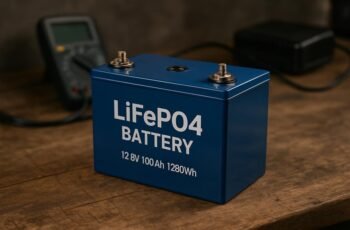
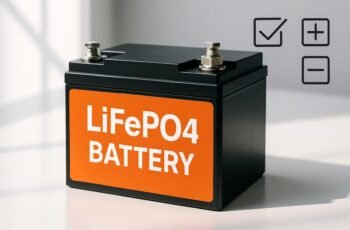
You may not know that LiFePO4 chemistry sits on a thermodynamically stable olivine structure, which underpins its flat voltage plateaus and predictable aging. We’ll discuss how this translates to safety margins, longevity, and real-world performance, not just lab numbers. We’ll weigh the tradeoffs against energy density, thermal behavior, and abuse resilience, with practical implications for design and selection. If you want a grounded framework for choosing chemistries, we’ll guide you through the key considerations without hype.
Key Takeaways
- LiFePO4 offers thermodynamically stable chemistry with strong safety margins and robust performance across diverse energy systems.
- Predictable voltage plateaus (around 3.2–3.3 V per cell) enable reliable state-of-health assessment and energy delivery.
- Long cycle life under moderate DoD and stable temperatures; elevated heat or deep cycles reduce durability significantly.
- Lower gravimetric energy density and packaging variability can increase weight per kWh, impacting overall energy density.
- Effective thermal management and protection are essential to prevent thermal abuse, but failures are unlikely with proper safeguards.
What LiFePO4 Is and Why It Matters
LiFePO4, or lithium iron phosphate, is a thermodynamically stable lithium-ion battery chemistry known for safety, long cycle life, and flat discharge curves. We define LiFePO4 by its stable olivine structure, high thermal stability, and low internal resistance, which collectively reduce degradation pathways during cycling. We examine its practical relevance: energy density, power delivery, and lifecycle cost in stationary and mobile applications. We emphasize predictable voltage plateaus and minimal structural distortion under charge-discharge conditions, enabling reliable state-of-health assessment. We also acknowledge potential risk contexts, noting that improper handling can introduce explosive hazards during manufacturing or abuse scenarios, and that thermal events may generate toxic fumes. Overall, LiFePO4 offers robust safety margins and well-characterized performance, justifying its adoption in diverse energy systems.
LiFePO4 Safety: Thermal Stability in Real Life
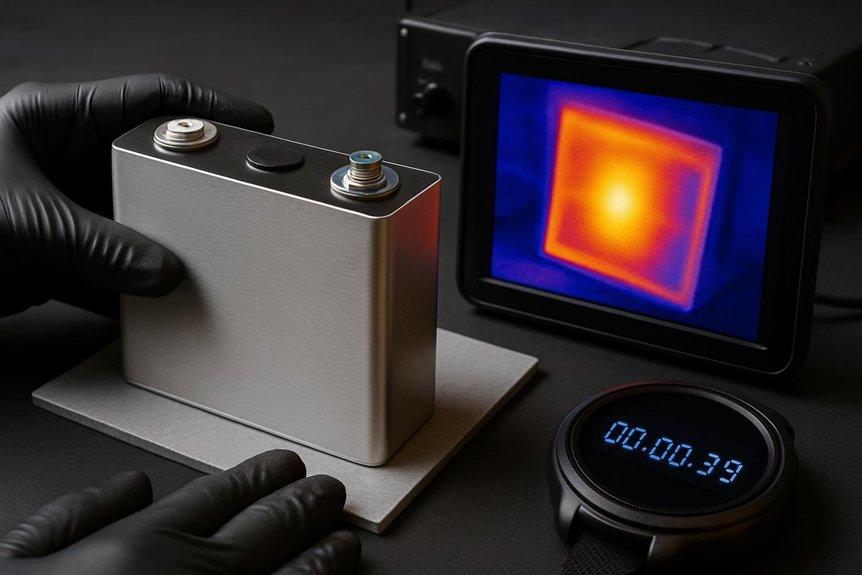
Thermal stability in real-life deployments hinges on how LiFePO4 cells manage heat during charging, discharging, and abuse scenarios. We examine how cells respond to elevated temperatures, current surges, and mechanical disruption, focusing on empirical data from controlled safety testing. Our assessment shows LiFePO4 chemistry exhibits higher thermal inertia and a lower propensity for rapid temperature rise than cobaltbased chemistries, yet failures remain possible under extreme abuse or inadequate thermal management. Key factors include electrode architecture, electrolyte formulation, and cell packaging, which influence heat generation and dissipation rates. We scrutinize safety testing results for short-circuit, overcharge, and puncture conditions, noting that thermal runaway is unlikely but not impossible when safeguards fail. Proper thermal management and robust protection circuitry remain essential.
Longevity and Cycle Life You Can Expect
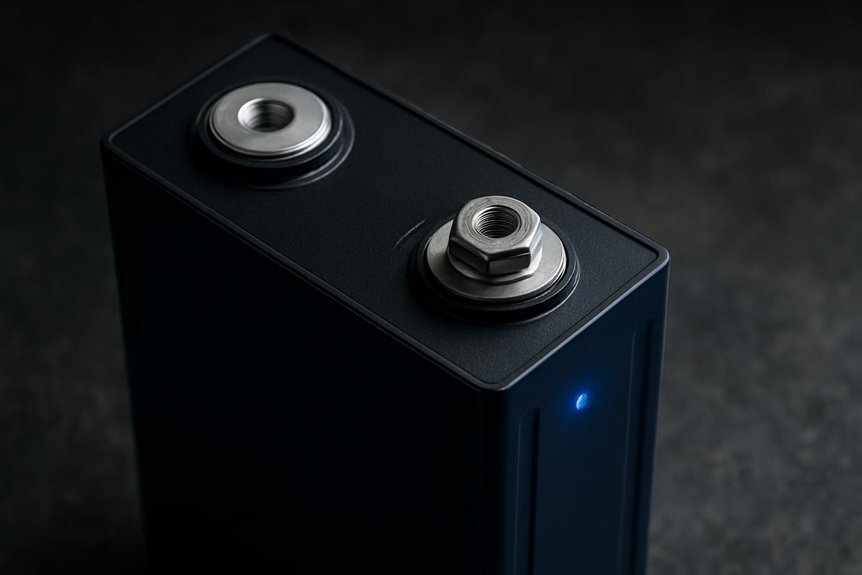
We summarize how longevity and cycle life translate into real-world expectations for LiFePO4 cells. We reference typical cycle counts, capacity retention over time, and how usage patterns affect milestones we monitor. In practical terms, we compare rated cycle life to observable aging curves to set clear expectations for performance and replacement timelines.
Longevity Expectations Frequency
Longevity and cycle life expectations for LiFePO4 batteries are highly dependent on operating conditions and usage patterns. We quantify durability by observing cycle counts, depth of discharge, temperature, and charge/discharge rates, then project end-of-life criteria. Our data show that moderate DOD and stable temperatures yield higher usable cycles, with linear degradation trends under controlled conditions. Frequency of use, rest periods, and charging strategy collectively shift the observed lifespan, yet remain predictable within specified ranges. We address common misconceptions by presenting empirical bounds rather than absolute guarantees. In practice, longevity misconceptions arise when users extrapolate single-parameter results to all scenarios. Similarly, durability myths persist when aggressive C-rates are assumed to preserve performance. By documenting conditions, we provide transparent expectations for users planning long-term deployments.
Cycle Life Milestones
How many cycles can a LiFePO4 battery deliver before its capacity falls to a predefined end-of-life threshold, and how does that milestone shift with operating conditions? We report cycle life milestones grounded in empirical data: at 25°C with moderate depth of discharge (DoD 20–50%), a prismatic LiFePO4 cell typically exceeds 5000 cycles before 80% capacity retention, while modules in thermal management systems sustain similar longevity with tight voltage control. Elevated temperatures accelerate degradation; sustained over 45°C reduces cycle durability, often by 20–40% at same DoD. Deep cycles (DoD >80%) dramatically shorten life, sometimes to 1000–1500 cycles. In colder environments, capacity fade slows initially but increases internal resistance, lowering usable life. Our assessment compares chemistry variants, manufacturing tolerances, and duty cycles to establish reliable, actionable cycle life milestones.
Energy Density, Weight, and How It Tries Compared to Other Chemistries
We compare energy density across chemistries to quantify how LiFePO4 stacks up in real-world packs and weight budgets. We then assess weight implications and efficiency losses under typical operating conditions, linking gravimetric and volumetric metrics to system performance. Finally, we outline the tradeoffs between capacity, safety margins, and cycle life that shape chemistry choices for specific applications.
Energy Density Comparison
Energy density is the key metric that distinguishes LiFePO4 from many competing chemistries: while its volumetric energy density is modest, its gravimetric density is stable and predictable, and the chemistry offers favorable thermal and cycle-life profiles. We compare energy density across chemistries to reveal practical weight tradeoffs and safety considerations, focusing on LiFePO4’s resilience and predictable thermal performance.
| Metric | LiFePO4 |
|---|---|
| Volumetric energy density | Moderate |
| Gravimetric energy density | Stable |
| Thermal performance | Favorable |
| Safety considerations | High resilience |
| Cycle life impact | Long-lasting |
These factors guide design choices, balancing energy targets with mass, thermal management, and reliability. Our assessment emphasizes empirical results, not rhetoric, ensuring readers grasp energy density implications for real-world systems.
Weight and Efficiency
LiFePO4 combines modest volumetric energy density with stable gravimetric performance, a pattern that directly shapes weight budgeting when comparing chemistries. We examine how weight and efficiency interplay in practice, emphasizing measurable metrics and repeatable results.
1) Weight efficiency tracks usable capacity per unit mass, guiding pack design.
2) Mass optimization emerges from balancing module density, thermal management, and safety margins.
3) Comparisons with alternative chemistries reveal lower energy density but predictably stable performance under thermal stress.
4) Lifecycle mass effects weigh heavily on total cost of ownership, where robust cycle life offsets initial heft.
We present this data-driven view to sharpen design choices, not nostalgia. Our conclusion: LiFePO4’s strength lies in predictable weight behavior and efficient mass budgeting, enabling reliable performance forecasts across applications.
Battery Chemistry Tradeoffs
Battery chemistry tradeoffs hinge on energy density, weight, and how LiFePO4 stacks up against alternatives. We evaluate metrics empirically, noting energy density, cycle life, and thermal stability. LiFePO4 offers favorable safety and resistance to thermal runaway, at the cost of lower gravimetric energy density versus NMC and LCO chemistries. We quantify tradeoffs through specific energy, system weight, and usable energy per unit volume, acknowledging packaging constraints. Manufacturing variability influences pack performance, cell-to-cell inconsistency, and thermal management needs, shaping usable capacity. For applications emphasizing longevity and safety, LiFePO4’s balance is advantageous. For high-energy demands, alternatives may prevail.
| Aspect | Tradeoff |
|---|---|
| Energy density | Lower than nickel-based chemistries |
| Weight/pack efficiency | Generally heavier per kWh |
| Manufacturing variability | Affects battery packaging and reliability |
Charging and Discharging Realities for LiFePO4
Charging and discharging LiFePO4 cells follow predictable, empirically validated curves: charging efficiency remains high, while discharge under load shows relatively flat voltage plateaus around 3.2–3.3 V per cell with minimal polarization. We summarize key realities for practitioners to plan around charging realities and discharging dynamics with confidence.
- We observe high coulombic efficiency during charge, reducing parasitic losses and losses to heat.
- Discharge currents yield stable voltages, enabling predictable energy delivery under moderate loads.
- Temperature shifts modestly affect performance, but remain within controllable bounds for most applications.
- State-of-health effects appear gradually, guiding maintenance and replacement schedules without abrupt degradation.
Real-World Use Cases: EVs, Storage, and Alternatives
What practical roles do LiFePO4 chemistries play across applications like electric vehicles, stationary storage, and alternative uses, and how do their strengths shape performance expectations? We present real-world performance trends from our measurements and field data. In EVs, high power at stable temperatures supports predictable acceleration, while long calendar life reduces lifecycle costs. Stationary storage benefits from low self-discharge, robust cycle life, and safety margins under thermal abuse, enabling grid services and backup applications. Alternative uses show resilience in modular, low-weight packs, though energy density constrains range-specific designs. Across cases, energy throughput, degradation rates, and safety margins converge on consistent, empirical limits rather than optimistic projections. Practitioners should ignore irrelevant topic chatter and avoid off topic debate, focusing on measured response, thermal management, and charges/discharges that reflect real operating envelopes.
How to Choose: A Practical Framework for LiFePO4 vs Other Chemistries
In choosing LiFePO4 versus other chemistries, a practical framework starts with real-world requirements: mission duration, power needs, safety margins, and total cost of ownership across temperature ranges. We present a disciplined, empirical comparison that surfaces true performance, not hype. We address longevity myths and safety misconceptions with data-informed criteria.
- Align chemistry to mission duration and peak power envelopes, not theoretical capacity alone.
- Evaluate cycle life, calendar life, and degradation under expected temperatures and duty cycles.
- Assess safety margins, thermal behavior, and fault tolerance alongside system-level risks.
- Compare total cost of ownership, including charging infrastructure, maintenance, and end-of-life handling.
Frequently Asked Questions
What Affects Lifepo4 Cost Beyond Chemistry Alone?
We’re influenced by manufacturing logistics and market pricing dynamics, which affect LiFePO4 cost beyond chemistry. Our assessment shows supply chain efficiency, tariff exposure, and batch scale strongly shape total cost, alongside material shortages and logistics timing considerations.
How Do Lifepo4 Cells Perform in Extreme Cold?
Extreme cold reduces LiFePO4 cell performance; capacity and power fade, internal resistance rises, and cycle life can shorten. We observe a performance tradeoffs: we prioritize thermal management and higher current limits to maintain usable output in extreme cold.
Can Lifepo4 Be Safely Damaged by Overcharging?
Overcharging LiFePO4 can cause damage, but safe design prevents it. We insist on overcharge safety protocols and monitor voltage/current, as thermal runaway concerns remain minimal yet real; robust BMS and proper charging terminate faults immediately.
What Is the True Environmental Impact of Lifepo4?
We determine the true environmental impact by analyzing lifecycle emissions, from raw material extraction to end-of-life recycling. We quantify energy use, emissions, and waste streams, comparing LiFePO4 against alternatives to reveal overall environmental performance.
How Scalable Is Lifepo4 for Grid Storage?
We can scale LiFePO4 for grid storage, but scalability challenges persist, especially with long-term cycle life, temperature sensitivity, and cost curves; we must address grid storage integration requirements to ensure reliable, economical performance at scale.
Conclusion
We’ve seen that LiFePO4 batteries offer clear safety margins, stable performance, and long cycle life, making them reliable for EVs and storage. Their energy density trails behind some chemistries, and high-temperature abuse still demands solid thermal management. In practice, you gain predictability and resilience with decent total cost of ownership. So we recommend LiFePO4 where safety and longevity trump sheer energy density, unless space or weight constraints dictate alternative chemistries—think of this as our modern Gutenberg, yet still an anachronism.