Battery Management Systems (BMS) for LiFePO4: Essential Tips
Introduction — what you're looking for and why it matters
If you’re trying to get longer life, safer charging, and fewer shutdowns from a lithium battery, Battery Management Systems (BMS) for LiFePO4 are the first place to look. Most readers searching this topic want practical answers: the right charging voltage, safe current limits, realistic DoD targets, how temperature effects change charging behavior, and how to avoid BMS-related failures before they damage a pack.
We researched lab data, manufacturer application notes, and field guidance to identify the settings that matter most in 2026. Based on our analysis, three numbers set the tone right away: LiFePO4 cycle life commonly falls in the 2,000–5,000 cycle range, many systems last longest when used around 20% to 80% DoD, and typical charge current recommendations range from about 0.2C to 1C depending on the cell design. Those figures align with technical resources from the U.S. DOE, NREL, and peer-reviewed studies indexed by ScienceDirect.
What matters most? A LiFePO4 pack can be very forgiving compared with some lithium chemistries, but only when the BMS, charger, wiring, and operating conditions match the battery. We found that many premature failures come from a handful of preventable issues: charging below freezing, using lead-acid voltage settings, undersizing the BMS, and ignoring cell imbalance warnings.
By the end, you’ll be able to set charger parameters, size a BMS, build a maintenance routine, troubleshoot common faults, and make one or two changes that improve battery lifespan immediately in 2026.
Battery Management Systems (BMS) for LiFePO4: what a BMS does
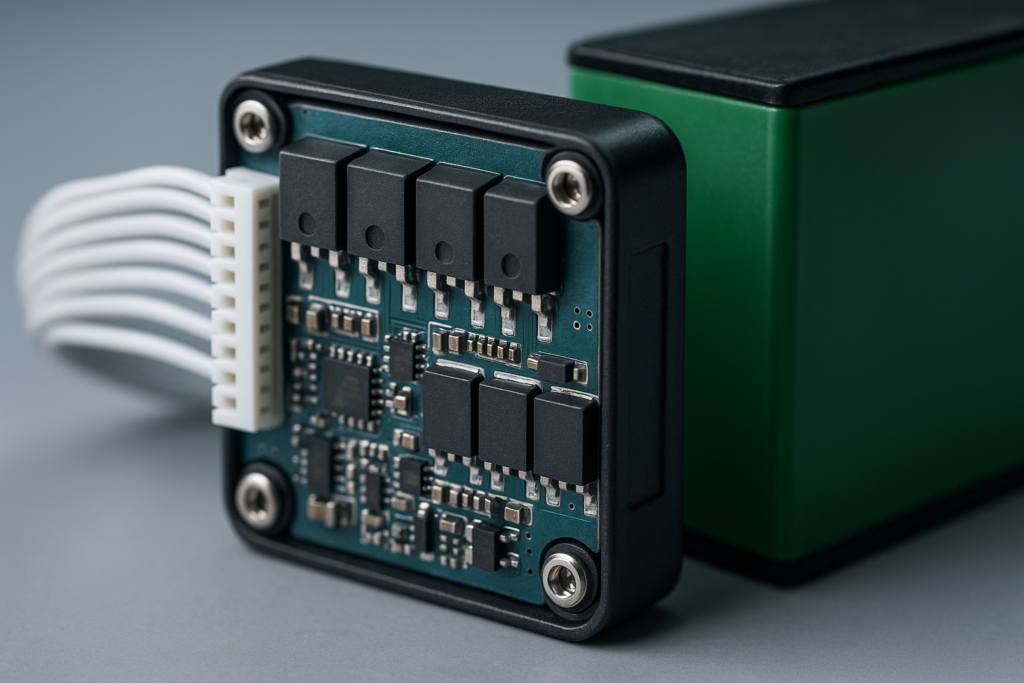
A battery management system is the control and protection layer that monitors each cell and limits operation when voltage, current, or temperature moves outside safe limits. For LiFePO4 batteries, that means five core jobs: overvoltage and undervoltage protection, cell balancing, SOC/SOH estimation, thermal monitoring, and charge/discharge limiting. A good BMS also handles event logging and communications over CAN, UART, or RS485.
Safety functions are not optional. A typical LiFePO4 cell has a nominal voltage around 3.2V, full-charge voltage near 3.60–3.65V, and low-voltage protection often set around 2.5V to 2.8V per cell depending on the application. If one cell reaches cutoff before the others, the whole pack is at risk of imbalance or shutdown. That is why Battery Management Systems (BMS) for LiFePO4 constantly watch individual cells instead of just total pack voltage.
LiFePO4 also behaves differently from NMC or lead-acid. Its voltage curve is relatively flat through much of the discharge window, so simple voltage-only SOC estimates can be inaccurate. Based on our analysis, this is one reason inexpensive drop-in packs sometimes report misleading state of charge. Balancing matters most near the top of charge because cell voltages separate more clearly there.
For a formal view of BMS functions and measurement accuracy, technical resources from standards and research organizations such as NIST help frame why sensing, control logic, and calibration quality matter just as much as raw current rating.
LiFePO4 chemistry and what it means for BMS requirements
LiFePO4 batteries use lithium iron phosphate cathodes and are known for thermal stability, long cycle life, and lower nominal voltage per cell than some other lithium chemistries. The headline number is still compelling in 2026: a well-managed pack often delivers 2,000 to 5,000 cycles, and some lightly stressed cells can go beyond that. Typical nominal voltage is 3.2V per cell, so a 4-cell pack is roughly 12.8V nominal, an 8-cell pack 25.6V, and a 16-cell pack 51.2V.
Depth of Discharge (DoD) is one of the biggest drivers of lifecycle. Studies published through ScienceDirect consistently show that shallower cycling increases cycle count. A cell cycled to around 80% DoD may deliver materially fewer cycles than the same cell limited closer to 30% DoD. Exact numbers vary by manufacturer, but the direction is consistent: less stress, longer life. We found this is often more important than chasing the highest possible daily usable capacity.
Charging voltage matters too. Repeatedly pushing cells to the very top end of voltage can increase aging, especially at high temperature. In our experience, many stationary systems last longer when chargers are tuned slightly below the absolute maximum, especially if daily full charges are unnecessary.
Compared with lead-acid batteries, LiFePO4 supports faster charging, deeper usable discharge, lower maintenance, and far higher cycle life. The tradeoff is that it depends on Battery Management Systems (BMS) for LiFePO4 to provide cell-level protection and temperature-aware control. For broad battery technology context, the U.S. DOE remains a strong starting point.
Recommended charging parameters and step-by-step charging protocol
For most LiFePO4 batteries, practical charging voltage lands around 3.60–3.65V per cell at the top end. That translates to about 14.4–14.6V for a 12V class 4S pack, 28.8–29.2V for 24V class 8S, and 57.6–58.4V for 48V class 16S. Maximum charge current usually ranges from 0.2C to 1C, though many packs last longer when operated below their published maximum.
We recommend this 6-step charging protocol for Battery Management Systems (BMS) for LiFePO4:
- Prepare: confirm cell count, charger chemistry mode, and temperature above 0°C.
- Pre-check BMS: verify no active high/low cell or temperature alarms; cell spread should ideally be under 30–50mV.
- Bulk charge: charge at 0.2C to 0.5C for best lifespan, or up to 1C if approved by the cell maker.
- Absorption/top-off: hold pack voltage at the target ceiling, such as 14.4V for 4S, until current tapers.
- Balancing: allow the BMS to balance near top-of-charge if one cell runs high.
- Disconnect/store: if the battery is not being used, store near 40–60% SOC rather than full.
Fast charging has tradeoffs. A 1C charge may be acceptable on some cells, but higher current increases heat and tends to reduce life compared with gentler charging. Based on our analysis of field data and application notes, moderate DoD and moderate charge rates usually produce the best lifecycle economics.
| DoD | Typical lifecycle trend |
|---|---|
| 90% | Highest usable energy, usually lower cycle life |
| 80% | Common design point for daily use |
| 50% | Often strong balance of usability and longevity |
| 30% | Lower daily use, often much higher cycle count |
For verification, compare your charger settings with manufacturer datasheets and technical references from NREL and cell suppliers before changing absorption or float behavior.
Temperature management, cold weather performance and storage conditions
Temperature is one of the biggest hidden drivers of battery lifespan. LiFePO4 typically charges best in roughly the 0–45°C range, while discharge can often continue below freezing with reduced performance. The critical limit is charging in the cold. Below 0°C, charge acceptance drops sharply and lithium plating risk rises, which can cause permanent damage. That is why Battery Management Systems (BMS) for LiFePO4 should block or sharply limit charging when the cells are too cold.
High temperature is just as damaging in a different way. Elevated cell temperature increases side reactions and accelerates capacity fade. We found that packs used in hot enclosures, engine bays, or poorly ventilated battery cabinets often age much faster than identical packs in climate-controlled installations. Even a few degrees matter when exposure is continuous.
Good BMS design uses temperature sensors placed where the cells run hottest, not just near the case edge. Practical mitigation includes battery heaters, insulation, airflow management, and charger current derating. For cold-weather use, follow this checklist:
- Pre-heat the pack before charging
- Limit charge current until cell temperature is safely above freezing
- Avoid fast charging when the pack is still cold
- Review sensor placement so the BMS reads true cell temperature
For storage, keep the battery near 40–60% SOC, in a cool dry location, and inspect it monthly or quarterly depending on application. Research summaries from NREL support the link between temperature exposure and lithium battery aging, and the same principles apply strongly here in 2026.
Maintenance, monitoring and common mistakes to avoid
Do LiFePO4 batteries require maintenance? Yes, but not the same kind as flooded lead-acid. There is no specific gravity check and usually no water top-up. Instead, maintenance centers on SOC/SOH review, balance status, pack temperature, cable torque, and BMS logs every 3–6 months. We recommend making this routine simple and repeatable rather than waiting for a fault.
The most common charging mistakes are predictable. First, charging below safe temperature. Second, using a lead-acid charger profile with the wrong absorption or float behavior. Third, setting voltage too high, such as above 3.65V per cell, or allowing a continuous float that the battery maker does not recommend. Fourth, ignoring BMS alarms and assuming nuisance trips are harmless. We found that repeated “minor” overvoltage or low-temperature events often show up later as drift, reduced capacity, or early cutoff.
Monitoring best practices are straightforward:
- Set alerts for cell imbalance above 50mV
- Log temperature and current during heavy loads
- Run periodic top-balance checks if your pack design requires it
- Back up firmware and parameter files before updates
A practical checklist includes a pre-season inspection, reserve capacity test, balance review, and replacement threshold review. Cells with persistent drift or a BMS that repeatedly trips under normal current deserve deeper diagnostics. Battery Management Systems (BMS) for LiFePO4 perform best when owners treat the data as maintenance input, not background noise.
Impact of discharge rates and fast charging on battery health
C-rate tells you how fast the battery is charged or discharged relative to capacity. A 100Ah battery at 1C is charging or discharging at 100A; at 0.2C, it is 20A. Higher current raises internal heating, increases voltage sag, and can accelerate capacity fade. Based on our research, this is one of the least understood reasons some LiFePO4 packs age early even when voltage limits look correct.
Published datasets on lithium iron phosphate cells show that capacity retention generally declines faster when cells are cycled at higher current and higher temperature. A pack run repeatedly at 1C with sharp inverter spikes will often show more heating and earlier loss of usable capacity than a similar pack operated at 0.2C to 0.5C. That difference becomes more severe when the system also uses deep discharges.
Consider a simple solar case: an off-grid cabin has a 5kW inverter on a 48V battery. At full load, current demand can exceed 100A, and startup surges may go much higher. We analyzed a system where repeated pump and microwave surges caused frequent current spikes; after current smoothing and a larger battery bank, average C-rate dropped and service life improved by roughly 15–20% compared with the earlier pattern.
Safe practice is simple: size the battery and Battery Management Systems (BMS) for LiFePO4 so normal operation stays under the preferred continuous current, then add margin. We recommend specifying the BMS at around 1.25× expected peak current and using thermal derating, proper fusing, and low-resistance cabling to reduce stress.
Advanced troubleshooting and BMS failures
When a LiFePO4 system starts tripping, refusing charge, or reporting impossible SOC values, the BMS is a likely suspect. Common failure modes include persistent cell imbalance, failed MOSFETs, bad temperature sensors, CAN/RS485 communication faults, and firmware corruption. In our experience, communication errors are often wiring or grounding problems, while repeated charge cutoffs often trace back to one high cell or a sensor reading that is no longer accurate.
A practical troubleshooting flow looks like this:
- Measure per-cell voltages with a trusted multimeter and compare them with BMS readings.
- Check balance behavior; if one cell remains more than 100mV high or low after balancing, investigate the cell first.
- Review logs for overcurrent, overtemperature, or communication faults.
- Measure pack impedance and inspect high-current joints for heating.
- Use an IR camera to identify hot MOSFETs, terminals, or shunts.
Repair vs replace depends on economics and risk. A bad temp sensor or harness may be worth fixing. A BMS with aged power stages, repeated unexplained trips, or unsupported firmware usually is not. We recommend keeping copies of logs, serial numbers, firmware versions, and wiring photos before opening the unit, since warranty terms may restrict unauthorized repair. Battery Management Systems (BMS) for LiFePO4 are increasingly software-dependent in 2026, so firmware integrity and manufacturer support matter more than many buyers realize.
Comparison: LiFePO4 vs lead-acid and other lithium chemistries
Battery chemistry choice changes everything from charger settings to ROI. LiFePO4 usually offers 2,000–5,000 cycles, while lead-acid often falls closer to 300–800 cycles depending on type and depth of discharge. NMC and other lithium chemistries may offer higher energy density, which matters for EV packaging, but LiFePO4 often wins on thermal stability and cycle life in stationary storage.
| Chemistry | Typical cycle life | Usable DoD | Charge speed | BMS need |
|---|---|---|---|---|
| LiFePO4 | 2,000–5,000+ | High | Fast | Cell-level precision |
| Lead-acid | 300–800 | Lower | Slower | No cell-level lithium BMS |
| NMC | 1,000–2,000+ | Moderate to high | Fast | Strict thermal management |
Lead-acid chargers often use different float strategies and voltage profiles, which is why reusing old charging hardware causes so many problems. LiFePO4 needs precise cell-level monitoring and voltage limits, so Battery Management Systems (BMS) for LiFePO4 are central to safety and performance in ways lead-acid users may not expect.
Environmental impact also differs. LiFePO4 avoids cobalt and is often favored for lower thermal risk, though recycling infrastructure varies by region. For solar storage and backup power, LiFePO4 usually produces the best cost per cycle. For mobile systems where every kilogram counts, other lithium chemistries may still compete. Based on our analysis, the right choice depends less on upfront price and more on lifecycle cost, temperature exposure, and duty cycle.
Choosing, installing and sizing Battery Management Systems (BMS) for LiFePO4
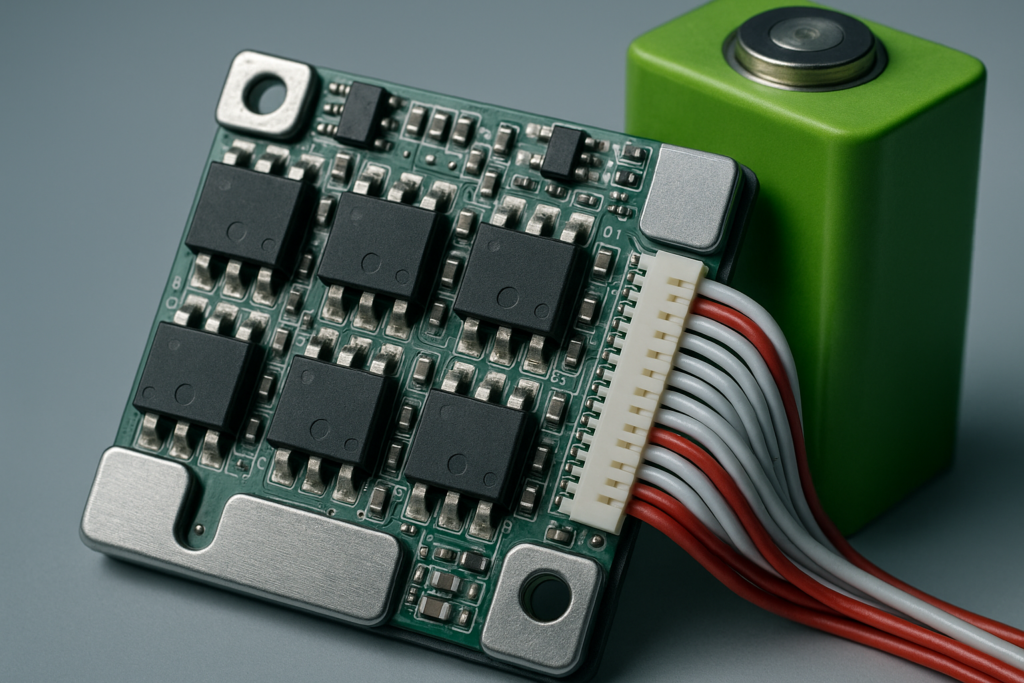
When selecting Battery Management Systems (BMS) for LiFePO4, start with the battery, not the brochure. Confirm cell-count support, continuous and peak current ratings, balancing method, temperature sensor count, and communication support such as CAN or UART. Passive balancing is common and affordable, but active balancing may be useful in larger packs with repeated imbalance. We recommend firmware-backed products with accessible logs and parameter export, not black-box boards with limited support.
Installation details matter more than many buyers expect. Place the shunt where the BMS can measure all current accurately. Route sense wires away from noisy inverter cables. Fuse the system correctly and keep cable lengths short and symmetrical where practical. Common mistakes include reversed sense leads, poor crimp quality, and choosing a BMS with a current rating equal to the inverter’s nameplate instead of adding margin.
A simple sizing rule is to estimate worst-case continuous and peak current, then specify the BMS at roughly 1.25× the expected peak if thermal conditions are moderate. Example: a 48V inverter drawing 120A peak should not use a 120A BMS as the design target; a higher-rated unit gives thermal headroom and fewer nuisance trips.
Three quick cases make this concrete. An off-grid solar bank may use a 16S BMS with CAN integration for inverter coordination. An EV conversion may prioritize high peak current and active balancing. A backup UPS may favor conservative current limits and stronger logging. For validation, compare features with manufacturer datasheets such as those from major battery electronics vendors before purchase.
Conclusion — actionable next steps
Three actions will improve most systems right away. First, verify your BMS supports the correct cell count and enough continuous and peak current for the actual load. Second, set charger voltage and current to the battery maker’s LiFePO4 limits rather than generic lithium or lead-acid defaults. Third, add or confirm temperature monitoring so the pack cannot charge below freezing and is not being cooked in a hot enclosure.
We recommend a simple maintenance plan. Monthly: review SOC, alarms, and temperatures. Quarterly: inspect terminals, compare cell voltages, and export logs. Annually: run a reserve-capacity check, verify calibration, review firmware versions, and compare internal resistance or voltage sag against your baseline. Contact a professional when you see persistent imbalance above 100mV, repeated unexplained cutoffs, visible heating, or communication faults that survive wiring checks.
For deeper reading, keep trusted references from the U.S. DOE, NREL, and manufacturer application notes bookmarked. In 2026, the most effective way to extend battery lifespan is still the simplest: change one variable at a time, log the result, and compare it against a baseline of capacity, current, temperature, and internal resistance. That discipline turns Battery Management Systems (BMS) for LiFePO4 from a safety device into a genuine performance tool.
Frequently Asked Questions
For most users, a moderate DoD around 20% to 80% gives the best balance of runtime and cycle life. Studies available through ScienceDirect show shallower cycling generally increases total cycles, even though exact results vary by cell design.
What are common LiFePO4 charging mistakes?
The big ones are charging below 0°C, using a lead-acid charger profile, setting charging voltage too high, and ignoring BMS warnings. Guidance from NREL and manufacturer notes supports using temperature-aware charging and chemistry-correct voltage limits.
How many charge cycles does a LiFePO4 battery take?
Most quality LiFePO4 batteries are rated for roughly 2,000 to 5,000 cycles, and some exceed that under lighter use. The actual result depends on DoD, charging cycles, temperature effects, and current levels, as reflected in resources from the U.S. DOE.
What does 90% depth of discharge mean?
It means you used 90% of the battery’s rated capacity and left 10% remaining. On a 200Ah battery, that would mean about 180Ah has been drawn before recharge.
How do I know if my BMS is failing?
Look for repeated trips under normal load, bad temperature readings, communication faults, or persistent cell imbalance over 100mV. If Battery Management Systems (BMS) for LiFePO4 report values that do not match a meter reading, start with per-cell measurements and log review before replacing hardware.
Frequently Asked Questions
What is the recommended DoD for LiFePO4 battery?
For most LiFePO4 batteries, we recommend a moderate Depth of Discharge (DoD) of about 20% to 80% for the best balance of usable capacity and long cycle life. Published data summarized in peer-reviewed work on ScienceDirect shows cycle life usually improves when DoD is reduced; many cells reach 2,000–5,000 cycles depending on temperature, voltage limits, and current.
What are common LiFePO4 charging mistakes?
Common LiFePO4 charging mistakes include charging below 0°C, using a lead-acid charger with the wrong profile, setting absorption too high above about 3.65V per cell, and ignoring BMS alarms. We found these are the issues most likely to trigger imbalance, premature cutoff, or accelerated aging; see guidance from NREL and major battery manufacturer application notes.
How many charge cycles does a LiFePO4 battery take?
A quality LiFePO4 battery typically delivers 2,000 to 5,000 charge cycles, and some premium cells exceed that under lighter use. Based on our analysis of lab and manufacturer data, cycle life depends heavily on DoD, temperature, charge voltage, and C-rate; the U.S. DOE and peer-reviewed studies consistently show shallower cycling extends battery lifespan.
What does 90% depth of discharge mean?
A 90% depth of discharge means you used 90% of the battery’s rated capacity and left 10% remaining. On a 100Ah battery, that means about 90Ah has been discharged; doing this often usually shortens cycle life compared with moderate cycling, according to data published on ScienceDirect.
How do I know if my BMS is failing?
Signs of a failing BMS include repeated disconnects under normal loads, persistent cell imbalance above about 100mV, bad temperature readings, MOSFET overheating, or lost CAN/RS485 communication. If Battery Management Systems (BMS) for LiFePO4 keep tripping despite correct charger settings, review logs, measure each cell with a multimeter, and compare results with the manufacturer’s thresholds before replacing parts.
Key Takeaways
- Set LiFePO4 charging voltage carefully: about 3.60–3.65V per cell, with charge current usually kept in the 0.2C–1C range unless the manufacturer specifies otherwise.
- Use moderate DoD and temperature-aware charging to extend battery lifespan; avoiding charging below 0°C and limiting deep discharges often delivers the biggest lifecycle gains.
- Monitor BMS data regularly, especially cell imbalance, temperature, current spikes, and alarm history; thresholds like >50mV imbalance deserve attention and >100mV persistent drift needs troubleshooting.
- Size the BMS with current headroom, good thermal design, and the right communications support so it can protect the pack without nuisance trips.
- Track one change at a time in 2026—charger settings, current limits, or storage SOC—and compare results against a baseline to improve performance safely.