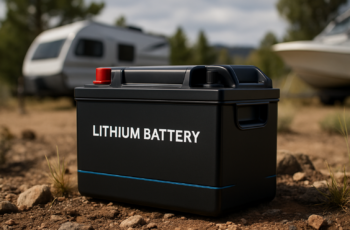
We were comparing 12V batteries for an off-grid setup when the Litime 230Ah model appeared at a useful 2,944Wh capacity. We’ll examine its 200A BMS, low-temperature charging protection, cycle rating, weight, and installation limits for RV, marine, and solar use. Its specifications look practical, but fit, terminal clearance, and charger compatibility can change whether it suits your system.


November 17, 2026 4:37 am
Key Takeaways
- The LiTime 12V 230Ah LiFePO4 battery stores 2,944Wh and weighs approximately 46 pounds.
- It suits deep-cycle RV, solar, marine, and off-grid storage, but is not designed for engine starting.
- Its 200A BMS provides over 20 safeguards, while IP65 protection resists dust and water jets.
- The battery supports over 4,000 cycles at 100% depth of discharge and includes a five-year warranty.
- Check its dimensions, LiFePO4 charging compatibility, cold-weather needs, and monitoring requirements before buying.
12V 230Ah Battery Review
How does the Litime 12V 230Ah battery perform as a deep-cycle power source? We can assess its value by considering its rated energy and intended applications. Its 12-volt, 230-amp-hour Battery capacity equals 2,944 watt-hours, providing substantial stored energy for appliances and other loads in a suitable system.
As a rechargeable LiFePO4 battery, it’s designed for repeated deep-cycle use rather than engine starting. RV compatibility includes recreational vehicles, travel trailers, Class C RVs, and camper vans; it also suits solar, off-grid, marine, and energy-storage setups.
We should match connected loads and charging equipment to system requirements, since usable performance depends on installation and operating conditions.
Detailed features
For fit and installation planning, the Litime measures 19.02 × 6.69 × 9.45 inches, fits Group 4D battery boxes, and weighs about 46 pounds—roughly one-third as much as a comparable lead-acid battery. These Battery dimensions help us assess clearance and handling before installation.
The 12V LiFePO4 battery stores 2,944Wh and includes a 200A battery management system with more than 20 safeguards. Its cold weather protection pauses charging below 32°F (0°C), while its IP65 rating protects against dust and water jets. We can connect up to 16 batteries in a 4P4S configuration for a 48V, 920Ah system with up to 47.1kWh output.
For battery installation, we recommend confirming that your compartment accommodates its 19.02 × 6.69 × 9.45-inch dimensions and approximately 46-pound weight. It fits Group 4D battery boxes, but you should verify terminal clearance and secure mounting before connecting it.
The included package contains one battery, model EF-A2E128A-10, also identified as 12V 230Ah LTCP.
For solar compatibility, match your charge controller’s settings to LiFePO4 charging requirements and observe the battery’s low-temperature charging protection. Contact Litime support for setup guidance.
November 17, 2026 4:37 am
Pros and Cons
We’ll weigh the battery’s 2,944Wh capacity, 200A BMS, low-temperature charging protection, and 4,000+ cycle rating against its application limits.
It isn’t intended for engine starting, golf carts, or jacks, and its non-Bluetooth version lacks app monitoring. These pros and cons will help you assess whether it fits your power system.
Pros
Although it weighs just 46 lb, the Litime 12V 230Ah battery provides 2,944Wh of capacity, making it easier to handle than a comparable lead-acid battery while offering substantial energy storage for RV, marine, solar, and off-grid use.
This Lightweight Design can simplify installation and reduce payload, while its Group 4D dimensions suit compatible battery boxes. We can also expand capacity by connecting up to 16 batteries in a 4P4S configuration, supporting systems up to 48V and 47.1kWh.
Its Extended Lifespan is backed by a rating of 4,000-plus cycles at 100% depth of discharge, plus a five-year warranty and 24/7 online technical support.
Cons
Despite its high capacity and long cycle rating, the Litime 12V 230Ah battery has limitations to weigh. At approximately 46 pounds and nearly 19 inches long, it may not fit compact compartments; check clearances and Group 4D compatibility before installation.
Cold weather charging stops below 32°F, protecting the cells but requiring a warmer location or charging plan in freezing conditions. This model also lacks Bluetooth monitoring, so we can’t check battery status wirelessly and must use other monitoring equipment.
Its 200A BMS limits current, and the battery isn’t suitable for engine starting, golf carts, or jacks.
The Litime 12V 230Ah LTCP is a deep-cycle LiFePO4 battery with 2,944Wh of capacity, a built-in 200A battery management system, and an IP65-rated enclosure for RV, solar, marine, and off-grid energy storage. At 19.02 × 6.69 × 9.45 inches, it fits Group 4D battery boxes and weighs about 46 pounds.
During battery installation, we should confirm the compartment dimensions, secure the unit, and use compatible charging equipment. Its low-temperature protection pauses charging below 32°F, so cold weather charging requires attention to ambient conditions.
The battery supports up to 16 units in a 4P4S configuration, enabling a 48V system with 47.1kWh output.
November 17, 2026 4:37 am
Concluding thoughts
For RV, solar, marine, and off-grid storage, the Litime 12V 230Ah LTCP combines 2,944Wh of capacity with a 200A BMS, IP65 protection, and a 46-pound weight. We’d consider it for users who need substantial capacity in a lighter Group 4D-compatible package.
Its low-temperature charging protection, 4,000-plus-cycle rating at full discharge, and five-year warranty support long term value, though actual service life depends on operating conditions. Ideal applications include travel trailers, camper vans, and stationary energy storage—not engine starting, golf carts, or jacks.
Before buying, we’d confirm dimensions, charging compatibility, and whether its non-Bluetooth design meets your monitoring needs.
Frequently Asked Questions
Can This Battery Be Connected to an Alternator for Charging?
Yes, we can charge this battery from an alternator, but we should use a lithium-compatible DC-DC charger to regulate current and voltage. Alternator charging compatibility depends on charger settings; check manufacturer specifications before installation.
What Charger Settings Are Recommended for This Lifepo4 Battery?
“Measure twice, charge once”: we recommend 14.4–14.6V bulk/absorption and 13.5–13.8V float. Recommended voltage settings should follow your charger’s lithium profile. Set Charge current limits at or below 200A; avoid charging below freezing.
Can It Power a Refrigerator Overnight in an RV?
Yes, we can power an RV refrigerator overnight: the battery stores 2,944Wh. Refrigerator runtime depends on the appliance’s cycling and inverter losses; compare its overnight energy use with usable battery capacity to confirm sufficient reserve.
How Should the Battery Be Stored When Not in Use?
For storage, let’s give the battery a calm winter’s rest: disconnect it, charge to roughly 50–60% (Storage charge level), and keep it dry within a moderate Temperature range; avoid freezing, heat, and prolonged full discharge.
Are Cables or Mounting Hardware Included With the Battery?
We can’t confirm that Included cables or Mounting hardware come with the battery: the listed package contains one 12V 230Ah LiFePO4 battery only. Check with the seller before purchase if you need either accessory.
November 17, 2026 4:37 am
Conclusion
If you’re upgrading an RV or solar setup just as your power needs are growing, this battery may be a timely fit. We get 2,944Wh of storage, a 200A BMS, and more than 4,000 rated cycles in a roughly 46-pound package. Before buying, we’d verify the battery’s dimensions, terminal clearance, and charger compatibility, and confirm it suits the intended load. Its low-temperature protection pauses charging below 32°F. It isn’t designed for engine starting, golf carts, or jacks.