Looking for a heavy-duty, safer replacement for lead-acid batteries for your golf cart, trolling motor, or marine rig?
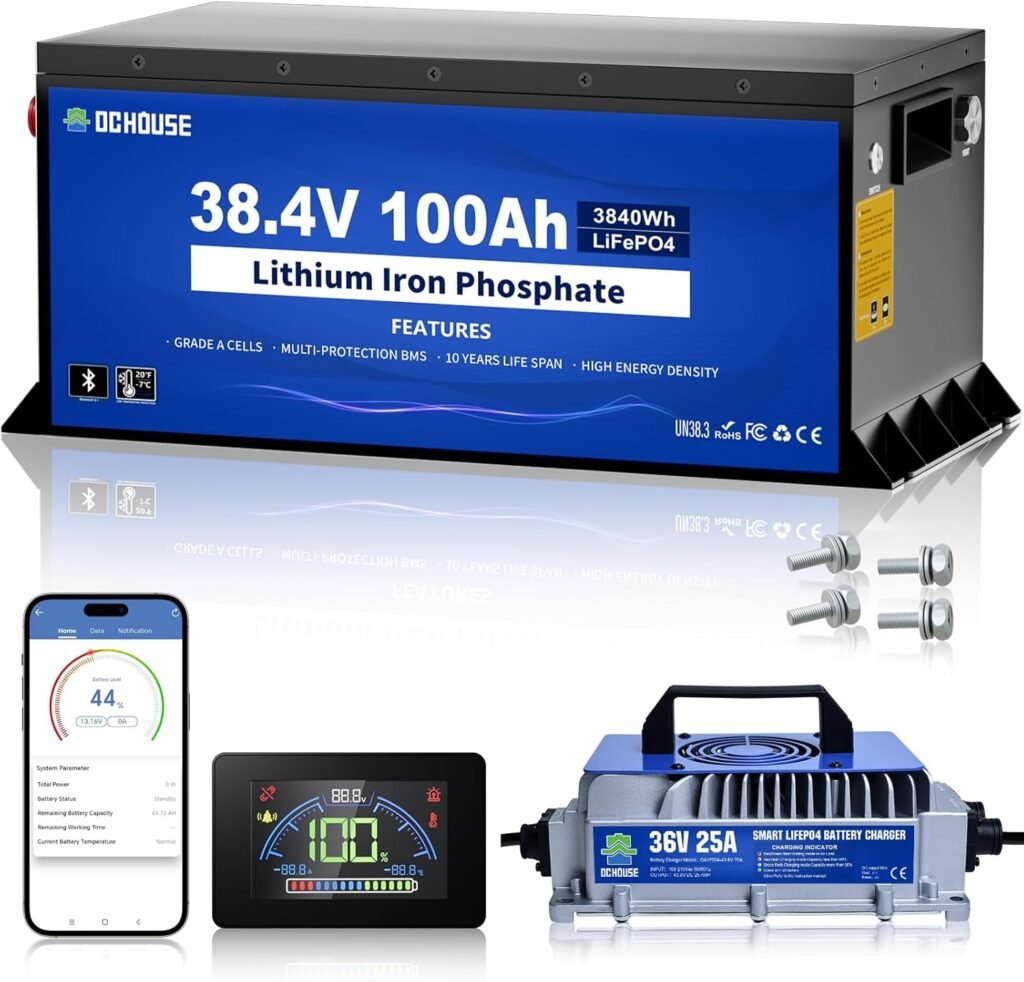

Product overview: DC HOUSE Metal Case 36V 100Ah Pro Lithium Golf Cart Battery
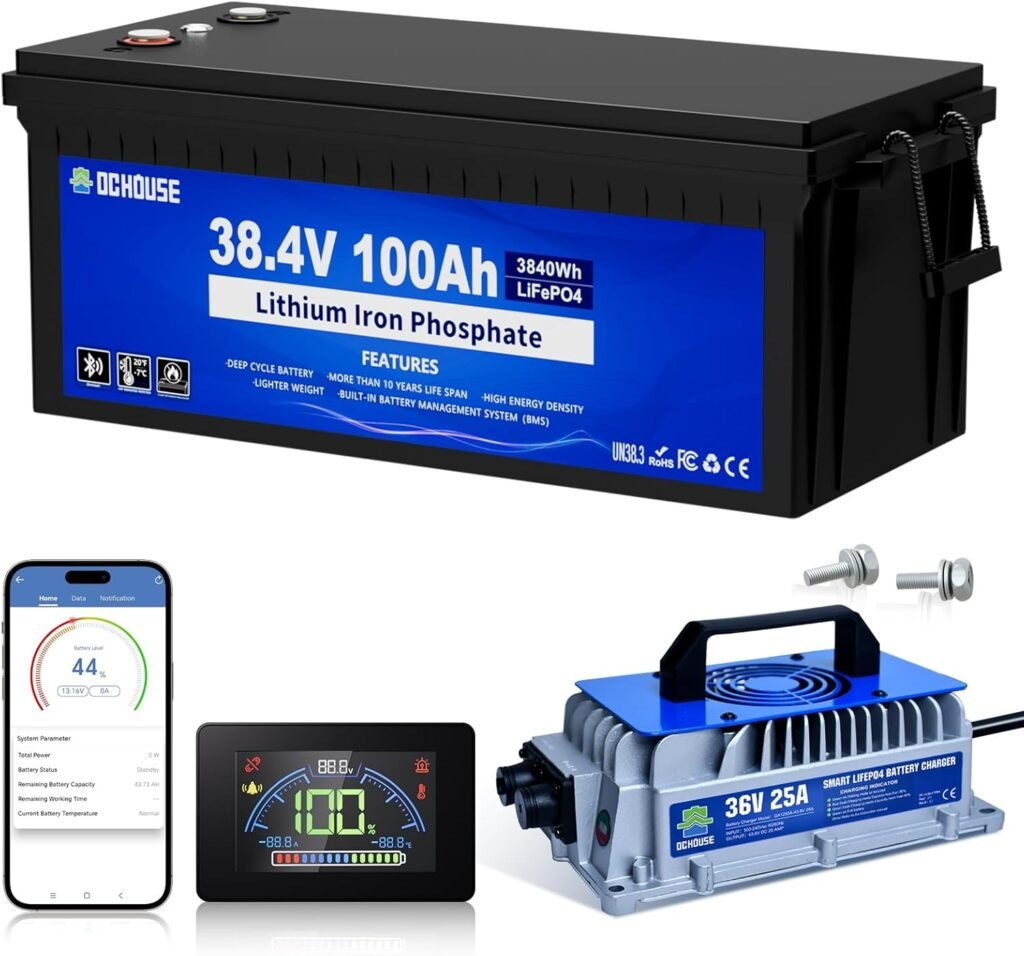
You’re looking at the DC HOUSE Metal Case 36V 100Ah Pro Lithium Golf Cart Battery, LiFePO4 Battery with 36V 25A Charger, Bluetooth Mobile APP & LCD Monitor, 200A BMS, Peak Current 670A, Perfect for Trolling Motor, Marine. This battery combines a rugged metal case, smart monitoring, and a high-current BMS to give you a modern substitute for bulky lead-acid packs. You’ll get a 3.84 kWh capacity in a package designed to be safer, longer-lasting, and easier to install than a traditional 6x6V lead-acid configuration.
Key specifications at a glance
You want specs up front so you can quickly compare. The table below breaks down the important numbers and features so you don’t have to hunt through long descriptions.
| Specification | Value |
|---|---|
| Nominal voltage | 36V |
| Capacity | 100Ah |
| Usable energy | 3.84 kWh |
| Chemistry | LiFePO4 (Lithium Iron Phosphate) |
| BMS continuous rating | 200A (2C-rated) |
| Short-duration discharge | 280A for 30s |
| Peak current | 670A for 1s |
| Charger included | 36V 25A (supports 0V charging) |
| Charge time (approx.) | ~4 hours (with 25A charger) |
| Range (typical) | 30–40 miles or 5–7 rounds of 18-hole golf (depending on load) |
| Supports motor up to | 5 kW |
| Dimensions | 20.71 × 10.55 × 9.17 inches |
| Weight | 36.3 kg (80 lbs) |
| Monitor | Bluetooth APP + LCD monitor (wireless); reserved port for wired monitor |
| Charging cable | 2.7 m (8.86 ft) |
| Case | Metal, fireproof, impact-resistant |
| Special features | One-touch power switch, pressure relief valve, Grade A cells, metal fixtures holding cells |
Design and build quality
You’ll notice the first thing that stands out is the metal case. It’s designed to be fireproof and impact-resistant, which is a clear upgrade from the typical ABS-plastic enclosures used on many batteries.
The package is beefy but compact for a 36V 100Ah pack, and the internal metal fixtures are meant to keep the cells stable. That helps reduce vibration-related wear, which matters if you’re mounting this on a cart or boat.
Metal case safety and protections
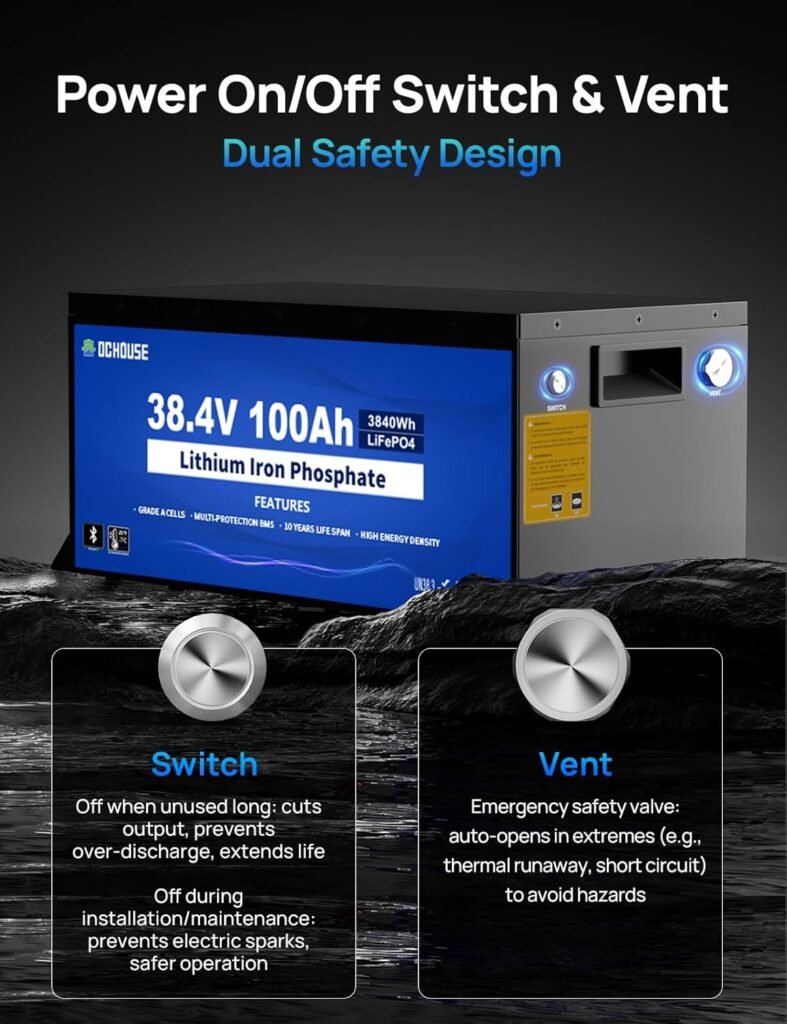
The metal case gives you higher resistance to heat and impact than most consumer lithium batteries. You’ll also have a built-in pressure relief valve that vents in extreme overpressure situations, which reduces the risk of case rupture or explosion.
There’s a one-touch power switch so you can cut off output quickly when you’re not in use and prevent accidental power-on. Those two items together make the battery safer for transport, storage, and outdoor recreational use.
Internal construction and cell fixing
Inside, cells are secured by metal fixtures instead of loose glue or flimsy holders, so you’ll get better physical stability. That mechanical stability reduces micro-movements that accelerate cell wear and can improve the pack’s long-term reliability.
The battery uses Grade A cells, which the manufacturer claims extend life by about 30% and allow the pack to last up to eight times as long as typical lead-acid batteries under comparable cycling. You’ll still need to treat it properly, but the cell quality gives you a stronger baseline for longevity.

Performance and real-world range
You’ll find this battery delivers a usable 3.84 kWh of energy, which translates into meaningful range for golf carts, trolling motors, and smaller marine applications. The manufacturer suggests 30–40 miles of range or 5–7 rounds of 18-hole golf on a single charge, but your mileage will vary based on load, terrain, speed, and conditions.
Expect better acceleration and more usable range under normal conditions than a similarly sized lead-acid pack because LiFePO4 maintains voltage better under load. If you run aggressive speeds or steep climbs frequently, your range will be on the lower side of the estimate.
Discharge performance and climbing power
The DC HOUSE battery is equipped with a robust 200A BMS and supports 2C discharge. That means it can handle sustained currents of roughly 200A and short bursts of much higher current — specifically 280A for 30 seconds and a 670A peak for 1 second. You’ll appreciate that for hill climbs and sudden acceleration demands.
Those numbers allow support for motors up to about 5 kW and give enough torque to climb slopes around 20° while maintaining performance. If your cart or vessel draws heavy current spikes (like trolling motors starting or inrush from large controllers), the 670A peak provides an important safety margin.
Charging: charger, times, and convenience
You’ll get a 36V 25A charger included, and that’s part of what makes this battery convenient. The 25A charger is relatively high-current for a 36V battery, allowing you to recharge the pack in about 4 hours from a typical state of discharge.
The charger supports 0V charging, which is very handy if a battery has been fully depleted. You’ll be able to safely bring back over-discharged batteries that otherwise would be tricky to revive with chargers that don’t support zero-volt recovery.
Charger cable and shipping notes
The 2.7-meter (8.86 ft) charging cable gives you flexibility in where you plug in, and the charger’s capacity makes it realistic to charge between rounds or trips. Note that the battery and charger may be shipped as two separate packages, so don’t worry if you get one before the other — they’ll arrive separately.
Charging best practices
You should keep the charger connections clean and double-check polarity during installation. Use the provided charger for routine charging and avoid using unknown chargers with different voltage or current behaviors. Charging in a ventilated, dry area and avoiding extreme temperatures will maximize the battery’s lifespan.
Monitoring and controls
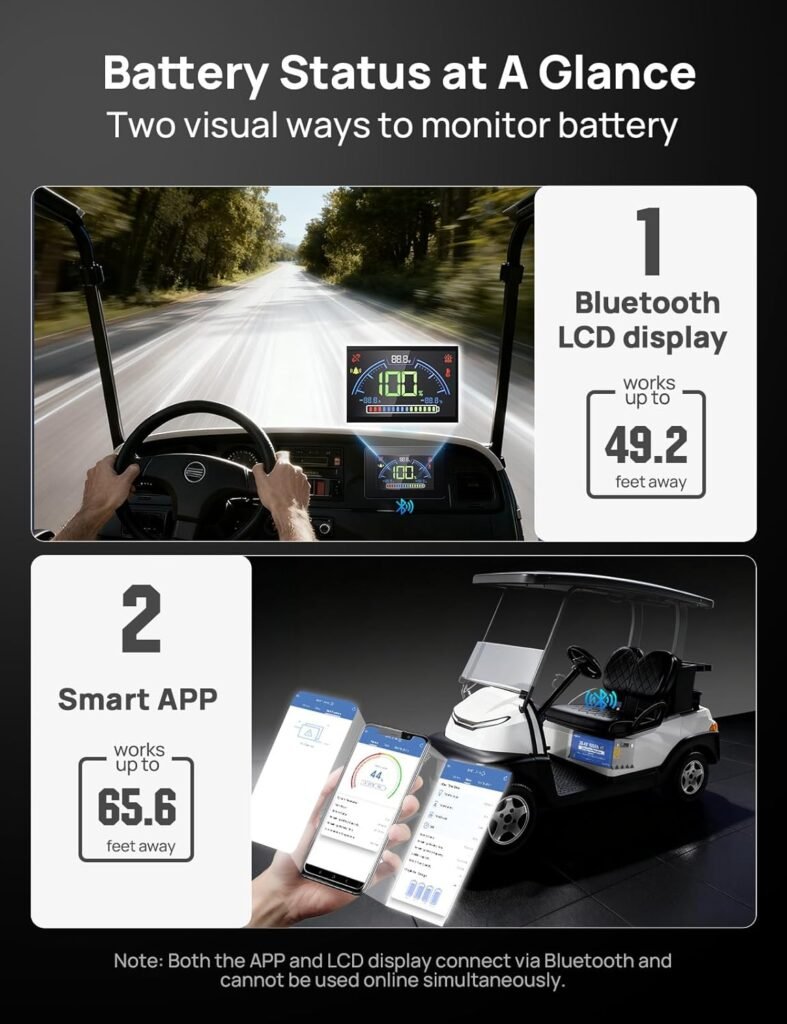
You’ll have two ways to monitor the battery: a Bluetooth mobile app and a wireless LCD monitor included in the package. That combination lets you check state-of-charge (SOC), voltage, and current in real time within about 15 meters of range.
The monitor is compact (2.76 × 0.98 × 1.77 inches) and designed to connect to the battery terminals and communicate with the battery via Bluetooth. If you prefer wired monitoring, a wired comms monitor can be connected through the reserved port on the battery — you’d need to buy that wired monitor separately.
How to use the LCD monitor and mobile app
To use the wireless LCD monitor, connect its positive and negative leads to the corresponding terminals on the golf cart switch key as instructed. Then pair the monitor with the DC HOUSE mobile app over Bluetooth to see battery voltage, current, and SOC remotely. The app gives you a convenient snapshot of charge status and lets you plan recharges without opening the battery compartment.
If you need a wired setup for display or integration into a custom instrumentation system, you can purchase a compatible wired monitor and connect it through the reserved communication port on the battery.
Installation and compatibility
You’ll appreciate how much simpler this single 36V pack is compared with wiring six 6V lead-acid batteries in series. Installation is typically a one-piece swap into your golf cart battery tray or platform, saving you hours of wiring and reducing points of failure.
Before you install, measure the physical footprint and verify the terminal layout and seat mount points so the battery sits securely. At 80 lbs (36.3 kg), it’s lighter and more compact than many comparable lead-acid packs, but you still want secure mounting to prevent movement under load.
Wiring tips and what to check
Make sure your cart’s wiring and connectors are rated for the battery’s continuous and peak currents — 200A continuous and 670A peak can exceed older carts’ wiring capacity. Check controller and contactor ratings against the battery’s capabilities. If your system expects individual 6V modules for a charger or balancer, you’ll need to adapt or upgrade those components, since this is a single-pack solution.
Safety features and recommended practices
You’ll get a number of safety features built into the DC HOUSE battery: a metal fireproof case, an external one-touch power switch for isolation, and a pressure relief valve to handle extreme internal pressure. Those safeguards reduce but don’t eliminate risk — you still need to follow safe charging and storage procedures.
Store the battery in a dry, ventilated area at moderate temperatures, avoid sub-freezing charging, and don’t allow repeated deep discharge beyond the manufacturer’s recommendations. Keep wiring clean, use fuses or breakers sized correctly, and inspect terminals periodically for corrosion.
Handling and storage guidance
When handling, use two people or equipment for moving the pack if needed, as it’s still about 80 lbs. Don’t drop the pack or subject it to repeated heavy impacts. For long-term storage, keep the battery at about 40–60% SOC rather than fully charged or fully discharged, and recharge periodically to prevent cell imbalance.
Advantages over lead-acid batteries
You’ll notice several clear benefits when switching from lead-acid to this LiFePO4 pack. The battery is lighter, charges faster, gives better usable capacity, and requires no watering or equalization charging. The manufacturer claims up to eight times the life of lead-acid, which translates into fewer replacements and lower lifetime cost despite higher upfront expense.
LiFePO4 holds voltage better under load, which means better performance during extended use. The single-box installation also removes the hassle of wiring multiple 6V batteries in series, making upgrades much simpler.
Durability and lifecycle
Grade A cells and robust internal mounting improve durability and help reduce the common failure points found in lower-quality packs. Expect thousands of cycles (often several thousand for LiFePO4 chemistry) if you treat the battery well, which makes it a practical long-term investment for recurrent use like daily golf rounds or frequent marine outings.
Ideal use cases
You’ll find this battery suits several mobile applications. It’s a natural fit for golf carts, where range and quick charging between rounds matter. It’s also suitable for trolling motors and smaller marine craft that need stable voltage and high burst current for climbing or quick acceleration.
Other uses include small RV systems, portable power stations that accept 36V input, and any application where you’d previously have used multiple lead-acid modules. If your application draws heavy continuous current beyond the 200A continuous rating, you’ll need to confirm compatibility before purchase.
What it’s not ideal for
If your system requires a different nominal voltage (48V, 24V, etc.) you’ll need a different pack or a custom solution. Also, very high continuous loads beyond the 200A rating or continuous duty cycles for large motors might call for a different battery spec or paralleling multiple packs (with professional guidance).
Pros and cons
You want a quick list to weigh the decision. Here’s a concise breakdown to help you decide.
Pros:
- Safer metal case with pressure relief valve and one-touch power switch.
- High-quality Grade A cells with extended life claims.
- Strong discharge capability (200A continuous, 670A peak).
- Fast charging with included 25A charger and 0V recovery.
- Bluetooth app + LCD monitoring for convenience.
- Single-box replacement for 6x6V lead-acid stacks: easy installation.
- Lighter and more compact than comparable lead-acid packs.
Cons:
- Upfront cost higher than lead-acid (though lifetime cost usually lower).
- Two-package shipping may cause staggered delivery — charger may arrive separately.
- Wired monitor not included; you’ll need to purchase separately if you want a wired solution.
- At ~80 lbs, still relatively heavy; ensure secure mounting.
- Some carts/controllers may need wiring or contactor upgrades to fully handle peak currents.
Troubleshooting common issues
You’ll likely encounter a few minor issues during installation or in early use; here are quick remedies.
- If the monitor won’t pair: ensure the LCD is connected to the battery terminals correctly and the monitor is powered. Confirm Bluetooth is enabled on your phone and the app has permission to use Bluetooth.
- If only one package arrives: be patient; the battery and charger may ship separately. Wait for the second package before raising a missing-item claim.
- If battery reads 0V and won’t charge: use the included 0V-capable charger, which is specifically designed to revive over-discharged packs. If the charger won’t initiate, check connections and fuses, and consult support.
- If your cart trips breakers under load: check that wiring, contactors, and controller are rated for 200A continuous and the motor starts don’t exceed what the wiring can handle. You may need heavier gauge cables or upgraded contactors.
When to contact support
If you see persistent physical deformation, if the pressure relief valve has activated and you detect fumes or burning smells, or if the BMS permanently disables output and won’t reset after correct charging, contact the vendor or manufacturer support. Don’t attempt to open or service the battery yourself.
Maintenance checklist
You’ll get the longest life by following simple maintenance habits: keep terminals clean and tight, use the included charger, store at moderate SOC if idle, avoid freezing temperatures for charging, and periodically check for firmware updates in the app if provided.
- Inspect terminals quarterly for corrosion.
- Tighten connections to the recommended torque.
- Avoid chain-paralleling multiple packs unless specified and balanced.
- Run a full cycle occasionally to let the BMS rebalance cells.
Installation quick-start (step-by-step)
You want to get going quickly. Here’s a concise sequence to install the pack safely.
- Verify the physical dimensions and clearances on your cart or boat.
- Remove existing lead-acid batteries (if present) and clean the tray area.
- Place the DC HOUSE 36V 100Ah pack into the tray and secure it with factory-approved straps or brackets.
- Connect the positive and negative cables, checking polarity carefully.
- Install fuses or breakers sized appropriately for the 200A continuous rating.
- Attach the LCD monitor leads to the golf cart switch key terminals as instructed, then pair the mobile app via Bluetooth.
- Make sure chargers and wiring are routed safely and protected from abrasion.
- Do a short test run at low speed to verify proper operation before full use.
Compatibility checklist before buying
You’ll want to run through these checks so you avoid surprises.
- Physical fit: Does the battery fit your tray? Check dimensions and clearance.
- Weight capacity: Can the mounting and frame handle ~80 lbs?
- Wiring rating: Are your existing cables, fuses, and connectors rated for up to 200A continuous and 670A peak?
- Controller compatibility: Will your motor controller recognize a 36V LiFePO4 pack and handle its discharge profile?
- Charger needs: Are you comfortable using the included 25A charger, or do you need a slower charger for longevity?
- Monitor preferences: Do you want the wireless LCD and app, or would you prefer a wired display? Wired displays require separate purchase.
FAQ — likely buyer questions
You’ll probably have questions; here are answers to the most common ones.
-
Q: How do I monitor battery health?
A: Use the included LCD monitor and the Bluetooth mobile app to check SOC, voltage, and current in real time. You can also use wired monitors through the reserved port if preferred. -
Q: Can the charger charge an over-discharged battery?
A: Yes; the included 36V 25A charger supports 0V charging, which helps revive deeply discharged packs. -
Q: Will it work with my golf cart?
A: In most cases yes, but verify that your cart’s wiring, controller, and contactors can handle the battery’s current ratings and that the battery fits physically. -
Q: What happens if the battery gets too hot?
A: The BMS will monitor temperatures and can cut output if unsafe conditions are detected. The metal case helps with heat resistance, but avoid charging or operating in extreme ambient temperatures. -
Q: Is the wired monitor included?
A: No. The set includes a wireless Bluetooth LCD monitor. If you need a wired monitor you’ll have to buy it separately and use the reserved communication port.
Final verdict — should you buy it?
You’ll get a compelling upgrade if you want a safe, high-performance single-pack replacement for lead-acid arrays. The DC HOUSE Metal Case 36V 100Ah Pro Lithium Golf Cart Battery combines robust safety features, a powerful BMS, fast charging, and convenient monitoring to make daily use simpler and more reliable.
If you value longer life, reduced maintenance, stronger performance on climbs and starts, and a single-box installation, this pack is a strong candidate. Just make sure your cart’s wiring and controllers match the battery’s current ratings and that you’re comfortable with the upfront investment versus the longer-term savings.
Quick buying and setup tips to finish
You’ll want to measure, check electrical compatibility, and plan cable upgrades if necessary before purchasing. Keep an eye on shipping: expect the battery and charger to arrive in two packages. After installation, pair the app and monitor immediately to confirm correct operation and get comfortable with your new charge and discharge metrics.
If you follow these steps you’ll be set to enjoy a quieter, more efficient, and safer power solution for your golf cart, trolling motor, or small marine craft.
Disclosure: As an Amazon Associate, I earn from qualifying purchases.