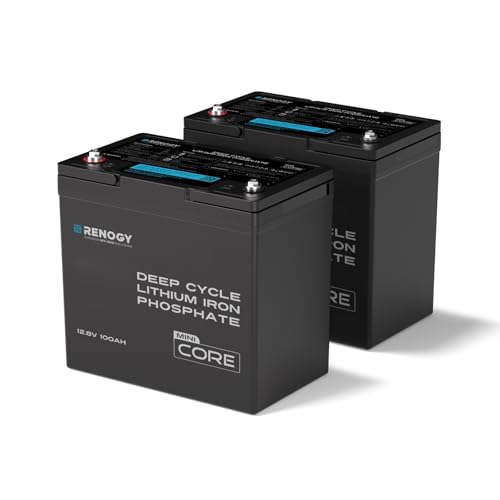
A 100Ah LiFePO4 battery usually needs more space than a compact RV or boat compartment can spare, but Renogy’s Mini model fits a Group 22NF case. We’ll examine its dimensions, 100A BMS, enclosure, and installation limits, then weigh its advantages against practical trade-offs. Its compact size may suit tight spaces, but capacity, load demands, and monitoring costs still matter.

November 22, 2026 9:01 am
Key Takeaways
- The Renogy 100Ah LiFePO4 Mini Battery delivers 100Ah at 12.8V in a compact Group 22NF case measuring 9.02 × 5.43 × 8.39 inches.
- Its small footprint suits tight RV, boat, kayak, and teardrop-trailer compartments, but check dimensions and expected runtime before replacing a battery.
- A built-in 100A BMS protects against temperature extremes, voltage limits, overcurrent, and short circuits; its IP65 case resists dust and splashes, not immersion.
- Flexible mounting and rugged, UL-listed EV-grade prismatic cells suit constrained installations and rough conditions, but upside-down mounting is not recommended.
- Remote monitoring requires a separately sold Renogy 300A Battery Shunt; 100Ah may also be insufficient for higher energy demands.
Compact Group 22NF Design
Although it holds 100Ah at 12.8V, the Renogy Core Mini measures just 9.02 × 5.43 × 8.39 inches in a Group 22NF footprint. This space-saving footprint can help us use available room more efficiently in teardrop trailers, kayaks, RVs, and boats.
Compared with a Group 31 battery, the Core Mini is up to 50% smaller; it’s also 13% smaller than other equivalent 12.8V, 100Ah mini batteries. When we assess a replacement for a lead-acid battery, we should check the compartment’s dimensions and clearances before choosing. The Group 22NF fit suits installations where conventional battery space is limited.
Detailed features
Beyond its compact Group 22NF footprint, the Renogy Core Mini includes features for protection, installation flexibility, and outdoor use. Its 100A BMS protection covers temperature extremes, voltage limits, overcurrent, and short circuits. We can orient it flexibly, but shouldn’t install it upside down.
| Feature | Specification | Function |
|---|---|---|
| BMS | 100A; multiple safeguards | Electrical protection |
| Mounting | Flexible orientation | Fits constrained spaces |
| Casing | IP65; metallic cell spacers | Resists dust, splashes, and movement |
UL-listed, EV-grade prismatic cells support use on rough roads and choppy water. For remote monitoring, we can add a separately sold Renogy 300A Battery Shunt and view readings in the DC Home app or Renogy ONE monitor.
November 22, 2026 9:01 am
Pros and Cons
We’ll weigh the battery’s compact Group 22NF size, flexible mounting, built-in protections, and rugged construction against its installation and monitoring limitations.
The optional shunt costs extra, and upside-down mounting isn’t recommended. Here are the main pros and cons.
Pros
The Renogy Core Mini’s compact 9.02 × 5.43 × 8.39-inch Group 22NF case fits tight spaces and weighs in as a lead-acid replacement for RVs, boats, and other applications. We can mount it in flexible orientations, excluding upside down, which helps with constrained installations.
Its integrated 100A BMS provides cold weather protection and guards against high temperatures, voltage extremes, overcurrent, and short circuits. UL-listed, EV-grade prismatic cells, metallic spacers, and an IP65-rated casing support rugged construction, resisting movement, splashes, water, and dust.
For remote monitoring, we can add a separately sold Renogy shunt and use the DC Home app or Renogy ONE monitor.
Cons
Although its compact size eases installation, the Core Mini’s 100Ah capacity may not suit systems with higher energy demands. We should check expected loads and runtime before choosing it; its Limited capacity may require additional batteries for larger setups.
Monitoring also adds accessory costs: the Renogy 300A Battery Shunt is sold separately, so real-time app or monitor data isn’t included with the battery.
We should also account for installation constraints. Flexible orientation helps in tight spaces, but Renogy doesn’t recommend mounting the unit upside down. Its IP65 rating protects against dust and splashes, not immersion, which limits use in exposed locations.
Concluding thoughts
For compact installations, Renogy’s Core Mini 100Ah LiFePO4 battery offers a space-saving lead-acid replacement with a 100A BMS, flexible mounting, and an IP65-rated casing. Its 9.02 × 5.43 × 8.39-inch Group 22NF footprint suits tight compartments in teardrop trailers, kayaks, RVs, and boats.
We’d consider these ideal applications when space matters more than maximum capacity. The BMS guards against temperature, voltage, current, and short-circuit faults, while EV-grade cells and metallic spacers support use on rough roads or choppy water.
For long term reliability, follow charging and mounting guidance; don’t install it upside down. Add a separate shunt for remote monitoring.
November 22, 2026 9:01 am
Frequently Asked Questions
Can This Battery Power a 12V Trolling Motor?
Yes, we can power a compatible 12V trolling motor, provided its current draw stays within the battery’s 100A BMS limit. Motor compatibility depends on specifications; Trolling motor runtime varies with load and conditions.
What Charger Is Compatible With the Renogy Core Mini Battery?
Choose a LiFePO4-compatible charger, like a careful bridge guiding power safely to shore. We should verify its charging voltage against Renogy’s specifications; the provided information doesn’t state a specific voltage or charger model.
Can Multiple Batteries Be Connected in Series or Parallel?
Yes, we can connect multiple batteries in series or parallel, but the provided specifications don’t state connection limits. Before configuring battery bank configurations, we should verify Renogy’s current manual for approved arrangements and maximum battery counts.
How Long Does the Battery Take to Recharge?
Recharge Time depends on charger output; we can’t specify it without that rating. A 100Ah battery needs roughly 10 hours at 10A, before charging losses. Charging Methods include compatible solar, alternator, or AC chargers; check manufacturer guidance.
Does the Battery Qualify for a Manufacturer’s Warranty?
We can’t confirm warranty eligibility from the available specifications; they don’t state the warranty term or conditions. Check Renogy’s current warranty documentation for coverage exclusions, registration requirements, and proof-of-purchase rules before relying on coverage.
November 22, 2026 9:01 am
Conclusion
We find the Renogy 100Ah LiFePO4 Mini most compelling when installation space is tight: its Group 22NF case measures just 9.02 × 5.43 × 8.39 inches. That compact footprint holds a 12.8V, 100Ah battery with a 100A BMS, making it a practical option for appropriately sized RV, boat, or trailer loads. Before buying, we’d check fit, clearance, and power needs; remote app monitoring also requires a separately sold shunt. It isn’t suitable for upside-down mounting.