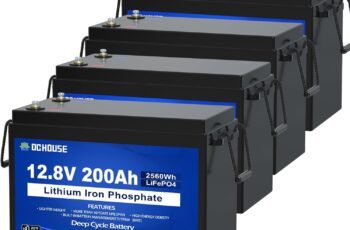
We’ll assess the POERUNI 4-Pack as four separate 12.8V, 100Ah LiFePO4 batteries—not a single integrated 400Ah unit—and compare its 5,120Wh total capacity and 96-pound combined weight with typical lead-acid alternatives. We’ll also examine its built-in protection, installation flexibility, cycle-life claims, and two-year warranty. Before deciding whether this set suits an RV, boat, or off-grid system, we’ll consider a few compatibility and delivery details.
Key Takeaways
- The four 12.8V, 100Ah batteries provide 5,120Wh total; each battery is a separate 1,280Wh unit, not one integrated 400Ah battery.
- Built-in BMS protection covers overcharging, over-discharging, overcurrent, short circuits, and temperature extremes.
- Each battery weighs about 24 pounds, making the 96-pound set substantially lighter than comparable lead-acid capacity.
- The batteries are maintenance-free and rated for over 15,000 cycles at 80% depth of discharge, with a stated service life exceeding 10 years.
- The two-year warranty is relatively limited, so confirm coverage and delivery timing before relying on the set for critical backup power.
Four-Battery 100Ah Pack
The POERUNI four-battery pack includes four 12.8V, 100Ah LiFePO4 batteries, each rated for 1,280Wh. This Pack configuration gives us four independent battery units rather than one integrated 400Ah battery.
Together, they provide 5,120Wh of nominal energy, while each unit retains its own 12.8V, 100Ah rating. Capacity scaling is consequently based on combining the supplied batteries, not increasing the capacity of an individual battery.
Compared with buying a single 100Ah unit, this four-pack supplies four times the total rated energy. We can allocate batteries across compatible applications or use them together, depending on system requirements and installation design.
Detailed features
Beyond the four-pack’s combined capacity, each POERUNI battery pairs a sealed, maintenance-free design with a built-in BMS that guards against overcharging, over-discharging, overcurrent, short circuits, and temperature extremes. Compared with lead-acid units, each weighs about 24 pounds, roughly 70% less.
| Feature | POERUNI specification | Practical comparison |
|---|---|---|
| Capacity | 1,280Wh per battery | Full rated capacity usable |
| Battery management | Built-in BMS protections | Monitors key electrical risks |
| Temperature range | -20°C to 60°C | Supports varied conditions |
We can mount each battery in flexible orientations, but not upside down. Its lithium iron phosphate chemistry supports more than 15,000 cycles at 80% depth of discharge and a stated service life exceeding 10 years.
Pros and Cons
We’ll compare the four-pack’s long cycle life, low weight, and built-in protections with its two-year warranty and installation limits.
This will help you assess its trade-offs against comparable lead-acid batteries. We’ll also consider how its capacity and operating range fit your application.
Pros
With four 12.8V, 100Ah batteries, this POERUNI pack provides 5,120Wh of total capacity, while each unit weighs about 24 lb—roughly 70% less than a comparable lead-acid battery. That lightweight design makes installation and handling easier, especially in RVs, boats, and off-grid systems.
We also value the batteries’ long cycle life: POERUNI rates them for more than 15,000 cycles at 80% depth of discharge and over 10 years of service. Each unit can deliver its full 1,280Wh capacity. A built-in management system guards against common electrical and temperature faults, while the sealed, maintenance-free construction eliminates watering and acid-leak concerns.
Cons
Despite those advantages, the four-pack’s 96 lb combined weight and 2-year warranty may be drawbacks for some buyers. We’ll need to plan for lifting and transport, even though each 24 lb battery is lighter than a comparable lead-acid unit.
The limited warranty also offers less coverage than buyers may find with some competing lithium batteries, so we should weigh it against the stated lifespan of more than 10 years. The package’s four separate units can simplify installation, but availability may vary, and shipping delays could disrupt project schedules.
We should confirm delivery timing and warranty terms before choosing this pack for critical backup power.
Concluding thoughts
For RVs, solar systems, boats, and other off-grid applications, the POERUNI four-pack offers 5,120Wh of rated capacity, long cycle-life claims, and built-in protection in a lightweight, maintenance-free design.
At about 24 pounds per battery, it’s substantially lighter than comparable lead-acid options and avoids watering and acid-leak concerns. The BMS adds safeguards against common electrical and temperature faults, while the stated operating range supports varied conditions.
We’d weigh the 15,000-cycle claim and 10-year design life against the two-year warranty when evaluating long term value. These are ideal applications for users prioritizing usable capacity and reduced maintenance, provided the upfront cost fits their budget.
Frequently Asked Questions
Can These Batteries Be Connected in Series or Parallel?
We can’t confirm Series connection or Parallel limits from the provided specifications; they don’t state supported wiring configurations. Before connecting batteries, check POERUNI’s manual or contact the manufacturer to verify compatibility, maximum counts, and system voltage.
What Charger Is Recommended for the POERUNI Batteries?
We recommend a LiFePO4-compatible charger with a 14.4–14.6V profile for each 12.8V battery. Check Charger voltage compatibility and charging current limits against POERUNI’s specifications; we can’t confirm an exact recommended current from available information.
Are These Batteries Suitable for Use in Cold-Weather Conditions?
Yes, we can use these batteries from -20°C to 60°C, like equipment facing a 40-degree freeze. Cold temperature charging limits matter: check the manual. For Winter storage precautions, keep them protected from freezing and fully charged.
Can They Be Used to Replace Lead-Acid Batteries in Existing Systems?
Yes, we can use these batteries for a System Retrofit, but we should verify charger, inverter, and voltage compatibility first. Lead Acid Compatibility isn’t automatic; lithium charging profiles and system settings may require adjustment for safe operation.
What Should I Do if the Battery’s BMS Shuts It Down?
If the BMS shuts down, we should disconnect loads and charging, then inspect wiring, temperature, and voltage before reconnecting. Follow the manufacturer’s BMS reset procedure; shutdown troubleshooting differs from lead-acid recovery, so don’t force charging.
Conclusion
We see the POERUNI pack as a practical choice when you need four manageable batteries rather than one heavy unit. Together, they provide 5,120Wh, while each 24-pound battery is easier to position than a comparable lead-acid alternative. The claimed 15,000-plus cycles at 80% discharge are notable, but we’d verify system compatibility and delivery timing before ordering. With only two years of warranty coverage, we’d compare support terms carefully against other LiFePO4 options before committing to this set.