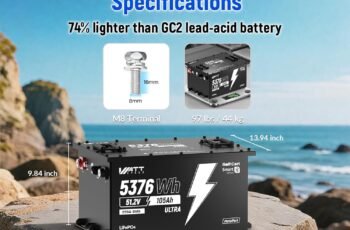
We’ll assess the Redodo 12V 100Ah LiFePO4 Battery 2-Pack as a 200Ah, 2,560Wh option for RV, marine, solar, and backup systems. We’ll examine its Grade A cells, 100A BMS, low-temperature charging protection, installation requirements, and five-year warranty, then weigh its advantages against limits on peak loads. Before deciding whether this two-pack fits your system, we’ll look at the specifications that matter most.
Key Takeaways
- The two-pack combines two 12.8V, 100Ah batteries for 200Ah and 2,560Wh at 12.8V.
- Each Group 31 battery has a 100A BMS, M8 terminals, and weighs about 22.2 pounds.
- Low-temperature protection stops charging below 32°F and discharging below -4°F, but does not heat the cells.
- The batteries support marine, RV, solar, and backup-power uses; check inverter, trolling-motor, charger, and system requirements first.
- Each battery includes a five-year warranty and is rated for over 4,000 cycles; confirm the two-pack price offers worthwhile savings.
12V 100Ah Two-Pack
The Redodo 12V 100Ah two-pack includes two Group 31 LiFePO4 deep-cycle batteries, each rated at 12.8V and 1,280Wh. Together, they provide 200Ah of nominal capacity and 2,560Wh of energy at 12.8V when used in parallel.
You can deploy the batteries separately in compatible 12V systems or combine them to increase capacity; series connections can support higher-voltage configurations. For a value comparison, assess the pair’s combined capacity and intended system requirements against purchasing individual batteries.
The bundle savings may make the two-pack practical when you need two units for an installation, while avoiding the cost of buying each battery separately.
Detailed features
Beyond the two-pack’s combined capacity, each Redodo battery uses Grade A LiFePO4 cells, a 100A BMS, and M8 terminals in a Group 31 case measuring 6.77 × 13 × 8.5 inches and weighing about 22.2 pounds. Each unit supplies 12.8V and 1,280Wh, with protection against charging below 32°F and discharging below -4°F. This Cold weather protection helps us manage low-temperature operation.
For marine compatibility, the upgraded BMS guards against water, salt spray, and corrosion. We can connect batteries in series or parallel, up to 4S4P, to build systems reaching 48V, 400Ah, and 20.48kWh for varied power requirements.
Pros and Cons
We’ll weigh the two-pack’s key advantages, including its 100A BMS, cold-weather protection, and support for series and parallel expansion.
We’ll also consider trade-offs such as its Group 31 dimensions and the limits of its 100Ah capacity for higher-demand systems. This comparison will help you assess whether the batteries fit your application.
Pros
If you need dependable capacity for marine or off-grid use, this two-pack offers 2,560Wh total, built-in 100A BMS protection, and support for configurations up to 4S4P. We can expand the system to 48V, 400Ah, and 20.48kWh for larger power needs.
Cold Weather Protection automatically stops charging below 32°F and discharging below -4°F, helping safeguard cells in low temperatures. Marine Compatibility suits boats and 12V trolling motors, while the upgraded BMS adds protection against water, salt spray, and corrosion.
Grade A cells are rated for over 4,000 deep cycles, and each 22.2-pound battery includes a five-year warranty.
Cons
Although the two-pack offers substantial capacity, its 100A BMS may limit high-current loads, and the low-temperature protection stops charging below 32°F rather than heating the cells. These charging limitations matter in cold climates, where we’ll need to warm the batteries before charging.
The BMS also stops discharge below -4°F, restricting winter use. Each battery weighs about 22.2 pounds, so installation still requires lifting and securing two units. We should verify that the 100A rating suits our inverter or trolling motor’s peak draw.
Five-year warranty coverage is shorter than the stated 10-year lifespan, so we’ll want to review its terms carefully.
Concluding thoughts
For boaters and off-grid users who need expandable 12V storage, the Redodo 100Ah two-pack offers 2,560Wh combined capacity, built-in 100A BMS protection, and support for systems up to 48V through series connections.
| Consideration | Assessment |
|---|---|
| Capacity | 2,560Wh across two batteries |
| Expansion | Up to 4S4P configurations |
| Protection | Cold-temperature charging and discharging cutoffs |
| Warranty | Five years |
We’d match each battery to your system’s voltage and load requirements, and verify charger compatibility before installation. Grade A cells, over 4,000 stated cycles, and a 10-year stated lifespan support Long Term Value, though actual service depends on use and care. Ideal Applications include marine electronics, trolling motors, RVs, solar, and backup power. For portable setups, each 22.2-pound battery requires space and secure mounting.
Frequently Asked Questions
Can These Batteries Be Charged While Temperatures Are Below Freezing?
No—we shouldn’t charge these batteries below freezing. Their Low temperature protection automatically stops charging below 32°F (0°C), helping prevent cold-weather damage. We can resume Cold weather charging once battery temperature rises above that threshold.
What Charger Voltage and Profile Are Recommended for These Batteries?
Recommended Charger Voltage and Charging Profile: We can’t confirm exact settings from the supplied specifications. Use a charger explicitly compatible with 12.8V LiFePO₄ batteries; verify its manufacturer-recommended voltage and profile, and make sure charging stops below 32°F (0°C).
Can I Connect These Batteries in Parallel With Batteries of a Different Brand?
Yes, we can connect different brands in parallel if their chemistry, nominal voltage, capacity, charge settings, and protection limits match. For Parallel Compatibility, we should fully charge batteries individually first; Mixing Battery Brands may reduce performance or lifespan.
Are the Batteries Suitable for Powering a 24V Trolling Motor When Wired in Series?
Yes—two batteries can power a 24V trolling motor through series wiring, joining one battery’s positive terminal to the other’s negative. We get 24V and retain 100Ah capacity; verify motor compatibility and wiring instructions first.
What Should I Do Before Storing the Batteries for an Extended Period?
Before extended storage, we should disconnect the batteries, clean terminals, and leave each at a partial Storage charge rather than fully charged or depleted. Store them in a cool, dry place, then periodically check charge levels.
Conclusion
We see the Redodo 12V 100Ah two-pack as a practical choice for RV, marine, solar, and backup systems needing 200Ah of LiFePO4 storage. Its 100A BMS, Grade A cells, and five-year warranty support everyday use, while low-temperature protection prevents charging below 32°F without heating the battery. Before buying, we recommend checking charger settings, Group 31 fit, system voltage, and peak loads. Treat the 100A limit like a gate: demanding inverters may need more current.