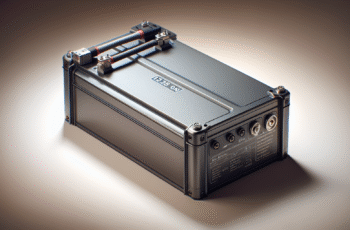
We’ll assess how the Renogy 100Ah LiFePO4 Mini fits its Group 22NF dimensions, performs with a 100A BMS, and handles the demands of mobile installations. Its compact size, IP65 casing, and flexible mounting may suit an RV, boat, or teardrop trailer, but compartment clearance and capacity needs still matter. We’ll also examine its monitoring requirements and installation limits before weighing its advantages and trade-offs.
Key Takeaways
- The Renogy 100Ah LiFePO4 Mini Battery measures 9.02 × 5.43 × 8.39 inches, making it suitable for tight compartments.
- Its 100A BMS protects against temperature extremes, voltage faults, overcurrent, and short circuits.
- UL-listed prismatic cells, metallic spacers, and an IP65 casing help withstand vibration, dust, and splashes.
- Flexible mounting suits RVs, boats, kayaks, and teardrop trailers, but upside-down installation is not recommended.
- Capacity may be limiting for high-demand systems; remote monitoring requires a separately sold Renogy 300A shunt.
Compact Group 22NF Fit
The Renogy Core Mini’s Group 22NF footprint measures 9.02 × 5.43 × 8.39 inches, making it a compact fit for tight battery compartments. These space saving dimensions can help us use limited installation areas in teardrop trailers, kayaks, RVs, and boats.
Compared with a Group 31 battery, this model is up to 50% smaller; it’s also 13% smaller than other equivalent 12.8V, 100Ah mini batteries. We can use Group 22NF compatibility to assess whether the battery fits an existing compartment, but should verify its available clearance and mounting requirements before installation. Its compact size supports lead-acid replacement in constrained spaces.
Detailed features
Beyond its compact footprint, the Renogy Core Mini combines a 100A battery management system (BMS) with low- and high-temperature charging protection, overvoltage and undervoltage safeguards, overcurrent protection, and short-circuit protection. For Low Temperature Charging, this BMS helps prevent charging outside the battery’s specified temperature range.
We also note its UL-listed, EV-grade prismatic cells, secured with metallic spacers to limit movement and damage on rough roads or choppy water. An IP65-rated casing resists dust, splashes, and water. You can mount the battery in various orientations, but not upside down.
For Battery Monitoring, add a separately sold Renogy 300A shunt to view real-time data in the DC Home app or Renogy ONE monitor.
Pros and Cons
We’ll weigh the battery’s compact Group 22NF footprint, flexible mounting, and integrated protections against its installation limits and optional monitoring cost.
Its IP65 casing and reinforced cell construction also affect how it performs in boats and RVs. Let’s compare the practical benefits and trade-offs.
Pros
With its compact Group 22NF footprint, the Renogy Core Mini fits tight installations while providing 100Ah of capacity. We can use its 9.02 × 5.43 × 8.39-inch dimensions as a lead-acid replacement in teardrop trailers, RVs, boats, or kayaks.
Its flexible mounting supports varied orientations, helping us work around limited installation space; upside-down placement isn’t recommended. The integrated 100A BMS provides Low temperature protection, along with safeguards against high temperatures, overvoltage, undervoltage, overcurrent, and short circuits.
UL-listed prismatic cells, metallic spacers, and an IP65-rated casing add protection against movement, vibration, splashes, and dust in demanding mobile or marine environments.
Cons
Although the compact design suits tight installations, it limits capacity to 100Ah, so we may need a larger battery bank for higher-demand systems. This limited capacity can also mean extra batteries, wiring, and installation space, reducing some of the size advantage.
We should account for the higher upfront cost typical of LiFePO4 batteries, especially if expanding the bank. The 100A BMS may restrict systems with high continuous loads or surge demands, so we’ll need to check appliance specifications.
Monitoring also requires a separately purchased Renogy shunt. Finally, although mounting is flexible, we shouldn’t install the battery upside down, which may constrain placement.
Concluding thoughts
For compact installations, the Renogy Core Mini 100Ah LiFePO4 battery combines a small Group 22NF footprint with a 100A BMS, flexible mounting, and an IP65-rated casing. At 9.02 × 5.43 × 8.39 inches, it suits tight spaces in teardrop trailers, kayaks, RVs, and boats.
Its protections address temperature extremes, voltage faults, overcurrent, and short circuits; EV-grade cells and metallic spacers support use on rough roads or choppy water. We’d avoid upside-down mounting and budget separately for the optional shunt if remote monitoring matters.
For these ideal applications, assess capacity and installation needs to judge long term value.
Frequently Asked Questions
What Appliances Can a 100AH Lifepo4 Battery Run?
We can run LED lights, phones, laptops, fans, and efficient small fridges; high-wattage heaters or microwaves may exceed inverter limits. Small appliance runtime depends on load and usable capacity; camping power options require checking voltage and inverter ratings.
How Long Does the Battery Take to Recharge?
Recharge time depends on charger output, like water filling a vessel: we can’t specify charging duration without that rating. At 20A, expect roughly five hours ideally; actual time varies with charging conditions and tapering.
Can This Battery Be Connected in Series or Parallel?
We can’t confirm Series connection or Parallel connection support from the available specifications. Check Renogy’s manual for approved configurations, maximum battery counts, and wiring requirements before connecting units; don’t assume the integrated BMS permits either setup.
What Charger Is Compatible With the Renogy Core Mini?
We recommend a lithium-compatible 12.8V LiFePO4 charger. Check Charger voltage compatibility against Renogy’s specifications, and observe Charging current limits: the integrated BMS is rated for 100A, but confirm the battery’s manual for its maximum charge current.
How Should the Battery Be Stored When Not in Use?
We should store the battery like a priceless power reserve: disconnect it, keep it dry, and avoid upside-down placement. Check Renogy’s manual for Storage charge and temperature control requirements; the provided specifications don’t state exact storage conditions.
Conclusion
Overall, we find the Renogy 100Ah LiFePO4 Mini a practical choice when space is tight and its capacity suits your plans. Its Group 22NF footprint, 100A BMS, EV-grade cells, and IP65 casing support compact mobile installations, while flexible mounting helps with placement—just don’t install it upside down. Before buying, measure your compartment and estimate your power needs; 100Ah may leave ambitious loads wanting a little more. Remote monitoring also adds the cost of a separate 300A shunt.