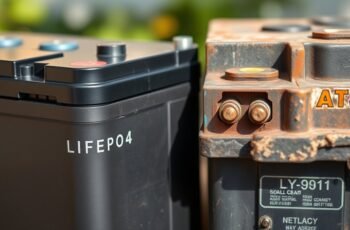
When comparing LiFePO4 and lead acid batteries, it’s essential to evaluate not just initial costs but also their long-term economics. While LiFePO4 batteries demand a higher upfront investment, their durability and fewer replacements can make them more cost-effective over time. Understanding these trade-offs requires an in-depth analysis of lifespan, maintenance, and overall value—factors that can markedly influence your decision and impact your total ownership costs.
Key Takeaways
- LiFePO4 batteries have a higher initial purchase cost but offer longer lifespans, reducing replacement expenses over time.
- Lead acid batteries are cheaper upfront but require more frequent replacements, increasing total ownership costs.
- LiFePO4’s extended cycle life (2,000-5,000 cycles) lowers long-term replacement and maintenance costs.
- Recycling LiFePO4 is more environmentally friendly and cost-effective, with less hazardous waste handling compared to lead acid.
- Over the long term, LiFePO4 provides better overall savings despite higher initial investment due to durability and lower maintenance.
What Are LiFePO4 and Lead Acid Batteries?
While both LiFePO4 and lead acid batteries serve as energy storage solutions, they differ markedly in chemistry and performance characteristics. LiFePO4 batteries utilize lithium iron phosphate chemistry, offering higher energy density, longer cycle life, and improved safety. Lead acid batteries rely on lead plates and sulfuric acid, making them heavier and more prone to degradation over time. From an environmental perspective, LiFePO4 batteries are more favorable due to their recyclable materials and lower toxic emissions, reducing environmental impact. Battery recycling processes for lithium-based batteries are evolving to minimize waste and recover valuable components efficiently. In contrast, lead acid recycling involves handling toxic lead, posing health risks and environmental challenges. Understanding these differences helps inform sustainable choices in energy storage solutions.
Initial Cost Differences Between LiFePO4 and Lead Acid Batteries
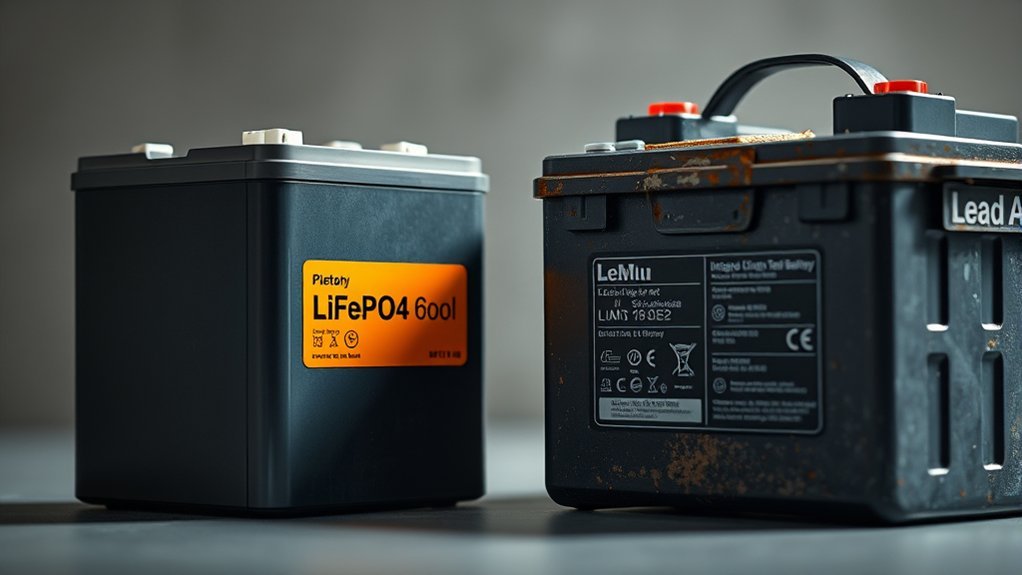
Initially, the upfront cost of LiFePO4 batteries is substantially higher than that of lead acid batteries, primarily due to their advanced chemistry and manufacturing complexity. This higher initial investment reflects the sophisticated materials and processes involved. However, when considering the total cost, factors like battery recycling and environmental impact become significant. LiFePO4 batteries generally have longer lifespans, reducing replacement frequency. The table below compares key cost aspects:
| Feature | Lead Acid | LiFePO4 |
|---|---|---|
| Initial Cost | Lower | Higher |
| Recycling & Disposal | Less efficient | More environmentally friendly |
| Environmental Impact | Higher pollution risk | Lower environmental footprint |
While initial costs are higher for LiFePO4, their durability and eco-friendly benefits can offset the upfront expense over time.
Maintenance Costs and Requirements for Both Battery Types
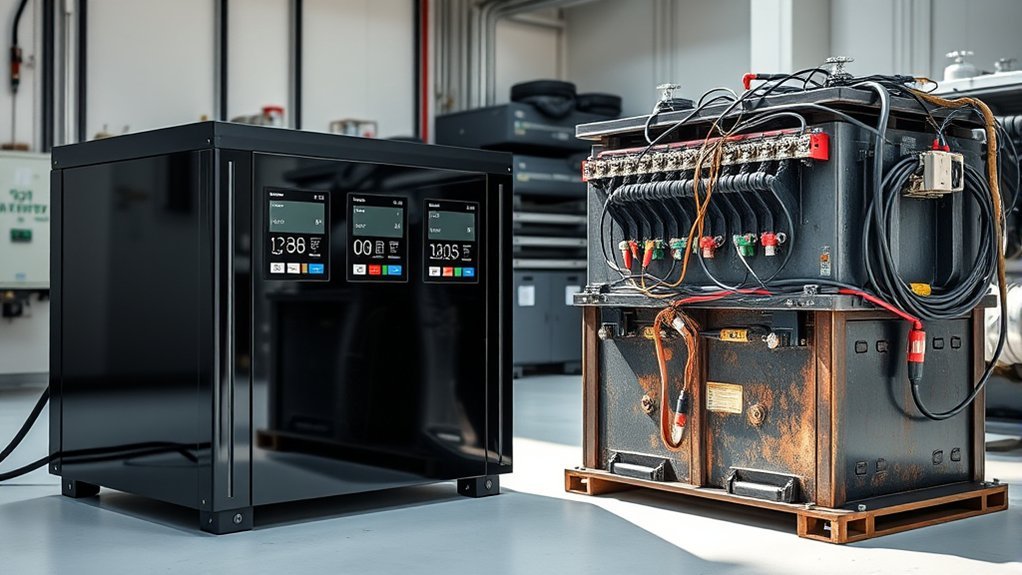
Maintenance costs and requirements differ substantially between LiFePO4 and lead acid batteries due to their distinct chemistries and design features. Lead acid batteries require regular watering, equalization charges, and periodic equalization to prevent sulfation, increasing maintenance effort. Conversely, LiFePO4 batteries demand minimal maintenance, mainly monitoring voltage and ensuring proper charging. From an environmental perspective, both types benefit from battery recycling programs to mitigate environmental impact, though lead acid batteries involve hazardous materials like sulfuric acid and lead, raising disposal concerns. LiFePO4 batteries are more environmentally friendly, with less toxic waste and easier recycling processes. Overall, LiFePO4 batteries present lower ongoing maintenance costs and a reduced environmental footprint, making them a more sustainable choice over the long term.
How Long Do LiFePO4 and Lead Acid Batteries Last?
LiFePO4 batteries typically offer a longer lifespan compared to lead acid batteries, primarily due to their more robust chemical stability and superior cycle life. LiFePO4 cells can often endure 2,000 to 5,000 charge cycles, translating to 8-10 years of reliable use, whereas lead acid batteries generally last 500-1,000 cycles or 3-5 years. This extended lifespan reduces the frequency of battery replacements, positively impacting battery recycling efforts by decreasing waste. Environmentally, LiFePO4 batteries have a lower environmental impact over time because they require fewer replacements and are more amenable to recycling processes. In contrast, lead acid batteries pose higher risks of hazardous material leakage and more complex recycling, emphasizing the importance of longevity in minimizing ecological harm.
Total Cost of Ownership: Considering Lifespan and Performance
When evaluating the total cost of ownership for LiFePO4 versus lead acid batteries, it’s essential to take into account initial costs alongside performance and lifespan. LiFePO4 batteries typically last longer, reducing replacement frequency, and have higher efficiency, which improves overall performance. Their environmental impact is also lower, given better recyclability and less toxic waste. A holistic view includes battery recycling costs and sustainability benefits. The table summarizes key aspects:
| Aspect | Lead Acid | LiFePO4 | Notes |
|---|---|---|---|
| Initial Cost | Lower | Higher | Higher upfront investment |
| Lifespan | 3-5 years | 8-15 years | Longer lifespan reduces replacement costs |
| Performance | Lower efficiency | Higher efficiency | Better performance over time |
| Environmental Impact | Higher toxicity, waste | Lower toxicity, recyclable | Reduced environmental footprint |
| Total Cost | Higher over time | Lower over time | Savings depend on lifespan, recycling, and efficiency |
When Is It More Cost-Effective to Choose Lead Acid Batteries?
When evaluating cost-effectiveness, initial purchase price and short-term usage requirements are critical factors. Lead acid batteries often have a lower upfront cost, making them more economical for applications with limited duration or infrequent use. Analyzing these aspects helps determine if lead acid is the more practical choice in specific scenarios.
Initial Purchase Price
The initial purchase price of lead-acid batteries often appears lower than that of LiFePO4 cells, making them seem more economical upfront. However, this short-term perspective overlooks factors like battery recycling and environmental impact, which influence total cost over time. Lead-acid batteries generally have lower initial costs but require more frequent replacements, increasing lifecycle expenses. In contrast, LiFePO4 batteries, despite higher initial prices, offer longer lifespan and reduced environmental footprint through less hazardous materials. The decision hinges on balancing immediate affordability against long-term sustainability and total cost of ownership. To clarify, consider the following comparison:
| Aspect | Lead Acid | LiFePO4 |
|---|---|---|
| Initial Cost | Lower | Higher |
| Lifecycle Cost | Higher due to replacements | Lower due to durability |
| Recycling & Disposal | More challenging | Environmentally friendlier |
| Environmental Impact | Greater pollution risk | Reduced impact |
Short-Term Usage Needs
In scenarios where operational periods are short and battery replacement frequency remains manageable, opting for lead-acid batteries can be more cost-effective. For applications with limited cycle demands, the lower initial investment outweighs long-term benefits. Consider these factors:
- Battery recycling: Lead-acid batteries are widely recycled, reducing disposal costs and environmental impact.
- Environmental impact: Although lead-acid batteries are recyclable, improper disposal poses environmental risks, making short-term use more practical.
- Cost efficiency: For short-term or infrequent use, lead-acid units require less upfront investment, and their shorter lifespan remains manageable within budget constraints.
In such cases, the combination of lower purchase costs and established recycling infrastructure makes lead-acid batteries a prudent choice over Lifepo4.
Advantages of LiFePO4 in Long-Term Cost Savings
LiFePO4 batteries offer significant long-term cost savings primarily because of their superior cycle life and durability compared to lead acid alternatives. This longevity reduces replacement frequency, lowering overall ownership costs. Additionally, their enhanced stability mitigates risks associated with battery failure, decreasing maintenance expenses. From an environmental perspective, LiFePO4 batteries are more sustainable; their longer lifespan lessens the need for frequent battery recycling and disposal, reducing environmental impact. They are also inherently safer, decreasing the risk of hazardous leaks or fires. To illustrate, consider the following comparison:
| Aspect | Lead Acid | LiFePO4 |
|---|---|---|
| Cycle Life | 300-500 cycles | 2000+ cycles |
| Environmental Impact | Higher due to shorter lifespan and disposal concerns | Lower, longer lifespan and safer materials |
| Recycling | Costly and complex | More straightforward and eco-friendly |
Factors That Affect Battery Costs Beyond Price Tags
While the initial purchase price often attracts attention, several other factors greatly influence the overall cost of battery systems. First, battery recycling impacts long-term expenses, as sustainable recycling methods reduce environmental disposal costs and recover valuable materials, affecting the total lifecycle cost. Second, manufacturing sustainability plays a role; batteries produced with environmentally responsible processes often have higher upfront costs but can reduce costs related to environmental compliance and waste management over time. Third, performance longevity—including cycle life and degradation rate—affects replacement frequency and maintenance costs, influencing the total cost of ownership. These factors, integrated with material sourcing and production practices, shape the real economic picture of LiFePO4 versus lead-acid batteries beyond their initial price tags.
Which Battery Type Offers Better Value for Your Budget?
When evaluating value, we consider both initial purchase costs and the potential for long-term savings. Lifepo4 batteries typically have higher upfront prices but offer lower maintenance and longer lifespans, reducing total ownership costs. Conversely, lead-acid batteries may be more affordable initially but can incur higher replacement and maintenance expenses over time.
Initial Purchase Cost
Although LiFePO4 batteries typically have a higher upfront cost, they often provide better overall value when weighing initial purchase expenses. The initial investment includes not only the purchase price but also factors like battery recycling and environmental impact.
- Initial Cost: Lead acid batteries are generally cheaper upfront but require regular replacements, increasing long-term expenses.
- Durability: LiFePO4 batteries have a longer lifespan, reducing replacement frequency and associated costs.
- Environmental Considerations: Although the initial cost for LiFePO4 is higher, their lower environmental impact and recyclability can offset upfront expenses over time.
When evaluating initial purchase costs, it’s essential to consider these aspects, as the higher initial investment in LiFePO4 batteries could translate into greater value through reduced environmental impact and recycling benefits.
Long-Term Savings
Over the lifespan of a battery, long-term savings become a critical factor in determining value. Lifepo4 batteries generally offer superior durability, with deeper cycle life and reduced maintenance costs, translating to lower replacement expenses. In contrast, lead acid batteries often require more frequent replacements, increasing total ownership costs. Additionally, Lifepo4 batteries are more environmentally friendly, featuring better battery recycling processes and a smaller environmental impact due to fewer hazardous materials. Over multiple cycles, the initial higher investment in Lifepo4 becomes offset by savings in replacement and disposal costs. By considering environmental impact and recycling efficiency, Lifepo4 not only provides better long-term financial value but also aligns with sustainable practices, making it the more cost-effective option over extended periods.
Frequently Asked Questions
How Do Environmental Impacts Differ Between Lifepo4 and Lead Acid Batteries?
We find that LiFePO4 batteries have a lower environmental footprint and cause less resource depletion than lead acid batteries, thanks to longer lifespans and cleaner manufacturing processes, making them a more sustainable choice overall for eco-conscious applications.
Are There Warranty Differences That Affect Long-Term Costs?
Warranty wonders warrant worry; Lifepo4 batteries typically offer longer, more extensive warranties, reducing maintenance expenses, whereas lead acid warranties are often shorter and less inclusive, potentially escalating long-term costs due to increased upkeep and replacements.
How Do Recycling and Disposal Costs Compare for Both Battery Types?
We find Lifepo4 batteries have lower recycling and disposal costs due to longer battery lifespan and higher charging efficiency, reducing environmental impact and waste. Lead acid batteries require more frequent replacements, increasing overall disposal expenses.
What Are the Safety Considerations Influencing Overall Costs?
Safety considerations are the backbone of cost, like the foundation of a building. Lifepo4’s manufacturing expenses and supply chain constraints often reduce risks and costs, whereas lead acid’s hazards increase safety-related expenses, impacting overall affordability and operational safety.
Do Different Applications Favor One Battery Type Financially Over the Other?
Different applications often favor Lifepo4 batteries financially due to their longer battery longevity and lower manufacturing costs over time, especially in high-cycle environments, whereas lead acid batteries may initially seem cheaper but incur higher replacement and maintenance costs.
Conclusion
In summary, while LiFePO4 batteries have a higher upfront cost, their lifespan of up to 15 years and over 2,000 charge cycles considerably reduce long-term expenses. Notably, studies show that they can be more cost-effective after just 3-5 years compared to lead acid batteries, which often need replacing sooner. By analyzing total ownership costs, it’s clear that investing in LiFePO4 offers superior value for those prioritizing durability and performance over time.