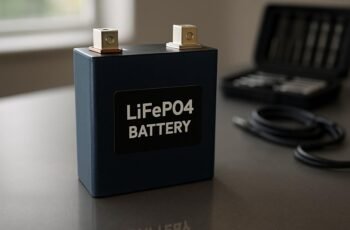
We understand LiFePO4 offers safety and long life, but its energy density lags behind NMC and LTO, meaning bigger packs for the same energy. We must manage temperature to control impedance growth and fading, and we should monitor how high-rate charging accelerates wear. Practical packaging, sourcing, and end-of-life recycling add costs and risk. These tradeoffs shape whether LiFePO4 fits our project, and they’re worth weighing before we commit.
Key Takeaways
- Lower energy density: LiFePO4 has lower gravimetric and volumetric energy density than NMC or LTO, leading to larger pack sizes.
- Thermal design needs care: higher densities can raise thermal risk, requiring effective cooling and module stacking strategies.
- Performance at extremes: lower temperature reduces usable capacity; high temperatures accelerate impedance growth and aging.
- End-of-life considerations: recycling access, regulatory hurdles, and supply-chain sustainability impact total lifecycle costs.
- Safety vs. tradeoffs: safer thermal behavior and long cycle life come with tradeoffs in energy density and potentially higher upfront costs.
Is LiFePO4 the Right Choice for You? A Quick Decision Framework
Is LiFePO4 the right choice for you? We approach this with crisp criteria and data-driven analysis, guiding you toward an informed decision. We compare lifecycle cost, thermal stability, and charging behavior across typical use cases, from modern photography setups to household kitchen appliances. We quantify energy density, cycle life, and safety margins, noting LiFePO4’s lower energy per kilogram but superior thermal tolerance and longer calendar life under moderate temperatures. We assess charging current limits, state-of-charge ranges, and the impact of ambient conditions on performance. Our framework emphasizes risk awareness: mis-sizing, improper cooling, or aggressive charging can erode benefits. In practical terms, if your priority is reliability, predictable safety, and long service intervals for high-use devices, LiFePO4 often aligns with your goals.
LiFePO4 Energy Density: What You Should Know
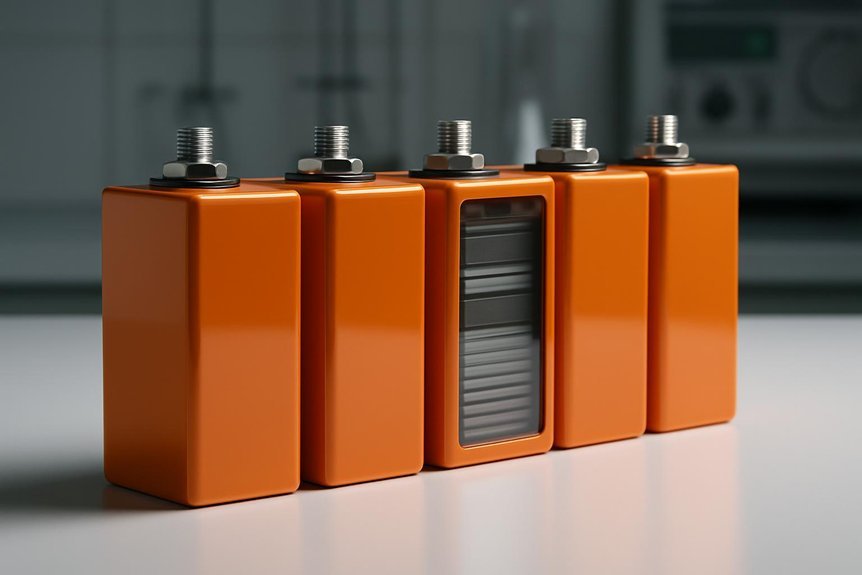
We’ll start with the core energy density fundamentals to quantify what LiFePO4 can store per unit mass and volume, and what that implies for pack sizing and weight. We’ll compare practical density factors—cell chemistry, packaging, and safety margins—with real-world performance data, so you can judge feasibility against your application. We’ll also contrast LiFePO4 with common alternatives to highlight trade-offs in energy density, cost, and risk.
Energy Density Fundamentals
LiFePO4 energy density is defined by both gravimetric (Wh/kg) and volumetric (Wh/L) metrics, which determine how much energy a cell stores per mass and per volume. We assess these metrics to compare cells fairly, accounting for packaging and system integration. Gravimetric density reflects usable energy relative to weight, guiding portability and payload implications. Volumetric density informs space requirements and thermal design, influencing enclosure, cooling, and module stacking. Our analysis considers practical ranges, voltage stability, and cycle life, ensuring realistic hardware selection. We also address operating limits: low temperature performance can reduce accessible capacity, while thermal runaway risk remains a key safety concern under high-rate duty cycles. Informed choices balance energy density against reliability, safety margins, and overall system efficiency.
Practical Density Considerations
Practical density considerations for LiFePO4 hinge on real-world tradeoffs between energy per mass and energy per volume, plus how packing, thermal management, and duty cycles affect usable capacity. We assess pack layout, cell chemistry, and cooling to minimize temperature-induced losses, recognizing that higher densities can increase thermal risk. In practice, energy per kilogram remains favorable, but volumetric density often lags competing chemistries, demanding careful enclosure design and module stacking. We quantify usable capacity under cycling profiles, identifying degradation drivers and mitigation steps. Dendrite mitigation is relevant, though less dominant than with lithium metal, and we monitor electrolyte behavior to preserve impedance. We also consider mineral sourcing implications for material sourcing and supply continuity, ensuring that density gains align with long-term sustainability and cost constraints.
Comparisons With Alternatives
How does LiFePO4 stack up against alternative chemistries in energy density terms, and what does that mean for real-world design choices? We compare gravimetric and volumetric metrics, acknowledging tradeoffs between energy density, safety, and lifecycle costs. LiFePO4 offers lower energy density than NMC or LTO in many cases, yet it delivers steadier voltage, longer cycle life, and safer thermal behavior. Real-world design must weigh lifetime losses against system weight and space, plus end-of-life implications like battery recycling. The table below highlights representative figures, while reality often varies with temperature, rate, and packaging.
| Metric | Insight |
|---|---|
| Gravimetric density | Moderate, improving with materials engineering |
| Volumetric density | Compensated by packaging strategies |
How Temperature Impacts LiFePO4 Performance and Longevity
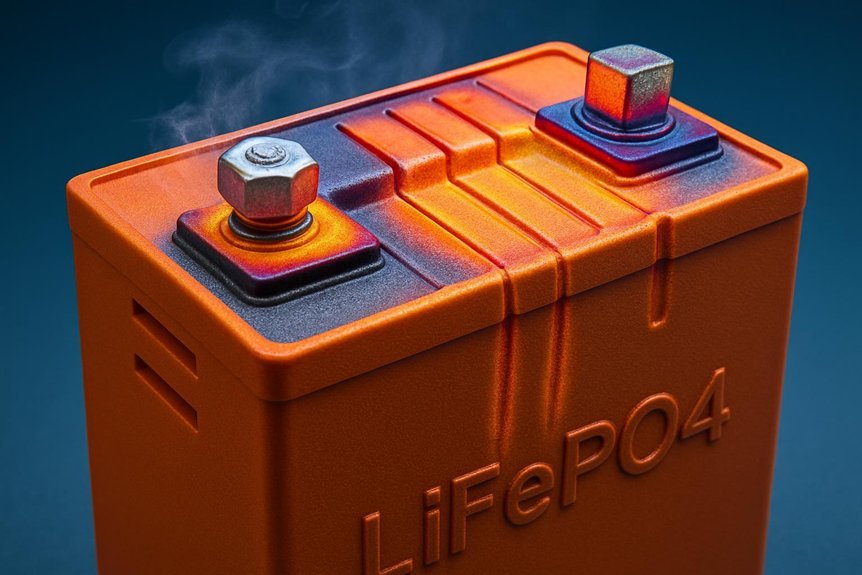
Temperature strongly shapes LiFePO4 performance and longevity: cells operate efficiently within a narrow thermal window, while deviations can sharply boost degradation mechanisms. We observe that temperature stability directly influences reaction kinetics, impedance growth, and electrolyte stability, with suboptimal temps accelerating solid-electrolyte interphase evolution. At high temperatures, diffusion speeds rise, promoting capacity fade and potential safety events; at low temperatures, kinetic limits reduce usable capacity and increase internal resistance. Our data show that maintaining a controlled thermal environment preserves cycle life, reduces rate losses, and stabilizes capacity retention. Effective thermal management minimizes transient hot spots and ensures uniform cell temperatures across modules. We emphasize monitoring, insulation, and active cooling or heating strategies to sustain predictable performance and mitigate long-term degradation risks.
Charging and Power Management: Getting the Most From Lifepo4
We’ll outline how best charge parameters, safe charging practices, and efficient power management come together to maximize LiFePO4 performance while minimizing risk. Our guidance is grounded in data-driven thresholds, clear current/voltage limits, and disciplined scheduling that preserves capacity and safety. By aligning charging profiles with pack chemistry and use-case demands, we empower you to extract consistent, reliable energy with reduced degradation.
Optimal Charge Parameters
Original Text:
Optimal charge parameters for LiFePO4 depend on balancing cell voltage limits, current, and thermal constraints to maximize cycle life and efficiency. We, as practitioners, measure charge endpoints, C-rate, and ambient warmth to minimize impedance growth and electrolyte stress. Our approach prioritizes optimal charging that respects each cell’s mid-range voltage and short-circuit protection thresholds, while avoiding overcurrent events during fast charging. We quantify trade-offs: higher currents boost throughput but reduce cycle life, whereas conservative currents extend longevity at the cost of longer charge times. Temperature tracking informs safe current derating, preventing thermal runaway risks. We document data for reproducibility, validate with cycle testing, and adjust profiles according to pack configuration. In practice, this yields reliable battery cycling performance with predictable state-of-charge behavior and reduced degradation.
Safe Charging Practices
Why risk when you can manage it? We implement safe charging practices to maximize Lifepo4 longevity and performance with measured controls and verifiable data. We start with strict charge parameters, monitor voltage, current, and temperature, and enforce end-of-charge conditions to prevent overcharge. We favor balanced charging, proper termination, and compatible BMS integration to maintain cell balance and mitigate thermal runaway risk. We log cycle data, track degradation indicators, and adjust schedules based on real-time telemetry rather than guesswork. We avoid non technical chatter and irrelevant details, staying focused on criteria that impact safety margins and cycle life. We also acknowledge unrelated tangents only as indicators of potential distraction risk, not as guidance. Our approach is data-driven, precise, and purpose-built for safe, reliable Lifepo4 operation.
Efficient Power Management
Efficient power management hinges on precise charging orchestration and real-time telemetry, ensuring Lifepo4 cells deliver maximum usable energy with minimal degradation. We optimize charging profiles, monitor temperature, and apply adaptive cutoffs to reduce stress and cycle loss. Our data-driven approach highlights trade-offs between fast charge, longevity, and safety, guiding decisions with measurable thresholds. Risk awareness drives conservative limits when anomalies appear, preventing thermal runaway and capacity fade. In practice, we blend standardized charging algorithms with site-specific telemetry to sustain performance over time. Unrelated topic, random concept.
| Parameter | Impact |
|---|---|
| SoC tracking | Accuracy reduces overcharge risk |
| Thermal monitoring | Prevents accelerated aging |
Total Ownership Cost: Capex, Ongoing Costs, and Replacement
Total ownership cost for LiFePO4 batteries comprises capex, ongoing operating expenses, and eventual replacement, with each component tied to performance and usage patterns. We quantify capex as initial pack cost plus integration, BMS, and thermal management. Ongoing costs include charging efficiency losses, cooling energy, routine maintenance, and warranty considerations, all reflecting duty cycle and depth of discharge. Replacement timing hinges on degradation rates, replacement cycles, and residual value. We assess total cost of ownership through scenario modeling, sensitivity to usage profiles, and uncertainty in price trajectories. We also consider disposal regulations and recycling economics, which influence end-of-life budgeting and environmental compliance. Our approach emphasizes data-driven comparisons, transparent assumptions, and risk-aware planning to avoid overestimating longevity or underestimating ancillary costs.
Real-World Longevity and Degradation in LiFePO4 Systems
Real-world LiFePO4 longevity hinges on heterogeneous aging mechanisms that unfold under diverse duty cycles and environmental conditions. We observe capacity fade, impedance growth, and coulombic efficiency shifts driven by temperature, current profiles, and state-of-charge exposure. Our data show slower degradation relative to other chemistries, yet degradation remains path dependent: high-rate pulses, deep-discharge events, and prolonged idle states accelerate aging differently. We quantify wear with cycle life, calendar aging, and resistance rise, then map failure modes to usage patterns. Our assessment confronts durability myths and longevity myths with evidence from long-term cycling and field telemetry. By grounding expectations in measured trends, we caution against overgeneralization while highlighting design margins, active management, and duty-cycle optimization as leverages for real-world endurance.
Environmental, Supply, and Sourcing Considerations for LiFePO4
Environmental, supply-chain, and sourcing considerations for LiFePO4 must be grounded in data and risk awareness; in practice, these factors drive availability, cost, and lifecycle outcomes as much as chemistry itself. We center on system integration and regulatory hurdles, emphasizing risk-aware procurement, transparency, and lifecycle governance. Material sourcing, processing footprint, and supplier reliability shape performance, not just chemistry. We quantify supply risk, monitor geopolitical exposure, and track environmental safeguards to avoid hidden costs. We balance cost, cadence, and compliance, acknowledging recycling, end-of-life management, and safer substitutes. Effective integration relies on cross-functional standards, data sharing, and traceability to minimize disruption. Readers gain a data-driven view of how external factors translate to reliability, cost, and regulatory compliance in LiFePO4 deployments.
| Factor | Impact |
|---|---|
| Supply stability | Direct cost, timelines |
| Compliance | Regulatory hurdles, audits |
| Lifecycle data | Predictive maintenance, optimization |
| Recycling access | End-of-life cost, sustainability |
Frequently Asked Questions
Can Lifepo4 Be Recycled Effectively and Cheaply?
We can recycle LiFePO4 effectively and cheaply, though recycling economics hinges on improving recovery rates; disposal challenges persist. We quantify costs, streamlining processes, assessing supply chains, and reducing environmental risk as we pursue practical, data-driven, reader-focused improvements.
What Are Hidden Safety Risks in Long-Term Use?
We do identify hidden safety risks in long term LiFePO4 use: thermal runaway onset, aging-induced internal shorts, moisture sensitivity, and dendrite concerns in high-rate abuse; we quantify data to guide risk-aware, proactive thermal management and monitoring.
How Does Aging Affect Cycle Life Under High C-Rates?
Aging acts like fading inscriptions on a map, revealing that aging effects accelerate under high rate cycling, increasing capacity loss and safety concerns. We observe memory effects and battery behavior shift, with regional supply shaping risk factors for long term use.
Do Lifepo4 Batteries Have Memory Effects?
Yes, LiFePO4 cells exhibit no classic memory effect; capacity loss is driven by cycle aging and calendar aging. We monitor impedance, capacity fade, and rate effects to quantify memory-like behavior and optimize cycle life and safety.
Are There Notable Regional Supply Chain Risks?
Undoubtedly, there are notable regional supply chain risks. We assess supply chain resilience and regional mining dependence, citing concentration and geopolitical shocks; we quantify exposure, model contingencies, and recommend diversification, stockpiles, and alternate sourcing to mitigate disruption.
Conclusion
We see LiFePO4 as safe and durable yet bulky and energy‑denser rivals exist. Juxtaposing its robust cycle life with lower gravimetric energy, we’re reminded that size and cost implications matter as much as safety. We avoid overclaiming; data shows slower energy density growth and notable lifecycle savings with proper thermal and charging control. If you prioritize safety and longevity over compactness and peak energy, LiFePO4 remains compelling, but plan for higher pack volumes and end‑of‑life costs.