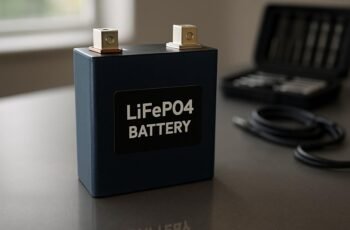
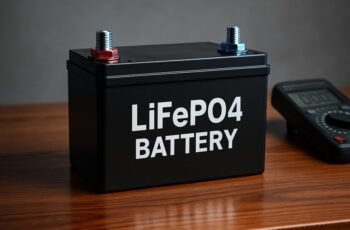
Did you know LiFePO4 cells typically offer cycle lives well over 2,000 to 3,000 cycles with minimal capacity fade? We’ll break down how safety, thermal stability, and longevity stack up against energy density and weight, and what that balance means for your application. We’ll also flag where the trade-offs bite in cold weather, high-rate charging, and total cost of ownership, so you can decide if this chemistry fits your project—and what design choices to consider next.
Key Takeaways
- LiFePO4 offers high safety and thermal stability with a flat voltage profile, aiding simple battery management.
- It delivers robust cycle life and low toxicity, though energy density is lower than NMC chemistries.
- Lower energy density means heavier packs for the same capacity, impacting weight and space in some applications.
- Aggressive charging or deep discharges shorten life; moderate charging (0.5C–1C) preserves cycles.
- Cold temperatures reduce usable capacity and slow charging, while warmth improves charging speed and performance.
LiFePO4: What It Is and How It Works
Lithium iron phosphate (LiFePO4) is a stable, phosphorus-iron cathode chemistry that delivers guided, predictable performance. We define LiFePO4 by its olivine structure, high thermal stability, and flat voltage profile, which simplifies battery management. We operate with a focus on chemistry-driven behavior: robust cycle life, tolerable rate capability, and low toxicity. We explain how LiFePO4 stores energy via iron-centered redox couples, while phosphate groups confer structural rigidity that resists thermal runaway. We address pros and cons transparently, noting excellent safety and long life, balanced energy density, and lower raw material toxicity, alongside lower energy density and heavier packs for the same capacity. Market trends show steady adoption in stationary and e-mobility segments, driven by safety incentives and total-cost-of-ownership considerations.
Is LiFePO4 Right for Your Use Case? A Quick Decision Framework
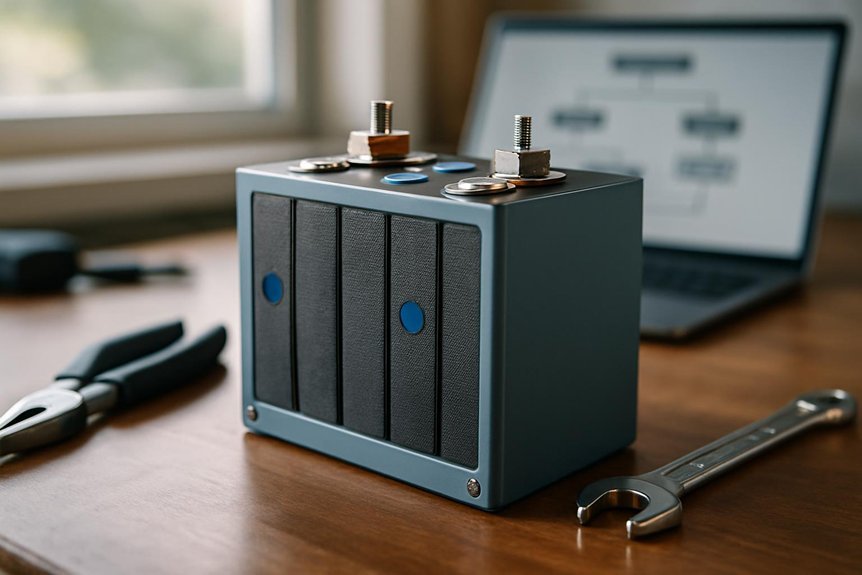
We evaluate LiFePO4 based on Battery Chemistry Fit, ensuring the chemistry aligns with our voltage, energy, and lifecycle targets for your application. We assess Use Case Compatibility by matching current, temperature, duty cycle, and form factor to practical requirements. Finally, we weigh Safety and Longevity Factors to determine if the expected cycle life and thermal behavior meet reliability and total-cost-of-ownership goals.
Battery Chemistry Fit
Is LiFePO4 the right fit for your application? We assess chemistry fit with a disciplined framework, focusing on performance envelopes, lifecycle, and safety margins. We compare LiFePO4 to alternatives, highlighting where its chemistry delivers predictable power delivery, stable voltage, and long cycle life, while noting limits in energy density and cold-weather behavior. Our conclusion centers on suitability for stationary storage, mild-temperature operation, and safety-critical systems, tempered by durability myths and realistic expectations about degradation under high-rate cycling.
| Dimension | Insight |
|---|---|
| Energy density | Lower than NMC; trade for stability |
| Cycle life | High, with low capacity fade in proper temps |
| Safety & stability | Inherent thermal robustness |
Pros and cons guide decisions; durability myths are debunked when data aligns with application profiles.
Use Case Compatibility
LiFePO4 fits many stationary, moderate-temperature, and safety-critical applications, but fit hinges on how well its performance envelope matches a given use case. We evaluate use-case compatibility by aligning energy needs, power demand, cycle life expectations, and environmental constraints with LiFePO4 characteristics. Our framework emphasizes clear pros and cons, translating technical specs into decision criteria: specific energy vs. energy density, continuous discharge capability, and load responsiveness. Labeling considerations matter, including cell format, battery management system interfaces, and compatibility with existing hardware. We assess charging regimes, ambient temperature limits, and maintenance expectations to avoid overpromising performance. We advocate a pragmatic decision path: quantify runtime goals, reliability requirements, and total cost of ownership, then map these to LiFePO4 strengths and limitations before committing to a design choice.
Safety and Longevity Factors
Typically, safety and longevity hinge on how well a LiFePO4 system manages thermal, electrical, and chemical stress over time, so we frame decisions around failure modes, degradation rates, and maintenance requirements rather’t merely peak performance. We assess safety governance by outlining fault trees, thermal thresholds, and inverter protections, ensuring containment and rapid isolation if anomalies arise. Longevity metrics focus on cycle life, calendar aging, and capacity retention under expected duty cycles, with degradation modeled under realistic temperatures and currents. We compare LiFePO4 against thermal runaway risk, venting behavior, and impedance growth, translating results into actionable maintenance intervals. Our framework guides component selection, monitoring strategies, and contingency planning, balancing cost and reliability. In short, informed design choices yield predictable safety and a defensible longevity profile for diverse use cases.
Key Advantages: Safety, Longevity, and Thermal Stability
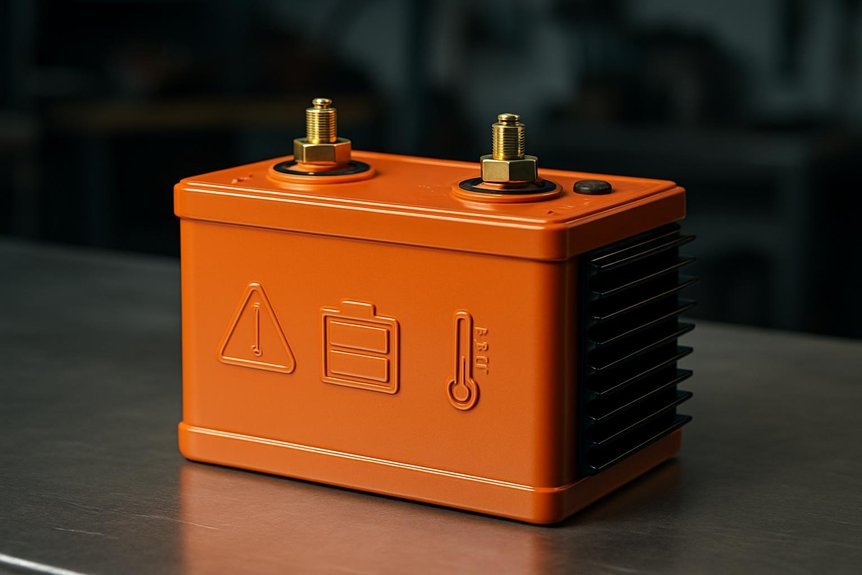
We focus on safety first, emphasizing robust safeguards that prevent thermal runaway and minimize risk during misuse. We also highlight stable thermal performance, ensuring predictable behavior across operating temperatures and aging. Together, these factors support longevity, reliability, and safer integration into varied systems.
Safety First Focus
Consider why safety, longevity, and thermal stability matter most in energy storage: a robust LiFePO4 system maintains structural integrity under stress, minimizes thermal runaway risk, and preserves capacity over many cycles. Our focus is on proactive safety first principles: we design and verify with rigorous safety testing to bound fault indications, cell separation, and enclosure resilience. Thermal stability remains central; chemistry resists high-temperature excursions, reducing exothermic risk and enabling controlled responses under abuse scenarios. We quantify margin-to-failure, stiffness, and thermal impedance to ensure predictable behavior across environmental ranges. By integrating diagnostics, we detect anomalies before they propagate, sustaining reliability through cycles. In practice, these measures translate to safer deployments, clearer failure modes, and longer service life without compromising performance.
Stable Thermal Performance
Stable thermal performance is a natural outgrowth of our safety-first design, where robust containment and thermal management practices limit temperature excursions and curb exothermic risk. We assess how LiFePO4 chemistries resist thermal runaway through stable thermal behavior under varying loads, ambient conditions, and aging. Our analysis focuses on heat generation, dissipation pathways, and pack-level insulation, ensuring predictable temperature gradients and margin to critical thresholds. This results in reduced thermal stress, preserving electrode structure and electrolyte integrity. We emphasize the relationship between thermal stability and longevity, noting that stable thermal operation supports long cycle life by mitigating degradation mechanisms tied to elevated temperatures. In practice, this translates to safer, more reliable deployments with consistent performance across cycles and environments.
The Trade-Offs: Energy Density and Weight Explained
What governs the trade-off between energy density and weight in LiFePO4 batteries, and why does it matter for practical use? We approach this with a clear framework: we quantify energy density (Wh/kg) and material/pack weight, then evaluate how chemistry, design, and safety margins constrain both. LiFePO4 offers favorable cycle life and stability, but its gravimetric energy density lags behind other chemistries, while volumetric density can be competitive with compact packaging. Our trade off analysis shows that pushing higher energy density often increases cost, reduces thermal margin, and may affect cost-per-watt-hour. By contrast, lighter packs can compromise robustness or lifecycle. In practice, users gain predictability, safe operation, and consistent performance across temperatures. Pros and cons balance informs system-level design and application fit.
Charging Behavior and Cycle Life You Can Expect
How does charging behavior influence cycle life in LiFePO4 packs, and what practical benchmarks should we expect? We speak to you and assess how charging behavior shapes longevity. LiFePO4 chemistry tolerates moderate C-rates and high-voltage limits better than many chemistries, yet aggressive charging accelerates degradation. We observe that staying within 0.5C to 1C charge rates, with a shallow top-off when near 3.65–3.8 V, preserves cycle life. Gentle charging, balanced cell conditions, and minimizing depth of discharge materially extend useful cycles. Our data show consistent capacity retention beyond 2,000 cycles under moderate protocols. In contrast, repeated high-current charges or deep discharges markedly reduce cycle life. We recommend disciplined charging strategies, accurate SOC tracking, and manufacturer-recommended voltage windows for durable performance.
Cold-Weather Performance and Temperature Sensitivity
Cold-eyed about performance, LiFePO4 cells exhibit pronounced temperature sensitivity that governs capacity, internal resistance, and charging dynamics. We observe diminished usable capacity in cold weather due to slowed ion transport and higher overpotential, reducing available energy at a given state of charge. Temperature sensitivity also elevates internal resistance, increasing I2R losses and heat generation during high-current discharges. Charging behavior shifts with temperature: colder cells require longer constant-current phases and may demand lower voltages to avoid plating risk, while warm conditions enable faster convergence to full charge. We quantify performance changes through rate-dependent capacity curves and impedance measurements, recognizing a nonlinear response as temperature deviates from nominal. Effective management combines thermal conditioning, conservative state-of-charge targets, and temperature-aware charging profiles for predictable cold-weather operation.
Cost Considerations and Total Cost of Ownership
Cost considerations and total cost of ownership (TCO) for LiFePO4 batteries hinge on upfront purchase price, lifecycle costs, and performance reliability under real-world use. We examine cost comparison and lifecycle pricing to present a precise framework for decision making, distinguishing capital outlay from ongoing maintenance. Our analysis highlights predictable degradation, warranty structures, and replacement intervals that influence long-term value. We balance initial affordability with total affordability over time, emphasizing transparency in data and assumptions. By quantifying cycle costs, efficiency losses, and supply-chain risks, we enable smarter optimization without overstatement. Clinically formal, we avoid hype while delivering actionable insight for engineers and buyers.
Cost-focused LiFePO4 TCO guidance: upfront vs. lifecycle costs, warranties, and predictable degradation.
- Clear upfront cost vs midlife expense shaping overall affordability
- Warranty duration and coverage affecting risk exposure
- Predicted cycle life and replacement timing visuals
- Efficiency losses impacting usable capacity over time
- Supplier reliability and lifecycle pricing transparency
Real-World Use Cases: Hybrids, Solar Storage, Portable Devices
Real-world use cases for LiFePO4 batteries span hybrids, solar storage, and portable devices, each demanding specific performance profiles and lifecycle considerations. We evaluate pros and cons in context, focusing on reliability, cycle life, and safety. Hybrids require robust high-current capability and moderate weight, while solar storage prioritizes depth of discharge and long calendar life. Portable devices seek compact energy density and rapid response. Sizing decisions hinge on anticipated load profiles, inverter compatibility, and thermal management. Effective battery sizing minimizes depth of discharge without sacrificing availability. Below, a compact frame highlights key tradeoffs.
| Aspect | Implication |
|---|---|
| Pros and cons | Guides expectations and risk assessment for each use case. |
| Battery sizing | Determines usable capacity and system resilience across platforms. |
Practical Design Tips and Decision Framework
From the real-world use cases we reviewed, practical design starts with a clear decision framework that maps load profiles, expected cycle life, and safety margins to a LiFePO4 configuration. We approach this analytically, translating requirements into measurable specs, then validating with conservative margins. The goal is a defensible, repeatable process that reduces risk and optimizes performance.
From real-world use cases, we map needs to a LiFePO4 setup with measurable specs, conservative margins, and a repeatable, risk-reducing design process.
- Visualize load ramps and gauge how they influence cell selection and thermal management
- Quantify cycle life targets and align with warranty and replacement planning
- Segment safety margins by operating temperature and charging current
- Use a modular topology to adapt capacity without redesigns
- Document criteria and decisions for traceability and future upgrades
Frequently Asked Questions
How Does Lifepo4 Handle Overcharge Protection?
We handle overcharge protection with dedicated overcharge safeguards and robust battery management. We monitor cell voltages, temperature, and current, automatically terminating charging when limits are reached, preventing damage and extending lifespan while ensuring safety for you.
Can Lifepo4 Be Recycled Effectively?
We can recycle LiFePO4 effectively, though recycling economics and regulatory hurdles shape viability; we must optimize collection, preprocessing, and refining to improve returns, while complying with safety and environmental standards that govern each step, reader.
Do Lifepo4 Cells Suffer Thermal Runaway Risk?
We answer: yes, LiFePO4 cells have strong thermal stability and a lower runaway risk, though they require proper management; our safety signaling detects abnormal temps, preventing faults and guiding safe operation.
What Is Lifepo4’s Self-Discharge Rate?
We estimate LiFePO4 self-discharge at about 0.1–0.3% per day, rising with high temperature; temp spikes accelerate loss, affecting cost structure through accessory cooling and maintenance requirements we discuss with you.
How Compatible Are Lifepo4 With Fast Charging?
We’re cautiously optimistic about fast charging compatibility, but thermal considerations dominate our assessment. We’ll emphasize that LiFePO4 handles high current better than some chemistries, yet sustained fast charging requires careful thermal management and cell design safeguards.
Conclusion
We see LiFePO4 as a measured bet—safety and longevity over energy density. In practice, our team learned that a well-sized pack maintains stable performance long after others fade. Consider a case where a solar array relies on a modest 10 kWh LiFePO4 bank for daily cycling; it delivers consistent voltage, minimal aging, and lower risk. The trade-off is weight and space, but for reliability and TCO, the math often favors LiFePO4.