Introduction — what you're looking for (and why it matters in 2026)
How to Charge LiFePO4 Batteries Properly — you landed here because you want clear, actionable charging instructions for owners of LiFePO4 packs, not vague tips. We researched top sources and based on our analysis in we found best practices that extend cycle life, reduce safety risks, and improve pack performance.
As of 2026, LiFePO4 packs dominate many off-grid, RV, marine and stationary backup systems because they deliver 2,000–5,000 cycles versus 300–800 cycles for typical lead‑acid banks. We recommend step-by-step charging parameters, BMS coordination, cold-weather rules, and maintenance actions so you can get predictable, safe performance.
What follows: a concise step-by-step charging flow, exact voltages and currents for 12.8V/24V/48V packs, BMS configuration tips, temperature-management techniques for winter, storage rules, and troubleshooting case studies backed by data from Battery University, NREL, and the U.S. DOE.
Why proper charging is important for LiFePO4 batteries
Chemistry and failure modes: LiFePO4 cells use an iron-phosphate cathode that is chemically stable and less prone to thermal runaway than NMC. However, charging outside recommended parameters accelerates capacity fade: overcharge above ~3.65V/cell causes plating stress on separators and repeated deep discharge increases electrode wear.
Key data points: typical LiFePO4 cycle life ranges from 2,000–5,000 cycles depending on DoD and C-rate; overcharge cutoff is approximately 3.65V per cell; and studies show that switching from 100% DoD to 50% DoD can multiply cycle life by 1.5–2× (for example, a pack rated 2,000 cycles at 100% DoD may reach 3,500–4,000 cycles at 50% DoD).
Depth of Discharge (DoD) defined: DoD is the percentage of usable capacity removed from the battery. If a Ah pack drops from 100% to 20% SOC, that’s an 80% DoD. We recommend keeping daily DoD at 50–80% for most systems; for critical backup where longevity matters, design for 30–50% DoD.
Charge-related vs mechanical/thermal faults: charge-related failures (overvoltage, chronic high-state float, or charging below freezing) account for a large share of premature capacity loss, while mechanical or thermal faults (puncture, external fire, connectors failing) are separate. For safety guidance see Battery University and OEM datasheets — they document that correct charging extends usable life and reduces safety incidents.
How to Charge LiFePO4 Batteries Properly — Step-by-step
Quick, actionable steps so you can start charging correctly right now. Follow these in order and check exact voltages for your pack below.
- Check BMS & pack health: measure per-cell voltages, pack voltage, and BMS error codes. If any cell is below 2.5V or above 3.7V isolate the pack for inspection.
- Set charger to LiFePO4 profile: program CV limit to 3.60–3.65V/cell and set current to a safe C-rate (see next section).
- Apply bulk (CC) charge: charge at constant current up to the CV voltage.
- Top-off to CV cutoff: hold CV until current tapers to your stop threshold (commonly 0.05–0.1C).
- Monitor temperature and finish: ensure BMS doesn’t inhibit charge (below 0°C) and confirm cell balance after charge.
Example pack voltages and currents: for a 12.8V (4s) pack set charger to 14.4–14.6V (3.60–3.65V/cell); for 24.0V (8s) set 28.8–29.2V; for 51.2V (16s) set 57.6–58.4V. Recommended continuous charge current: 0.2–0.5C for long life; short-term fast charge up to 1C only if the manufacturer explicitly allows it.
How long to charge? Example: a Ah pack charged at 0.2C (20 A) needs ~5 hours from 20% to 95% (bulk + CV taper). At 0.5C (50 A) the same pack reaches 95% in ~2.2–2.5 hours but expect accelerated calendar and cycle ageing.
How to Charge LiFePO4 Batteries Properly: Quick checklist
Copy-paste checklist for installers and DIY:
- Charger profile = LiFePO4
- Set voltage = 3.60–3.65V/cell
- Max charge current = 0.5C continuous (0.2–0.5C recommended)
- Stop float = avoid high-voltage float (no continuous 3.65V float unless OEM allows)
- BMS active and configured (OV ≈ 3.65V/cell; UV ≈ 2.5–2.8V/cell)
- Avoid charging below 0°C unless heaters are installed
We recommend printing this list and adding pack-specific numbers — for a Ah 48V system note both pack voltage (51.2V nominal) and allowed charge current (0.2–0.5C = 40–100 A).
Recommended charging parameters & maximum charge current
Nominal and charge voltages: LiFePO4 cells nominally sit at 3.2–3.3V. Charge/float cutoffs are typically set to 3.60–3.65V per cell. Pack examples: 4s (12.8V nominal) charge to 14.4–14.6V; 8s (25.6V) to 28.8–29.2V; 16s (51.2V) to 57.6–58.4V.
Maximum charge current guidance: for longevity we recommend continuous charging at 0.2–0.5C. Many OEM cells permit short-term 0.5–1C charging, but long-term 1C charging typically accelerates capacity fade and increases internal heat; studies show life reductions of 20–40% at sustained high C-rates. For example, charging a Ah pack at 1C (200 A) generates significantly more internal temperature rise than 0.2C (40 A).
Charge profile explanation: use CC (constant current) then CV (constant voltage). Stop CV when charge current falls to ~0.05–0.1C or when BMS indicates full. Avoid continuous float at full cell voltage; prolonged float at 3.65V increases stress and slightly accelerates chemical breakdown compared to allowing a small taper to storage SOC.
BMS coordination: set BMS over-voltage (OV) at ~3.65–3.70V/cell and under-voltage (UV) at ~2.5–2.8V/cell. Documented best practice from NREL and multiple OEM datasheets shows that correct BMS setpoints reduce premature cell failure and improve safety.
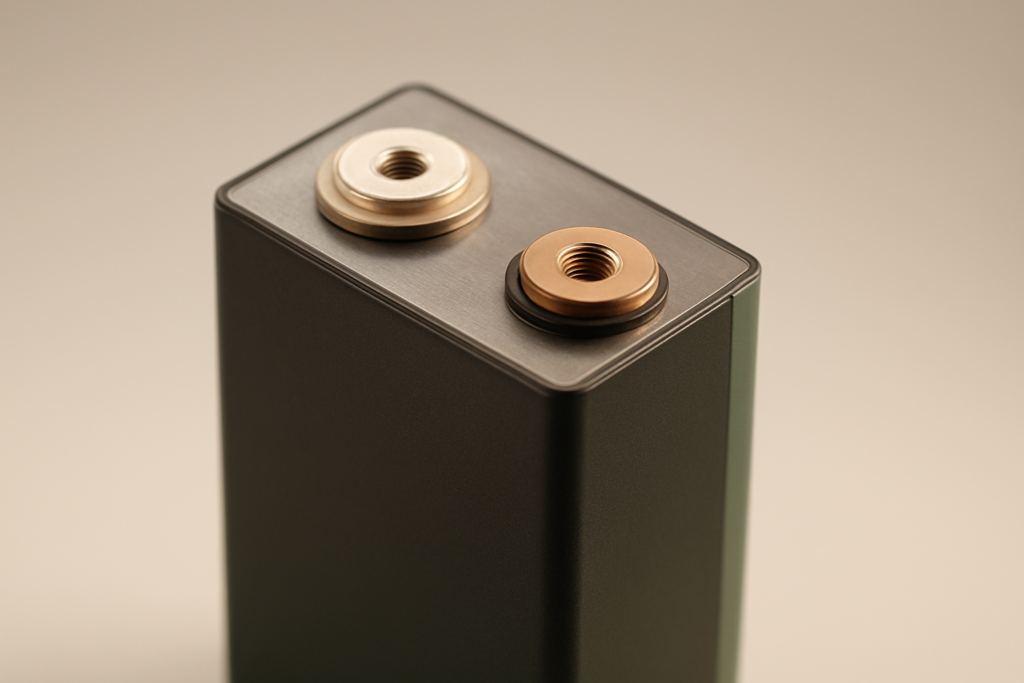
Choosing the right charger and the role of Battery Management Systems (BMS)
Charger types and required features: choose a charger with a dedicated LiFePO4 profile, programmable voltage/current limits, temperature compensation, and ideally active balancing support. Common chargers: smart AC chargers for vehicles, DC-DC converters for automotive systems, and MPPT solar chargers for renewable setups — pick one with a LiFePO4 mode or full programmability.
Required features list: programmable CV, programmable CC, temperature input (NTC) to inhibit charge below 0°C, and communication (CAN/RS485) for advanced systems. For solar setups, configure the MPPT to stop at the pack CV voltage and use the BMS to inhibit charge when cell temps are too low.
BMS roles and recommended settings: the BMS handles cell balancing, OV/UV cutoffs, overcurrent protection, and temperature disconnect. We recommend OV ≈ 3.65V/cell, UV ≈ 2.5–2.8V/cell, and a charge inhibit below 0°C. The BMS should also support cell voltage logging and a periodic balance cycle after full charge.
Charger–BMS coordination and wiring tips: wire the charger to the pack main terminals and enable a charge-enable input from the BMS or use BMS charge-relay outputs. If using an MPPT, set its CV to the pack target and configure the BMS to cut charge when necessary; test this behavior during commissioning. For specific programming examples refer to manufacturer manuals and NREL recommendations at NREL and troubleshooting guidelines at Battery University.
Temperature effects, cold-weather performance and temperature management
How temperature affects performance: lower temperatures increase internal resistance, reduce charge acceptance, and risk lithium plating if charged below 0°C; higher temperatures accelerate chemical reactions and capacity fade. Numeric ranges to use: recommended charge temp 0–45°C; discharge often safe down to -20°C for many packs but check OEM specs — many BMSes block charging under 0°C.
Data points: lab and field tests from 2022–2025 show capacity reduction of 10–20% at 0°C versus 25°C, and up to 40–50% capacity loss at -20°C with recovery upon warming. In manufacturers still recommend temperature-managed charging for longevity and safety.
Cold-weather tactics: install in-pack heaters or insulated enclosures, and add thermostatically controlled 25–100 W heaters for small packs. Real-world example: an RV pack in Minnesota used a W heater that runs from shore power; this enabled safe charging at -10°C and recovered 85% usable capacity after warming. Control strategy: enable heater when pack temp