Looking for a reliable 48V lithium battery that can replace heavy lead-acid packs in your golf cart, RV, solar setup, or off-grid system?

Product Overview
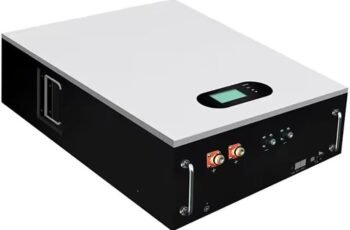
The 48V 100Ah LiFePO4 Battery, Built in 200A BMS, 6000 Cycles, 5.12kWh Capacity 48 Volt Lithium Battery Perfect for Golf Carts, RV, Solar and Off Grid is positioned as a direct drop-in replacement for standard lead-acid batteries. You get a nominal 51.2V pack with 100Ah capacity (5.12kWh), a built-in 200A BMS, and plug-and-play compatibility for many 48V systems.
This pack emphasizes higher energy density, lower weight, and long lifespan compared with lead-acid. It also comes with an A+ grade BMS, safety protections, and a 5-year free warranty with lifetime technical support. You should read the included user manual closely before installation and use.
Important clarification about cycle life
The product listing contains two different cycle-life claims: the product name indicates “6000 Cycles” while the detailed description mentions “15,000 cycles.” That’s a big difference in expected lifespan and total cost of ownership.
You should confirm the manufacturer’s official cycle-life specification before purchase. Ask for the specific test conditions used to generate the cycle-life number (e.g., depth of discharge, charge/discharge rate, temperature). Real-world cycle life will depend heavily on how you use, charge, and store the battery.
Key Specifications
Below is a compact summary to help you understand the most relevant numbers at a glance.
| Specification | Value / Notes |
|---|---|
| Product name | 48V 100Ah LiFePO4 Battery, Built in 200A BMS, 6000 Cycles, 5.12kWh Capacity 48 Volt Lithium Battery Perfect for Golf Carts, RV, Solar and Off Grid |
| Nominal voltage | 51.2V (commonly referred to as 48V systems) |
| Capacity | 100Ah |
| Nominal energy | 5.12 kWh |
| Built-in BMS | A+ grade, 200A rating, protections for overcharge/discharge, short circuit, temperature control, auto-balancing |
| Claimed cycle life | 6000 cycles (name) / up to 15,000 cycles (details) — verify with vendor |
| Cells | EV-grade A-class prismatic aluminum cells |
| Cooling | Modular cooling system |
| Weight | ~35% lighter than equivalent lead-acid pack (manufacturer claim) |
| Compatibility | Drop-in replacement for many 48V golf carts, RVs, solar systems, off-grid systems |
| Operating temp (charging) | Requires ≥ 5°C for charging (manufacturer note) |
| Warranty | 5-year free warranty with pro-rated coverage after year 5; lifetime technical support |
| Included | User manual; follow guidelines for safety/compliance |
This table gives you the quick facts you’ll refer to when matching the pack to your vehicle or system. If any of these values are critical for your installation, verify exact physical dimensions, terminal placements, and weight with the seller.
Performance and Capacity
You’re buying a nominal 5.12 kWh battery. In practical terms, that number translates into how much usable energy you’ll have for motors, appliances, and inverters.
LiFePO4 chemistry is more forgiving than other lithium chemistries: it holds voltage under load well, supports high cycle counts, and generally allows a deeper depth of discharge (DoD) without rapid degradation. The pack’s built-in auto-balancing and modular cooling should help maintain consistent voltage among cells and keep performance stable over time.
Be cautious with capacity expectations. While many LiFePO4 packs allow near 100% DoD safely, most manufacturers recommend using 80–90% daily to maximize cycle life. Below is a practical runtime table using both full nominal capacity and a conservative 80% usable capacity.
| Load (W) | Runtime at 100% DoD (hours) | Runtime at 80% DoD (hours) |
|---|---|---|
| 200 W (lights, small fridge) | 25.6 h | 20.5 h |
| 500 W (small appliances, moderate draw) | 10.24 h | 8.19 h |
| 1000 W (microwave short bursts, hair dryer not continuous) | 5.12 h | 4.10 h |
| 1500 W (air pump, small AC intermittently) | 3.41 h | 2.73 h |
| 2000 W (heavy inverter loads) | 2.56 h | 2.05 h |
These are rough calculations based on energy (5.12 kWh) and do not include inverter inefficiencies. If you’re using an inverter, expect 5–15% additional losses; adjust runtimes accordingly.
Motor and Golf Cart Performance
For golf carts, motors usually draw in the hundreds to low thousands of watts depending on terrain and speed. Your 48V 100Ah LiFePO4 battery will give you higher consistent voltage under load than a weakened lead-acid pack, meaning better hill-climb performance and steadier speed on long courses.
If your cart draws, for example, 1.2 kW average while driving: 5.12 kWh / 1.2 kW ≈ 4.27 hours at 100% DoD, or ≈ 3.4 hours at 80% DoD. Real-world times will be lower because of accelerations, stops, and regenerative braking inefficiencies.
RV and Off-Grid Performance
In RV use, your critical loads (fridge compressor, lights, water pump, electronics) are better served by the stable output of LiFePO4. For a typical RV with average continuous draw of 400–800W during the day (lights, fridge, fans), the battery will last many hours, and you’ll be able to recharge quickly if you have a solar array or shore power charger.
If you plan to run high-draw appliances (air conditioners, electric heaters), you’ll need much larger capacity or multiple packs.
Build Quality and Safety Features
You can expect EV-grade A-class prismatic aluminum cells and an A+ grade BMS. These are good signs: prismatic cells give compact energy density and the aluminum casing helps thermal management. The A+ BMS provides layered protection for charging and discharging, short-circuit protection, and temperature monitoring.
The pack also claims modular cooling and auto-balancing technology. Cooling reduces thermal stress under heavy discharge or charge, while auto-balancing prevents cell drift — both contribute to longevity.
Safety certifications aren’t explicitly listed in your provided text, so you should confirm which certifications the pack carries (UL, CE, UN38.3 for transport, etc.). For installations near sensitive electronics—like a golf cart with radios and control systems—having a reliable BMS and proper grounding reduces the chance of electrical interference and faults.
Temperature limitations and safety notes
The manufacturer clearly warns that charging requires temperatures of 5°C or higher and that return shipping won’t be covered for low-temperature charging issues. That means the BMS likely prevents charging below a threshold to protect the cells, and you won’t be able to charge the pack in cold environments without additional measures (like a controlled warm storage or heater accessory).
You should:
- Avoid charging below 5°C unless the battery has a stated internal heater or you use a heated enclosure.
- Keep the battery away from extreme heat sources and avoid direct sunlight if installed in an enclosed compartment without ventilation.
- Follow the user manual for torque specs on terminals and proper mounting.
Installation and Compatibility
One of the biggest selling points is true plug-and-play compatibility. The pack claims standard industrial dimensions and direct drop-in replacement mostly for vehicles and systems that originally used 48V lead-acid batteries. That can save you time and money by avoiding rewiring or system reprogramming.
However, you must still verify several things before physically installing the battery:
- Physical dimensions and terminal locations must match the battery compartment and cable lengths.
- Terminal types (M8/M10 studs, bolt patterns) must be compatible with your cart or inverter clamps.
- Your charger and controller should support LiFePO4 chemistry or be adjustable to an appropriate LiFePO4 charging profile.
- If you plan to wire multiple packs in series or parallel (for higher voltage or capacity), use identical packs and confirm the BMS supports multi-pack operation. Mixing different ages, brands, or states of health can cause problems.
If you replace a bank of lead-acid batteries with this single pack, ensure that your vehicle/controller doesn’t rely on lead-acid-specific behaviors (like low-voltage cutoff points, charger float behavior, or current sensing). In some cases, you may need to reprogram controller parameters or use a LiFePO4-aware charger.
Series and parallel arrangements
- Series: If you need 96V systems, you can connect two identical 48V packs in series. Make sure both packs are the same model and state of charge before connecting.
- Parallel: You can increase capacity by paralleling identical packs. Use identical packs with the same BMS design, and parallel connections should be made per manufacturer guidance.
- Never mix different capacities, ages, or chemistries.
Charging, Charging Times, and Maintenance
Charging correctly matters more than most people realize. LiFePO4 requires a specific voltage window and charging behavior that differs from lead-acid.
Recommended general charging rules:
- Use a charger designed for LiFePO4 or one configurable for LiFePO4 voltage/charge profile.
- Typical full charge voltage per cell: around 3.6–3.65V. For a 16S pack (51.2V nominal), that equals about 57.6–58.4V maximum. Check the manual for the exact float/charge voltage the pack requires.
- Avoid lead-acid chargers that use higher float voltages or long equalization cycles; these can harm LiFePO4 cells.
- The pack’s BMS will usually prevent overcharge, but it’s best to use the correct charger to avoid unnecessary BMS cutoffs and stress.
Estimated charge times for 100Ah pack (theoretical, without inefficiency/taper):
- 0.1C (10A charger): ~10–11 hours to full (including CV taper)
- 0.2C (20A charger): ~5–6 hours
- 0.5C (50A charger): ~2–2.5 hours
- 1C (100A charger): ~1–1.5 hours (battery manufacturers sometimes advise against continuous 1C charging for longevity; check manual)
Below is a simplified charging-time table including taper and inefficiencies:
| Charger Current | Theoretical Time (Ah / A) | Practical Time (hours) |
|---|---|---|
| 10 A (0.1C) | 100 / 10 = 10 h | 10–12 h |
| 20 A (0.2C) | 5 h | 5–6 h |
| 50 A (0.5C) | 2 h | 2–2.5 h |
| 100 A (1C) | 1 h | 1–1.5 h (use only if manufacturer allows) |
If you use solar charging, size your charge controller to match the battery’s accepted charging current and ensure MPPT settings are correct for LiFePO4.
Maintenance tips
- Keep terminals clean and tight; check torque periodically.
- Inspect the BMS and wiring for corrosion or loose connections.
- For long-term storage, store the battery at around 40–60% state of charge and in a cool, dry environment. Many manufacturers recommend 40–60% SoC for storage to minimize degradation.
- Avoid keeping the battery fully discharged for long periods.
- Follow the specific storage temperature and state-of-charge recommendations in the user manual.
Real-world Use Cases and Examples
You want to know how this pack performs in your specific application. Below are realistic scenarios to help you make a decision.
Golf Cart
- Benefit: Consistent voltage under load provides better torque and hill performance. A lighter pack improves handling and reduces strain on suspension. Plug-and-play design typically makes installation quick.
- Expectation: If your cart previously ran 18 holes on lead-acid with low voltage sag, the LiFePO4 pack will often give longer range and steadier speed per charge.
RV
- Benefit: High cycle life and fast recharge make this pack ideal for boondocking with solar and for towing when shore power is limited.
- Expectation: Use it to run lights, fridges, pumps, and small appliances for many hours. For HVAC or heavy AC loads, you’ll need a larger bank or generator.
Solar / Off-grid
- Benefit: LiFePO4 works very well with solar because you can use a higher proportion of installed capacity and recharge quickly with proper MPPT controllers.
- Expectation: For daily cycling from solar, the pack can last many years without deep degradation if you use proper charge control and avoid extremes of temperature.
Workstation/Inverter Use
- Benefit: Stable voltage and a high discharge rating (200A BMS) support high-power inverters for tools or servers for short to moderate durations.
- Expectation: Factor in inverter inefficiency and continuous draw limits. The built-in 200A BMS gives you a maximum continuous discharge corridor—check your inverter surge requirements relative to the BMS rating.
Pros and Cons
Spell out the strong points and the tradeoffs so you know what you’re agreeing to when you buy.
Pros
- Significantly lighter and more energy-dense than equivalent lead-acid replacements.
- Higher usable depth of discharge and faster recharge capability.
- Built-in A+ BMS with layered protections and auto-balancing improves safety and longevity.
- Plug-and-play design for many 48V systems reduces installation complexity.
- 5-year free warranty with pro-rated support after that, plus lifetime technical support.
- Attractive for golf carts, RVs, solar, and off-grid configurations.
Cons / Caveats
- Conflicting cycle-life claims (6000 vs 15,000 cycles) need clarification from the seller.
- Charging is restricted at low temperatures (≥ 5°C) — you must prevent charging in cold environments or risk issues that may void returns.
- Some older vehicles or chargers might require reprogramming or replacement to match LiFePO4 charging parameters.
- Upfront cost will be higher than lead-acid batteries despite long-term savings.
- If your application requires continuous high currents above the BMS rating, you’ll need to verify continuous and peak discharge capability carefully.
Warranty, Support, and Documentation
The battery includes a 5-year free warranty with pro-rated coverage afterward and lifetime technical support. That’s a good baseline—it suggests the manufacturer expects multi-year use and wants to support customers.
You should:
- Register the battery if required by the warranty terms.
- Keep purchase receipts and any serial number records.
- Read the included user manual completely and keep it with your vehicle or system documentation.
- Ask the seller about warranty processes for RMA, who covers shipping costs for returns, and what conditions void the warranty (e.g., charging below 5°C).
Questions to Ask the Seller Before Buying
Make sure you get answers to these practical items so you don’t get surprised after purchase.
- Which cycle-life figure is correct under real-world conditions: 6000 cycles or 15,000 cycles? Provide test parameters.
- What are the exact physical dimensions, terminal types, bolt sizes, and pack weight?
- Which safety and transport certifications does this specific model carry (UL, UN38.3, CE, RoHS, etc.)?
- What is the recommended maximum continuous charge and discharge current?
- Does the pack include a heating or low-temperature charge function, or is an external heater required for cold climates?
- What is the exact recommended charge voltage and float voltage for this pack?
- Are multiple packs allowed in series/parallel, and are there any special instructions for doing so?
- What is the warranty registration process and what scenarios are excluded from warranty coverage (e.g., low-temp charging)?

Practical Buying Checklist
Before you click “buy,” run through this quick checklist so installation and use are straightforward:
- Verify dimensions and terminal compatibility with your battery compartment.
- Confirm charger compatibility (LiFePO4 profile and voltage).
- Check local climate: will you need a heated enclosure or storage to keep the battery above 5°C for charging?
- Confirm the correct cycle-life number and any supporting test data.
- Ensure the seller provides a clear warranty policy and accessible support channels.
- Plan for safe handling and installation: use insulated tools, proper torque, and secure mounting.
Final Verdict and Recommendation
If you want a modern, lighter, more efficient replacement for lead-acid batteries in your golf cart, RV, or off-grid system, the 48V 100Ah LiFePO4 Battery, Built in 200A BMS, 6000 Cycles, 5.12kWh Capacity 48 Volt Lithium Battery Perfect for Golf Carts, RV, Solar and Off Grid is a compelling option. You’ll benefit from faster recharge, consistent voltage, and likely many years of use if you follow temperature and charging guidance.
However, before you purchase:
- Confirm the correct cycle-life claim and the conditions used for that test.
- Make sure your charger and controller are LiFePO4-compatible.
- Factor in the cold-weather charging restriction and plan accordingly if you operate in low temperatures.
You’ll likely enjoy the improved range, reduced weight, and lower long-term replacement costs compared with lead-acid. Just verify the technical and warranty details so you know exactly what you’re getting and how to maintain it for the longest life.
Disclosure: As an Amazon Associate, I earn from qualifying purchases.