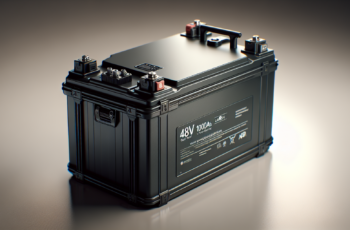
Can this WattCycle 12V 100Ah LiFePO4 battery truly meet our expectations for reliable, long-lasting power in RVs, boats, home backup, and other mobile or stationary applications?


Product summary and quick impression
We find this WattCycle 12V 100Ah LiFePO4 Lithium Battery — BCI Group 24 — immediately appealing for its compact size, relatively light weight, and high cycle life. The battery is designed to fit BCI Group 24 boxes and offers a lot of capacity and safety features for both portable and stationary uses. Our first impression is that it targets users who want to upgrade from lead-acid or older lithium designs while keeping installation simple.
Key specifications at a glance
Below we break down the core specs so we can quickly see what this battery offers and whether it fits our system requirements. This snapshot helps us compare it to other options in the market.
| Feature | Specification |
|---|---|
| Nominal Voltage | 12.8 V |
| Capacity | 100 Ah (1280 Wh nominal) |
| Chemistry | LiFePO4 (LFP), A+ grade cells |
| Dimensions | 10.2 x 6.6 x 8.2 inches (26 x 17 x 21 cm) |
| Weight | 23.2 lbs (10.5 kg) |
| Cycle Life | Up to 15,000 cycles (manufacturer rating) |
| Built-in BMS | 100A, disconnects if discharge > 300±50A |
| Temperature Range | -4°F (-20°C) to 158°F (70°C) operating |
| Series/Parallel | Up to 4 in series or 4 packs in parallel |
| Certifications | SDS, UN38.3, FCC, CE, RoHS |
| Typical Applications | RVs, golf carts, home energy storage, boats, lawn equipment |
We like having this table because it condenses the main selling points and technical specs into one place, making cross-checking with our needs straightforward.
Size, weight, and form factor
The WattCycle unit measures 10.2 x 6.6 x 8.2 inches and weighs about 23.2 pounds. Those dimensions make it compact relative to many lead-acid Group 24 batteries, and the weight reduction is immediately useful for mobile applications. Because it conforms to BCI Group 24 sizing, we can drop it into many existing trays and enclosures without awkward modifications.
We appreciate that the compact form factor also allows for denser energy storage in tight compartments, such as under RV benches or in small marine lockers. The relatively light weight means we can install more capacity without a dramatic increase in overall system weight.
Build quality and certifications
The battery uses A+ grade LiFePO4 cells and carries SDS, UN38.3, FCC, CE, and RoHS certifications. Those certifications indicate both transport safety and adherence to common international electrical and environmental standards. We interpret A+ grade as a signal that the manufacturer sources high-quality cells rather than lower-tier variants.
In practice, build quality impacts long-term reliability and thermal behavior. The presence of a properly integrated BMS and the battery’s encapsulation lend confidence that it’s designed for real-world duty cycles rather than occasional use.
Performance: capacity and usable energy
At 100 Ah and 12.8 V nominal, the battery stores roughly 1280 Wh of energy. Because LiFePO4 chemistry tolerates deep discharge far better than flooded or AGM lead-acid types, we can safely draw a much larger percentage of that capacity. In many real-world setups we can use 80–100% of the rated capacity depending on the BMS settings and system design, which translates to significantly more usable energy than a lead-acid 100 Ah battery.
If we compare usable energy against lead-acid standards that commonly recommend a 50% depth of discharge, the WattCycle battery effectively doubles the usable capacity for the same nominal Ah rating. That’s a major advantage when sizing solar banks, RV house loads, or backup systems.
Cycle life and longevity
The manufacturer rates this LiFePO4 at up to 15,000 cycles. Even with conservative real-world factors, the life expectancy is far beyond typical lead-acid batteries. We expect years of service even when cycling daily. That translates to lower lifetime cost and less maintenance. The high cycle life also means we can design systems with more frequent cycling without fearing premature battery replacement.
We also need to account for real-world conditions like temperature, charge/discharge rates, and state of charge management when estimating actual longevity. But even conservative projections show a meaningful advantage over conventional batteries for long-term projects.

Built-in BMS and safety features
This battery includes a built-in 100A BMS that disconnects the battery if the discharge current exceeds roughly 300±50A. The BMS provides essential protections including overcurrent, overcharge, over-discharge, and cell balancing (as typical for LiFePO4). That simplifies installation because we do not need a separate external BMS in many use cases.
From our perspective, integrated BMS functionality reduces complexity and potential points of failure. We still recommend planning for proper fusing and wiring that follows best electrical safety practices, but the onboard BMS gives a solid baseline for safe operation.
Low-temperature protection and operating range
One standout feature is low-temperature protection: the battery is rated to operate down to -4°F (-20°C) and up to 158°F (70°C). LiFePO4 cells typically need temperature-aware charge management to avoid charging below freezing, and this battery’s protective circuitry accounts for that. We can expect it to handle a broad spectrum of climates, from cold winter storage to hot summer environments.
That said, we should be careful with charging at very low temperatures. The battery’s internal protection will prevent charging below its safe threshold, which protects the cells but may require planning if we expect to charge in freezing conditions. For continuous high-discharge scenarios in cold weather, we recommend monitoring the battery temperature or providing insulation/heating where necessary.
Charging characteristics and compatibility
LiFePO4 has different charge-voltage targets than lead-acid. Typical LiFePO4 charging involves constant-current followed by a bulk/absorption to about 14.4 V (varies by manufacturer) and an end-of-charge termination that avoids over-voltage on individual cells. The WattCycle battery’s internal BMS helps ensure safe charging, but we should configure chargers, inverters/chargers, and solar charge controllers for LiFePO4 profiles when possible.
We can use this battery with many modern multi-stage chargers that offer a LiFePO4 or “user-programmable” profile. Where chargers do not have a LiFePO4 setting, we need to ensure the charge voltage and float behavior do not push cell voltages above recommended limits. Using a quality MPPT solar charge controller with a LiFePO4 setting is ideal for off-grid solar installations.
Series and parallel configurations
The battery supports up to 4 batteries in series or 4 packs in parallel. That flexibility means we can create higher-voltage banks (e.g., 24V or 48V) by connecting up to 4 in series, or increase capacity by paralleling up to 4 packs. For hybrid systems where both higher voltage and higher capacity are needed, combinations within that supported range provide a practical path.
We must ensure matched state-of-charge, identical age, and consistent cell health when paralleling or stringing batteries. For installations beyond the supported configuration limits, or where we require many parallel strings, we should follow manufacturer guidance and consider additional BMS or professional system design.
Installation considerations and wiring
Because the battery fits BCI Group 24 form factors, we can often use existing trays and mounting points. Terminal placement, cable gauge, and fusing requirements should follow the current ratings and the BMS capacity. We prefer to use appropriately sized copper cabling and a fuse or breaker rated slightly above the expected continuous current but well below the point at which the BMS trips.
We also recommend securing the battery physically to prevent movement and ensuring proper ventilation and easy access to terminals. For marine installations, we treat terminals and exposed metal with corrosion-resistant coatings or cover them to prevent salt exposure.
Applications: RVs and motorhomes
RVers gain a lot from LiFePO4 due to the higher usable capacity, lower weight, and longer life. For those who spend extended periods off-grid, the WattCycle battery offers consistent power for appliances, lighting, and entertainment systems with minimal maintenance. The BCI Group 24 size is handy for retrofitting many RV battery bays.
We like that the battery’s charging and discharge characteristics mean fewer generator starts and more time relying on solar and stored energy. The low-temperature protection is beneficial for seasonal RVers who encounter chilly mornings.

Applications: Boats and marine
For marine use, compact size, low weight, and built-in safety are major benefits. LiFePO4 reduces battery bank weight and frees up space for gear or fuel, which can improve vessel balance. The battery’s ability to handle vibration and the certifications supporting safe transport are advantageous for marine installations.
In saltwater environments, we emphasize corrosion mitigation and proper terminal protection. The WattCycle battery’s wide operating temperature range also suits the varied climates many boats encounter.
Applications: Home energy storage and backup
For home backup or small off-grid systems, multiple WattCycle units can be combined in series/parallel within the supported limits to provide larger system voltages and capacities. Because we can use more of the rated capacity without fear of premature damage, fewer Ah are needed to meet the same usable energy target, which reduces footprint and maintenance compared with lead-acid.
We appreciate that warranty terms and expected lifespan generally make LiFePO4 more cost-effective over a multi-year horizon, even if upfront costs are higher. For critical backup loads, the low internal resistance and stable discharge curve ensure predictable performance during outages.
Applications: Golf carts, lawn equipment, and mobility
Golf carts and many electric mobility devices benefit from the high cycle life and stable output voltage of LiFePO4. The WattCycle battery’s capacity and current handling suit typical electric vehicle auxiliary roles, and its lighter weight improves range and efficiency. For lawn equipment that transitions from gas to battery power, this battery offers a long life and reliable output.
We recommend checking vehicle controller compatibility and ensuring the system’s charging infrastructure is configured for LiFePO4 chemistry.
Efficiency and internal resistance
LiFePO4 chemistry generally shows low internal resistance, which translates into lower voltage sag under load and higher charge acceptance. We expect the WattCycle battery to exhibit good round-trip efficiency compared to lead-acid, meaning more of the energy we store is available to use later. Lower I2R losses also mean less heat generation during heavy use.
In practice, this improves inverter performance and reduces strain on charging sources like solar arrays or onboard alternators. For high-draw applications, the battery’s ability to supply current without large voltage drops is valuable.
Safety and transport considerations
The included certifications (UN38.3 for transport) indicate the battery conforms to international shipping standards for lithium batteries. For large-scale shipments or airline carriage, we still need to follow the applicable regulations, but UN38.3 is an essential baseline. The built-in BMS and safety disconnect behavior provide an additional layer of protection against extreme conditions.
We recommend always using proper packaging and clearly labeling batteries for transport. For local transport, bolts must be secure and terminals insulated to prevent accidental short circuits.
Pros and cons
We summarize what we like and what we think warrants caution to make decision-making easier.
Pros:
- High cycle life (up to 15,000 cycles) gives excellent longevity and lowers lifetime cost.
- Compact Group 24 form factor and lightweight (23.2 lbs) make retrofits straightforward.
- Built-in 100A BMS simplifies installation and improves safety.
- Wide operating temperature range for varied climates.
- Certifications for safety and transport.
- Support for series and parallel configurations up to 4 units gives flexibility.
Cons:
- Upfront cost is higher than equivalent lead-acid options, even though lifecycle economics are favorable.
- Charging below freezing is blocked by protection, so we must plan for heating or deferred charging in very cold climates.
- Paralleling and series connections require careful system design and matching to avoid imbalances.
- Manufacturer cycle-life claims are optimistic; real-world life may be lower depending on use.
We find that most cons are addressable with proper planning and system integration. The advantages generally outweigh the downsides for users seeking long-term low-maintenance energy solutions.

Detailed technical comparison: LiFePO4 vs lead-acid (AGM/flooded)
We like to compare technologies when choosing batteries. The chart below highlights the most impactful differences for typical installations.
| Parameter | LiFePO4 (WattCycle 12.8V 100Ah) | Lead-acid (AGM/flooded 100Ah) |
|---|---|---|
| Usable Depth of Discharge | 80–100% | ~50% recommended |
| Cycle life | Up to 15,000 cycles (manufacturer claim) | 300–1200 cycles depending on type |
| Weight | ~23.2 lbs (10.5 kg) | 50–70+ lbs typical |
| Maintenance | Low (no watering) | May require maintenance (flooded) |
| Charge acceptance | High | Slower |
| Self-discharge | Low | Higher |
| Cost (upfront) | Higher | Lower |
| Environmental impact | Less lead content, recyclable | Uses lead, heavy metals |
We prefer LiFePO4 when weight, usable energy, and lifecycle matter most. Lead-acid retains some advantages where cost and simplicity are immediate concerns.
Wiring, fusing, and best installation practices
When installing the WattCycle battery, we follow a few rules to keep safety and performance high. Use the shortest practical cable runs with the correct gauge to limit voltage drop and heating. Place a properly rated fuse or circuit breaker close to the battery positive terminal to protect the wiring. It’s best practice to size the fuse based on the maximum continuous current we plan to draw and the BMS trip characteristics.
We also recommend isolating battery banks during maintenance and labeling cables for future troubleshooting. For parallel or series installations, make sure all batteries are at similar states of charge before connecting, and use consistent cable lengths to balance resistances.
Monitoring and remote management
This battery does not appear to include integrated remote telemetry out of the box. We can monitor system performance by integrating a battery monitoring system (BMS external monitor, shunt-based meter, or inverter/charger that reads battery voltage and current). Adding a battery monitor gives us state-of-charge estimation, cycle counts, and real-time current/voltage data so we can manage charging sources and avoid unexpected depletion.
We generally find a dedicated shunt-based battery monitor to be the most accurate option for off-grid systems. Many inverter/charger brands also offer communication protocols (CAN/RS485) that can work with LiFePO4 batteries if supported.
Temperature and winter operation specifics
Because LiFePO4 chemistry is sensitive to charging below freezing, the WattCycle’s internal protection prevents charging under certain low-temperature thresholds. That’s a safety plus, but it means we need a plan if we expect to charge batteries in sub-zero conditions. Options include insulated battery boxes, low-wattage thermostatically controlled heating pads, or placing the battery in a warmer compartment.
For discharging in cold conditions, the battery will typically provide power down to its lower operating limit. We still recommend testing the system under anticipated cold-load conditions to ensure performance matches expectations.
Real-world runtime examples
To get a sense of runtime, consider common loads. If we draw 200 W for lights, fans, and small appliances, the nominal 1280 Wh capacity would theoretically last about 6 hours at 100% discharge. If we use the battery conservatively at an 80% depth of discharge, we still get nearly 5 hours. For higher single loads, such as a 1000 W microwave run for 10 minutes, the battery can handle short bursts but we must ensure inverter sizing and cable gauge match the surge requirements.
We always recommend sizing battery capacity around actual consumption patterns, factoring in inverter efficiency, and planning for reserve capacity if needed for sunlight variability in solar scenarios.
Maintenance and lifecycle management
One of the major advantages we see is very low maintenance. There’s no watering or regular equalization required like with flooded lead-acid batteries. We should, however, visually inspect terminals for corrosion, keep connections tight, and monitor system performance. Periodically checking state-of-charge and reviewing any error codes from the BMS (if accessible) helps prevent surprises.
For long-term storage, keep the battery at a partial charge (around 30–60%) and in a cool, dry place. LiFePO4 batteries hold charge well, but extreme temperatures during storage should be avoided.
Warranty and support expectations
Manufacturers of LiFePO4 batteries typically offer multi-year warranties reflecting the technology’s longevity. Before purchasing, we recommend checking the specific warranty length, coverage details, and any registration or installation requirements. Warranty support and accessible customer service are important because batteries are critical components whose replacements are costly.
We also advise keeping receipts and documenting installation and use cases to simplify any potential warranty claims.
Price considerations and ROI
Upfront cost for LiFePO4 batteries is higher than for lead-acid alternatives, but when we calculate total cost of ownership over the expected lifecycle, LiFePO4 often becomes more economical. Savings come from longer life (fewer replacements), higher usable capacity per Ah, lower maintenance, and lighter weight (which can yield operational savings for mobile use).
When sizing systems, consider energy needs, replacement schedules, and secondary benefits like reduced generator runtime and improved solar utilization.
User tips and common pitfalls
We share a few practical tips based on what we’ve seen users do successfully, and some pitfalls to avoid:
- Tip: Configure chargers and controllers for LiFePO4 profiles to ensure correct charging voltages and cutoffs.
- Tip: Use proper terminal protection and corrosion inhibitors in marine environments.
- Pitfall: Avoid mixing batteries of different ages, brands, or capacities in parallel without careful matching and monitoring.
- Pitfall: Don’t rely solely on inverter/charger defaults meant for lead-acid; check settings.
These straightforward practices extend battery life and reduce headaches.
Frequently asked questions (FAQ)
We anticipate common questions and provide concise answers so that we can quickly resolve doubts.
Q: Can we place these batteries in any orientation? A: Generally yes, but follow manufacturer guidance for terminal clearance and ventilation. Secure mounting is recommended.
Q: How many can we parallel or series? A: Up to 4 in series or up to 4 packs in parallel as specified by the manufacturer.
Q: Will the battery charge from my RV alternator? A: Yes, if your alternator/charger is compatible and set to a LiFePO4 charging profile or has adjustable voltage; otherwise consider a DC-DC charger.
Q: Is the 15,000 cycles rating realistic? A: 15,000 cycles is the manufacturer’s marketing claim under ideal conditions. Real-world cycles depend on depth of discharge, temperature, and charge rates. Even with conservative assumptions, cycle life remains very high compared to lead-acid.
Q: What happens if we pull a very high current? A: The built-in BMS will protect the battery and will auto-disconnect if discharge exceeds the specified threshold (~300±50A) to prevent damage.
We find these answers help buyers align expectations with real-world performance.
Comparison with other LiFePO4 options
Compared to other LiFePO4 12V 100Ah options, this WattCycle product stands out for its BCI Group 24 form factor and high cycle-life claim. Pricing, warranty, and cell sourcing can vary across brands; we recommend comparing those elements along with customer reviews and support responsiveness.
We also consider whether the battery includes accessory features like Bluetooth monitoring or integrated communication protocols. For some buyers, those integrations simplify system monitoring; for others, the simpler the better.
Final verdict and who should buy it
We conclude that the WattCycle 12V 100Ah LiFePO4 battery is a practical and capable choice for users looking to upgrade from lead-acid or build a compact, long-lasting LiFePO4 bank. It fits well into RV, marine, golf cart, and small home energy systems where weight, usable capacity, and lifecycle matter. The built-in 100A BMS and broad operating temperature range add to its appeal.
We recommend this battery to:
- RV owners who want longer off-grid autonomy and lighter battery banks.
- Boaters seeking reduced weight and maintenance.
- Homeowners building modular backup or solar storage.
- Electric vehicle conversions and mobility applications that need compact, durable batteries.
If our priorities include the highest possible upfront value regardless of lifespan, lead-acid might still be considered, but for long-term performance and lower total cost of ownership, the WattCycle LiFePO4 is a strong option.
Where to buy and final purchase checklist
When we’re ready to buy, we recommend sourcing from reputable sellers who provide clear warranty terms and after-sales support. Before purchasing, check:
- Warranty length and coverage specifics.
- Seller’s return policy and shipping method (UN38.3 compliance).
- Compatibility with our existing charger/inverter or the need to update charge profiles.
- Whether additional accessories (monitoring shunt, mounting brackets) are required.
We prefer buying from authorized resellers or directly from the manufacturer when possible to simplify warranty and support.
Closing notes and recommended next steps
If we plan an installation, our next steps should be to size the bank against our load profile, confirm charger/inverter compatibility, and prepare mounting and wiring plans. We also suggest planning for future expansion by leaving space in the battery compartment and selecting appropriately sized cables and protective devices.
We’re comfortable recommending the WattCycle 12V 100Ah LiFePO4 Lithium Battery for many practical applications. With appropriate system design and installation care, it can deliver years of reliable service and meaningful performance advantages over traditional battery technologies.
Disclosure: As an Amazon Associate, I earn from qualifying purchases.