Are we looking for a reliable 24V battery solution that can power our trolling motor, boat, RV, or off-grid system for years without constant maintenance?

Overview of the LiTime 24V 100Ah LiFePO4 Deep Cycle Battery (2 Packs)
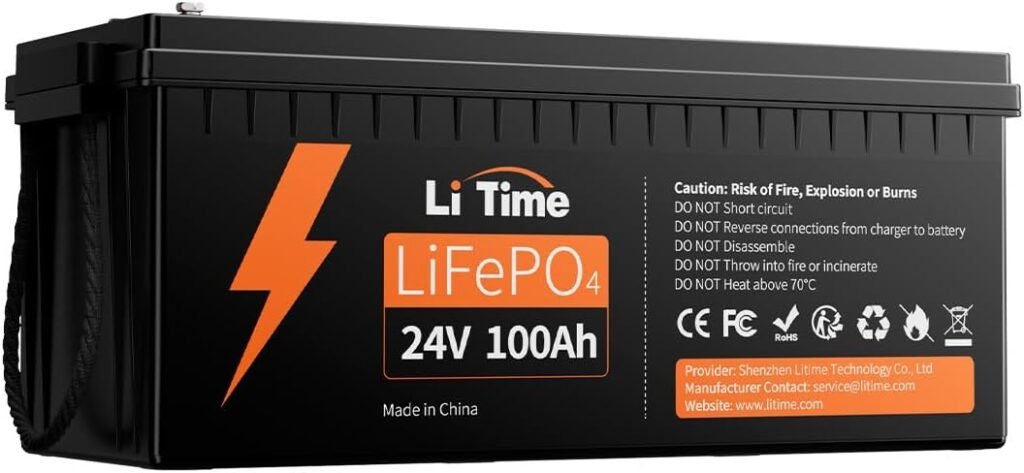
We want to give an honest, practical assessment of the LiTime 24V 100Ah LiFePO4 Deep Cycle Battery, 4000+ Deep Cycle, Built-in 100A BMS, Perfect for Trolling Motors, Boats, RVs, Off-Grid, Home Energy (2 Packs). We’ll cover real-world performance, usability, and value so we can decide whether this unit fits our needs.
What this product is and who it’s for
This product is a pair of 24V 100Ah LiFePO4 deep-cycle batteries designed for long life and repeated deep discharges. We see it aimed at boaters, RV owners, people running trolling motors, and homeowners building small off-grid or backup energy systems.
Key specifications
We want to make quick facts easy to find, so we’ve summarized the core specs in a compact table. These are the most relevant numbers we looked at when evaluating capabilities and compatibility with existing systems.
| Attribute | Specification |
|---|---|
| Product name | LiTime 24V 100Ah LiFePO4 Deep Cycle Battery (2 Packs) |
| Chemistry | LiFePO4 (Lithium Iron Phosphate) |
| Nominal voltage | 24V |
| Capacity | 100Ah (each) |
| Energy per pack | 2.56 kWh (per 24V 100Ah battery) |
| Depth of Discharge (DoD) | 100% supported |
| Cycle life | 4,000–15,000 cycles (manufacturer range) |
| Self-discharge | ~3% |
| Built-in BMS | 100A Battery Management System |
| Charge time (typical) | ~5 hours with 29.2V 20A charger (not included) |
| Expandability | Series/parallel up to 48V 400Ah (20.48 kWh) |
| Operating temperature | -20°C to 60°C |
| Warranty | 5 years (plus 24/7 customer support) |
| Not suitable for | Automotive starting or golf cart use |
Why these specs matter to us
We like clear, manufacturer-supplied measurements because they help us size systems and choose compatible chargers and inverters. The combination of long cycle life, full DoD support, and low self-discharge make these batteries attractive for seasonal and year-round applications alike.

Performance and real-world expectations
We’ll walk through what the numbers mean in everyday use and what we can expect from the batteries in different scenarios. Real-world performance is where the marketing claims either hold up or fall short.
Energy capacity and usable power
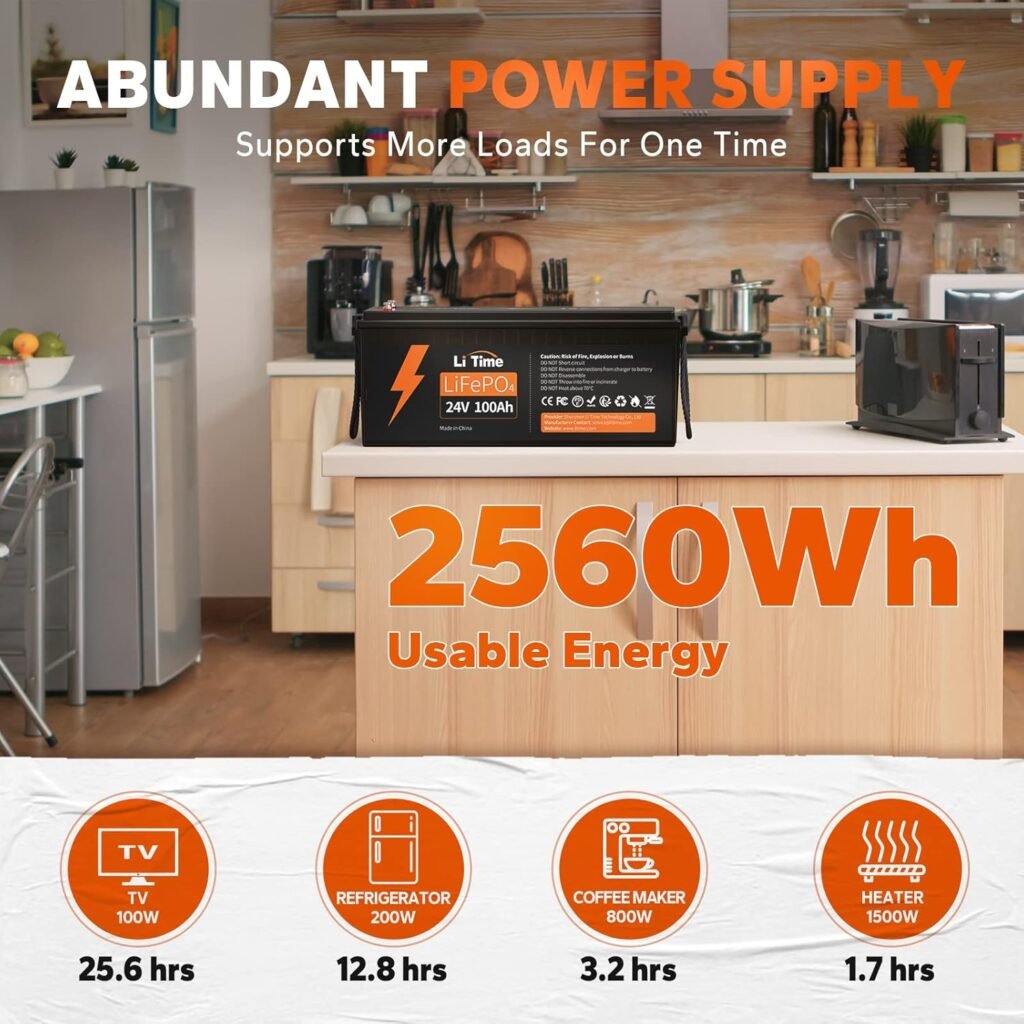
Each battery offers 2.56 kWh of energy, which translates into usable power for lights, small appliances, trolling motors, and certain RV loads. Because LiFePO4 chemistry allows 100% DoD safely, we can use more of that 2.56 kWh per battery than we would with lead-acid alternatives.
Cycle life and longevity
The manufacturer specifies 4,000–15,000 cycles, which is a broad range but indicates an extremely long lifespan compared to lead-acid batteries. We expect about a decade or more of practical life under moderate use, and the 10-year life claim for typical cycling reinforces the value proposition when planning replacements and system lifetime costs.
Charge/discharge behavior
With the built-in 100A BMS, charge-discharge behavior is managed to protect the cells from overcharge and over-discharge. Under a recommended charge rate (for example, a 29.2V 20A charger), a full charge takes about five hours. We appreciate the ability to charge faster than most lead-acid systems without harming the cells when using a proper charger.
Built-in Battery Management System (BMS)
We consider the BMS a crucial component for safety and long-term reliability, especially in batteries intended for repeated deep cycles.
What the 100A BMS protects against
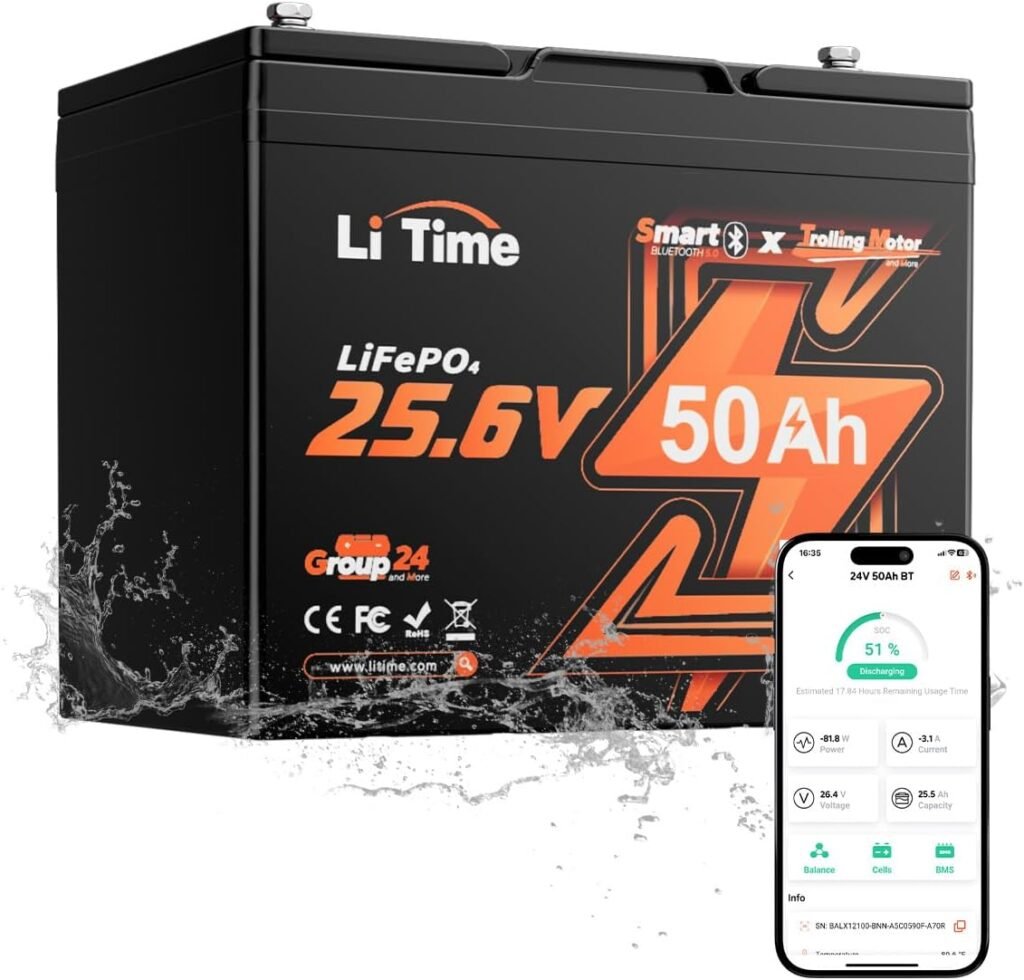
The 100A BMS guards the pack against overcharge, over-discharge, short-circuit, overcurrent, and cell imbalance. Because these protections are integrated at the pack level, we have fewer worries about external equipment causing damage if we wire things correctly.
How the BMS affects system design
The BMS current limit influences the maximum continuous discharge and charging currents we can use safely. We must design our system (inverter, motor controller, charger) so that continuous currents do not exceed the 100A limit unless we add additional protections or balance multiple packs correctly in parallel.
Charging characteristics and recommended setup
Charging behavior and the right charger selection are important for efficiency and battery health. We’ll walk through the recommended approaches and what to avoid.
Recommended charger specifications
The manufacturer recommends a 29.2V 20A charger for a roughly 5-hour charge time. We should pick a charger with LiFePO4-specific charging stages or the ability to set charging voltage to the appropriate range for LiFePO4 chemistry.
Charging time and acceptance
With typical chargers sized to the battery’s specs, we can expect to recharge these packs within several hours. We must factor in shore power availability or generator capacity when sizing our charging equipment for a complete system.
Expandability and system integration
One of the attractive features is the ability to expand system capacity by wiring packs in series and parallel.
Series and parallel options
The batteries support series/parallel expansion up to 48V 400Ah (20.48 kWh). This gives us flexibility to scale from a single-bank 24V system to a larger 48V bank suitable for heavier loads or longer runtimes.
Practical considerations when scaling
When combining multiple packs, we must ensure identical age, capacity, and state of charge on each pack to prevent imbalance and premature wear. We also need proper fusing, cabling rated for the expected currents, and careful monitoring via either the BMS or external system controllers.
Use cases: boating, RV, trolling motors, off-grid, and backup
We’ll look at the typical applications called out by the manufacturer and how the battery performs in each role.
Trolling motors and boating
For trolling motors, the batteries’ high usable capacity and low internal resistance mean longer run-times and more consistent voltage during discharge. On boats, the reduced weight compared to equivalent lead-acid batteries helps with fuel economy and payload limits.
RVs and on-board living
In RVs, these batteries handle repeated discharge-charge cycles for lighting, refrigeration, and electronics. The rapid recharge time and deep discharge capability let us rely less on generators and more on shore power or solar charging.
Off-grid and home backup
For small off-grid systems or emergency home backup, the expandability to 48V 400Ah (20.48 kWh) makes these packs viable building blocks. They’re particularly attractive for systems that emphasize long life and low maintenance.
What the battery is not for
The manufacturer explicitly warns against using these batteries for automotive starting or golf cart applications. We must respect that limitation because start applications demand very different power delivery profiles and safety considerations.
Safety and operating environment
Safety is a major factor for energy storage. We’ll go through safe operating temperatures, storage behavior, and common-sense guidelines.
Operating temperature range
The batteries are rated for operation from -20°C to 60°C, which covers most temperate and many extreme conditions. We should still keep batteries away from direct sources of heat and maintain ventilation for charging to avoid elevated temperatures.
Storage and self-discharge
A low self-discharge rate (~3%) makes storage over seasonal periods straightforward. We recommend storing the batteries at partial state of charge (around 30–50%) for long-term storage and checking periodically.
Installation, wiring, and maintenance
We’ll cover practical installation advice and the minimal maintenance needs for LiFePO4 chemistry.
Mechanical and electrical installation tips
We should mount the packs securely in a ventilated, dry location, using cables and terminals rated for the maximum currents we expect. Proper fusing and a main disconnect recommended by the inverter or motor controller manufacturer are essential.
Maintenance requirements
Unlike lead-acid batteries, LiFePO4 cells don’t require watering or equalization charges. We should still monitor for signs of swelling, unexpected voltage drops, or abnormal heat. Regular checks of terminal tightness and BMS fault indicators help maintain reliability.
Pros and cons
We’ll summarize the main advantages and the trade-offs so we can weigh the purchase decision.
Pros
- Long cycle life (4,000–15,000 cycles) and long calendar life, offering improved total cost of ownership.
- 100% DoD capability means we can use full capacity without damaging the cells.
- Built-in 100A BMS provides protection for everyday use and simplifies installation.
- Low self-discharge (~3%) is good for seasonal usage.
- Expandable to larger systems (up to 48V 400Ah) for scalable energy storage.
Cons
- Charger not included, so we must acquire a compatible 29.2V (or LiFePO4-capable) charger.
- The manufacturer warns against automotive starting and golf cart uses, limiting applicability for some buyers.
- Initial cost will be higher than equivalent lead-acid banks, though lifecycle cost should be lower in many use cases.
- The broad cycle range (4,000–15,000) can be confusing; real-world cycles depend heavily on use patterns and environmental conditions.
Comparison with lead-acid and other lithium chemistries
We’ll compare the LiTime LiFePO4 to common alternatives so we can understand trade-offs relative to what many people already own.
LiFePO4 vs. lead-acid
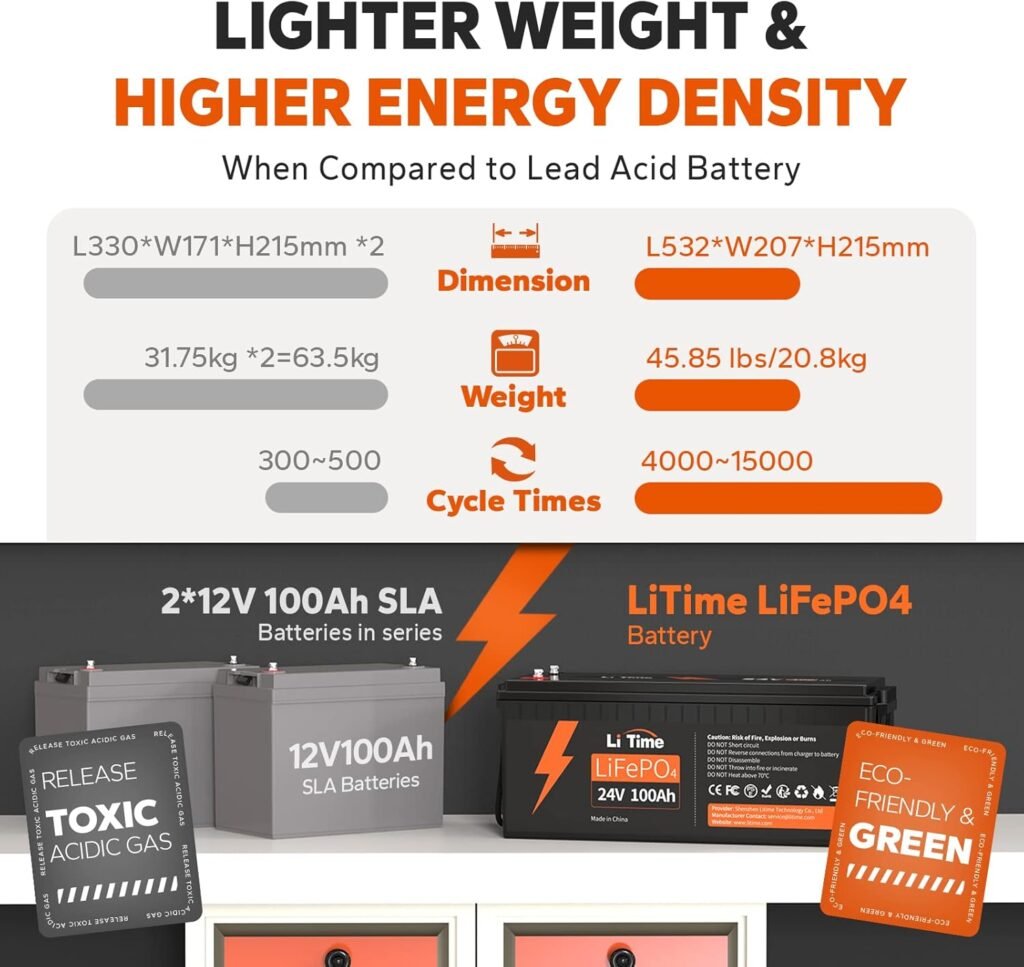
LiFePO4 offers far longer cycle life, deeper usable capacity (100% DoD vs. ~50% practical DoD for lead-acid), lighter weight, and essentially zero maintenance. Charging is faster and efficiency is higher, but initial purchase price is higher. Over a system lifetime, LiFePO4 is usually more cost-effective for frequent cycling.
LiFePO4 vs. other lithium chemistries
Compared with other lithium-ion chemistries (like NMC), LiFePO4 is generally safer thermally and has longer cycle life, though it has lower energy density. For marine, RV, and backup applications where safety and longevity are priorities, LiFePO4 is often preferred.
Pricing, warranty, and support
We’ll address total value rather than just sticker price, and explain warranty implications.
Warranty details and what to expect
The product comes with a 5-year warranty and 24/7 customer support. That gives us reassurance that the manufacturer stands behind the pack, and support availability can make troubleshooting issues much less stressful.
Total cost of ownership considerations
While upfront cost is higher than lead-acid, longer life, reduced maintenance, and better usable energy per cycle usually lower lifetime cost. We need to factor in charger costs, installation materials, and any monitoring equipment when calculating a full system price.
Practical scenarios and runtime estimates
We’ll provide example scenarios so we can get a feel for how long these batteries will run typical loads.
Example: trolling motor runtime
For a small to medium trolling motor drawing, say, 40–60 amps at 24V, a single 24V 100Ah pack would deliver roughly 2.4 kW at full charge. With 100% DoD allowed, we can translate that into a few hours of run time depending on motor draw. In practice, real-world runtimes vary with motor efficiency and conditions, but we can expect significantly longer usable runtime than comparable lead-acid setups.
Example: RV essentials for overnight use
For lighting (LED), water pump, and a low-power refrigerator in eco mode, two of these batteries in parallel or a pair in a larger system could sustain essential loads overnight and through cloudy days when combined with a modest solar array. Using 2.56 kWh per pack, we can estimate power draw to predict duration and decide if we need additional packs or a generator supplement.
Troubleshooting and common questions
We’ll list typical questions that come up and how we would address them.
What if the BMS trips?
If the BMS cuts output due to overcurrent or a detected fault, we should follow the manufacturer’s recommended restart procedure and confirm loads do not exceed the 100A rating. Persistent faults require contacting 24/7 customer support and avoiding repeated resets that might stress the pack.
Can we use these with existing chargers or solar controllers?
We can use them with chargers or solar controllers that have a LiFePO4 charging profile or configurable voltage. Standard lead-acid chargers without adjustable voltage or LiFePO4 settings can damage the battery or reduce lifespan.
Environmental considerations and recycling
Responsible handling matters to us, both in operation and at end-of-life.
Environmental impact during use
LiFePO4 chemistry is known for improved safety and relatively benign materials compared to some other lithium chemistries. The extended lifespan reduces the number of replacements and associated material use over time.
Recycling and disposal
When the batteries reach end-of-life, we should recycle them according to local regulations and through battery recycling programs. We recommend contacting the manufacturer or local recycling centers for guidance on responsible disposal.
Installation checklist and recommended accessories
We want to make sure we have everything we need before installation to avoid delays or compatibility issues.
Pre-installation checklist
- Compatible LiFePO4 or adjustable charger (e.g., 29.2V 20A recommended).
- Appropriate inverter, charger/inverter, or motor controller sized to the 24V system and respecting the 100A BMS limit.
- Correct gauge cabling and grommets for the expected current.
- Fuses or circuit breakers sized according to system specifications.
- Mounting hardware and a ventilated enclosure or compartment.
Recommended accessories
We recommend a LiFePO4-aware battery monitor, quality ring terminals, insulated battery switches, and an appropriately rated fuse or breaker for added safety and easier system management.
Final impressions and recommendation
We’ll summarize our view and give a clear sense of who will benefit most from this product.
Who should buy this
We believe this battery pack is an excellent option for people looking for a durable, low-maintenance 24V solution for trolling motors, boats, RVs, and off-grid or backup power systems. If we prioritize long lifespan, deep discharge capability, and expandability into larger systems, this product fits well.
Who should not buy this
We would not recommend these batteries for automotive starting duties or golf cart use, as the manufacturer specifically disallows those applications. Also, buyers who cannot invest in a proper LiFePO4-compatible charger or who need the absolute cheapest upfront cost might prefer other options.
How we would set up a typical small system
We’ll describe a straightforward system layout for a recreational or off-grid setup so we can picture the real-world steps.
Example system design for a boat or small RV
We would install one or two 24V 100Ah packs in a ventilated battery bay, wire to a LiFePO4-compatible charger tied to shore power or a generator, and add a battery monitor and fused DC distribution panel. If we need more capacity or higher voltage for an inverter, we’d expand to a 48V configuration by following the manufacturer’s guidance and ensuring pack matching.
Commissioning and first use
For first use, we’d check initial voltage, inspect terminals and mounting, apply correct charging profile, and verify the BMS behavior under light load before applying heavy currents. That helps detect any installation issues early and ensures the battery starts life in good condition.
Closing thoughts
We appreciate that the LiTime 24V 100Ah LiFePO4 Deep Cycle Battery (2 Packs) balances performance, safety, and expandability in ways that fit many recreational and small-scale off-grid applications. With a robust built-in 100A BMS, LiFePO4 chemistry, low self-discharge, and a 5-year warranty, this product looks like a compelling option when we want reliability and long-term value.
Disclosure: As an Amazon Associate, I earn from qualifying purchases.