With cycle lives often exceeding 6,000 at 80% depth of discharge, LiFePO4 packs offer years of dependable storage for your smart home. You’ll pair them with a hybrid inverter, a robust BMS, and an energy hub to shift loads, shave peaks, and ride through outages. You can even game time-of-use rates and boost solar self-consumption. But the real advantage appears when you integrate EV charging and smart appliances—if you configure them wisely…
Why LiFePO4 Is the Preferred Chemistry for Home Energy Storage
Among battery chemistries, LiFePO4 (LFP) stands out for home energy storage because it pairs high safety with long life and stable performance. You’ll feel the Lifepo4 advantages immediately: excellent Battery longevity from high Charge cycles, dependable Thermal stability, and robust Safety features that reduce fire risk. While its Energy density is moderate, you gain predictable output and durability that beat many alternatives over time. You also cut maintenance and replacement expenses, boosting Cost efficiency across the system’s life. Its benign chemistry improves Environmental impact compared with cobalt-heavy cells. Market trends show falling prices and rising adoption, validating your investment. Homeowner experiences consistently highlight quiet operation, reliable backup during outages, and steady daily cycling that supports solar self-consumption and peak-shaving.
System Architecture: Inverters, BMS, and Smart Energy Hubs
With LiFePO4’s safety and longevity established, the next step is wiring that chemistry into a smart, resilient home power stack. You’ll choose inverter types—hybrid for seamless grid/battery/solar orchestration, or battery-only for retrofit simplicity—and verify system compatibility with your packs and loads. Evaluate BMS features: cell balancing, temperature gating, fault logging, and CAN/RS485 communication to coordinate energy flow and enforce safety protocols.
Smart hubs unify controls, aggregating meter data, inverter telemetry, and BMS limits to automate dispatch by rules or APIs. Prioritize installation techniques that minimize impedance, segregate control and power wiring, and provide clear labeling and service disconnects. Track performance metrics—round-trip efficiency, conversion losses, response time, idle draw—to tune firmware and settings. Test failover behavior and alarms before commissioning.
Sizing Your Battery for Solar, TOU Rates, and Backup Needs
Before you buy cells or racks, define what the battery must do: soak up midday solar, arbitrage time-of-use rates, ride through outages, or all three. Start with a load analysis. Export smart meter data, map usage patterns by hour, and identify peak demand windows. Size battery capacity to shift excess PV into evening peaks while leaving headroom for backup essentials.
Estimate daily energy consumption you want to offset, then choose usable kWh that covers target hours at desired depth-of-discharge. For TOU, match capacity to the differential between off-peak charging and peak discharge windows. For backup, total critical loads and multiply by expected outage duration.
Account for system efficiency: inverter and round‑trip losses typically cut usable energy 10–15%. Validate with seasonal solar yield and adjust margins accordingly.
Installation Considerations: Safety, Location, and Code Compliance
Even if your design is dialed in, installation can make or break a LiFePO4 system. Prioritize installation safety: mount modules securely, use listed equipment, torque lugs to spec, and route conductors in protected pathways. Include appropriately rated overcurrent protection, DC disconnects, and a Battery Management System with cell-level monitoring. Provide clear labeling and an accessible emergency shutoff.
Choose an ideal location with stable temperatures, minimal dust and moisture, and adequate clearance for airflow and service. Keep batteries off living spaces if required, elevate from flood risk, and avoid direct sunlight or corrosive environments. Maintain working space per manufacturer instructions.
Meet code compliance by following NEC Article 706/480, local amendments, and fire codes. Pull permits, schedule inspections, bond/ground correctly, and document torque, wiring, and commissioning tests.
Integrating With Solar PV, EV Chargers, and Smart Appliances
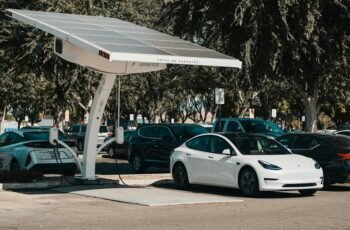
A well-orchestrated LiFePO4 system ties your solar PV, EV charger, and smart appliances into one responsive energy network. You connect the battery through a hybrid inverter that accepts PV input, manages charge/discharge, and supplies your loads. Choose inverters and chargers that share protocols (Modbus, OCPP, MQTT) so devices exchange status, power limits, and schedules reliably.
You’ll route solar into the battery first, then feed household circuits, with grid import as backup. For EVs, select a charger that supports dynamic load balancing and can throttle based on available stored energy. Smart appliances should expose controllable modes and power profiles. With utility-approved metering and export settings, you can interact with the smart grid while prioritizing self-consumption. This integration strengthens resilience and advances energy independence.
Energy Management Strategies and Automation Use Cases
You can use LiFePO4 storage to time-shift energy and cut bills by charging during off-peak rates and discharging at peak. Set automations that prioritize critical loads and shed nonessential circuits when prices spike or the grid sags. Configure backup modes so the battery preserves reserve capacity and switches seamlessly during outages.
Time-Of-Use Optimization
While utility rates shift throughout the day, smart homes can cut costs by scheduling when they draw, store, and export energy with LiFePO4 batteries. You use time-of-use data, solar forecasts, and appliance priorities to decide when to charge, discharge, or hold capacity. During peak pricing, you run on stored energy and delay flexible loads. When off-peak rates arrive, you recharge efficiently and precondition your home.
Set rules for energy arbitrage: buy cheap, store safely, and sell or offset during expensive windows. Automations can pre-charge before forecasted clouds, preserve a configurable reserve, and shift EV charging to the lowest-cost block. With APIs, you sync with utility tariffs, update schedules nightly, and learn patterns, ensuring each kWh earns maximum value without manual tinkering.
Backup and Load Shedding
Even before the grid blinks, design your LiFePO4 system to isolate critical circuits and shed nonessential loads in milliseconds. You’ll protect refrigeration, networking, medical devices, and lighting while deferring EV charging, pool pumps, and HVAC auxiliaries. Use a smart transfer switch, battery-aware inverter, and subpanel mapping to implement tiered load shedding strategies.
Define thresholds: state-of-charge, real-time solar output, and predicted outage duration. When SOC drops, your controller demotes medium loads, then noncritical loads, preserving backup power for essentials. Pair occupancy sensors and schedules to momentarily pause heavy appliances without disrupting comfort.
Integrate with your home automation: publish battery metrics, trigger scenes, and log events. Test failover monthly, simulate peak demand, and validate breaker labeling. Keep firmware updated and document emergency overrides.
Monitoring, Maintenance, and Lifecycle Optimization
Two priorities drive reliable LiFePO4 performance in smart homes: actionable monitoring and disciplined upkeep. You’ll protect battery health by pairing robust monitoring tools with clear maintenance schedules. Track performance metrics—state of charge, round-trip efficiency, temperature, and cycle count—to spot degradation factors early. Set alert thresholds and automate reports so exceptions prompt action, not guesswork.
| Metric | Target Range | Action Trigger |
|---|---|---|
| Temperature | 15–30°C | Adjust cooling/heating |
| SOC Window | 20–90% | Modify charge limits |
| Cycle Efficiency | >95% | Inspect wiring/BMS |
Run quarterly lifecycle analysis to align usage with capacity fade, then adjust charge ceilings, discharge depths, and peak loads. Calibrate sensors semiannually, update BMS firmware, and verify busbar torque. Keep terminals clean, ventilation clear, and logs synchronized. With disciplined routines, you extend service life and sustain stable, safe power.
Costs, Incentives, and ROI for Homeowners
Although upfront prices can look steep, you can frame LiFePO4 home storage as a long-term asset with predictable payback. Start by mapping total cost: batteries, inverter, installation, permits, and monitoring. Then quantify benefits: time-of-use arbitrage, solar self-consumption, outage resilience, and potential demand-charge reduction.
Next, stack incentive programs. Check federal tax credits, state rebates, utility performance payments, and virtual power plant enrollments. Confirm eligibility rules, cycling requirements, and metering costs so you don’t dilute savings.
Run a financial analysis: net present value, internal rate of return, and cash-on-cash payback. Model battery degradation, electricity price escalation, and tariff changes. Compare warranty term to payback horizon. If incentives cover 20–40% of capex and rates are volatile, you’ll often see 6–10 year payback and robust lifetime ROI.
Conclusion
You’re not just installing a battery—you’re choreographing your home’s energy like a symphony. With LiFePO4’s safety, lifespan, and stability, you’ll store sunshine, dodge peak rates, and glide through outages. Pair your inverter, BMS, and smart hub, size it right, and let automation do the heavy lifting. You’ll watch dashboards, catch incentives, and stretch ROI as your home hums efficiently. In the end, you won’t chase energy savings—they’ll quietly come to you, day after day.