?Are you trying to decide if the DATOUBOSS 48V 100Ah Lithium Golf Cart Battery is the right power solution for your golf cart, RV, solar setup, or trolling motor?

Product at a glance
You want clear specs up front so you can quickly decide if this battery fits your needs. The product marketed as “DATOUBOSS 48V 100Ah Lithium Golf Cart Battery, 48 Volt 100Ah LiFePO4 Battery, Built-in Smart 200A BMS, 5120Wh Engegy, 15000+ Deep yclefor Solar, Trolling Motor & Camping” packs high-capacity LiFePO4 cells into a compact, mobile-ready package. Below is a concise table to help you scan the most important technical details at a glance.
| Specification | Detail |
|---|---|
| Product name | DATOUBOSS 48V 100Ah Lithium Golf Cart Battery, 48 Volt 100Ah LiFePO4 Battery, Built-in Smart 200A BMS, 5120Wh Engegy, 15000+ Deep yclefor Solar, Trolling Motor & Camping |
| Nominal voltage | 48V (commonly quoted as 51.2V nominal pack voltage for LiFePO4) |
| Capacity | 100Ah |
| Usable energy | 5120 Wh (often presented as 48V × 100Ah or 51.2V × 100Ah depending on nominal voltage) |
| Max configured output (expandable) | Up to 20.48 kWh (4P1S: 48V 400Ah) |
| Built-in BMS | Manufacturer details vary (product name says 200A, product description mentions 100A); verify with seller |
| Cell chemistry | LiFePO4 (automotive-grade, UL-tested cells) |
| Cycle life | 15,000+ deep cycles (manufacturer claim) |
| Design life | ~10 years (manufacturer claim) |
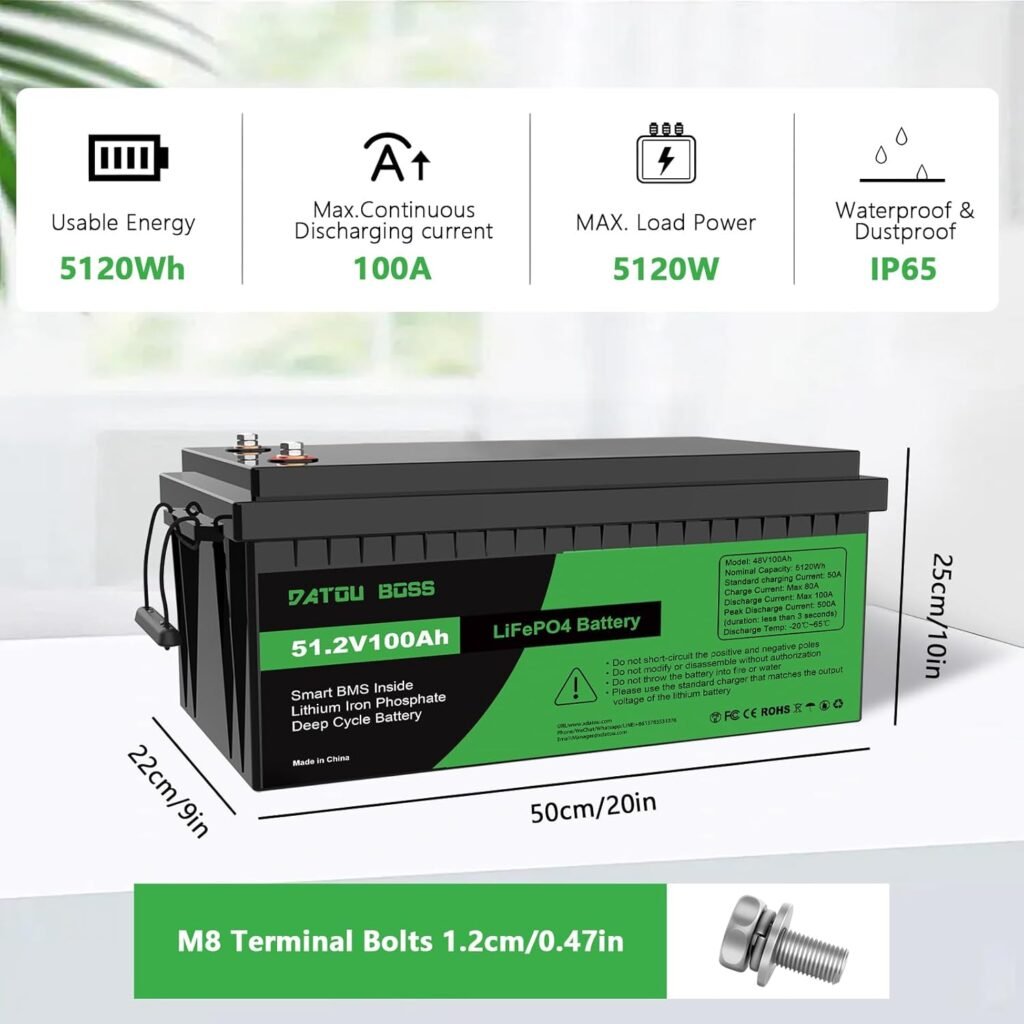
| Weight | 35 kg (77 lbs) |
| Protection rating | IP65 (waterproof/dust resistant) |
| Typical applications | Golf carts, RVs, solar systems, backup power, trolling motors, boats, campers |
What this battery is designed for
You want a durable, light, and safe power source that works for mobile and stationary uses. This DATOUBOSS battery is marketed for golf carts, solar energy storage, RVs, trolling motors, and camping gear, so it’s intended to be versatile and suitable for outdoor mobile environments. You’ll appreciate how it balances high cycle life and ease of installation compared with heavier lead-acid alternatives.
Built-in Smart BMS and safety features
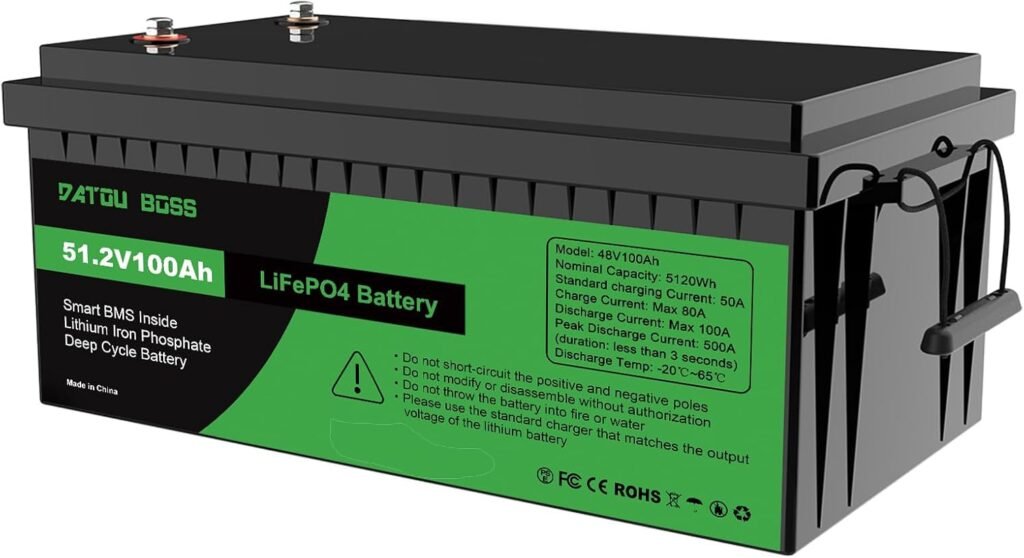
You’re probably most concerned about safety and longevity, and the built-in smart BMS is central to that. The battery ships with a smart battery management system that protects the pack from overcharge, over-discharge, overcurrent, overload, short circuits, and extreme temperature conditions. The product description mentions automotive-grade LiFePO4 cells that are UL-tested and certified, which is an important safety indicator for real-world use.
Note on BMS current specification: the product name lists a built-in 200A BMS while the detailed description states a 100A smart BMS. You should verify the specific BMS current rating with the seller before purchase because the continuous and peak current capacity determines suitability for high-draw motors or aggressive loads. If you plan to run high-current devices (like large trolling motors), confirm the exact BMS rating and whether the battery supports higher ongoing discharge.

Energy capacity, voltage, and real usable power
You want to understand how much usable energy you’re actually getting and how it translates into runtime. The battery is a 48V-class pack with 100Ah capacity; manufacturers often quote 51.2V pack nominal voltage for LiFePO4 chemistry because a 16-cell LiFePO4 series pack sits around 51.2V nominal. That is why the pack is often described as 5120 Wh (51.2V × 100Ah). In practice, the usable energy depends on the depth of discharge you allow — this battery promises 100% depth of discharge capability, but for maximum lifecycle you may want to maintain a shallower DOD.
You can also expand capacity: the unit supports series and parallel connections to create larger packs. The manufacturer notes you can combine up to a 4P1S configuration to reach 48V (51.2V) 400Ah, yielding a theoretical 20.48 kWh system. That kind of scale is useful if you need backup power for a house or long-off-grid runs.
Lifespan, cycle life, and cost-effectiveness
You need long-term value, not just short-term savings. The DATOUBOSS battery claims 15,000+ deep cycles and a design life around 10 years, which is significantly longer than typical lead-acid batteries. If those cycle numbers apply under realistic conditions, you’ll enjoy many years of heavy use before you start to consider replacement.
Be realistic: very high cycle claims often depend on specific testing conditions like shallow discharge depths, controlled temperatures, and conservative charge regimes. Even so, LiFePO4 chemistry generally provides many times the cycle life of lead-acid, and the 100% DOD capability combined with low maintenance translates to lower long-term total cost of ownership.
Weight, form factor, and durability
You want portability and a battery that’s easy to install. At about 35 kg (77 lbs), this pack is roughly one-third the weight of a comparable-capacity lead-acid pack, making installation, mounting, and removal considerably less daunting. The compact footprint helps you fit it into golf carts, RV compartments, or under bench mounts without consuming as much space as lead-acid solutions.
It’s also rated IP65, which means you get good protection against dust and low-pressure water jets. That makes it suitable for outdoor and mobile environments where vibration, splashes, and occasional exposure to weather are factors.
Performance in real-world use
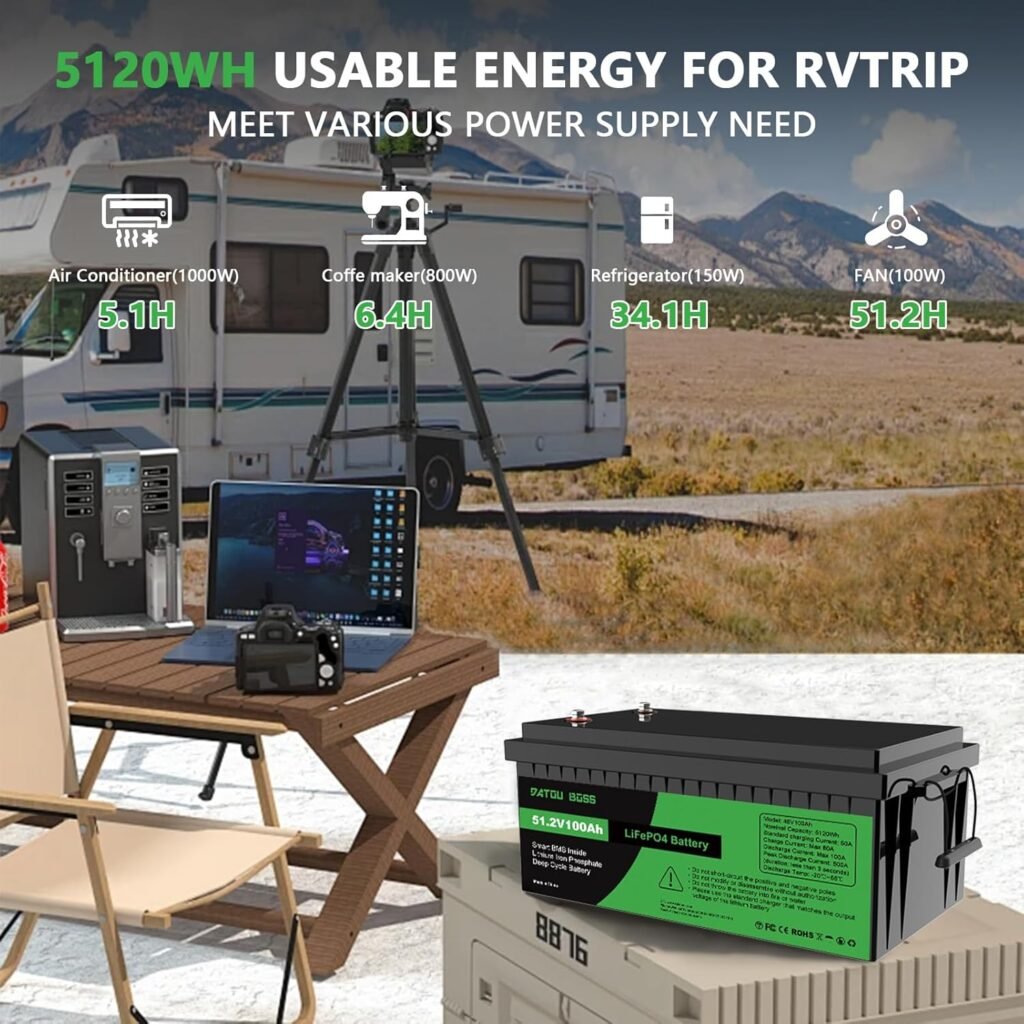
You’re likely to measure battery performance by the runtime you get under different loads. For light loads (12–200 W), you’ll get many hours of runtime, while moderate loads typical of trolling motors (hundreds of watts) will give you several hours depending on motor draw and conditions. For golf carts and RV traction use, your range will vary with terrain, weight, and throttle habits.
Remember that ambient temperature influences performance: LiFePO4 performs best in moderate temperatures and loses usable capacity when extremely cold. The built-in temperature protections in the BMS help prevent charging or discharging outside safe ranges, preserving battery health, but they may reduce usable power in very cold conditions.
Charging behavior and efficiency
You want clear guidance on how to charge this battery for longevity and speed. LiFePO4 batteries charge more efficiently than lead-acid types and accept higher charge currents without as much stress. The manufacturer’s BMS will manage cell balancing and cut off charging when safe limits are reached. Use an appropriate LiFePO4 charger or a programmable charger that supports proper charge voltages (typically around 14.4–14.6V equivalent per 12V module — for a 48V pack follow the manufacturer’s specified bulk and float voltages) and current profiles for best results.
Charge efficiency is generally high for LiFePO4, so you’ll waste less energy during charging and get more usable energy out compared with lead-acid systems.
Series and parallel expansion — how to scale the system
You’ll want to know how to scale capacity for larger systems. The DATOUBOSS pack supports series and parallel connections. Series configurations are how you reach higher voltages (e.g., stacking 4 × 12.8V modules to make a 51.2V pack), while parallel connections increase amp-hour capacity. The product details mention expansion up to a 4P1S configuration producing 48V 400Ah (20.48 kWh), letting you scale according to your load and runtime needs.
If you plan to parallel multiple packs, make sure they are identical units, at the same state of charge, and wired with equalizing leads to prevent imbalances. Pairing packs of different ages or states of charge without proper management can cause uneven wear or trigger protection mechanisms.
Installation and wiring: practical tips
You need safe, reliable installation guidance—especially for mobile use. Mount the battery on a stable surface with vibration damping where possible, and keep terminals protected from accidental shorts. Use appropriately sized battery cables and correct torque on terminal bolts to ensure low-resistance connections. For series/parallel setups, keep cable lengths balanced to minimize current distribution differences.
Because the pack is relatively lightweight, you can handle installation alone, but having a second person will make aligning and securing the battery easier and safer. Also verify the BMS current rating (100A vs 200A discrepancy) to ensure wiring and fusing match the expected continuous and peak currents.
Maintenance and routine checks
You want low-maintenance power, but a little care keeps the pack healthy. LiFePO4 batteries require far less maintenance than lead-acid batteries, but you should still periodically check terminal tightness, inspect for physical damage, ensure vents or enclosures are clear of debris, and confirm that the BMS has not triggered protective cutoffs. Monitor battery voltage and, if possible, use a battery monitor that tracks state of charge (SOC) and cycle counts so you can detect trends and avoid surprises.
If you store the battery long-term, keep it at around 40–60% charge in a cool, dry environment and top it up periodically per manufacturer recommendations.
Safety considerations and common cautions
You want to avoid mistakes that could shorten battery life or create hazards. Never short the battery terminals, always use proper fusing near the battery, and avoid charging at temperatures outside the recommended range. While LiFePO4 cells are much safer than many other lithium chemistries, you should still respect the following:
- Verify and match BMS and wiring current ratings before connecting high-draw loads.
- Use chargers that have a LiFePO4 profile or can be set to manufacturer-specified voltages.
- Keep the battery away from direct, prolonged high heat sources.
- If the BMS indicates a fault, follow the manufacturer’s fault diagnosis steps and avoid repeatedly attempting to charge/discharge until the issue is resolved.
Typical applications and how it performs in each
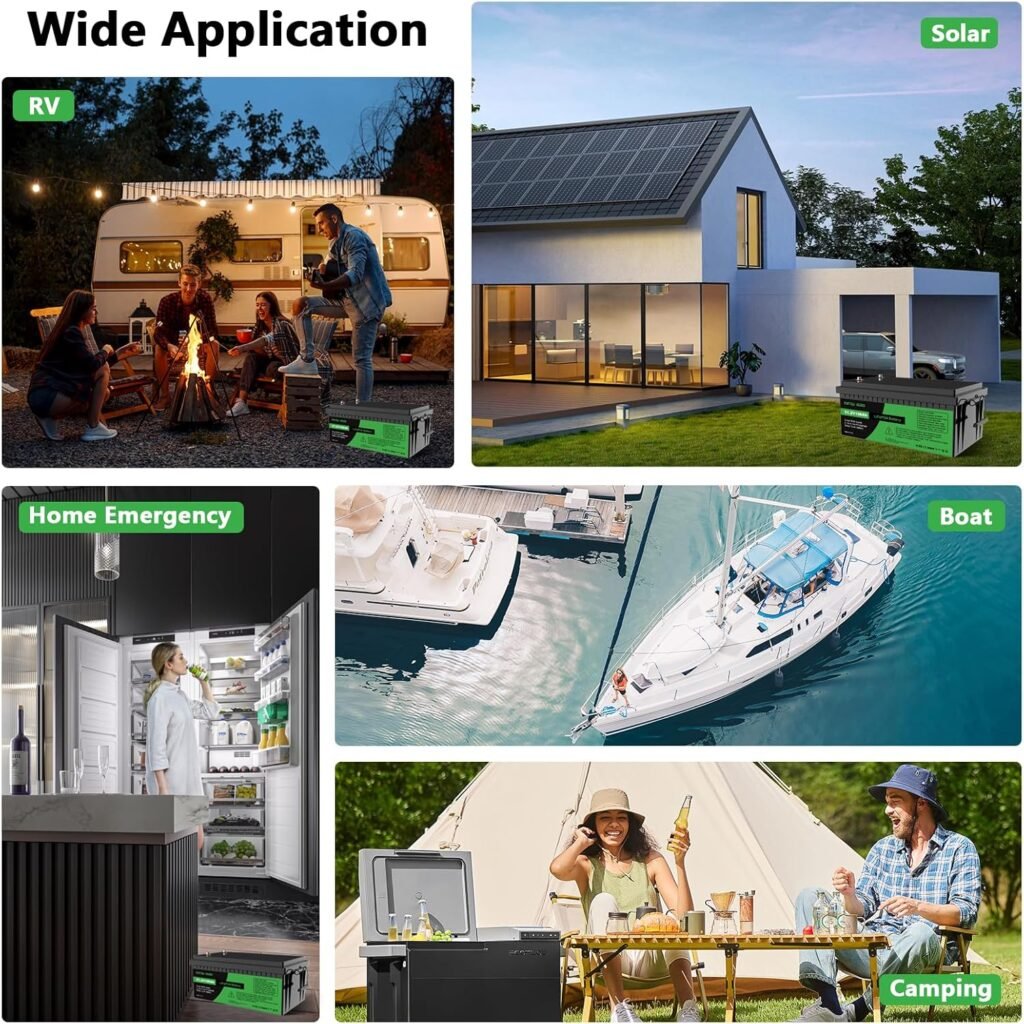
You want to match the battery to use cases so you get the best results. Here’s a breakdown of common applications and what to expect.
- Golf carts: You’ll gain weight savings and consistent voltage under load, which often improves range and acceleration compared with lead-acid setups. Be mindful of peak current demands; verify BMS rating.
- Solar home backup: In a 4P1S configuration (expanded), you can build into a substantial 20.48 kWh storage bank for off-grid or backup power. Use a compatible inverter/charger system and proper battery management when paralleling units.
- RVs and campers: Portability, low maintenance, and IP65 protection make this a great choice for mobile living. You’ll appreciate the lighter weight and longer operating life.
- Trolling motors and boats: Strong candidate as long as the BMS continuous/peak current is sufficient for motor draw. Consider external fusing and battery disconnects for marine safety.
- Trolling motors and fishing electronics: The high cycle life and stable output are helpful, but ensure the BMS rating handles peak motor startups.
Pros and cons — what you should weigh
You’ll want a balanced view so you can weigh trade-offs before buying.
Pros:
- High cycle life claims and long design life, reducing long-term cost of ownership.
- Much lighter than equivalent lead-acid solutions, simplifying installation and transport.
- IP65 rating makes it suitable for outdoor/mobile environments.
- Expandable in series and parallel for flexible system sizing.
- Low maintenance and higher charging efficiency compared to lead-acid.
Cons:
- Manufacturer BMS current discrepancy (100A vs 200A) needs verification; high-draw users must confirm exact specs.
- 15,000+ cycle claim may depend on ideal testing conditions; real-world performance might vary.
- Upfront cost is higher than lead-acid, even if lifecycle cost often ends up lower.
- Cold-weather performance can be limited; charging may be disabled by the BMS at low temperatures.
Comparison: DATOUBOSS LiFePO4 vs typical lead-acid
You’ll see the biggest differences if you compare lifecycle, weight, maintenance, and usable capacity. Here’s a simple comparison table to help you quickly evaluate trade-offs:
| Attribute | DATOUBOSS 48V 100Ah LiFePO4 | Typical Lead-Acid Equivalent |
|---|---|---|
| Weight | ~35 kg (77 lbs) | ~100+ kg for equivalent capacity |
| Usable capacity | Near 100% usable (manufacturer claims 100% DOD) | Typically 50% recommended DOD |
| Cycle life | 15,000+ (manufacturer claim) | 300–1,200 cycles depending on type |
| Maintenance | Low | Moderate to high (watering, equalizing charges) |
| Efficiency | High (lower charge losses) | Lower (higher charge losses) |
| Cost (initial) | Higher | Lower |
| Cost (over life) | Typically lower total cost of ownership | Higher long-term cost |
You should use this table as a guide: your actual operating costs depend on daily cycles, depth of discharge, and environmental conditions.
How to choose the right BMS/current capacity for your load
You need to size the battery system to match continuous and peak power draws. If the product you’re looking at truly contains a 200A BMS, that supports higher continuous currents and larger peak draws than a 100A BMS. For motors or inverter-start currents, you should:
- Calculate continuous current: For a 48V system, a 200A continuous capability is 9.6 kW (48V × 200A), whereas 100A equates to 4.8 kW. Match continuous loads to the lower of the inverter rating or BMS continuous rating.
- Account for motor startup: Many motors draw several times their nominal current at startup. Confirm whether the BMS supports surge currents and for how long.
- Use appropriate fusing: Install fuses or circuit breakers sized to protect wiring and battery from short circuits and runaway currents.
If you’re unsure, ask the seller to confirm BMS ratings and surge handling, since the product information shows conflicting numbers.
Practical charging setup examples
You want clear examples so you can visualize the system you’ll build.
Example 1 — Golf cart:
- Battery: single DATOUBOSS 48V 100Ah
- Charger: dedicated LiFePO4 48V charger sized to CC current of around 20–50A for faster charging without harming cells
- Expected use: multiple short cycles per day; charge nightly
Example 2 — Small off-grid RV solar:
- Batteries: two or more units in parallel for extra Ah (verify identical packs)
- Inverter: 48V inverter sized to continuous draw needs (e.g., 3–5 kW)
- Solar charge controller: MPPT rated for system voltage and PV input; ensure compatible charge voltages for LiFePO4
Example 3 — Home backup large capacity:
- Batteries: four units configured to reach 48V 400Ah (4 × 100Ah in parallel where applicable as per manufacturer instructions)
- Inverter/charger: 48V hybrid inverter capable of managing grid/solar/backup
- Management: use a battery monitor and BMS communications if available for charge/discharge logging and alerts
Troubleshooting and what to do if the BMS trips
You want to know practical steps when the protection system activates. If the BMS disables charging or discharging:
- Check voltage and individual pack status — ensure state of charge is within acceptable ranges.
- Inspect for obvious issues — loose terminals, corroded connectors, or signs of overheating.
- Review recent loads — did a sudden short or motor stall cause a high-current event?
- Reset per manufacturer guidance — some BMS units reset automatically after conditions normalize; others need manual intervention.
- Contact vendor support if faults persist — BMS-level faults often require vendor diagnostics or replacement modules to restore safe operation.
Environmental and storage guidelines
You want to keep battery health high during storage and in varied environments. Store the battery in a cool, dry place ideally between 15–25°C (59–77°F) and maintain around 40–60% state of charge for prolonged storage. Avoid prolonged storage at full charge or fully depleted states. In cold climates, keep the battery in insulated enclosures or use controlled indoor storage to avoid BMS-imposed charging restrictions at low temperatures.
Frequently asked questions you might have
You want fast answers to common concerns before buying.
- Will this battery work as a drop-in replacement for lead-acid? Often yes for voltage and capacity, but you must confirm physical dimensions, mounting, terminal locations, and BMS current limits. Also check on-charger compatibility.
- Can you parallel different model units? You should only parallel identical battery models with matching voltages, capacities, and BMS characteristics. Mismatched packs cause imbalance and stress.
- How fast can this battery charge? Charging speed depends on the charger current rating and BMS limitations. Check the seller’s recommended charge current and set your charger accordingly.
- Is 15,000 cycles realistic? That’s a manufacturer claim under specific conditions. Expect many thousands of cycles, but actual life will vary with depth of discharge and operating environment.
Final thoughts and recommendation
You’re looking for a safe, lightweight, and long-lived power source, and the DATOUBOSS 48V 100Ah LiFePO4 pack checks many of those boxes: high claimed cycle life, good portability, IP65 protection, and expandable configurations. Before you commit, confirm the BMS continuous and peak current rating (100A vs 200A discrepancy in the listing), verify the charger/inverter compatibility, and ensure your intended loads won’t exceed BMS limits. If you need a battery that reduces maintenance and offers long-term savings compared with lead-acid, this pack is a strong candidate — just verify the exact specifications with the seller so you can match the system to your real-world needs.
If you want, you can tell me what you plan to power (motor sizes, inverter wattage, or daily energy needs) and I’ll help you calculate runtime estimates and whether a single pack or a multi-pack setup is the better choice for your setup.
Disclosure: As an Amazon Associate, I earn from qualifying purchases.