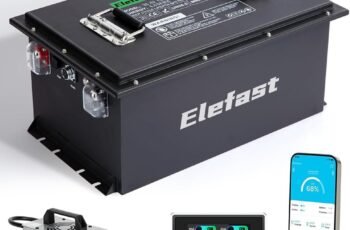
?Are you trying to decide if the CHINS 48V Lithium Golf Cart Battery, 48 Volt 100Ah LiFePO4 Battery, Built-in Bluetooth 200A BMS, Includes 48V 10A Lithium Battery Charger, Perfect for Golf Carts, Trolling Motors, Marine is the right upgrade for your cart, boat, or off-grid setup?

Quick look at what this battery offers
You can expect a modern LiFePO4 pack with a lot of useful features bundled in. The battery ships with a built-in 200A BMS, Bluetooth monitoring, and a 58.4V 10A charger, which makes it more of a ready-to-use power solution than a bare cell pack.
Key claims summarized
This model claims 100Ah at 48V (5.12 kWh), more than 2,000 deep cycles, app-based real-time data via Bluetooth, and fast charging from 0–100% in about 10 hours with the supplied 10A charger. These are strong selling points if you want reliability, low maintenance, and modern monitoring features.
Technical specifications (at-a-glance)
Below is a compact table to help you quickly compare the important numbers and features. You can refer back to this as you read the rest of the review.
| Specification | Value / Notes |
|---|---|
| Nominal Voltage | 48V (58.4V full charge) |
| Capacity | 100Ah (5.12 kWh) |
| Chemistry | LiFePO4 (Lithium Iron Phosphate) |
| BMS | Built-in 200A BMS (max continuous 200A) |
| Peak Discharge | 1000A for 3–5s; 300A ~32s; 600A ~32s (manufacturer claims) |
| Charger Included | 58.4V 10A Lithium Charger (0V wake function) |
| Estimated Range | Up to 30 miles with a 3 kW motor (test claim) |
| Cycle Life | 2000+ cycles (vs. 300–500 for lead-acid) |
| Weight | Significantly lighter (about 30% less than equivalent lead-acid) |
| Size (L×W×H) | 20.47 × 10.59 × 8.66 inches |
| Color | Black, Orange |
| Temperature Protection | High-temp cut-off at 122°F (50°C) |
| Parallel/Series | Parallel allowed; series not supported |
| Use Cases | Golf carts, trolling motors, marine, RV, solar, off-grid |
Why this table helps
If you’re comparing batteries, having the nominal voltage, capacity, BMS rating, physical size, and charging details all in one place makes it easier to match this pack to your application. You’ll want to check physical fit, terminal type, and charging wiring against your vehicle or system before purchase.
Performance and range
You’ll see better usable capacity and more consistent voltage from a LiFePO4 battery compared with traditional lead-acid. That translates into longer range and better performance under load for golf carts and trolling motors.
Range expectations
The manufacturer claims about 30 miles with a 3 kW motor under test conditions. In practice, your results will depend on terrain, passenger weight, stop-and-go driving, motor efficiency, and speed. If your cart typically runs at moderate speeds on relatively flat ground, that 30-mile claim is achievable. If you frequently climb hills or carry heavy loads, expect reduced range.
Power delivery and motor compatibility
With a built-in 200A continuous BMS and high short-term peak capabilities, this battery can handle strong loads. The product notes that 70-lb thrust trolling motors and even an 8 kW golf motor are supported, although high-power draws for extended periods may be constrained by thermal protection and BMS limits. You can confidently run a 3 kW motor for sustained use; anything beyond that should be assessed for duty cycle and wiring capacity.
Charging behavior and included charger
Charging setup matters for battery longevity and convenience. The CHINS pack includes a 58.4V 10A charger designed specifically for LiFePO4 chemistry.
Charger features and timings
The supplied charger brings the battery from 0% to 100% in roughly 10 hours at 10A, which is convenient for overnight charging. It also has a 0V wake function to recover batteries that are in low-voltage protection — useful if a discharged battery needs revival.
Practical charging advice
You should charge the battery after each use rather than letting it sit discharged, which preserves cycle life. If you use the pack daily, an overnight charge is reasonable. If you store the battery for long periods, leave it at around 40–60% state-of-charge and charge every few months to prevent deep discharge.
Battery Management System (BMS) and safety
Built-in protections are a major advantage of modern LiFePO4 packs. The CHINS battery’s BMS handles many critical safeguards so you don’t have to micromanage charge cycles.
What the 200A BMS protects against
The BMS is designed to protect you from overcharge, over-discharge, short circuit, and over-current conditions. It also includes high-temperature cut-off protection that prevents charging above 122°F (50°C), which decreases risk in hot environments. This makes the pack significantly safer than bare lead-acid batteries that lack active protection.
Peak current handling and real-world implications
Manufacturer figures list 1000A peaks for 3–5 seconds and other temporary high-current tolerances (e.g., 300A and 600A for about 32 seconds). Those peaks matter if you need a strong startup current for high-torque motors or winches. However, sustained draws should stay within the continuous 200A rating to avoid triggering protections or overheating.
Bluetooth APP and monitoring
You’ll appreciate modern monitoring when you don’t have to guess battery state. Bluetooth and a dedicated app are included so you can check the battery in real time.
What the app shows and how it helps
The app can display voltage, state-of-charge (SOC), current, temperature, and error codes in real time. That means you can monitor charge status from inside your garage or while on the road, reducing surprises and helping you plan charging stops or avoid over-discharge.
Troubleshooting Bluetooth issues
If you can’t connect, make sure Bluetooth on your phone is enabled and that you’re close enough to the battery (Bluetooth range is typically about 10–30 feet depending on obstructions). Reboot the phone and the battery monitor if necessary; sometimes a firmware update in the app improves stability.
Durability and lifecycle
Longer life is a major argument for LiFePO4 over lead-acid. You’ll replace this battery far less often than traditional flooded, AGM, or gel batteries.
Cycle life and long-term value
CHINS claims 2000+ cycles; compared to lead-acid’s 300–500 cycles, that’s a substantial lifetime advantage. Even though the upfront cost is higher than lead-acid, the total cost of ownership typically becomes lower because you replace batteries less often and you don’t need regular watering or equalization.
Weight and handling
This LiFePO4 battery is about 30% lighter than a comparable lead-acid pack. You’ll find it easier to lift and install, and the weight savings can improve handling and efficiency in light vehicles like golf carts and small boats.
Installation and compatibility tips
You’ll want to confirm a few things before swapping this pack into your vehicle or system. Physical fit, terminal compatibility, and electrical connections determine whether installation is straightforward or requires modification.
Mechanical fit and wiring
The battery size (20.47 × 10.59 × 8.66 inches) and mounting points may differ from your original battery. Test-fit the battery in your compartment before finalizing mounting hardware. Use appropriate wiring gauge for the continuous amps (200A) and ensure fuses or circuit breakers are in place for safety. If you’re not comfortable wiring high-current DC systems, hire a professional.
Parallel connections only — no series stacking
This CHINS battery does not support series connections; it can be connected in parallel to increase capacity but not to increase voltage. If you need higher voltage, you’ll need an alternative approach or a different product that supports series connection.
Safety and handling
You won’t need watering, corrosive acid management, or venting as with flooded lead-acid batteries, but safe handling is still essential.
Temperature, charging, and storage
Avoid charging above 122°F (50°C) and keep the battery out of direct extreme heat. For storage, keep it at about 50% charge in a cool, dry place and recharge every few months. While LiFePO4 chemistry is more stable than other lithium types, you should still follow standard battery safety practices: secure mounting, insulated terminals, and proper circuit protection.
Fuses, breakers, and wiring
Install fuses or breakers near the battery on the positive lead and size them based on expected continuous current plus a margin. Use high-quality terminals and corrosion-resistant connectors. Proper wiring protects both the battery and your vehicle.
Real-world use cases and suitability
You’ll find this battery versatile for many applications beyond golf carts. The included charger and built-in BMS make it attractive for multi-use installations.
Golf carts
This battery is designed primarily for golf carts and delivers excellent upshift in range and performance compared to lead-acid. If your cart runs a 3 kW motor, expect a comfortable full round or more on a single charge under normal conditions.
Trolling motors and marine use
For trolling motors up to 70 lbs thrust and similar demands, the high discharge capability is a strong match. For marine use, confirm terminal protection and corrosion resistance; marine environments may require additional sealing and hardware.
RV, solar, and off-grid
You can use the pack for small solar energy storage, RV house loads, and off-grid systems. The built-in BMS and 0V charger wake function make the battery convenient for intermittent use. Just ensure your inverter and system controllers match the 48V nominal voltage.
Maintenance and care
You won’t have to perform watering or acid maintenance, but you do need to take steps to protect cycle life and safety.
Best practices for longevity
Charge after use, avoid repeated deep discharges, and keep operating temperatures moderate. If you store the battery for more than a couple weeks without use, leave it at about 40–60% SOC and top up periodically. Use the app to monitor health and spot unusual behavior early.
Handling error codes and faults
If the BMS reports an error, check connections, battery temperature, and charge state first. Many faults are caused by loose connections or extreme temperatures. If the issue persists, contact the seller or authorized agent; CHINS lists only three U.S. agents (CHINS-US, CHINS LiFePO4 Battery, CHINS-STORE), so verify the seller’s authenticity.
Pros and cons — quick guide for decision-making
You should weigh both advantages and practical limitations before replacing your current power source.
Pros
- Long cycle life (2000+ cycles) reduces long-term cost.
- Built-in 200A BMS with robust short-term peak handling.
- Bluetooth and app monitoring for convenience.
- Lighter weight and smaller footprint than lead-acid.
- Charger included (58.4V 10A) with 0V wake function.
- Maintenance free compared to flooded lead-acid designs.
Cons
- Higher upfront cost than lead-acid.
- Does not support series connections (voltage scaling needs other solutions).
- Manufacturer peak current durations are specific and might be overstated in some use-cases; sustained high-power loads can still trigger protections.
- For marine environments, additional protective measures may be necessary to prevent corrosion.
How this battery compares to lead-acid and other lithium options
If you’re upgrading, understanding relative performance helps you make an informed purchase.
Compared with lead-acid
You’ll get more usable capacity, more cycles, faster recharge, zero watering, and lower maintenance. Lead-acid is cheaper initially, but you’ll likely replace those batteries multiple times over the lifespan of one LiFePO4 pack.
Compared with other lithium chemistries
LiFePO4 is more thermally stable and longer-lived than many other lithium chemistries (like NMC). It’s heavier and slightly lower energy density than newer chemistries, but it’s a great balance of safety, lifecycle, and cost for vehicle and stationary applications.
Installation checklist before you buy
You’ll want to confirm a few items before ordering and installing this pack.
- Confirm the physical dimensions fit your battery compartment.
- Check terminal type and polarity orientation.
- Verify your cart/controller is compatible with a 48V nominal system.
- Ensure you have adequate wiring gauge and fuse/breaker protection for 200A continuous.
- Decide if you need parallel capacity expansion; the battery supports parallel connections.
- Buy from authorized sellers (CHINS-US, CHINS LiFePO4 Battery, CHINS-STORE) when in the United States.
Troubleshooting common issues
If you run into problems, these checks will often solve or clarify the situation.
App or Bluetooth not connecting
Ensure phone Bluetooth is on, you’re close enough, and the battery monitor is powered. Reinstall the app or check for firmware updates. Try restarting the battery pack’s monitor (if accessible) and your phone.
Battery won’t charge or shows 0V
Use the included charger’s 0V wake function to bring the battery out of low-voltage protection. If it still won’t charge, confirm charger output with a multimeter and inspect connectors for corrosion or looseness.
Unexpected cut-off during high draw
This usually indicates the BMS protecting from over-current or over-temperature. Reduce continuous load, check wiring for undersized gauge or poor connections, and confirm ambient temperature isn’t too high.
Buying and after-sales considerations
You’ll want warranty and reliable support if problems arise. Confirm seller legitimacy and warranty terms before purchase.
Warranty and support
CHINS typically offers a warranty, but check exact terms and the agent you’re buying from. Because CHINS lists a limited number of U.S. agents, buy through an authorized channel to simplify support or warranty claims.
What to have ready when contacting support
Have your purchase receipt, serial number, and app screenshots of error codes or unusual readings. This will speed up diagnostics and help support give accurate instructions.

Final recommendations — is this battery right for you?
If you want a long-lasting, low-maintenance, higher-performing battery for a 48V golf cart, trolling motor, RV, or small off-grid system, you’ll find this CHINS 48V 100Ah LiFePO4 pack compelling. The combination of a robust BMS, Bluetooth monitoring, included charger, and claimed extensive cycle life means you’ll likely get very good value over time.
Who should choose this battery
You should choose this battery if you want:
- A drop-in replacement for a 48V lead-acid battery with higher usable capacity and less maintenance.
- App-based monitoring to avoid surprises.
- A lightweight, high-current solution for carts, boats, or off-grid projects.
Who should be cautious
If you need to stack batteries in series to increase voltage, this unit won’t support that configuration. Also, if your application consistently draws current well above 200A continuous for long periods, look for a battery with that continuous rating or design a system that limits sustained draw.
Final tips for getting the best performance
To maximize service life and reliability, follow these simple practices.
- Charge the battery after each use and avoid leaving it discharged for long periods.
- Use the app to monitor health and catch issues early.
- Keep the battery and charger out of extreme heat and protected from moisture and salt air.
- Use proper wiring and overcurrent protection sized for a 200A continuous system.
- Buy from authorized dealers to ensure warranty coverage and genuine product.
If you follow these guidelines, the CHINS 48V 100Ah LiFePO4 battery can give you longer life, less maintenance, and better performance than the lead-acid pack it replaces — while the built-in BMS and Bluetooth monitoring help make using and maintaining it straightforward.
Disclosure: As an Amazon Associate, I earn from qualifying purchases.