Have we found the right balance between cranking power and deep-cycle endurance for our marine, RV, and bow-thruster needs?

Our overall take
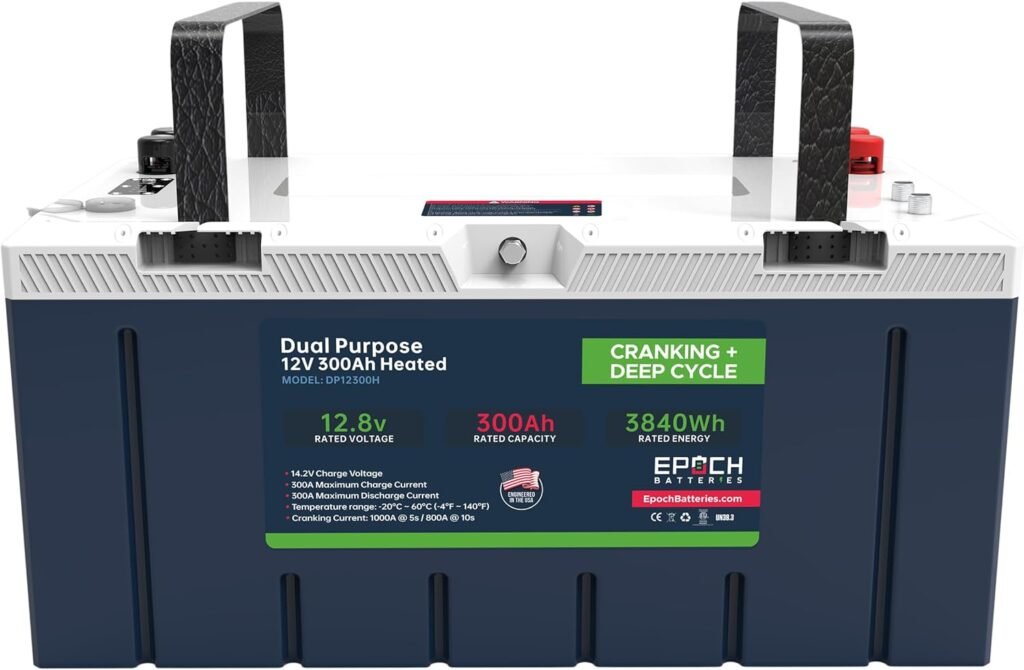
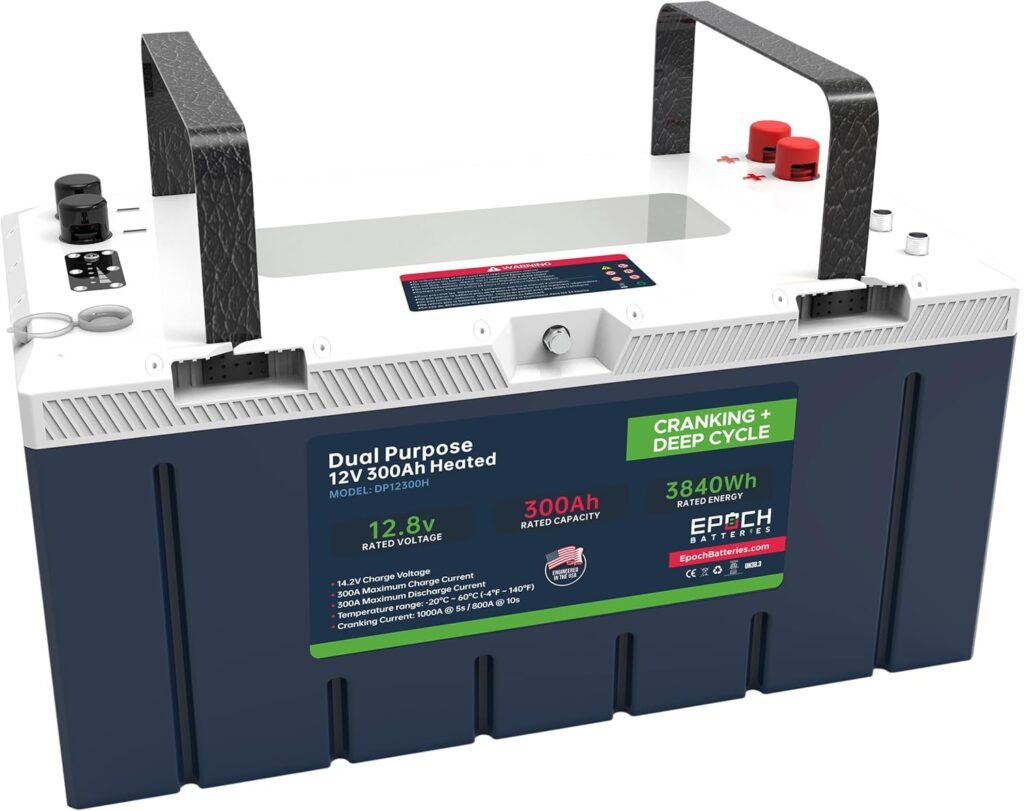
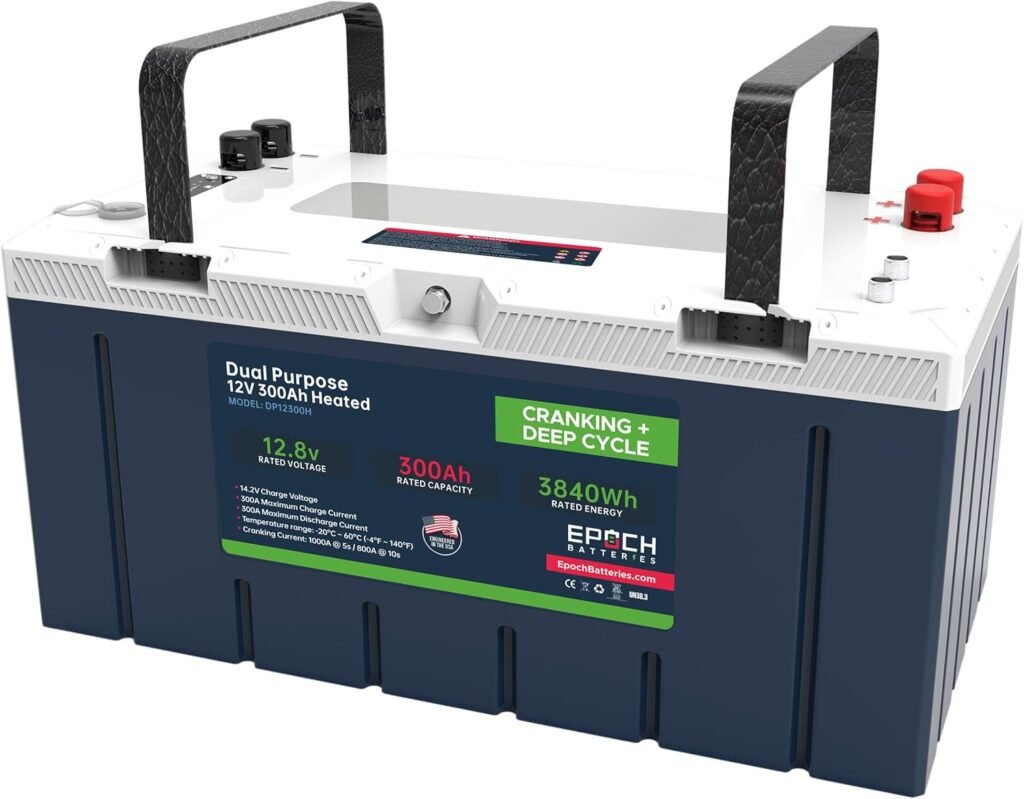
We appreciate batteries that simplify system design while giving reliable performance. The 12V 300Ah Pro Series – LiFePO4 Cranking & Deep Cycle Lithium Battery (Dual Purpose), Group 8D, aims to be exactly that: a heavy-duty, dual-purpose battery with high cranking bursts, long cycle life, integrated heating, and modern communications. We like that it targets both starting loads and sustained service loads without forcing us to pick one role over the other.
Product highlights
We want quick clarity about the most important traits before we commit, and this battery brings a clear set of headline features. It combines dual-purpose capability with a robust BMS, Bluetooth and CAN communications, and an IP67-rated enclosure that’s built for wet environments.
Key features in plain terms
We find it useful to list the standout specs so we can compare at a glance. Here are the essentials we consider most relevant when evaluating this battery:
- Group 8D form factor, making it a drop-in option for systems that accommodate that size.
- Dual-purpose design: intended for both cranking (starting) and deep-cycle use.
- Cranking ability: 1,000A for 5 seconds and 800A for 10 seconds—great for strong starting bursts.
- Built-in Battery Management System (BMS) rated 300A continuous charge/discharge.
- Internal heating to permit safe charging in sub-zero conditions.
- Bluetooth connectivity with iOS and Android apps plus over-the-air firmware updates.
- Victron CANBus communications for integration with Victron Cerbo systems.
- IP67 rating: dustproof and waterproof.
- 6000+ cycle life and maintenance-free operation.
- 11-year manufacturer warranty.
Quick technical breakdown
We like tables when they condense technical information into a usable form. Below is a table summarizing the core specs provided so we can review them quickly.
| Feature | Detail |
|---|---|
| Battery Type | LiFePO4 (Lithium Iron Phosphate) |
| Nominal Voltage | 12V |
| Capacity | 300Ah |
| Usable Energy | ~3.6 kWh (12V × 300Ah) — practically usable across most of the Ah range with LiFePO4 |
| Continuous Discharge / Charge | 300A max continuous |
| Cranking (Peak) | 1,000A for 5 seconds; 800A for 10 seconds |
| Heating | Internal heating element for cold-weather charging |
| Communication | Bluetooth (iOS/Android apps, OTA firmware updates); Victron CANBus compatible |
| Enclosure Rating | IP67 (dust and water resistant) |
| Cycle Life | 6000+ cycles (manufacturer claim) |
| Maintenance | Maintenance-free |
| Warranty | 11 years |
| Form Factor | Group 8D (physical compatibility with many heavy-duty applications) |

Performance expectations
We want to know how this battery behaves day-to-day, both for starting engines and for running loads. The specs suggest serious capability for both functions, and that dual-purpose mission is the product’s main appeal.
Cranking performance
We expect cranking to be a strong suit. A 1,000A burst for up to 5 seconds is sufficient for most gasoline and many diesel starters encountered in marine and RV applications. The 800A for 10 seconds rating provides an extra margin when longer cranking is necessary. Because the BMS supports high short-term current, we can rely on quick engine starts and demanding bow thruster bursts without the voltage collapses we might see with undersized lead-acid batteries.
Deep-cycle performance
We like that the battery can sustain continuous discharge and charge currents up to 300A. At 12V, that translates to roughly 3.6 kW continuous power delivery, which is plenty for high-draw inverters, windlasses, thrusters, or extended house loads on boats and RVs. The LiFePO4 chemistry also means we can use a much higher percentage of the rated capacity (often 80–100% usable) compared with lead-acid, which improves effective runtime.
Capacity and real-world runtime examples
We find examples helpful to visualize how a 300Ah battery translates into load runtimes. Using the nominal energy of about 3,600 Wh (3.6 kWh), here are typical use-case approximations.
- Running a 100W continuous laptop/fridge electronics: ~36 hours (3,600 Wh / 100 W), accounting for inverter inefficiency we’d expect somewhat less.
- Powering a 500W inverter load: ~7 hours (3,600 Wh / 500 W) before recharging.
- Supporting a 1,500W microwave or high-power induction cooktop for short periods: short bursts are possible thanks to the high continuous current capability, but sustained high-wattage use will drain the battery quickly.
We should account for inverter inefficiencies (typically 85–95%), voltage conversion losses, and any system losses when planning real-world runtimes.
Charging and charging compatibility
We prefer to control charging carefully to preserve battery life. LiFePO4 batteries are generally more forgiving than lead-acid, but they still benefit from proper charge profiles and adequate current handling.
Charging currents and limits
We must respect the built-in 300A maximum continuous charge rating. That gives fast charging capability when using an appropriately sized charger or DC-DC converter. When using an inverter/charger or multi-stage shore charger, we should ensure settings are compatible with LiFePO4 chemistry.
Recommended charge settings (general guidance)
We should verify exact manufacturer recommendations, but typical charge settings for LiFePO4 that we use in practice are:
- Bulk/absorb voltage: around 14.2–14.6V (manufacturer-specific).
- Float voltage: not always necessary, often set around 13.4–13.8V or disabled depending on the system.
- Charge termination: charge current taper typically ends when the battery reaches a high state of charge; CV stage duration is minimal compared to lead-acid.
We emphasize that we should confirm exact voltages and stages with the manufacturer’s manual before configuring charger systems.
Cold-weather charging
The internal heating element is a real advantage. LiFePO4 batteries should not be charged below a certain cell temperature without protection, because charging at very low temperatures can damage cells. The internal heater lets the battery warm itself to a safe charging temperature, enabling charging in sub-zero conditions without external heaters or manual intervention. That feature is particularly useful for year-round marine use and cold-climate RVing.
Integration, monitoring, and firmware
We value visibility and the ability to keep firmware current. This battery’s connectivity helps with both.
Bluetooth and app control
We like the Bluetooth interface for quick local monitoring and firmware updates using iOS or Android devices. Over-the-air firmware updates mean we can get bug fixes or feature updates without returning hardware, making long-term maintenance simpler.
Victron CANBus compatibility
For systems using Victron components, the CANBus compatibility is a strong plus. Integrating the battery string to a Victron Cerbo or similar allows centralized monitoring, alarms, and better system coordination. If we plan a multi-battery bank with Victron, the ability to see battery state, temperatures, and BMS status on the system’s display simplifies management.
Environmental protection and durability
We like equipment that survives marine exposure. An IP67 rating indicates a sealed package that protects against dust ingress and temporary immersion in water. That makes the battery a good fit for salty environments, bilge locations, or outdoor installations when properly mounted and ventilated.
Cycle life and warranty
A 6000+ cycle life means we can expect many years of daily cycling if we operate the battery within recommended parameters. The 11-year manufacturer warranty is substantial and gives us confidence in the long-term investment—especially important for heavy appliances and boat service where replacement costs and downtime are significant.
Installation and wiring tips
We want installation to be safe and straightforward. Here are practical tips we prefer to follow and recommend.
Mounting and location
- Mount the battery in a secure location that limits excessive vibration and protects from mechanical damage.
- Keep the battery in a relatively temperate compartment if possible to minimize extreme hot conditions, though the IP67 rating protects against moisture.
- Maintain clear access to battery terminals and the BMS for inspection or service.
Wiring and fusing
- Use properly sized cables for 300A continuous use. Voltage drop becomes significant at high currents, so minimize cable lengths and use thick-gauge copper conductors.
- Protect the positive conductor with an appropriately rated fuse or circuit breaker close to the battery to reduce circuit length without overfusing.
- Ensure proper torque on terminals per the manufacturer’s specs to avoid heating at connections.
Paralleling and series connections
- Paralleling multiple 12V batteries is possible to expand Ah capacity, but we should match batteries by age, capacity, and state of charge. Mixing new and old batteries is not recommended.
- For higher voltages (24V/48V), series-connecting 12V batteries can work, but we must ensure the BMS supports series configurations and that all batteries are identical and monitored—CANBus integration helps in multi-battery strings.
- Use battery balancing systems or matched communications (CANBus) to manage state of charge across a string when paralleling/series-connecting.
Safety considerations
We take safety seriously, so we note both advantages and common safety practices.
- LiFePO4 chemistry is one of the safer lithium variants with lower thermal runaway risk than some other lithium chemistries.
- The built-in BMS protects against overcurrent, overvoltage, undervoltage, and temperature extremes.
- We still follow good practices: proper fusing, secure mounting, adequate ventilation of the battery compartment, and keeping terminals clean and protected from accidental short circuits.
Pros and cons summary
We find a balanced list helps when comparing options.
Pros
- Dual-purpose design: capable of both high-cranking bursts and sustained deep-cycle service.
- High cranking ability: 1,000A for 5 seconds and 800A for 10 seconds is substantial for starters and thrusters.
- High continuous current capability: 300A continuous for charging/discharging gives strong inverter and heavy-load support.
- Internal heater enables charging in sub-zero environments.
- Bluetooth and OTA firmware updates simplify management and keep the battery current.
- Victron CANBus compatibility makes it ideal for modern systems with centralized monitoring.
- IP67 rated enclosure for marine and outdoor durability.
- Long cycle life (6000+ cycles) and an 11-year warranty add long-term value.
- Maintenance-free operation reduces upkeep.
Cons / considerations
- Group 8D sizing may require larger compartments; we should confirm physical fit in our application.
- Initial cost for high-quality LiFePO4 batteries is higher than equivalent lead-acid, but lifecycle cost can be lower.
- Proper charger configuration is required; we must ensure chargers and charging sources are LiFePO4 compatible.
- When paralleling or series-creating battery banks, we need to match batteries carefully and follow best wiring practices.
Comparison with lead-acid and other lithium chemistries
When weighing a LiFePO4 battery against alternatives, several factors guide our choice.
Versus lead-acid (flooded/AGM/Gel)
- Usable capacity: LiFePO4 typically allows deeper discharge (often to 80–100% usable), while lead-acid is commonly limited to 50% or less for longevity. To match 300Ah LiFePO4 usable capacity, lead-acid may require 600Ah or more.
- Weight and size: LiFePO4 is significantly lighter for the same usable energy, which reduces payload and improves vessel trim.
- Cycle life: LiFePO4’s 6000+ cycles far exceeds typical lead-acid life spans, decreasing lifetime replacement needs.
- Charging speed: LiFePO4 accepts higher charge currents and charges faster from a given charging source.
- Cost: Upfront cost higher for LiFePO4, but total cost of ownership often lower across battery life.
- Maintenance: LiFePO4 is maintenance-free compared to some flooded batteries that require watering and equalization.
Versus other lithium chemistries (NMC, LCO)
- Safety: LiFePO4 is more thermally stable and safer than many high-energy-density lithium chemistries.
- Cycle life: LiFePO4 typically offers longer cycle life at the cost of slightly lower energy density.
- Suitability for heavy-duty/cranking: LiFePO4’s ruggedness and high current capacity suit dual-purpose roles better than some high-energy cells optimized only for energy density.
Use-case examples and sizing guidance
We find concrete examples helpful to match this battery to common scenarios.
Single-battery systems
- Small-to-medium boat house bank: 12V 300Ah as a house battery gives several kilowatt-hours of usable energy, enough for lights, electronics, small fridge, and occasional inverter use for tools or a microwave for limited durations.
- Weekend RVing: For weekend trips without heavy AC use, a single 300Ah LiFePO4 battery will provide extended autonomy for lights, heaters (if DC or inverter-driven), phone charging, and small appliances.
Multi-battery banks
- Larger house loads or liveaboard boats: Paralleling two or more 12V 300Ah batteries doubles or triples capacity, giving greater runtime and redundancy. With CANBus integration, we can monitor and manage a multi-battery system more effectively.
- Higher-voltage systems: Series pairs can make 24V banks; multiple parallel strings can form 48V banks if desired, but we must ensure matched units and correct BMS/CAN configuration.
Bow thruster and windlass use
- Short, very high-current draws like bow thrusters or windlasses benefit from the battery’s cranking specs and high short-term current capacity. The ability to deliver large bursts reduces voltage sag and improves performance for such devices.
Practical checks before purchase
We prefer to validate a few details before committing to such a battery.
- Confirm physical dimensions and terminal types to ensure fit in our intended compartment.
- Check recommended charge profile values and confirm our chargers/inverters can be programmed accordingly.
- Verify communication needs—if we plan to integrate with Victron equipment, confirm the specific CANBus protocol/version supported.
- Ask about recommended installation accessories (e.g., fuse specs, busbars, communication cables) and whether they’re included or sold separately.
Maintenance and long-term care
We appreciate batteries that require minimal ongoing effort.
- Routine inspections: Check physical connections for corrosion and ensure terminals stay tight.
- Firmware updates: Use Bluetooth and OTA features as recommended to keep the BMS firmware current.
- Avoid deep discharges below manufacturer recommendations—LiFePO4 is tolerant, but extreme conditions shorten life.
- Store charged and at moderate temperatures if the battery will sit idle for long periods.
Cost and value proposition
We like to think about lifetime costs rather than just upfront price. Although LiFePO4 typically costs more initially than lead-acid, the higher upfront investment is offset by much longer cycle life, reduced maintenance, smaller size and weight, and better usable capacity. With an 11-year warranty and a 6000+ cycle claim, this battery looks like an economical choice over the long haul for frequent users.
Frequently asked questions (FAQ)
We anticipate common concerns and answer them in practical terms.
Q: Can we use this battery as both a starter and a house bank? A: Yes—the battery is marketed as dual-purpose with strong cranking capability and deep-cycle performance. It’s sized and rated to handle starter bursts and sustained loads.
Q: Is it safe to charge in freezing temperatures? A: The internal heating element allows charging at sub-zero temperatures by warming the cells to a safe charging temperature. We still recommend following the manufacturer’s guidelines about ambient temperature ranges.
Q: Can we parallel multiple batteries for more capacity? A: Yes, parallel operation is common, but we advise using identical batteries and matching states of charge when connecting. CANBus integration helps with monitoring when using multiple units.
Q: How does the 300A continuous rating translate to usable power? A: At 12V, 300A continuous equates to roughly 3.6 kW continuous power delivery. That’s the upper limit for sustained discharge from the battery; short bursts can be higher depending on BMS allowances.
Q: Will this battery fit in our old 8D lead-acid tray? A: The Group 8D designation indicates form factor compatibility, but always confirm dimensions and terminal orientation against your physical tray and mounting points.
Q: Do we need a special charger? A: We should use a charger with a LiFePO4-compatible profile. Many modern chargers and inverter/chargers support LiFePO4 settings; consult the charger documentation and the battery manufacturer’s recommended voltage/current settings.
Final verdict
We find this product compelling for anyone who needs a robust, dual-purpose 12V battery for marine, RV, or other heavy-duty applications. The combination of 300Ah capacity, high cranking currents (1,000A @ 5s), 300A continuous current capability, internal heating for cold-weather charging, Bluetooth and Victron CANBus compatibility, IP67-rated housing, long cycle life, and an 11-year warranty makes it a strong candidate for both starting and house duties. With proper installation, compatible chargers, and good system design, this battery delivers performance, safety, and longevity that can outshine lead-acid alternatives over the long term.
If we’re building a modern battery bank for demanding use—particularly where cold-weather charging, high cranking demands, or Victron integration matter—this battery deserves serious consideration.
Disclosure: As an Amazon Associate, I earn from qualifying purchases.