If we’re trying to stretch every dollar without sacrificing reliability, a few LiFePO4 picks stand out this year. We’ll compare a compact 20Ah pack for small loads, a budget-friendly 4S1P 18500 cell set for DIY builds, and a scalable 12V 100Ah option with Bluetooth. We’ll weigh cycle life, BMS protections, and real-world performance. By the end, we’ll know which delivers the best value—and which use cases each quietly excels at.
Key Takeaways
- LiFePO4 18500 3.2V 1000mAh: honest capacity, 1,500 cycles, ideal for solar lights/flashlights; ensure LiFePO4 charger compatibility.
- 12V 100Ah LiFePO4 (Group 24): 1.28 kWh, Bluetooth BMS, scalable to 20.48 kWh, fast charging; not for starting or golf carts.
- ECO-WORTHY 12V 20Ah: 3,000+ cycles, lightweight with BMS, series up to 4, unlimited parallel; great value for small off-grid loads.
- Prioritize BMS protections, temperature cutoffs, and certifications (UN38.3, UL 2271, CE) for safe, reliable budget performance.
- Match charge settings to LiFePO4 specs, operate in moderate temperatures, and verify series/parallel support for future expansion.
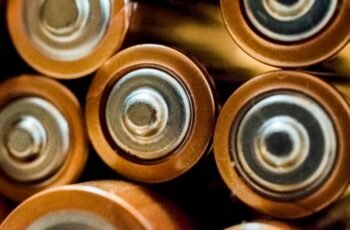
LiFePO4 18500 3.2V 1000mAh Rechargeable Solar Batteries (4 Pack)
--
If you’re outfitting solar garden lights and need true 18500-size cells, this 3.2V 1000mAh LiFePO4 4-pack hits the sweet spot for budget reliability. We appreciate the honest 1000mAh rating and 3.2Wh energy—no inflated claims. At 1.97 inches by 0.7 inches, they’re genuine 18500s, not AA or AAA substitutes. They’re built for outdoor solar lights—landscape, garden, and spotlights—and even work in flashlights that accept 18500 LiFePO4. With up to 1500 cycles and low self-discharge, they last and hold charge during storage. They arrive around 30% pre-charged for safe transport; let’s fully charge them before use to maximize longevity.
Best For: Homeowners and DIYers needing true 18500-size LiFePO4 cells for outdoor solar landscape, garden, or spotlight fixtures, and compatible 18500 flashlights.
Pros:
- Genuine 18500 size (1.97″ x 0.7″), 3.2V LiFePO4 with honest 1000mAh/3.2Wh rating
- Long lifespan up to 1500 cycles with low self-discharge for better storage retention
- Safer chemistry and pre-charged (~30%) for transport; reliable for solar light applications
Cons:
- Not AA or AAA size, so incompatible with devices expecting standard household cells
- 1000mAh capacity may be lower than some non-LiFePO4 18500 claims (though more realistic)
- Requires full charge before first use and LiFePO4-compatible charging in devices
12V 100Ah LiFePO4 Deep Cycle Battery (Group 24)


July 14, 2026 2:02 pm
Budget-minded RVers and off‑grid tinkerers will like how this 12V 100Ah Group 24 LiFePO4 packs 1.28 kWh, a 100A BMS, and Bluetooth monitoring into a 23.5 lb case. We get Grade A cells, auto-balancing, and protections for over/under‑voltage, overcurrent, short‑circuit, and high/low temps, plus a discharge disconnect above 300A. It runs from -4°F to 140°F with a 167°F cutoff. Expect up to 1.28 kW per battery and scalable power to 20.48 kWh (4P4S). Charge fast via solar MPPT (≥600W), generator, or 14.6V/20A charger; it’s not for starting or golf carts. Users report tight cell balance, accurate app data, and solid packaging.
Best For: RVers, boaters, and off‑grid homeowners seeking a lightweight, expandable 12V LiFePO4 with fast solar charging, robust protections, and Bluetooth monitoring.
Pros:
- 1.28 kWh per battery with 100A BMS; scalable to 20.48 kWh (4P4S) and up to 20.48 kW system output
- Fast charging via ≥600W solar MPPT, generator, or 14.6V/20A charger; six times faster than typical lead-acid
- Lightweight (23.5 lb) Group 24 form factor with Grade A cells, auto-balancing, and accurate Bluetooth app
Cons:
- Not suitable as a starter or golf cart battery
- High load cutoff above 300A limits very large instantaneous draws
- Operating temperature limits (low-temp cutoff, 140°F max, 167°F high-temp cutoff) may restrict extreme environments
ECO-WORTHY 12V 20Ah LiFePO4 Lithium Battery

July 14, 2026 7:16 am
Need a compact, lightweight pack that still lasts for years? ECO-WORTHY’s 12V 20Ah LiFePO4 (ECO-LFP1220) delivers 3000+ deep cycles and a 10-year lifespan—far beyond 300–400-cycle lead-acid rivals. At about 5.73 lb (3.03 x 7.17 x 6.69 in), it’s easy to mount for RVs, kayaks, fish finders, scooters, and DIY solar.
We like its built-in BMS guarding against overcharge, over-discharge, over-current, and short-circuit while maintaining cell balance. Expect steady voltage, reliable output, and flexible expansion: series up to four, unlimited parallel. Safety creds include UN38.3, UL 2271, and CE. Reviews trend positive (~4.4/5). Check Amazon for the 30-day return policy and warranty details.
Best For: DIY solar builders, anglers, RVers, and portable power users who need a compact, lightweight 12V battery with long cycle life and safe, steady output.
Pros:
- 3000+ deep cycles and ~10-year lifespan—far longer than typical lead-acid (300–400 cycles)
- Lightweight and compact (about 5.73 lb; 3.03 x 7.17 x 6.69 in) with steady voltage and built-in BMS protection
- Flexible system design: series up to 4 identical batteries and unlimited parallel; certified (UN38.3, UL 2271, CE)
Cons:
- Higher upfront cost than comparable-capacity lead-acid batteries
- 20Ah capacity may be insufficient for high-draw applications without adding more batteries
- Warranty specifics require checking the product page; mixed-but-positive reviews indicate some variability in user experience
Factors to Consider When Choosing Cheap Lifepo4 Batteries
As we compare budget LiFePO4 options, we’ll focus on battery chemistry type, cycle life rating, and real-world capacity to assure the specs match actual performance. We’ll also check for a robust built-in BMS with protections like overcharge, over-discharge, short-circuit, and low/high temperature cutoffs. Finally, we’ll weigh the temperature operating range so the battery works reliably in your climate and use case.
Battery Chemistry Type
Why does chemistry matter so much when we’re bargain-hunting LiFePO4 batteries? Because LiFePO4 (lithium iron phosphate) dictates how safely, consistently, and efficiently our budget pick performs. This chemistry is notably thermally stable and far less prone to thermal runaway than cobalt-based Li-ion, giving us peace of mind in hot vans, garages, or engine bays.
LiFePO4’s nominal 3.2V per cell means we’ll see 12.8V packs built as 4S and higher voltages with more series cells; parallel strings raise capacity. It also delivers low self-discharge and handles deep discharges well, so stored batteries stay ready and retain usable capacity. The trade-off: lower energy density makes packs heavier for the same watt-hours. When we weigh price, size, and safety, LiFePO4’s chemistry earns its value.
Cycle Life Rating
How long will a bargain LiFePO4 actually last? The cycle life rating tells us how many full charge–discharge cycles a battery can complete before capacity drops to a set threshold, usually 80% of original. Cheap packs often promise 1,000–2,000 cycles, while better-built rivals reach 3,000–5,000+. Higher numbers usually signal higher-quality cells, a stronger BMS, and tighter balancing—all of which slow capacity fade.
We should also weigh how we’ll use the battery. Shallower cycling boosts effective cycle count, so avoiding full discharges can stretch lifespan. Remember, the published rating is tied to warranty conditions and lab assumptions; temperature, charge rates, and charging routines can shift actual outcomes. When comparing budget options, the cycle life spec is a quick proxy for durability and value.
Real-World Capacity
So what will a “100 Ah” or “1000 mAh” LiFePO4 really deliver once it’s in our gear? Not the label, usually. Real-world capacity drops with higher discharge rates, cold temperatures, and age. Pull harder current and we’ll see less usable mAh than the spec sheet. Leave cells stored too long or run them in the cold, and runtime shrinks further.
LiFePO4 chemistry generally holds capacity well, but cheaper cells can fade noticeably after a few hundred cycles, reducing practical runtime even if they still “work.” To gauge true capacity, we should trust independent test data, discharge curves, and multi-cell pack measurements rather than marketing claims. When in doubt, size up slightly for our load and conditions, and expect some margin between rated and delivered capacity.
Built-In BMS Protections
Even on a tight budget, we can’t skip a solid built-in BMS—it’s the safety net that keeps LiFePO4 cells within safe limits. We want protections for overcharge, over-discharge, overcurrent, and short-circuit, plus smart cutoffs that prevent cell damage and safety risks.
Look for clear discharge ratings; a 100A BMS (or higher) should sustain continuous loads and disconnect if current spikes beyond safe limits. Auto-cell balancing is a must—it equalizes cell voltages during charging, which preserves capacity and consistent performance over time.
We also value a BMS that coordinates series and parallel setups, managing cell voltages, state-of-charge indication, and synchronized safety shutoffs across packs. Transparent specs, proven cutoff logic, and dependable balancing help cheap batteries behave like premium ones—and last longer.
Temperature Operating Range
Why does temperature matter so much with budget LiFePO4? Because these cells behave differently as conditions shift. Most affordable packs operate safely from about -4°F (-20°C) to 140°F (60°C), but performance changes near the edges. In the cold, internal resistance rises and effective capacity drops, so we get less run-time and slower charging. In heat, chemistry ages faster, cycle life shrinks, and protections may trip to prevent thermal damage.
We should look for a spec sheet that highlights an optimal operating zone around 20–25°C for best performance and longevity. It’s a realistic target for indoor use and a benchmark for comparing models. Many value batteries add temperature safeguards—low-temperature protections and high-temperature cutoffs (often around 167°F / 75°C)—which signal thoughtful design and help preserve our investment.
Charging Compatibility
How do we make a budget LiFePO4 pack charge safely and efficiently with our gear? We match the battery’s charging voltage and current to our charger or solar controller to avoid overcharge and undercharge. We also confirm the recommended charge rate—typically 0.5C to 1C—and stay within the specified charging temperature window, often -20°C to 60°C.
A proper BMS matters. We look for a rated BMS that supports our charging source—solar MPPT, AC adapter, or generator—and includes overcharge, over-discharge, and short-circuit protections. That keeps charge cycles controlled and consistent.
We want good data, too. Batteries with accurate, two-way monitoring—state of charge, voltage, amps/watts via an app or display—help us dial charge settings, spot issues early, and optimize runtime without stressing the cells.
Series/Parallel Expandability
When we plan to grow a budget LiFePO4 system, we start by deciding if we need more voltage or more runtime. Series raises voltage while keeping capacity per module the same; for example, stacking 12V batteries gets us 24V or 48V without changing each unit’s Ah. Parallel keeps voltage the same but adds capacity by summing Ah, extending runtime at 12V.
We check each battery’s allowed configuration—some cap series/parallel at combos like 4S or 4P—which limits total energy and shapes layout. We only combine packs with BMSs designed for series/parallel so charging stays balanced and protections remain effective. Finally, we confirm our charger, inverter, and controller are rated for the higher voltage or current that our chosen configuration demands.
Warranty and Certifications
Curiously, the best budget LiFePO4 picks still back their safety and longevity on paper. We should confirm third‑party safety marks first: UN38.3 for transport safety, UL 2271 for system safety, and CE for conformity. If a seller dodges certifications, we move on.
Next, we verify a real warranty. Look for a documented term—at minimum a 30‑day return plus manufacturer coverage—and read what’s included or excluded (BMS failures, swelling, shipping damage). A clear process for claims matters as much as length.
We also insist on a BMS with protection against overcharge, over‑discharge, overcurrent, and short‑circuit. Finally, we check performance guarantees, like 1,500+ cycles, and corroborate them with test data or consistent user reports. Promises need evidence, not marketing.
Conclusion
We’ve covered three budget-friendly LiFePO4 winners that don’t skimp on safety or performance. Whether we need compact power for solar lights, a scalable 12V 100Ah setup with Bluetooth and auto-balancing, or a rugged 12V 20Ah pack with a solid BMS, these picks deliver dependable cycles at a great price. Let’s match capacity, BMS protections, and expansion needs to our projects—and enjoy reliable, long-lasting power without overspending. Smart choices now mean fewer headaches later.