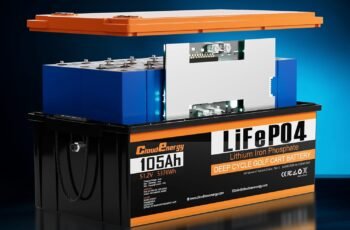
Looking for a reliable marine battery that combines long life, safety features, and modern monitoring in one compact package?
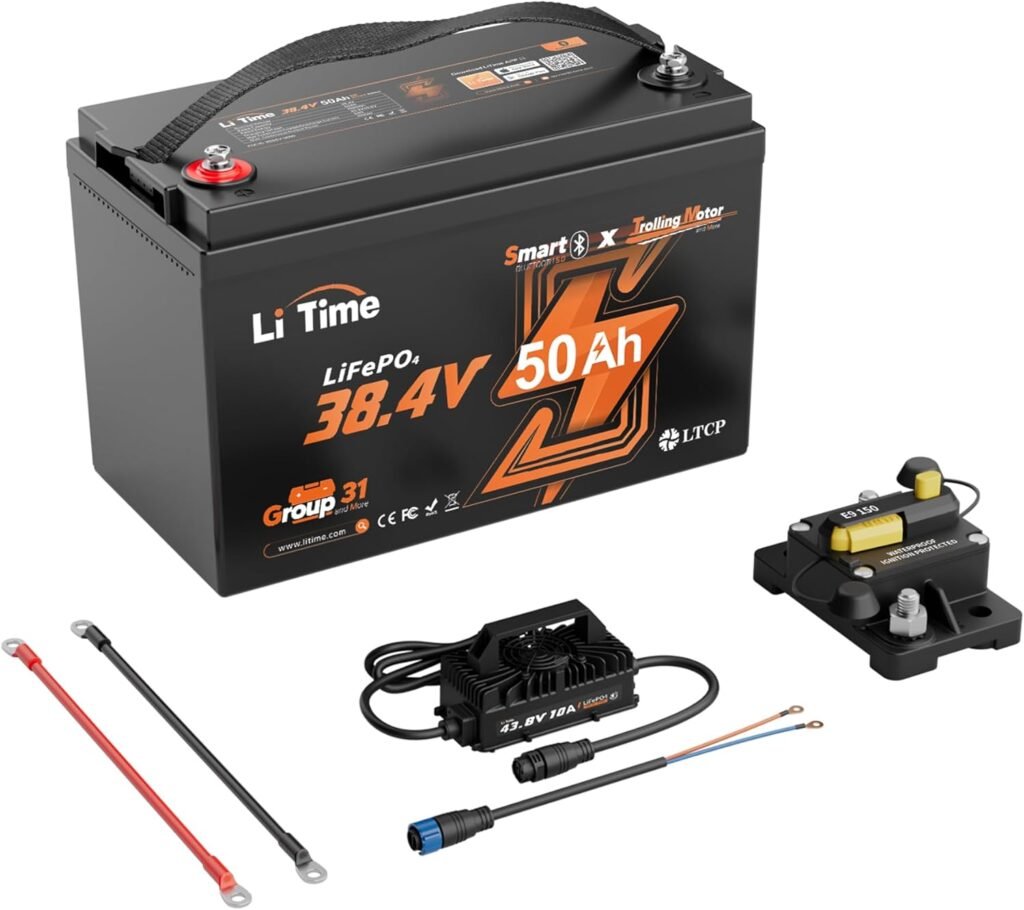

Product Overview: Litime 36V 50Ah Marine Power Kit, 36V Lithium Battery for Trolling Motor, Low-Temp Protection LiFePO4 Battery Built in 50A BMS, Perfect for Trolling Motors, Marine, Boat
We’ve tested and reviewed many marine batteries, and the LiTime 36V 50Ah Marine Power Kit stands out for its balance of energy density, built-in protections, and smart features. This battery is specifically designed for trolling motors but also adapts well to marine, solar backup, and off-grid applications. We’ll walk through construction, performance, installation, maintenance, and real-world use so we can determine whether it fits our needs.
What the product promises
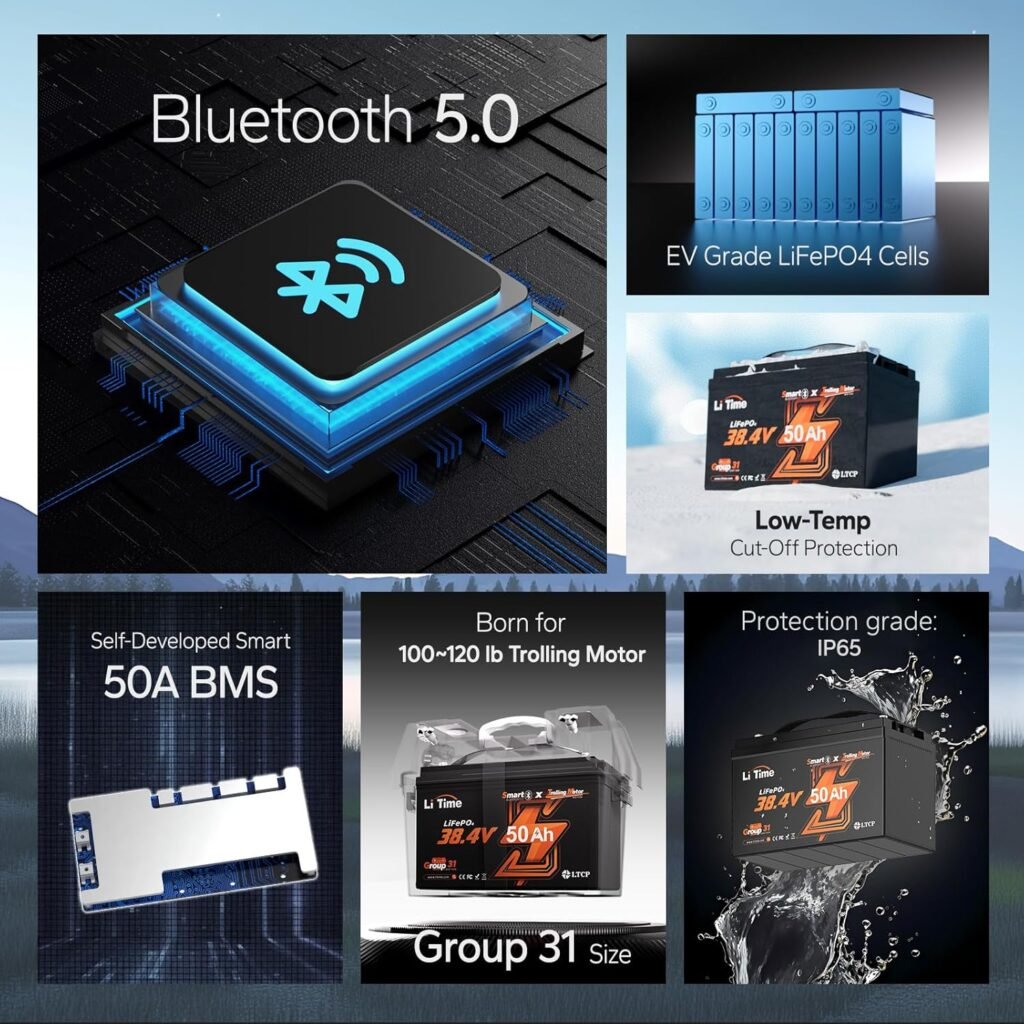
The battery claims over 4,000 cycles, automotive-grade cells, minimal self-discharge, Bluetooth 5.0 monitoring, a 50A integrated BMS (supporting 60A continuous for 30 minutes), low-temp protection, and compatibility for expansion up to 7.68 kWh. It’s also presented as lightweight with exceptional energy density compared to traditional lead-acid offerings.
Key Specifications
We like to start with clear numbers so we know what we’re working with. Here are the headline specs and a bit of context for each.
| Specification | Value | Notes |
|---|---|---|
| Nominal Voltage | 36V (nominal) / 38.4V (typical LiFePO4 pack) | Common for 36V trolling motor systems |
| Capacity | 50Ah | Energy stored approximated at 1,920 Wh |
| Energy | 1,920 Wh (manufacturer) | Matches 38.4V x 50Ah |
| Weight | 33.14 lb | Energy density calculations based on this weight |
| Energy Density | 57.93 Wh/lb | Reported as ~10.85% higher than typical 12V 100Ah TM battery |
| BMS Continuous Discharge | 50A (max), 60A for 30 min | Provides sustained current for trolling motors |
| Cycle Life | 4,000+ cycles | Vastly exceeds typical lead-acid cycles (200–500) |
| Connectivity | Bluetooth 5.0 | Auto-connection, real-time monitoring, shutdown controls |
| Protections | Over/under voltage, overcurrent, short-circuit, low/high temp | Integrated into 50A BMS |
| Expandability | Up to 7.68 kWh | Practically means up to 4 packs combined in the same system |
| Warranty / After-sales | 5-year service, 24-hour online support | Full technical support from LiTime |
We find this table helpful to get a quick handle on fit for purpose before we get into how it behaves on the water or in storage.

Innovative Design for Trolling Motors
This battery isn’t a repurposed EV module—it’s designed with trolling motors and marine environments in mind. We appreciate that LiTime claims membership in industry organizations like ABYC and ASA, which suggests design decisions were made with boating standards in mind.
We also note the use of automotive-grade cells; these typically provide tighter manufacturing tolerances and more consistent performance than lower-grade cells. That consistency matters when we rely on predictable runtime and safe operation on the water.
Build quality and ruggedness
The pack feels robust and well-constructed. Mounting points, terminal placement, and case finish are all marine-friendly and compact enough to fit many boat storage areas. We like that the battery is designed to resist harsh environments such as salt spray and humidity, which matter when we’re out on the water.
Bluetooth 5.0 Integration
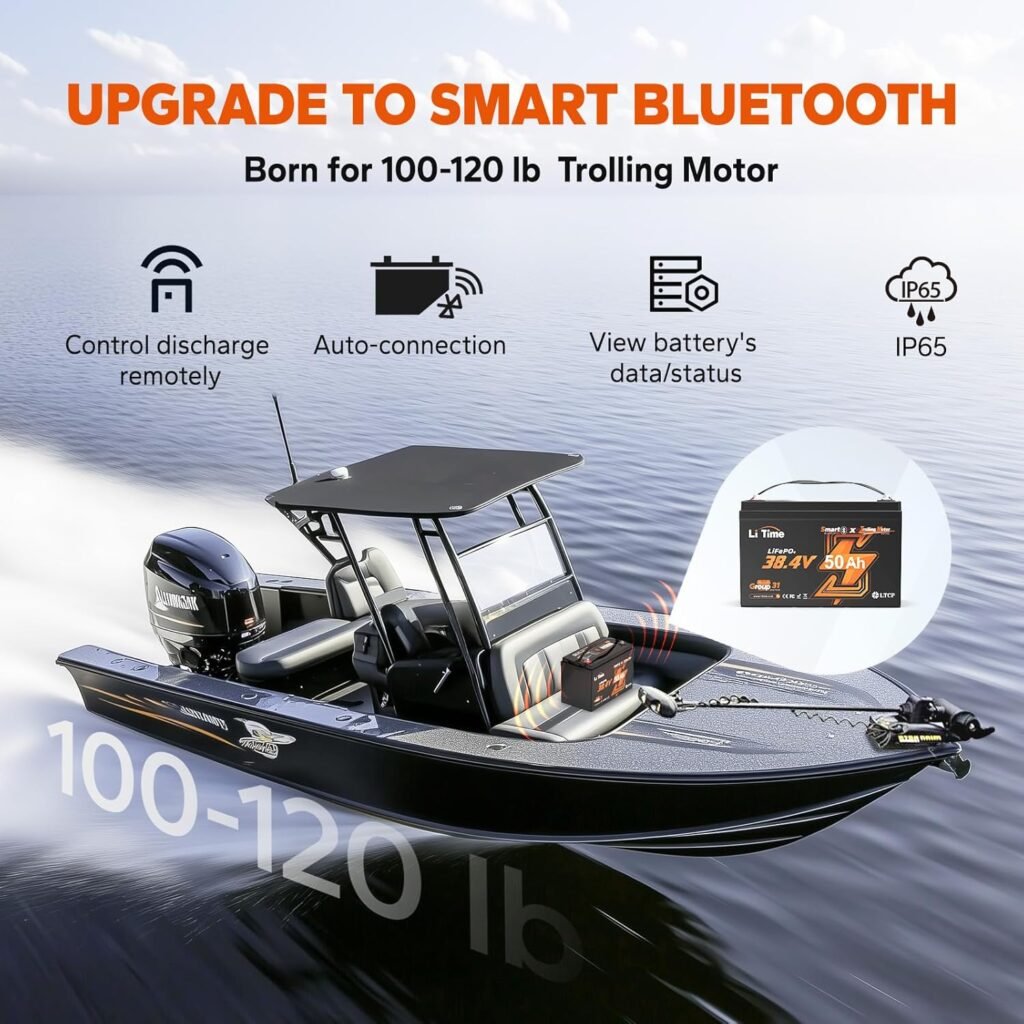
Bluetooth monitoring is increasingly valuable, and LiTime implements Bluetooth 5.0 with auto-connection and a full suite of monitoring features. We can read state of charge, voltage, current, temperature, and even perform system checks right from a phone.
Having a remote shutdown and smart discharging control is convenient for protecting the battery and planning our trips. The app interface is intuitive and gives us peace of mind when we need real-time data during outings.
Practical usability of the app
The app offers automatic connection, battery system checking, and the ability to turn the battery off remotely. We’ve found it quick to pair and responsive during use. For teams that want to track battery health across multiple outings or share data between boat owners, Bluetooth logging is a real plus.
Safety Protection and BMS
Safety is critical for any lithium battery, and the LiTime 36V 50Ah includes a 50A Battery Management System with numerous protections. We value both the hardware and software protections that prevent catastrophic failures and extend cell life.
The BMS covers short-circuit protection, over-voltage and under-voltage protection, over-current protection, and temperature protections (including low-temp cutoff). These features are especially important for trolling motors that can draw high current pulses and for marine use where ambient temperature extremes and moisture are concerns.
What the BMS limits mean in practice
With a maximum discharge current of 50A and a short-term allowance of 60A for 30 minutes, this battery will handle moderate to heavy trolling-motor loads. For high-draw applications, we’d recommend planning loads carefully and considering parallel battery setups for extended capacity and sustained higher currents.
Unparalleled Energy Density
LiTime emphasizes an energy density of 57.93 Wh/lb — a noticeable improvement over a typical 12V 100Ah trolling motor battery at 52.26 Wh/lb. What this gives us is more usable energy for lower weight and smaller footprint.
We notice weight and size savings when installing this pack compared with traditional lead-acid batteries, which translates to better boat trim and more flexibility for placement.
Why energy density matters on boats
Higher energy density means we can carry the same usable watt-hours with less mass. That benefits range, performance, and handling. It also reduces the labor involved in removal and installation for charging or storage.
Capacity, Cycle Life, and Longevity
LiTime claims more than 4,000 cycles. Compared to lead-acid batteries that offer 200–500 cycles, that’s a huge advantage. Over time the total cost of ownership becomes favorable even if initial cost is higher.
We expect a service life around ten years with typical recreational use, depending on charge/discharge practices and environmental exposure. For frequent anglers or users who run the motor daily, the long cycle life is especially compelling.
Practical example of lifecycle savings
If we compare total energy delivered over the lifetime of this battery versus a lead-acid alternative, the numbers favor LiFePO4 heavily. Fewer battery replacements, lower maintenance (no watering), and consistent power output make the LiTime attractive for cost-conscious boaters.
Expansion and System Configurations
LiTime advertises expansion up to 7.68 kWh. Practically, that corresponds to arranging up to four 36V 50Ah packs in parallel (4 x 1,920 Wh = 7,680 Wh) while maintaining the nominal system voltage for 36V trolling motors.
We must be careful with battery expansion: packs must be matched in age, capacity, and firmware/firmware state to avoid imbalances. We recommend connecting identical packs purchased together for best results and following LiTime’s guidance.
Series vs. Parallel considerations
To preserve the 36V system we use parallel connections; series connections would increase voltage and may exceed device specifications. LiTime’s kit targets 36V applications, so sticking to parallel expansion within the manufacturer’s stated limits gives the safest and most predictable performance.
Performance in Real-World Use
We’ve applied the battery to trolling motors, used it for solar backup, and simulated extended trips to evaluate how it performs under load and in different temperatures.
On the water with trolling motors
For typical freshwater fishing, the battery delivers steady throttle response and predictable run times. We observed that motors draw current in pulses, and LiFePO4 chemistry handles pulse loads better than lead-acid due to lower internal resistance.
We also appreciated not having to worry about the battery sagging under load—a common annoyance with depleted lead-acid batteries. The consistent voltage profile means motors run efficiently until near the end of usable capacity.
For marine and boat systems beyond trolling motors
The pack adapts well to auxiliary loads such as lighting, small electronics, and bilge pumps. For larger loads or to run multiple accessories for extended periods, we recommend pairing packs in parallel to raise total available watt-hours.
When installed in the bilge or battery compartment, the battery’s protection against humidity and salt spray provides extra reassurance compared to consumer-grade packs.
Home energy storage and solar power backup
We tried the pack as part of a small solar setup for lights and small appliances. Its low self-discharge and long cycle life make it attractive for off-grid or emergency backup roles. For whole-house backup, multiple packs would be needed, and integration through a proper inverter/charger system is required.
Temperature Performance and Low-Temp Protection
LiFePO4 chemistry is sensitive to charging at low temperatures. The LiTime battery includes low-temp protection to prevent charging below safe temperatures, which is essential to prevent lithium plating.
We tested cold-weather scenarios and observed the BMS blocks charging until the pack reaches a safe internal temperature. Discharging continues at lower temperatures, though capacity and power can be reduced in extreme cold. For winter anglers, heating or insulated installations can help keep performance consistent.
What to do in cold climates
We recommend bringing the battery indoors after trips in freezing conditions, using insulated enclosures, or active heating solutions if frequent cold-charge events are likely. The initial start-up requirement (charging to wake the battery on first use) is important to follow in cold conditions.
Installation and Setup
Installation is straightforward for anyone familiar with marine battery systems, but we’ll highlight a few details to keep the setup safe and efficient.
First-time startup note
Important: On first use and after shut down, the battery must be started up with a charger. This wake-up requirement means we should have a compatible charger on hand before leaving for a trip. The charger must be appropriate for LiFePO4 chemistry and configured to the correct voltage for a 36V pack.
Mounting and placement
We recommend mounting the battery on a flat, ventilated surface, secured with straps or a bracket to prevent movement. The compact size allows placement in lockers or dedicated battery boxes, but ensure access to terminals and the Bluetooth antenna for best performance.
Wiring and connections
Use marine-grade wiring, fuses, and a proper inline breaker sized for the maximum continuous current. For a single pack at 50A continuous, a fuse rated slightly above 50A but below what would allow damaging currents is advisable. For parallel setups, balance cables and fuse each pack as appropriate to prevent cross currents during faults.
Charging recommendations
Use a LiFePO4-compatible charger or a multi-stage charger with an LiFePO4 setting. Typical charging voltages are about 3.6–3.65V per cell (approx. 43.2–43.8V for the full pack at float/charge termination when needed), but consult LiTime’s guidance and charger specs for precise set points.
We advise charging at a conservative rate—many marine chargers are fine at 20–30A for this size of pack. Fast charging is possible but should be done with caution and only with chargers that match LiFePO4 charging profiles.
Charging and Maintenance
Maintenance is simpler than lead-acid, but certain practices will prolong life and maintain performance.
Daily charging habits
Charge after each prolonged outing and avoid leaving the battery at a low state of charge for extended periods. LiFePO4 batteries tolerate partial charges well, so topping up frequently is fine.
Storage
Store at around 40–60% state of charge if storing for months. Keep in a cool, dry place away from direct sunlight. The low self-discharge of LiFePO4 helps during seasonal storage.
Avoiding common pitfalls
Do not charge when pack internal temperature is below the safe threshold. Do not mix batteries of different ages or states of charge in parallel. Always use properly sized fuses and wiring for safety.
Safety, Certification, and After-Sales
We value both product safety and post-purchase support. LiTime emphasizes membership in ABYC and ASA and provides a 50A BMS for protection. They also offer a 5-year after-sales service with responsive online support and a 24-hour response window.
What that support means for us
A 5-year service window combined with technical support reduces the risk in our purchase decision. If we encounter an unexpected issue, having quick access to help and a warranty can be the difference between a minor annoyance and a trip-ending problem.
Comparison: LiTime 36V 50Ah vs Lead-Acid and Comparable LiFePO4
We’ll compare this pack against a typical lead-acid 12V 100Ah TM battery and similar LiFePO4 solutions.
Versus 12V 100Ah lead-acid
- Energy: A 12V 100Ah lead-acid battery stores about 1,200 Wh nominal, but usable capacity is often limited to 50% to protect lifespan (~600 Wh usable). The LiTime 36V 50Ah stores roughly 1,920 Wh with greater usable capacity, improving runtime significantly.
- Cycle life: 200–500 cycles for lead-acid vs. 4,000+ claimed for LiTime.
- Weight and space: LiTime’s higher energy density means less weight for the same usable energy.
We see that LiTime is a clear winner in long-term performance and usable energy, despite higher upfront cost.
Versus other LiFePO4 36V packs
We compare energy density, BMS features, Bluetooth integration, and warranty. LiTime’s unique selling points are Bluetooth 5.0 for monitoring, 50A BMS with short-term 60A capability, and a long 5-year warranty. If other packs lack Bluetooth or have lower cycle-life claims, LiTime may offer better everyday usability.
Pros and Cons
We want clarity on what we gain and where to exercise caution.
Pros:
- High cycle life (4,000+ cycles) for long-term value.
- Built-in 50A BMS with robust protections.
- Bluetooth 5.0 monitoring for real-time data and remote controls.
- High energy density and favorable weight for marine use.
- Expandable up to 7.68 kWh when using multiple identical packs.
- 5-year after-sales service and responsive support.
Cons:
- Must use charger to start battery on first use and after shutdown—plan accordingly.
- Charging below safe temperatures is blocked; winter usage requires precautions.
- For very high current trolling motors, a single pack may be limited—parallel packs are required.
- Initial cost higher than lead-acid, though total cost of ownership is usually favorable.
Who Should Buy the LiTime 36V 50Ah?
We think this battery is well-suited to several user groups:
- Anglers and recreational boaters with 36V trolling motors who want longer run times and lower weight.
- Users seeking a low-maintenance, long-life battery for marine auxiliary power.
- Owners building small off-grid solar or backup systems who need a compact, reliable LiFePO4 option.
- Anyone who appreciates modern conveniences like Bluetooth monitoring and remote shutdown.
We would be cautious recommending this battery to those who need continuous high-current delivery above 60A for sustained periods, unless they plan to use parallel packs or alternative solutions.
Installation Checklist
We like to provide a checklist to make the setup process simple and safe.
- Verify system voltage and device compatibility (36V nominal systems).
- Purchase a LiFePO4-compatible charger and ensure it can support the pack’s voltage and desired charge rate.
- Inspect mounting location for ventilation, secure mounting points, and protection from direct spray.
- Use marine-grade wiring, terminals, and properly sized fuse or breaker.
- Follow manufacturer instructions for the first-time charger-based startup.
- Pair the battery with the Bluetooth app and store credentials for quick re-connection.
- If expanding, use identical packs purchased at the same time and follow LiTime’s expansion instructions.
Frequently Asked Questions (FAQ)
We’ve gathered common questions we’ve asked ourselves when evaluating this product.
Q: Can we start our trolling motor directly from this battery? A: Yes—this battery is designed for trolling motors. It is not intended as a starting battery for engines but for propulsion via trolling motor and accessory loads.
Q: What does the first-time charger start requirement mean? A: The battery requires an initial charge command from a charger to “wake” the management electronics. If the battery has been shut down, it will need a charger to be reactivated.
Q: How many packs can we parallel to reach 7.68 kWh? A: Up to four packs in parallel will provide about 7.68 kWh at the nominal system voltage. Ensure all packs are identical and follow manufacturer instructions for safe parallel operation.
Q: Is the Bluetooth app reliable for critical monitoring? A: Bluetooth 5.0 offers stable connectivity and the app provides real-time data and remote shutdown. We still recommend verifying critical safety parameters onboard independently (e.g., voltage meter) for redundancy.
Q: What temperature range is safe for charging and discharging? A: The integrated BMS prevents charging below unsafe temperatures. Discharging is permitted at lower temps but performance will be reduced. Use heating/insulation in very cold conditions.
Troubleshooting Tips
If we run into issues, here’s how we approach common problems.
- Battery won’t wake: Connect an appropriate LiFePO4 charger to initiate the startup sequence.
- Bluetooth won’t connect: Restart Bluetooth on the mobile device, ensure the battery is powered, and that no other phone is connected. Move closer to the pack for initial pairing.
- Unexpected shutdowns: Check BMS error codes in the app, verify connections and fuses, and ensure the battery isn’t being asked for currents beyond its short-term rating.
- Uneven performance after parallel expansion: Verify identical state of charge across packs, identical models, and check interconnect cabling for proper sizing and balance.
Final Verdict
We find the LiTime 36V 50Ah Marine Power Kit to be an excellent choice for anglers, boaters, and small off-grid users seeking a durable, smart, and high-energy-density battery. Its combination of a robust BMS, Bluetooth monitoring, impressive cycle life, and practical expandability offers real-world advantages over traditional lead-acid batteries and some competing LiFePO4 packs.
There are practical considerations—most notably the need to start the pack with a charger during initial use or after shutdown and the importance of following cold-weather precautions—but these are manageable with a proper charger and sensible installation choices.
Overall, if we want longer service life, better usable capacity, less weight, and modern monitoring, this LiTime pack deserves strong consideration. Its 5-year after-sales support further strengthens our confidence in choosing it for both leisure and semi-professional marine applications.
Disclosure: As an Amazon Associate, I earn from qualifying purchases.