?Are we ready to see whether the Power Queen 12V 200Ah LiFePO4 Battery is the right choice for our RV, trolling motor, or off-grid setup?

Quick verdict
We find the Power Queen 12V 200Ah LiFePO4 Battery to be a compelling blend of long life, high usable capacity, and reasonably compact weight for its energy. It’s especially attractive for users who want reliable daytime solar charging and robust support for trolling motors and RV loads without frequent battery replacements.
What the Power Queen 12V 200Ah Is
We view this unit as a deep-cycle LiFePO4 battery designed for mobile and off-grid applications where longevity, safety, and weight matter. It’s billed as a multi-purpose battery for trolling motors, RV trailers, off-grid systems, and general 12V loads, with enough energy to serve as a single-battery solution or a modular block in a larger bank.
Key specifications
We summarized the main specs below so we can quickly see what this battery offers and how it stacks up for our needs.
| Feature | Detail |
|---|---|
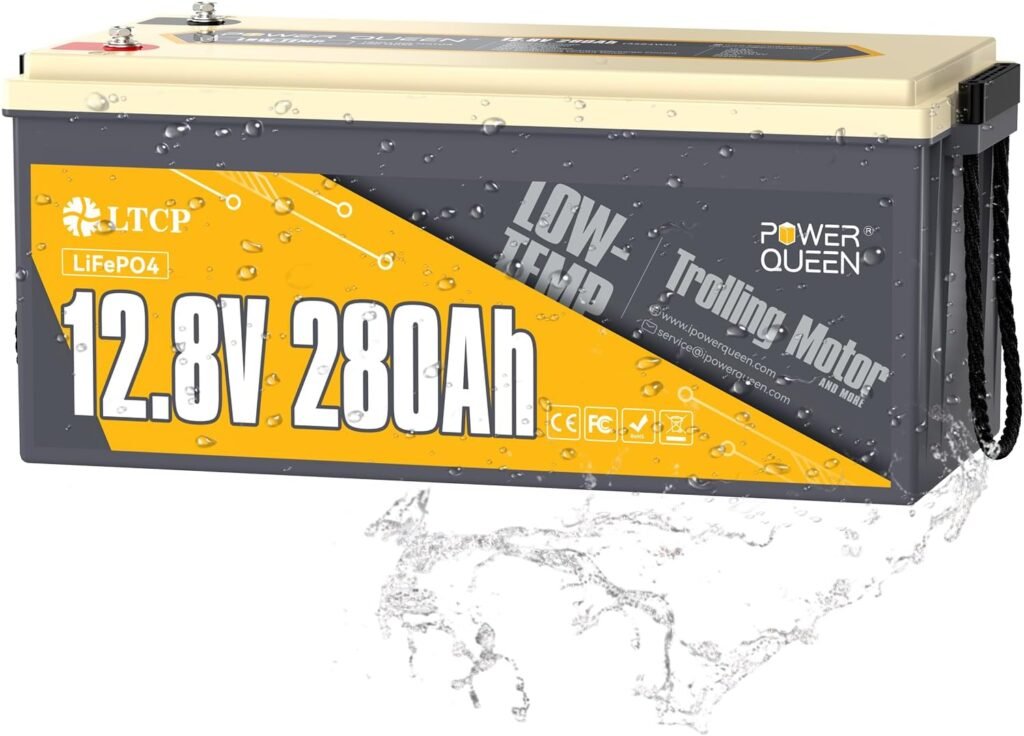
| Product name | Power Queen 12V 200Ah LiFePO4 Battery, 12V Lithium Battery 200Ah, RV Lithium Battery with 2560Wh Energy |
| Nominal voltage | 12.8 V (nominal, typical for LiFePO4 12V batteries) |
| Capacity | 200 Ah |
| Energy | 2560 Wh |
| Usable capacity | Up to ~95% capacity usage (per manufacturer claims) |
| Built-in BMS | Upgraded 100A BMS (built-in) |
| Max supported load | Supports up to 1280W load power (suitable for many 12V-36V trolling motors 70–120 lbs thrust) |
| Cycle life | 4000+ cycles @ 100% DOD; 6000 cycles @ 80% DOD; 15000 cycles @ 60% DOD |
| Lifespan | Up to ~10 years (manufacturer estimate with Grade A cells) |
| Weight | About 43.98 lb (≈19.95 kg) |
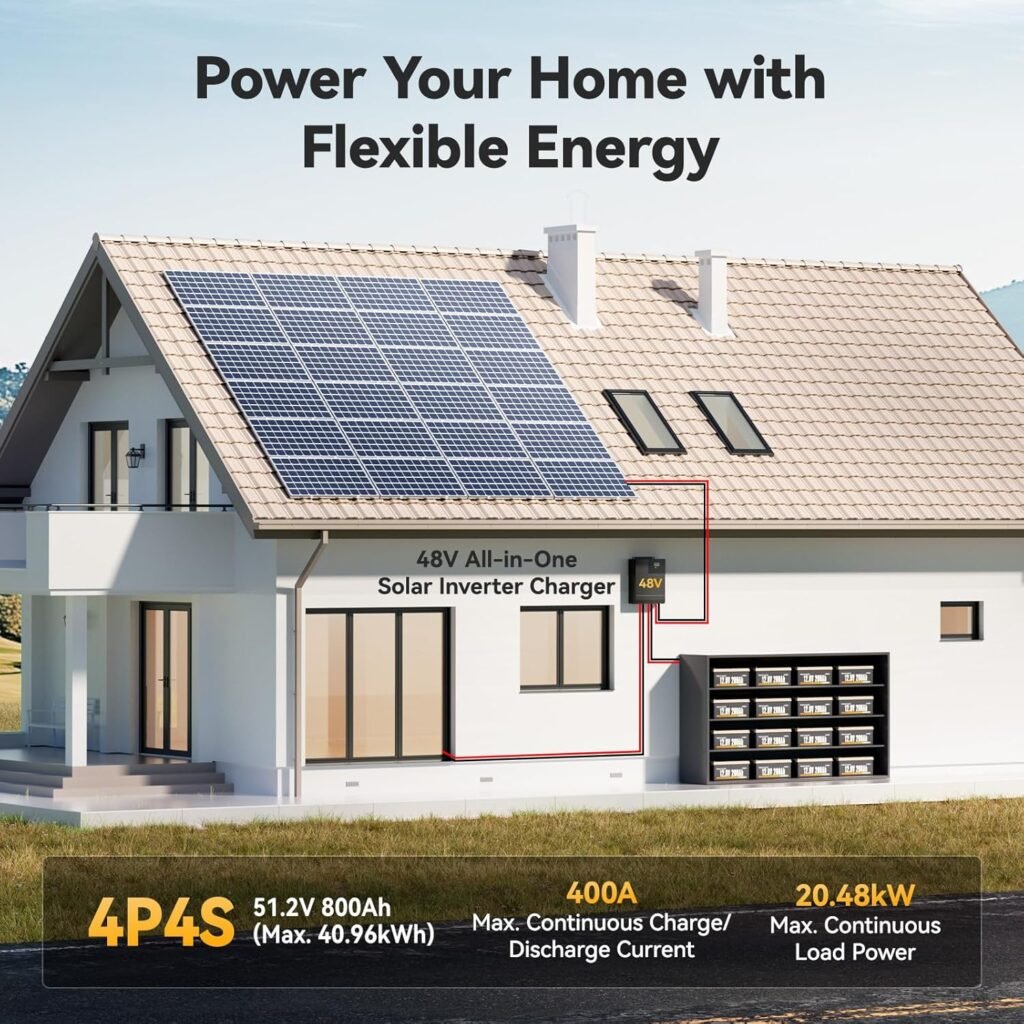
| Expandability | Up to 4 in series and 4 in parallel (Max 4S4P) to create up to 48V (51.2V) 800Ah bank — Max 40.96 kWh |
| Recommended charge voltage | 14.6 V (optimal charging) |
| Recommended charge current | 40 A for fastest recommended charging option |
| Charging methods | 14.6V charger (40A), Solar with MPPT (≥800W suggested), 40A DC-DC charger, generator |
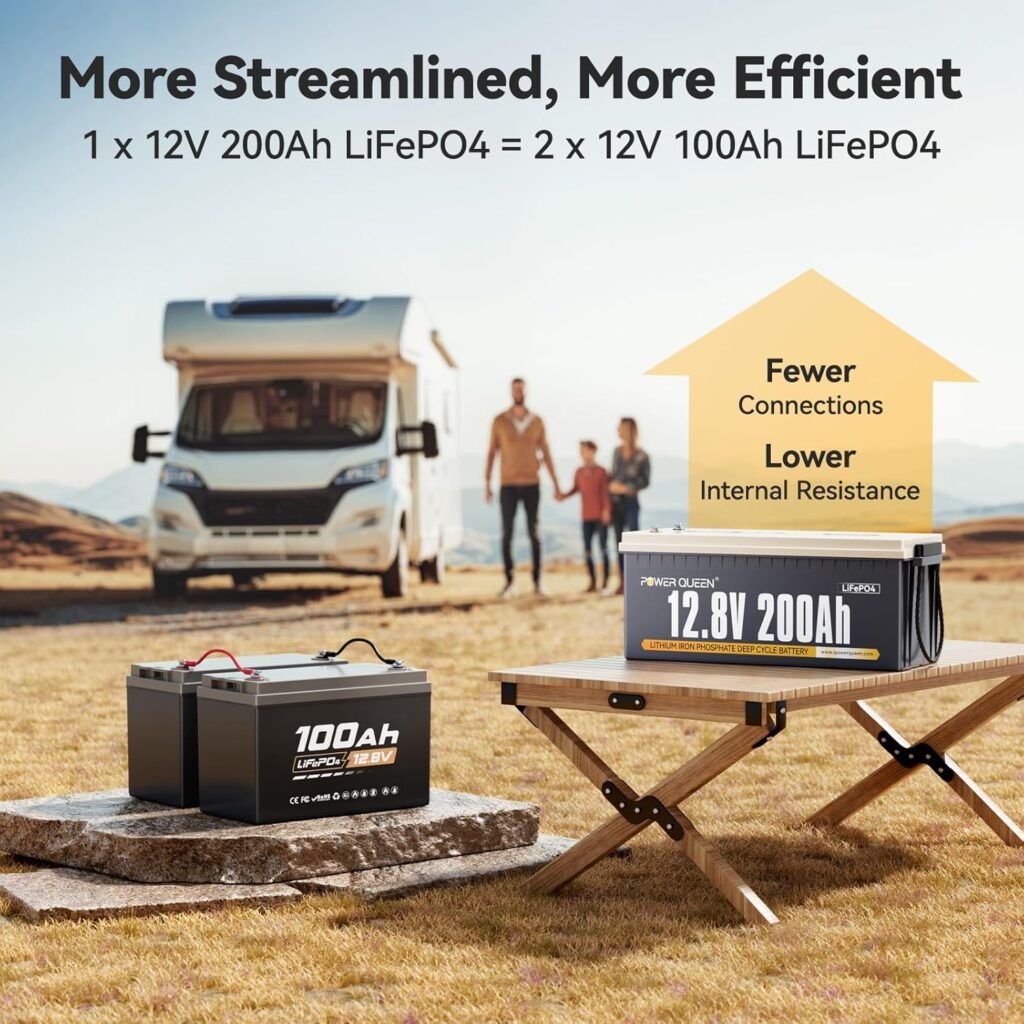
| Typical advantages vs lead-acid | ~1/3 the weight, much higher cycle life and usable capacity, lower self-discharge |
| Typical applications | Trolling motor, RV appliances, off-grid systems, fish finder/GPS, small inverters |

Performance in real use
We want practical expectations rather than marketing promises, so we’ll walk through realistic scenarios based on the battery’s 2560 Wh nominal energy and the manufacturer’s efficiency claims. We will state assumptions for our runtime estimates so they’re clear.
Trolling motor performance
We appreciate that Power Queen highlights suitability for 12V–36V trolling motors in the 70–120 lb thrust range and states support for a max 1280W load. That gives us a useful baseline for runtime math. If we run at the full 1280W draw, the battery’s 2560Wh will theoretically provide about 2 hours of runtime (2560 Wh ÷ 1280 W = 2 h). Accounting for real-world losses (inverter inefficiency if using AC, wiring losses, temperature effects), we should plan for slightly less—so roughly 1.5–1.8 hours at sustained max draw.
If our trolling motor typically draws less—for example, a 400W cruise—we can expect substantially longer runtime. Here’s a quick sense of what different continuous power draws could look like, using the 2560Wh nominal energy and assuming roughly 95% usable (manufacturer’s efficiency claim):
- 1280W continuous: ~2 hours (theoretical) → practical ~1.5–1.8 hours.
- 800W continuous: ~3.2 hours theoretically → practical ~2.8–3 hours.
- 400W continuous: ~6.4 hours theoretically → practical ~5.5–6 hours.
We recommend checking the trolling motor’s typical draw at the speeds you use most often. If we primarily run at high speeds or heavy loads (strong current, trolling with heavy gear), we should consider two batteries in parallel for extended runtime or to reduce depth of discharge and extend cycle life.
RV and off-grid use
We like that this battery offers up to 95% usable capacity, giving us a real advantage over lead-acid where only 50% usable is typical without sacrificing life. For many RV applications—lights, fans, water pump, fridge, and small electronics—2560Wh goes further than it seems on paper.
Let’s convert that to practical runtimes with conservative assumptions: using 95% usable capacity gives ~2432 Wh of usable energy. Here are example run times (approximate, continuous loads):
- 12V compressor fridge drawing 45–60W: ~40–54 hours of runtime (continuous). Real usage cycles will be less continuous because a compressor cycles on and off, so an RV fridge could run multiple days depending on ambient temp and insulation.
- LED lights (totaling 20W): ~121 hours (around 5 days at low consumption).
- Water pump (40W average): ~60 hours cumulative use.
- Small inverter loads (e.g., laptop 60W via inverter at 90% efficiency): ~36 hours.
These are approximate and depend on how many appliances we run at once, the efficiency of inverters, and whether we’re charging with solar/DC while using the loads. The advantage is that with a 2560Wh capacity and efficient LiFePO4 chemistry, we can run many RV essentials overnight or during cloudy stretches if we manage loads carefully and pair the battery with reasonable charging.
Charging: solar, DC-DC, and AC charging
We appreciate the flexibility of three recommended charging methods: a 14.6V/40A charger, solar panels with MPPT (≥800W suggested), and a 40A DC-DC charger. The manufacturer suggests about 5 hours for a full recharge using solar MPPT with ≥800W; in practice this depends on solar conditions, orientation, and MPPT efficiency.
Here’s how the three methods compare for full recharge from empty (using nominal numbers and ignoring some real-world inefficiencies):
- 14.6V @ 40A AC charger: 200 Ah ÷ 40A = 5 hours to full in ideal conditions. This aligns with the product’s stated ~5-hour charge time on the 40A charger.
- 40A DC-DC charger: Similar calculation — about 5 hours if the DC source can supply that current continuously.
- Solar with MPPT (≥800W): 2560 Wh ÷ 800 W = 3.2 hours in ideal sun and ideal panel output. Manufacturer’s estimate of ~5 hours accounts for non-ideal sun conditions, MPPT losses, and real-world effect. In practice, expect longer than the purely theoretical minimum—plan on 4–6 good sun hours for a near-full recharge under real conditions.
We should also set chargers to the recommended charge-voltage profile for LiFePO4 chemistry (manufacturer recommends 14.6V) to ensure proper charging and longevity.
Battery chemistry and longevity
We’re big fans of LiFePO4 chemistry for applications where cycling and safety are priorities. Power Queen uses Grade A LiFePO4 cells and publishes impressive cycle figures: 4000+ cycles at 100% depth of discharge (DOD), 6000 cycles at 80% DOD, and 15000 cycles at 60% DOD. Those are meaningful when we compare to sealed lead-acid (SLA/AGM) which often provide 200–500 cycles and notable capacity fade over a few years.
To put this in perspective, if we cycled the battery once per day:
- 4000 cycles at 100% DOD ≈ 11 years of daily cycles.
- 6000 cycles at 80% DOD ≈ 16+ years.
- 15000 cycles at 60% DOD ≈ 40+ years.
These are theoretical extremes, but they highlight how LiFePO4 can outlast lead-acid by a large margin. For RV and marine use where we might cycle daily during travel season or use shallow cycles year-round, the long cycle life and years-of-service estimate (up to 10 years per manufacturer) translate into strong lifecycle value.
We also appreciate the low self-discharge and high-efficiency rating (up to 95% effective capacity usage), which reduces the worry about losing charge during storage and maximizes usable energy between charges.
Safety and built-in BMS
We like that Power Queen integrates an upgraded 100A Battery Management System (BMS). A robust BMS is essential for LiFePO4 packs to protect the cells from overcharge, over-discharge, overcurrent, and cell imbalance. The 100A rating gives us a clear continuous discharge current ceiling for safe operation and aligns with the product’s role powering trolling motors and other onboard electronics.
Practically, this means:
- The BMS will limit current to protect the battery from damage if a load tries to pull more than about 100A continuously.
- It will handle cell balancing and protection tasks that help extend life and prevent unsafe conditions.
- For high-starting-current loads (e.g., a large inverter surge or some electric outboards), we should verify whether the BMS supports short-term surge or peak currents and make sure any surge needs are within spec.
We recommend always following manufacturer guidance on wiring, fusing, and not exceeding the 100A BMS limit. If we think we’ll need sustained currents above 100A, parallel batteries or an external high-current-rated system will be required.
Weight, size, and portability
At about 43.98 lb, the Power Queen 12V 200Ah is light compared to equivalent capacity lead-acid batteries. The product claims it’s roughly one-third the weight of comparable lead-acid batteries. That weight saving matters for boats and RVs where every pound affects fuel economy and handling.
We find the lighter weight simplifies repositioning, installation, and mounting, and makes a single person more capable of handling the battery. However, it’s still heavy enough that we recommend using proper lifting technique and secure mounting hardware in vehicles and boats.
Expandability and system integration
We like the expandability: the battery supports up to 4 in series and 4 in parallel (Max 4S4P), enabling a maximum 48V (51.2V nominal) 800Ah bank and total energy up to 40.96kWh. That flexibility is powerful for building larger off-grid systems or higher-voltage inverter banks for bigger power draws.
Important system-integration considerations we advise:
- When building series/parallel banks, use identical batteries (same age, same model, same state of charge) to avoid imbalance and premature wear.
- Observe proper series/parallel wiring steps: balance the packs, and ideally wire in a pattern that balances resistance between parallel groups.
- Keep consistent charging settings and use a charger/inverter compatible with LiFePO4 voltage profiles (charge voltage ~14.6V for 12V nominal).
- Ensure adequate fusing and a high-current disconnect to protect wiring and equipment in case of faults.
We emphasize safe installation practices and recommend consulting the battery manual for series/parallel limits and wiring diagrams.
Pros and cons
We like listing pros and cons so we can decide objectively. Here’s our take:
Pros:
- Long cycle life and durable Grade A LiFePO4 cells that significantly outlast lead-acid alternatives. We expect years of service even under regular use.
- High usable capacity (up to 95%) gives more real-world energy than lead-acid at the same nominal Ah rating.
- Lightweight relative to lead-acid, making installation easier and reducing payload weight in RVs and boats.
- Built-in upgraded 100A BMS provides essential protection and simplifies system design.
- Versatile charging options (AC 40A charger, DC-DC 40A, solar MPPT) fit mobile and off-grid use cases.
Cons:
- 100A BMS imposes a continuous current limit; heavy users needing sustained >100A output must parallel batteries or use different hardware.
- Initial purchase cost for LiFePO4 is higher than comparable lead-acid options, though lifecycle cost is lower. We must balance upfront expense against long-term savings.
- For full bank expansion, careful wiring and battery management are required; DIYers should ensure they understand series/parallel limitations.
- Manufacturer claims like cycle life and charging times are ideal conditions; real-world performance depends on environment, loads, and charging setup.
Installation tips and best practices
We recommend several practical steps when we install the Power Queen battery:
- Mounting: Secure the battery in a well-ventilated, dry location with vibration protection. Use tie-downs or brackets rated for the battery’s weight and motion environment (marine/RV).
- Ventilation: Although LiFePO4 does not vent hydrogen like lead-acid, we still prefer a location where heat can dissipate because high ambient temps shorten battery life.
- Wiring and fusing: Use appropriately sized cables for up to 100A and a fuse or circuit breaker near the battery positive terminal sized for the maximum safe current. For 100A continuous BMS, a fuse rated slightly above that (but within wiring and BMS guidelines) is appropriate.
- Charger settings: Set AC chargers and inverter/chargers to LiFePO4 parameters—bulk/absorption at ~14.6V and float disabled or set to manufacturer float recommendations (often lower or unnecessary for LiFePO4).
- Parallel/series setup: When paralleling or putting in series, use batteries of the same model and state of charge, and if possible, start with them at the same voltage. Avoid mixing old and new batteries.
- Temperature: Protect the battery from extremes. If the BMS has cold charge protection, ensure chargers respect that behavior. Cold charging can be restricted on LiFePO4 packs unless a battery heater or temperature sensors are integrated.
Maintenance and troubleshooting
We appreciate that LiFePO4 is relatively low-maintenance, but some checks and practices will keep the battery healthy:
- Visual and connection checks: Periodically inspect terminals for corrosion and tighten connections. Clean terminals if necessary and apply anti-corrosion products made for battery terminals.
- Monitor SOC and voltages: Use a simple battery monitor or the inverter/charger display to track state of charge, voltage, and currents. Keeping cycles moderate will maximize life.
- BMS trips: If the BMS cuts output or charging stops, check for overcurrent, over-voltage, or temperature fault conditions. Reduce loads, verify charger settings, and let the battery rest. If the BMS doesn’t reset or there’s an unusual error, contact Power Queen support.
- Rebalancing: The internal BMS manages balancing; if we suspect imbalance (uneven voltages in a series bank), consult the manufacturer or a qualified technician rather than trying to rebalance manually without the right tools.
- Firmware and updates: If the manufacturer offers BMS firmware updates or monitoring tools, follow their instructions to maintain performance and safety.
Comparison with lead-acid and other LiFePO4 options
We often weigh choices between lead-acid, AGM, and LiFePO4. Here’s how the Power Queen stacks up in our view:
- Vs AGM/lead-acid: LiFePO4 provides far greater usable capacity (typically 80–95% vs 50% for lead-acid), far more cycles (thousands vs hundreds), lower weight, and lower long-term maintenance. Upfront cost is higher, but total cost of ownership usually favors LiFePO4 for regular users.
- Vs other LiFePO4 brands: The Power Queen offers a common modern feature set—100A BMS, Grade A cells, and long cycle claims. We would compare warranty, after-sales support, and any extra features (e.g., integrated Bluetooth monitoring) when choosing between brands. If we need higher continuous discharge than 100A, we might choose different models or plan to parallel units.
We recommend comparing real-world customer reviews, warranty terms, and support responsiveness when picking a brand. Batteries can be long-term investments, and manufacturer support matters.
Practical examples and scenarios
We find example use-cases helpful to visualize how the battery performs in the field. Here are a few realistic scenarios using the Power Queen 12V 200Ah:
Scenario 1 — Solo angler with a trolling motor and electronics: We run a 12V trolling motor that averages ~400–600W while cruising and add electronics (fish finder 20–30W, GPS 10W). With roughly 2560Wh energy, we can expect 4–6 hours of mixed-use operation depending on throttle usage and how much continuous high-power draw we use. For multi-day fishing or heavy-high throttle use, we’d consider a second battery in parallel.
Scenario 2 — Weekend RV trip with solar: We install the battery in an RV with a 600–800W roof solar array and an MPPT controller. During sunny days, we can comfortably run lights, fridge, and charge devices while topping the battery each afternoon. The 200Ah capacity provides overnight autonomy; pairing it with a second battery or slightly larger solar array gives multi-day independence in mixed sunlight conditions.
Scenario 3 — Off-grid cabin backup: Used as a backup for lights, a small fridge, and electronics at a remote cabin, the unit supplies dependable daily capacity and accepts solar or generator charging. For higher continuous loads like a full-size inverter powering AC loads, we’d scale the bank to match load and runtime expectations, leveraging the 4S4P expandability if we need 48V systems.
Common questions we get and the answers we’d give
We anticipate several questions and share our answers from experience:
Q: Can we run a full-size inverter and heavy loads off this single 12V 200Ah battery? A: It depends on the inverter’s continuous draw and surge requirements. The built-in 100A BMS limits continuous discharge to around 100A. At 12.8V nominal, 100A is roughly 1280W continuous, aligning with the stated max 1280W support. For larger continuous inverter loads or frequent high-surge appliances, we should either parallel batteries or use a higher-voltage inverter bank (48V) built from multiple batteries in series/parallel.
Q: How many solar panels do we need for reliable daily recharge? A: The manufacturer suggests ≥800W panels with MPPT as a reference for about 5 hours to recharge in real conditions. In practice, system sizing should consider latitude, weather patterns, and energy use. For many RV setups, 400–800W of roof panels is a practical range; for consistent daily recharge in limited sun, more panels or a ground-mounted array could help.
Q: What is the expected warranty and support? A: We recommend checking the vendor’s listing or contacting Power Queen directly for exact warranty terms. Warranty terms can vary by retailer and region; confirm coverage for manufacturing defects and the expected warranty length before purchase.
Who should buy this battery?
We find this battery best for:
- Anglers and boaters running trolling motors in the 70–120 lb thrust range who want lighter batteries with dependable runtime.
- RV owners wanting a long-lasting battery for lights, fridge, pumps, and electronics with efficient solar charging.
- Off-grid users who want a modular, expandable LiFePO4 solution that can be configured into larger 48V banks.
- Anyone who wants to replace older lead-acid banks with a battery that offers more usable capacity and longer life.
We might not recommend it for:
- Users requiring sustained >100A continuous discharge from a single 12V battery without paralleling.
- Those with extremely tight upfront budgets who can’t justify LiFePO4 initial cost even with lifecycle savings.
Final thoughts and recommendation
We believe the Power Queen 12V 200Ah LiFePO4 Battery is a strong option for RVers, boaters, and off-grid enthusiasts who value longevity, high usable capacity, and lower weight. Its upgraded 100A BMS, Grade A cells, and three-way charging approach make it a practical and flexible power source for many mobile and stationary systems.
If we value long-term performance and don’t require more than roughly 1280W continuous from a single battery, this unit aligns well with our needs. For higher sustained loads, we recommend paralleling additional Power Queen batteries or designing a higher-voltage (48V) system using the expandability options. Always follow safe wiring practices, match batteries for series/parallel banks, and configure charging to the appropriate LiFePO4 voltage profile.
We’re comfortable recommending this battery as a solid balance of performance, weight, and lifecycle value for typical RV, trolling, and off-grid applications.
Disclosure: As an Amazon Associate, I earn from qualifying purchases.