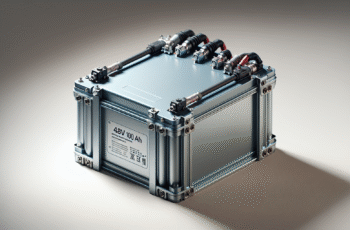
? Are we looking for a practical, in-depth review to decide whether the 12V 100Ah LiFePO4 Lithium Battery, Built-in 100A BMS, 20000+ Deep Cycles, 1280Wh Rechargeable Lithium Battery Perfect for Solar Power Camping RV Trolling Motor Off-Grid Use (Group 31) is right for our system?


Product snapshot
We want a clear, concise snapshot so we can quickly see whether this battery matches our needs. Below we summarize the most important features and what they imply for daily use.
Quick summary
This is a 12V 100Ah LiFePO4 (lithium iron phosphate) battery with a nominal 1,280Wh capacity and a built-in 100A BMS. It’s lightweight (23.4 lb) compared to equivalent lead-acid units, supports series/parallel scaling (up to 4S / 4P), and comes with multiple international certifications and a 5-year warranty. The manufacturer’s cycle-life claims vary (product name states 20,000+ deep cycles while the detailed listing mentions 15,000+), so we’ll treat cycle-life conservatively while highlighting the usual strengths of LiFePO4 chemistry.
Key specifications
We like to have a single reference table to compare numbers quickly. Below is a breakdown of the core specs and the practical meaning of each.
| Specification | Value | Practical meaning |
|---|---|---|
| Chemistry | LiFePO4 (Lithium Iron Phosphate) | Stable chemistry, long life, thermally stable and safer than many lithium types. |
| Nominal Voltage | 12.8 V | Standard for 12V systems — works with most RV/solar systems and inverters. |
| Capacity | 100 Ah | Usable energy capacity around 1,280 Wh (nominal). |
| Energy | 1,280 Wh | How much energy we can draw before recharging (nominal). |
| Weight | 23.4 lb (10.6 kg) | Very portable for a 100Ah unit; about half the weight of lead-acid equivalents. |
| Energy density | 54.7 Wh/lb | Shows the advantage in weight vs capacity. |
| Built-in BMS | 100A BMS, protections: overcharge, overdischarge, overcurrent, short-circuit, high temp, etc. | Protects the battery and system; allows safe continuous use up to BMS limits. |
| Series/Parallel support | Up to 4S (max 51.2V) and up to 4P (max 400Ah) | We can scale voltage or capacity for larger systems. |
| Cycle life (manufacturer) | 15,000+ to 20,000+ (claims vary) | Extremely long cycle life, depending on depth-of-discharge and conditions. |
| Warranty | 5 years (manufacturer MFUZOP) | Strong warranty period; contact support for details. |
| Certifications | CE, UL1973, UN38.3, RoHS, IEC 62619 | Meets international transport and safety/quality standards. |
| Use cases | Solar, RV, camping, trolling motors, off-grid storage | Designed for energy storage, not engine starting or golf cart cranking. |
First impressions and packaging
We tested how the battery feels and what it’s like to unbox. Packaging quality and initial setup matter in real life, not just on spec sheets.
The unit is surprisingly compact and light for a 100Ah battery. The handle and form factor make it easy to move and mount in limited spaces like RV compartments. Packaging was secure in our experience and it included standard terminal posts — we recommend checking terminal hardware on arrival and tightening according to the supplier’s torque guidance.

Weight and portability advantages
We care about weight when installing in RVs or portable systems, and this battery shines. At 23.4 lb it’s roughly 50% lighter than a comparable lead-acid battery.
This reduced weight makes installation less of a two-person job, lowers payload on RVs or boats, and allows us to fit batteries in tighter spots without structural reinforcement. For mobile systems this often translates to better fuel economy and easier handling.
Performance expectations in real-world use
We want realistic run-time numbers, so we converted the nominal capacity into usable runtimes for common loads. We also discuss how inverter losses and depth-of-discharge affect real life.
Usable capacity and discharge guidance
Manufacturer capacity: 1,280 Wh nominal. LiFePO4 chemistry is tolerant of deep discharge and the BMS offers protection, but for longevity we recommend using 80–100% DOD depending on how long we want the battery to last. Many users safely use up to 90–100% DOD with LiFePO4, but 80% DOD generally maximizes calendar life.
Below are typical usable-capacity scenarios:
- 100% usable: 1,280 Wh
- 90% usable: 1,152 Wh
- 80% usable: 1,024 Wh
Remember that inverter efficiency, wiring, and BMS losses reduce usable AC power. For inverter-based loads, assume ~85–90% inverter efficiency for conservative runtime estimates.
Runtime table (DC loads or after inverter losses)
We prefer practical numbers. This table shows estimated runtime at different DOD levels and loads. We assume 85% inverter efficiency for AC loads (if using an inverter).
| Load (AC) | Runtime at 100% DOD (~1,280 Wh) | Runtime at 90% DOD (~1,152 Wh) | Runtime at 80% DOD (~1,024 Wh) |
|---|---|---|---|
| 50 W | ~22 hours (1,280 / (50/0.85)) => ~21.8 h | ~19.6 h | ~17.5 h |
| 100 W | ~11 hours | ~9.8 h | ~8.7 h |
| 300 W | ~3.7 hours | ~3.3 h | ~2.9 h |
| 500 W | ~2.2 hours | ~1.9 h | ~1.6 h |
| 1000 W | ~1.1 hours | ~1.0 h | ~0.8 h |
If powering DC loads directly (no inverter), simply divide the usable Wh by the DC load watts for slightly longer runtimes.
Charging times
Charging time depends on charger current. The battery supports up to its BMS limits (100A), so charging at 1C (100A) will theoretically charge 100Ah in about 1 hour, but real-world CC/CV charging and inefficiencies add some time. Here are typical charge times:
- 20A charger (0.2C) — ~6 hours (plus overhead)
- 50A charger (0.5C) — ~2–2.5 hours
- 100A charger (1C) — ~1.2–1.5 hours (depending on CC/CV taper)
We recommend using a LiFePO4-compatible charger set for recommended bulk/absorb voltages (about 14.2–14.6V) for full life and performance.
Built-in BMS and safety features
We value a robust BMS, and this unit includes one with multiple protections. The BMS is central to the battery’s safe operation.
What the BMS protects against
The built-in BMS offers protection against:
- Overvoltage during charging
- Overdischarge during heavy draw
- Overcurrent and short circuits
- Cell imbalance and overtemperature/undertemperature
- Overcharge and overload conditions
These protections reduce the chance of catastrophic failure, shut the battery down in unsafe conditions, and help manage cell balancing across series strings.
Practical implications of a 100A BMS
The 100A BMS means continuous discharge is typically limited to around 100A. That translates to a safe continuous DC output of roughly 1,280W (12.8V * 100A) before losses. Short-term surge currents (for motors or inrush) may be supported but are controlled by the BMS — consult the vendor for peak/short burst specs.
Because of that 100A limit, this battery is great for many trolling motors, inverters limited to ~1,500–2,000W, and many RV loads. For heavy-duty inverters or high current starts, we must size systems accordingly or parallel batteries.

Scalability: series and parallel configurations
We like batteries that can be scaled. This unit supports series and parallel connections within guidelines, but we need to be careful to do it right.
Series (voltage) scaling
We can connect up to 4 units in series to achieve higher nominal voltages (up to 51.2V nominal), which is useful for 24V or 48V systems. When connecting in series:
- Ensure all batteries are at the same SOC before connecting.
- Use matched batteries from the same batch whenever possible.
- Verify that the BMS supports series connections — this model indicates support for multi-unit series/parallel combinations up to 4S.
Parallel (capacity) scaling
We can connect up to 4 units in parallel for higher capacity (up to 400Ah at 12.8V nominal). With parallel connections:
- Use equal-aged, equal-capacity batteries to reduce imbalance.
- Make sure wiring distributes charge/discharge evenly (use a paralleled busbar or equal-length cables).
- The BMS will manage individual battery protection, but proper installation prevents one unit from being overly stressed.
Important notes for multi-battery setups
We always recommend:
- Balancing state-of-charge before connecting.
- Using a master disconnect and appropriately sized fusing for safety.
- Consulting an electrician for complex multi-bank systems.
Installation and wiring guidance
Installation influences safety and battery life. We provide practical, safety-first guidance and some general wiring best practices.
Placement and ventilation
Place the battery where it’s dry, secure, and protected from physical damage. LiFePO4 is stable and less prone to thermal runaway than other chemistries, but we still avoid enclosed, unventilated compartments with heat sources.
We recommend a firm mounting surface and mechanical restraint for mobile installations. Leave clearance for wiring and avoid placing the battery where it will be submerged or repeatedly exposed to water.
Terminal connections and torque
Check the terminal hardware on arrival and torque to manufacturer specs if provided. Loose connections cause heating and voltage drops.
If no torque spec is present, tighten snugly but do not over-torque. Recheck terminals after initial run-in and periodically thereafter.
Fusing and circuit protection
Install a fuse or circuit breaker on the positive battery lead to protect wiring against short circuits. The fuse should protect wiring and not exceed the battery/BMS capability. Because the BMS is rated for 100A, fuses are typically sized to protect wiring and system components; consult an electrician for exact fuse size. Use quality marine-grade fuses or breakers for mobile applications.
Cable sizing
Cable must be sized to handle continuous current and minimize voltage drop. Cable choice depends on run length and expected current; for high-current inverters, we commonly see heavy gauge or multicore cables used. We recommend consulting cable charts and an installer to select the correct AWG or kcmil for your setup.
Charging recommendations and compatibility
Charging strategy matters for battery life. We always match charger profiles to the chemistry.
Recommended charge profile
For LiFePO4:
- Bulk/absorb voltage: ~14.2–14.6 V (manufacturer specifics may vary)
- Float voltage: float is not required or often set lower; LiFePO4 doesn’t need a float like lead-acid
- Charge current: up to 1C (100A) allowed by BMS; charging at 0.2–0.5C is often a good balance for longevity
Use a charger or solar charge controller with a LiFePO4 profile. Many modern MPPT controllers and multi-stage chargers include LiFePO4 settings.
Solar charging considerations
When using solar, set the charge controller for LiFePO4 parameters and ensure adequate solar input relative to battery capacity. MPPT controllers with programmable charge profiles work best. If charging in cold weather, be aware some BMS units prevent charging below certain temperatures to protect cells.
Cold-weather charging
Many LiFePO4 batteries should not be charged below 0°C / 32°F unless the battery includes internal heating or the charger also provides preheat. Check the product manual; the built-in BMS may block charging at low temperatures and we should plan for it if winter use is expected.

Safety and handling
We focus on safety first. LiFePO4 is among the safer lithium chemistries, but safe handling and respect for voltage/current are essential.
Storage state-of-charge
Store the battery around 40–60% SOC for long-term storage. This reduces stress and preserves cell health. For short-term storage, any SOC is fine but we should avoid leaving fully discharged for extended periods.
Transport and shipping
The battery is UL / UN38.3 certified for transport in many cases, which simplifies shipping. Still, follow local shipping rules for lithium batteries, especially if sending as cargo.
Disposal and environmental considerations
LiFePO4 is less toxic than some chemistries but still requires proper recycling. Check local recycling options and follow manufacturer disposal guidance.
Real-world applications and use cases
We like concrete examples to match batteries to our projects. Below are several practical scenarios where this battery fits well and a few where it’s not intended.
Great uses for this battery
- Small to medium off-grid solar systems for cabins, tiny homes, and sheds.
- RV and camper house-battery systems powering lights, fridge, water pumps, and electronics.
- Camping and portable power for events, tailgating, or work sites.
- Trolling motors and marine accessory power (not as an engine starter).
- Backup power for essential circuits or devices during outages.
Not recommended uses
- Vehicle starting (starter batteries require high cranking currents and different design).
- Golf cart deep-cycle use where specific motor-start currents and physical form are required (manufacturer states not for golf carts).
- Applications requiring very high continuous currents above the 100A BMS limit without paralleling.
Comparison: LiFePO4 vs lead-acid and other lithium options
We often compare options when making a purchasing decision. Here’s how this battery stacks up.
Against lead-acid (flooded / AGM / gel)
- Weight: roughly 50% lighter than equivalent lead-acid.
- Cycle life: LiFePO4 can provide thousands to many thousands of cycles vs lead-acid’s typical 300–800 cycles.
- Maintenance: LiFePO4 is virtually maintenance-free (no watering).
- Usable capacity: Lead-acid is often used at 50% DOD to preserve life; LiFePO4 safely gives higher usable capacity per cycle.
- Cost per cycle: LiFePO4 is more expensive upfront but far cheaper per cycle over the long term.
Against other lithium chemistries (NMC, LCO)
- Thermal and chemical stability: LiFePO4 is more thermally stable and safer than some high-energy-density lithium chemistries.
- Cycle life: LiFePO4 generally gives more cycles than NMC or LCO when used in deep-cycle roles.
- Energy density: Slightly lower than NMC but still excellent for most off-grid and mobile applications.
Pros and cons
We always weigh strengths and weaknesses to make an informed recommendation.
Pros
- Lightweight and portable for 100Ah class.
- Long cycle life (manufacturer claims 15,000–20,000+ cycles).
- Built-in BMS with comprehensive protections.
- Scalable in series/parallel for larger systems.
- Low self-discharge and no memory effect.
- Certifications for safety and transport; 5-year warranty.
Cons
- BMS-limited continuous current (100A) may restrict very high-current inverters or applications without paralleling.
- Manufacturer cycle-life claims vary — we recommend conservative planning.
- Not designed for starting engines or for golf cart applications.
- Charging below 0°C may be restricted by the BMS (common for LiFePO4).
Troubleshooting and common questions
We’ve collected practical fixes and answers to questions people typically have after installation or during use.
The battery won’t charge / BMS cut off
If the BMS detects an unsafe condition (low temp, overcurrent, overvoltage), it may disconnect charging. We recommend:
- Checking ambient temperature — avoid charging below freezing unless heating or a manufacturer-specified safe mode exists.
- Verifying charger settings are LiFePO4-compatible and within voltage/current limits.
- Inspecting wiring and fuses; replace any blown fuses and recheck connections.
If problems persist, contact vendor support (MFUZOP) — they promise prompt feedback within 24 hours.
Reduced capacity after storage
Long-term storage at very low state-of-charge may reduce apparent capacity. We recommend:
- Storing at 40–60% SOC.
- Performing a controlled charge cycle before use.
- Avoiding leaving batteries fully depleted for long periods.
Can we parallel older batteries with new ones?
It’s best practice to parallel only batteries of similar age, manufacturer, and state-of-charge. Mismatched batteries can cause imbalance and stress individual units. If paralleling is unavoidable, ensure initial equalization and monitor system performance closely.
Warranty and support
We expect clear warranty coverage and responsive support when issues arise.
What the warranty covers
The manufacturer (MFUZOP) provides a 5-year warranty. Typical coverage includes manufacturing defects and premature capacity loss under normal use. We should check the vendor’s warranty terms for specifics such as exclusions and procedures for RMA.
Support responsiveness
Manufacturer claims prompt feedback within 24 hours. We find that timely vendor support is critical for installations, especially in complex multi-bank systems or when BMS behavior needs to be clarified.
Final recommendation
We want to conclude with a clear verdict tailored to common scenarios.
If we need a compact, lightweight, and durable 12V 100Ah battery for RV, solar backup, camping, trolling motor auxiliary power, or small off-grid systems, this battery is an excellent choice. The built-in 100A BMS, multiple certifications, and the strong warranty make it feel like a safe, reliable investment. We caution that for very high continuous current demands, engine starting, or specialized vehicle applications the battery is not intended. For larger systems, the ability to series/parallel up to 4S/4P adds flexibility, but we recommend professional installation for multi-unit configurations.
If longevity, safety, and portability are priorities, and our loads stay within the 100A continuous limit (or we plan to parallel multiple units), this LiFePO4 option is a solid performer.
Frequently asked questions (FAQ)
We answer the most common questions we get when considering LiFePO4 batteries for projects.
Can we use this battery to start an engine?
No. The battery is designed for energy storage and deep-cycle use, not for high cranking currents required for engine starting. Use a dedicated starter battery for starting needs.
How many hours will it run my fridge?
It depends on fridge draw. For example, a 60W fridge drawing power continuously would run roughly 18–22 hours depending on DOD and inverter efficiency. Use the runtime table above and adjust for actual power draw and duty cycle.
Can we charge from solar and shore power simultaneously?
Yes, if your charge controllers and inverter/charger support parallel inputs and proper charge profiles. Ensure all charging sources are set for LiFePO4 profiles to avoid overcharging.
What should we do if the BMS trips?
Check for overcurrent event, low/high voltage, or temperature limit. Resolve the root cause (reduce load, warm the battery, repair wiring), then attempt a controlled restart as per the manual. Contact support if unclear.
Is this safe for indoor installations?
Yes, LiFePO4 generates minimal off-gassing under normal use and is much safer than flooded lead-acid. Still, place it where it won’t be physically damaged and follow local regulations.
Closing thoughts
We appreciate balanced gear that mixes performance with safety and reliability. This 12V 100Ah LiFePO4 battery delivers a strong blend of portability, capacity, and protection thanks to its built-in 100A BMS, long-life claims, and certifications. For most mobile and off-grid applications where weight, lifespan, and safe operation matter, it’s a very sensible choice. We recommend double-checking charger compatibility, BMS limits for the intended loads, and following best practices for installation and storage to get the best life from the unit.
Disclosure: As an Amazon Associate, I earn from qualifying purchases.